Artwork
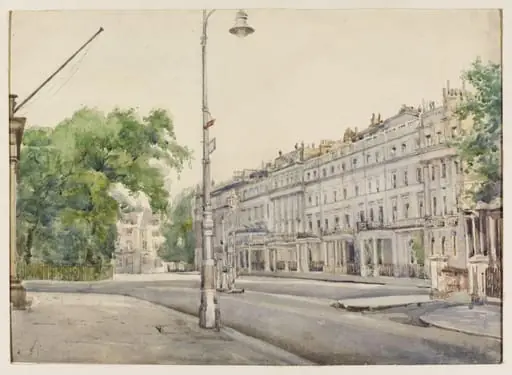
Lyall Street, Eaton Square
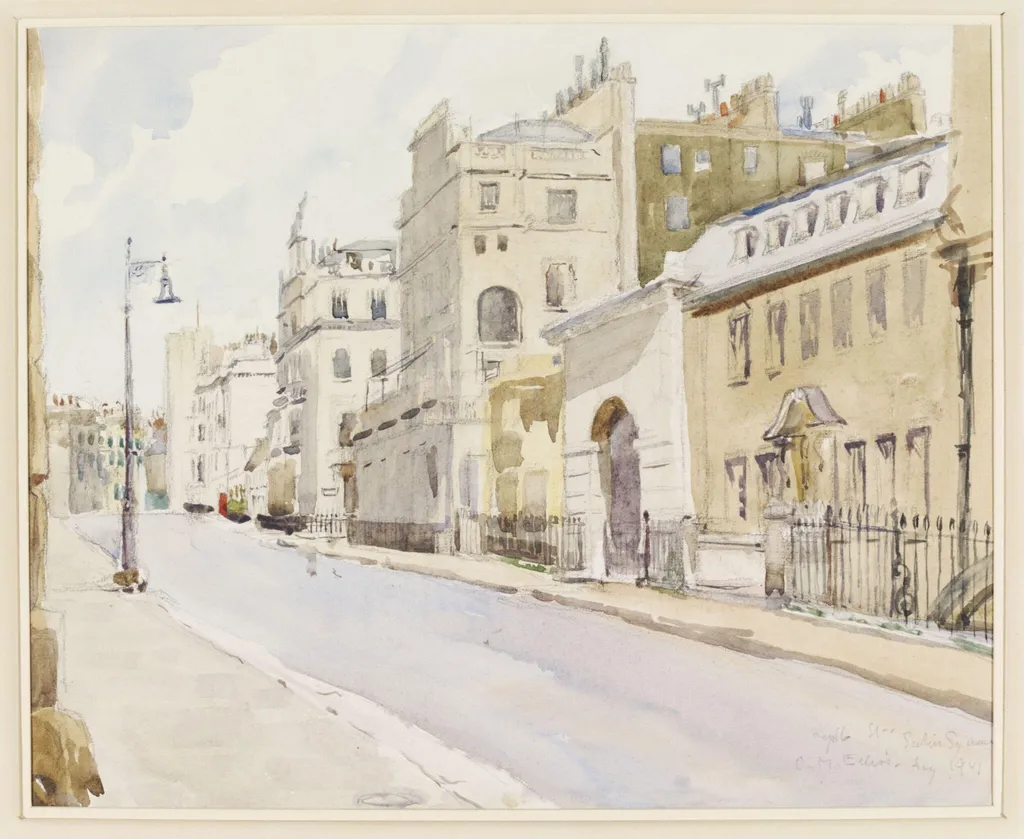
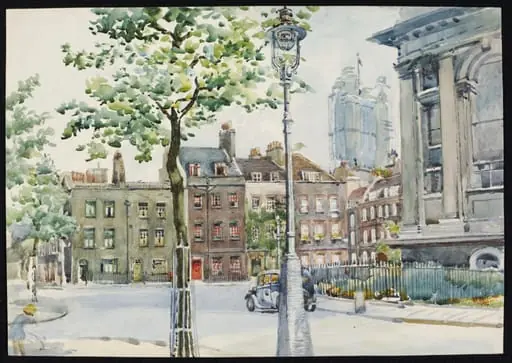
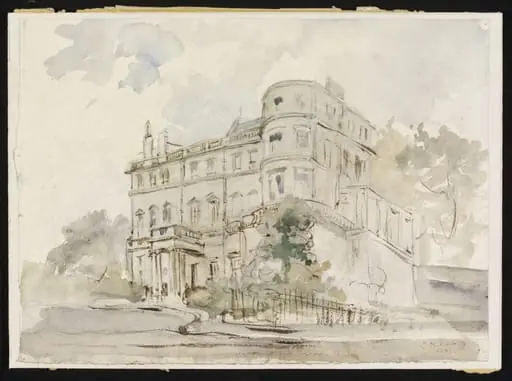
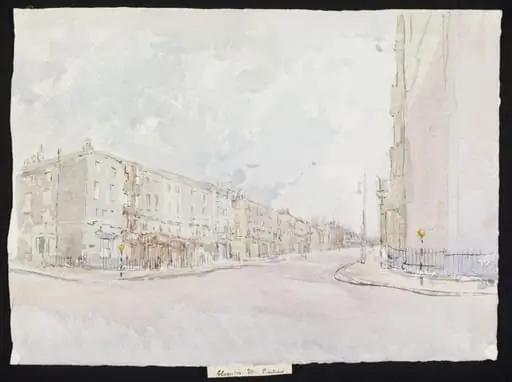
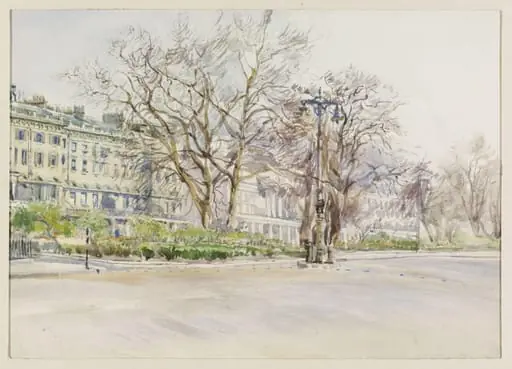
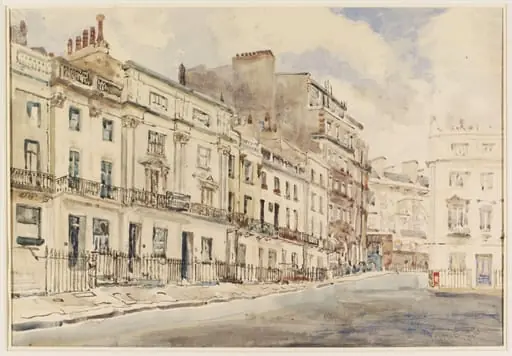
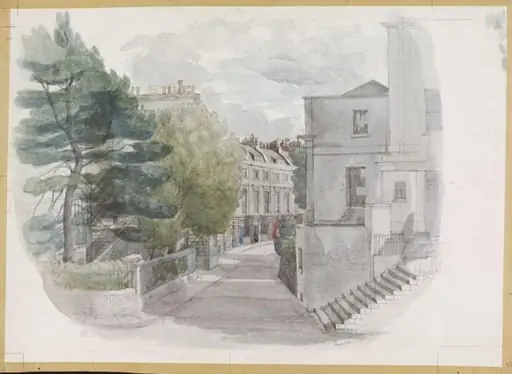
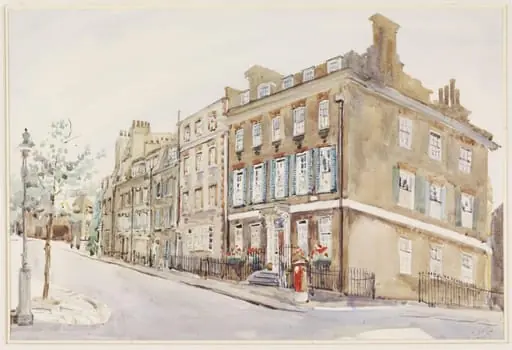
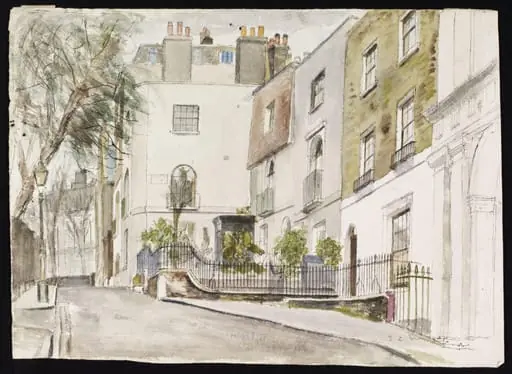
Lyall Street, Eaton Square is a watercolor work on paper by the Social Realist artist Ediss. It dates from 1941 and is held in the collection of the Victoria and Albert Museum.
About this work
Overview
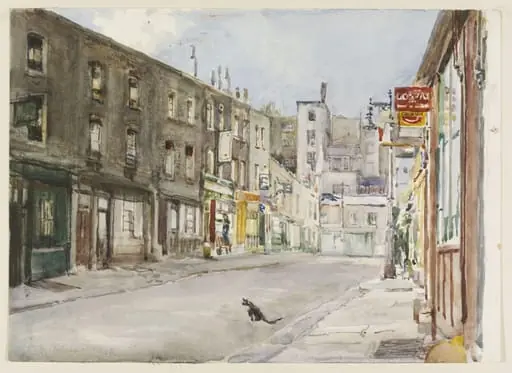
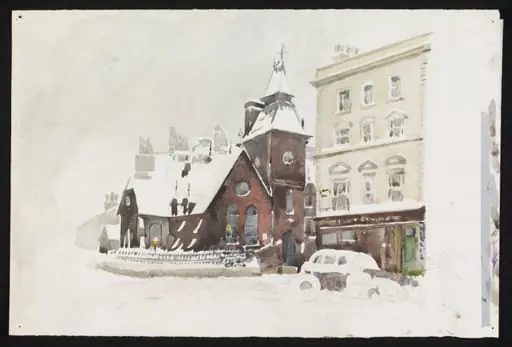
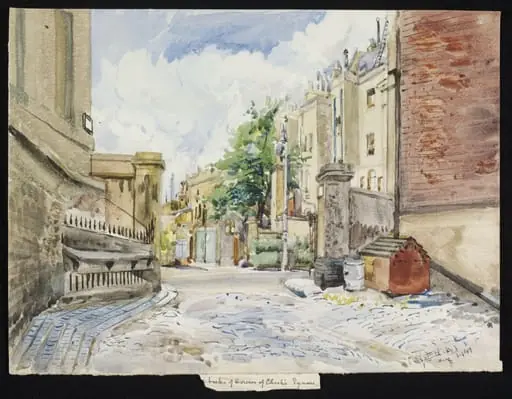
Created in 1941, this watercolour by Ediss records a stretch of Lyall Street within Eaton Square, London. Executed for the Recording Britain initiative, the piece captures a quiet urban scene amid the upheavals of the Second World War, contributing to a national effort to document vulnerable locales.
Subject & Meaning
The composition presents a narrow city thoroughfare flanked by historic façades with arched doorways and modest windows. A solitary lamppost anchors the left side, while distant figures remain merely suggested, emphasizing the street’s subdued atmosphere and the everyday life that persisted despite wartime disruption.
Technique & Style
Ediss employs a loose, watery wash that renders the architecture in soft, sketch‑like outlines. The palette is restrained, dominated by light tones and generous areas of white, allowing the forms to emerge through simple shapes rather than detailed rendering.
History & Provenance
The work was commissioned by the Committee for the Employment of Artists in Wartime, with funding from the Pilgrim Trust, as part of the broader Recording Britain project overseen by Sir Kenneth Clark. It was intended to preserve images of sites at risk from bombing, redevelopment, and other wartime changes.
Context
Eaton Square, a distinguished residential area in central London, was selected for its architectural significance. The watercolour reflects the project's aim to capture the evolving British landscape, documenting both the physical environment and the subtle continuity of daily life during the conflict.
Artist & collection
Artist
Ediss painted London’s quiet streets and squares in delicate watercolours during the early 1940s.