Artwork
Vânat
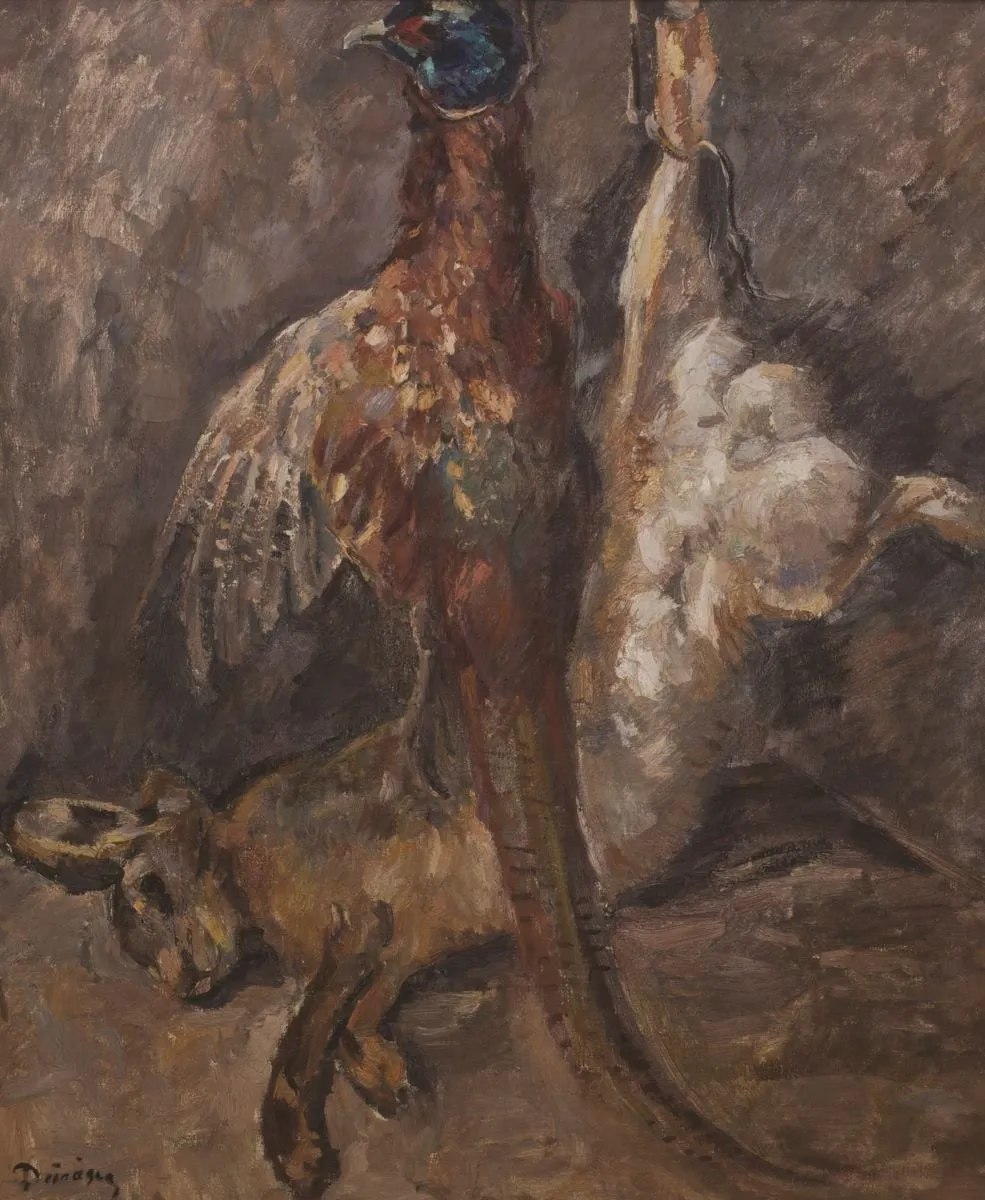
Vânat is a print by Nicolae Dărăscu. It dates from 1931 and is held in the collection of the Bucharest Municipality Museum.
About this work
Overview
The work resides in the Museum of Ethnography, where it is contextualized within Romanian rural traditions of subsistence and natural resource use.
Vânat, painted around 1931 by Nicolae Dărăscu, is a quiet still life depicting hunted game. The composition centers on a pheasant suspended by its legs and a rabbit resting beside it, both rendered in subdued earth tones. The muted background and lack of narrative context emphasize the objects themselves, inviting contemplation rather than drama. The work resides in the Museum of Ethnography, where it is contextualized within Romanian rural traditions of subsistence and natural resource use.
Subject & Meaning
The painting presents two animals commonly hunted in Romania’s countryside: a pheasant and a rabbit. Their stillness and placement suggest the aftermath of a hunt, not as triumph but as quiet necessity. The absence of hunters or tools shifts focus to the animals as both prey and material, hinting at themes of mortality, sustenance, and the intimate relationship between people and the land. The work avoids sentimentality, presenting the subjects with detached observation.
Technique & Style
Dărăscu employs a restrained palette of browns, muted reds, and soft blues, grounding the scene in naturalism. Feathers and fur are rendered with careful, textured brushwork that suggests texture without flourish. The lighting is even and diffuse, eliminating dramatic shadows and reinforcing the sense of stillness. The composition is tightly framed, with no extraneous elements, directing attention to the physical presence of the animals and the quiet dignity of their form.
History & Provenance
Created in the early 1930s, Vânat entered the collection of the Museum of Ethnography in Romania, where it remains today. Its acquisition reflects institutional interest in documenting rural life and material culture during a period of national identity formation. Unlike Dărăscu’s more celebrated urban scenes, this work was likely valued for its ethnographic resonance, offering insight into domestic practices and seasonal rhythms of the Romanian countryside.
Context
In interwar Romania, artists increasingly turned to rural subjects as symbols of authentic national character. Vânat aligns with this trend, portraying game not as trophies but as elements of everyday life. The painting’s quiet realism contrasts with romanticized depictions of the countryside, instead offering a sober record of subsistence practices. It reflects a broader cultural moment in which art served as a repository of folk experience and environmental awareness.
Legacy
Vânat endures as a quiet example of Romanian interwar realism, valued for its unembellished portrayal of rural life. While not widely exhibited outside ethnographic contexts, it contributes to understanding how artists engaged with nature and tradition without idealization. Its presence in the Museum of Ethnography underscores its role as a document of material culture, preserving a visual record of practices that have since faded from common experience.
Artist & collection

Artist
Nicolae Dărăscu was a Romanian painter. He was influenced by Impressionism and Neo-impressionism.