Artwork
Veneția (Biserica Santa Maria Veneția)
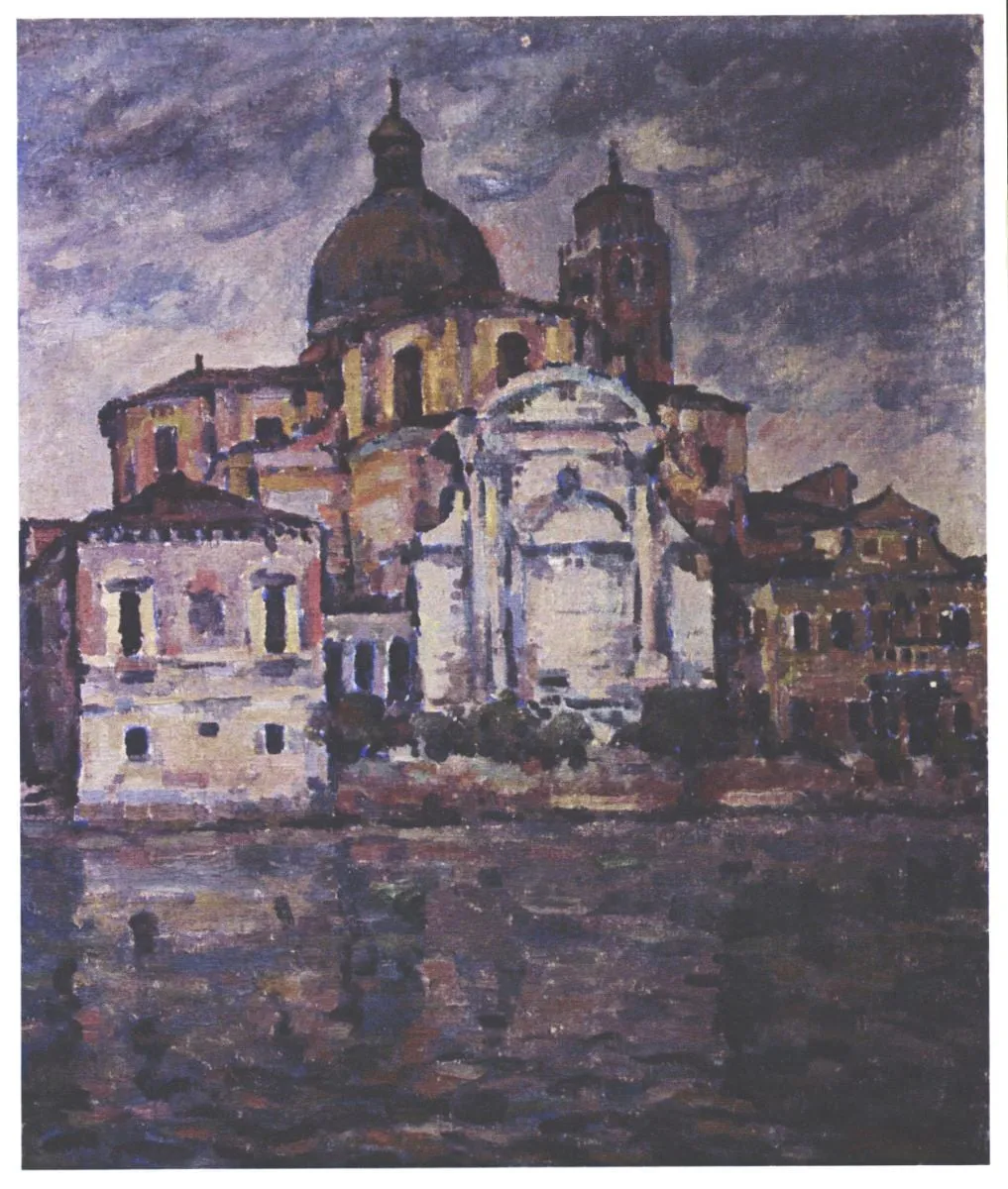
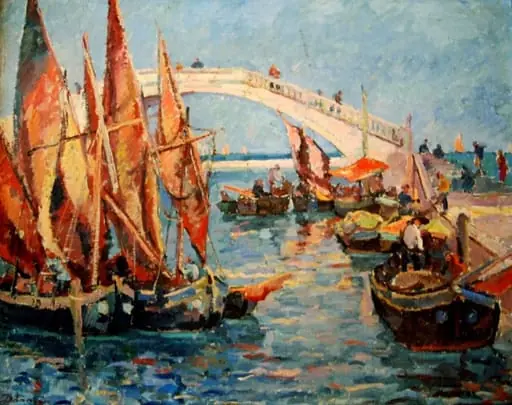
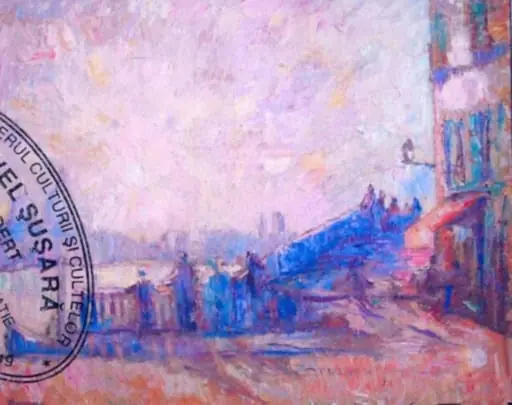
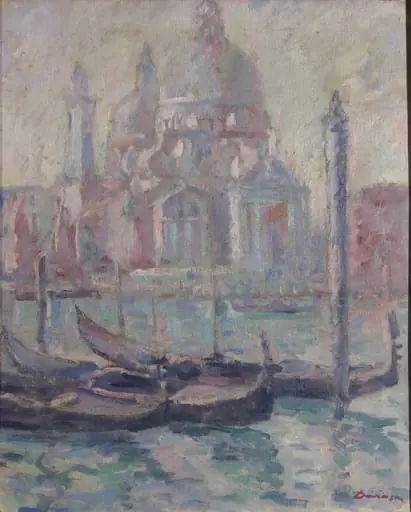
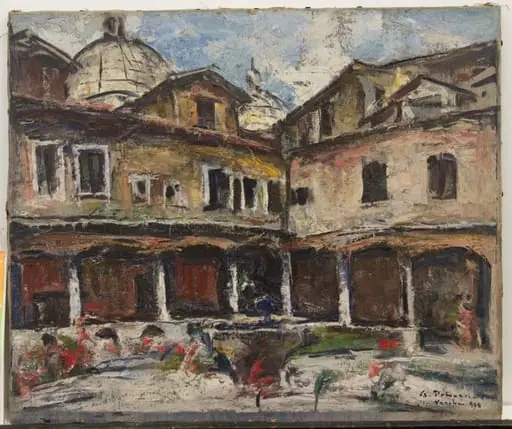
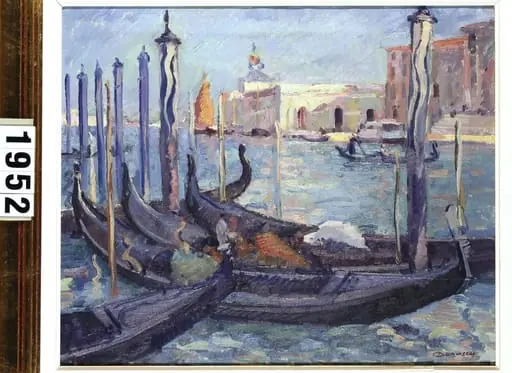
Veneția (Biserica Santa Maria Veneția) is a print by Nicolae Dărăscu. It dates from 1931 and is held in the collection of the Visual Art Museum Galați.
About this work
Overview
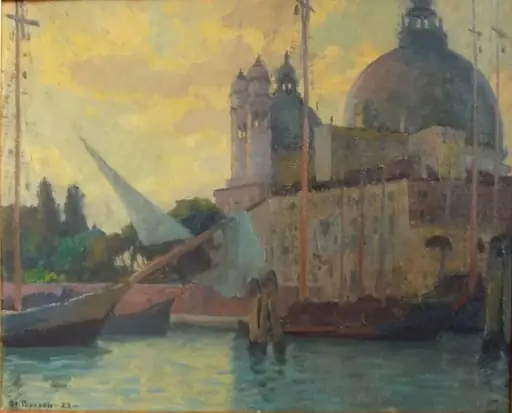
Painted around 1931 by Nicolae Dărăscu, Veneția (Biserica Santa Maria Veneția) depicts a Venetian church seen through a moody, atmospheric lens.
Painted around 1931 by Nicolae Dărăscu, Veneția (Biserica Santa Maria Veneția) depicts a Venetian church seen through a moody, atmospheric lens. The work is held in the collection of the Museum of Ethnography. Unlike typical topographical renderings, the painting prioritizes emotional tone over architectural precision, using texture and light to evoke a sense of isolation and grandeur amid natural turbulence.
Subject & Meaning
The subject is the Church of Santa Maria della Salute in Venice, recognizable by its twin domes and slender bell towers. Dărăscu presents it not as a monument of pilgrimage but as a solitary structure battered by an overcast sky and churning waters. The contrast between the luminous façade and the oppressive atmosphere suggests a meditation on endurance, beauty persisting against decay or turmoil.
Technique & Style
Dărăscu employed thick, heavily textured brushwork, applying paint in a manner that borders on sculptural. The surface is marked by visible strokes, scrapes, and layered impasto, particularly in the sky and water, where pigment seems gouged rather than brushed. This physicality amplifies the emotional weight of the scene, transforming the church into a tactile presence emerging from chaos.
History & Provenance
Created during Dărăscu’s mature period, the painting reflects his engagement with European modernism and his interest in landscape as psychological expression. It entered the Museum of Ethnography’s collection in the mid-20th century, likely through institutional acquisition. Its placement there, rather than in a fine arts museum, hints at its perceived cultural or ethnographic resonance beyond purely aesthetic value.
Context
In early 20th-century Romania, artists like Dărăscu were redefining national identity through depictions of foreign sites, often imbued with personal or symbolic meaning. Venice, as a symbol of faded glory and artistic legacy, offered a rich counterpoint to Romania’s own evolving cultural narrative. This work aligns with broader trends of expressive landscape painting in interwar Eastern Europe.
Legacy
Veneția remains a key example of Dărăscu’s distinctive approach to landscape, where emotional intensity overrides documentary accuracy. Its textured surface and dramatic lighting influenced later Romanian painters seeking to convey inner states through external environments. Though not widely exhibited, it endures as a quiet, powerful statement on perception and resilience in modern Romanian art.
Artist & collection

Artist
Nicolae Dărăscu was a Romanian painter. He was influenced by Impressionism and Neo-impressionism.