Artwork
Adam and Eve with the Infants Cain and Abel
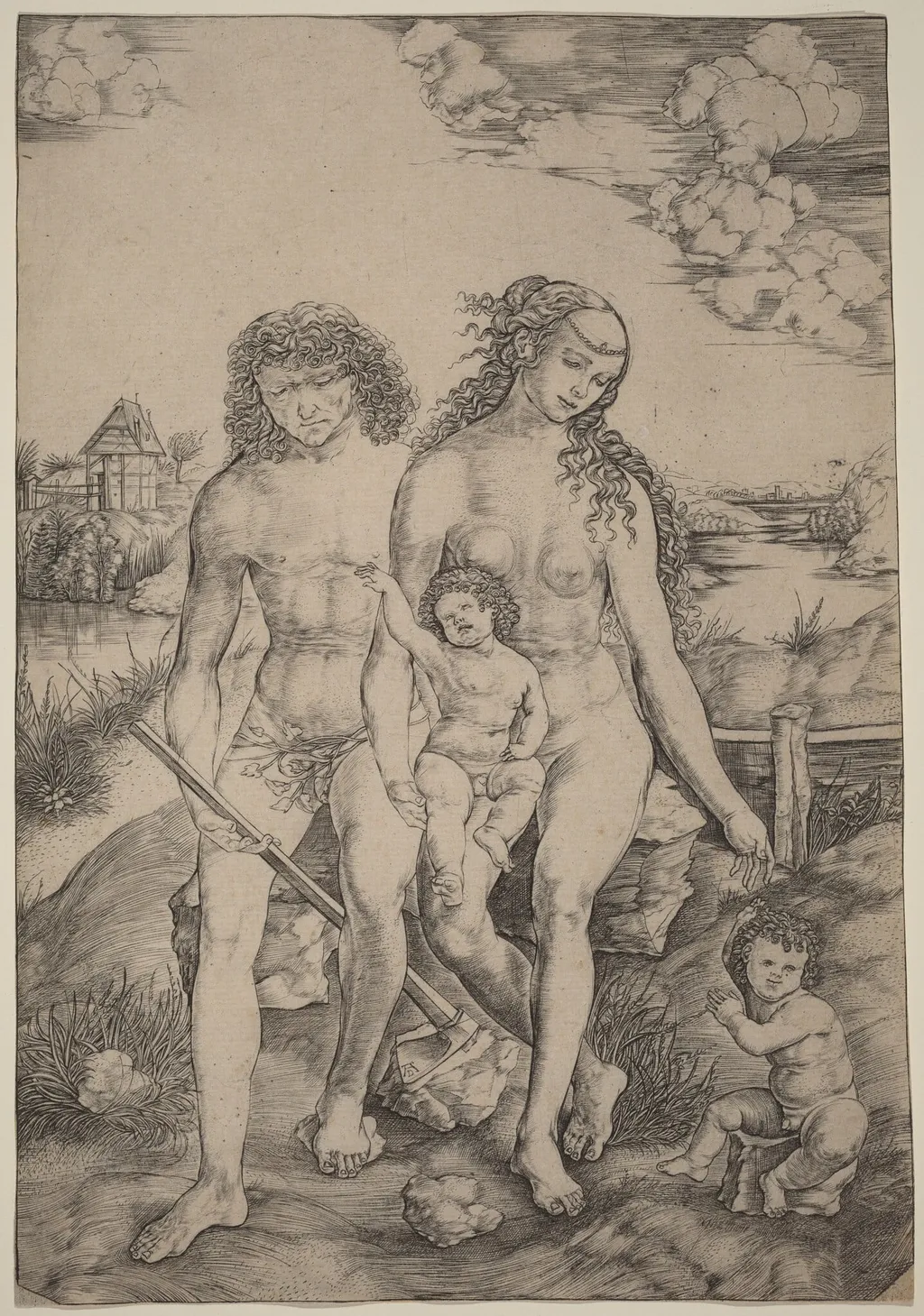
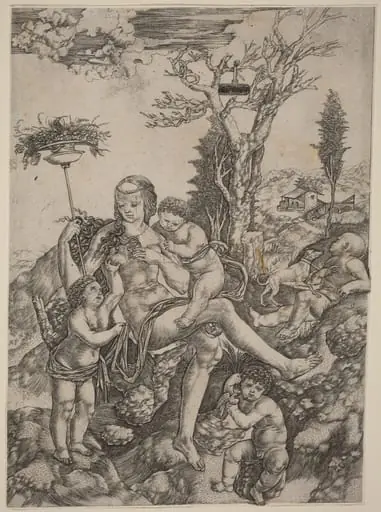
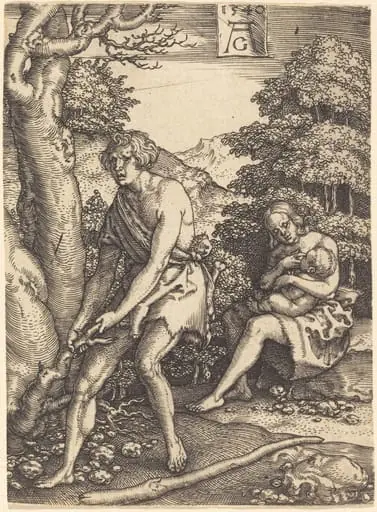
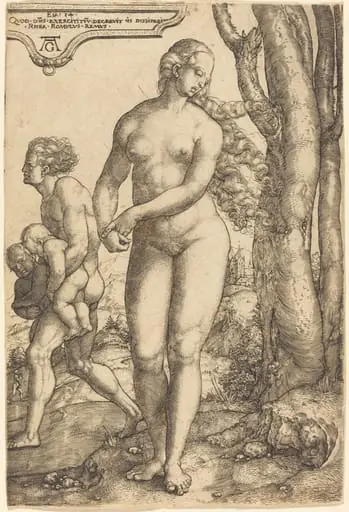
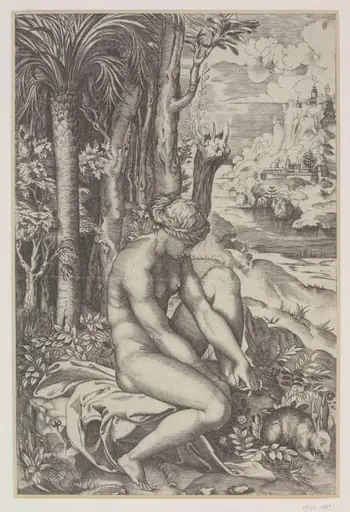
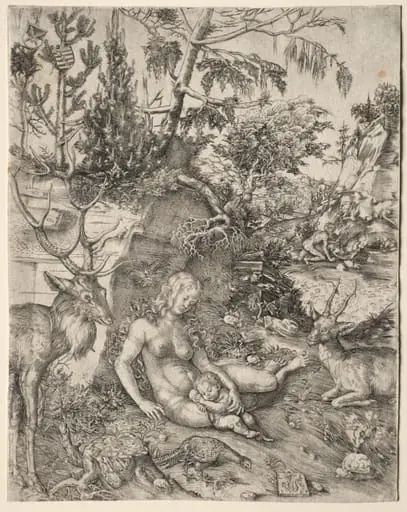
Adam and Eve with the Infants Cain and Abel is an ink print by the Renaissance artist Cristofano Robetta. It dates from 1498 and is held in the collection of the National Gallery of Art.
About this work
Overview
The scene unfolds outdoors with subtle landscape elements, reflecting the artist’s skill in rendering spatial depth through controlled engraving techniques.
Created in 1498 by the Florentine goldsmith and printmaker Cristofano Robetta, this engraving portrays Adam and Eve with their young sons Cain and Abel. Robetta, known for his meticulous line work, translated a now-lost painted composition into a finely detailed printed image. The scene unfolds outdoors with subtle landscape elements, reflecting the artist’s skill in rendering spatial depth through controlled engraving techniques.
Subject & Meaning
The image presents a quiet moment from the biblical narrative, showing Adam and Eve with their twin sons shortly after their expulsion from Eden. The figures are arranged in a stable, intimate group, suggesting familial unity amid their fallen state. The inclusion of the infants emphasizes the continuation of human life beyond paradise, subtly underscoring themes of lineage and consequence without overt moralizing.
Technique & Style
Robetta employed fine, precise engraving lines to model form and texture, particularly in the folds of clothing and the softness of skin. Shading is achieved through closely spaced hatching, creating volume without heavy contrast. The background—hut, boat, and clouds—is rendered with delicate economy, balancing detail with atmospheric suggestion. The figures’ calm expressions and natural postures reflect a humanist sensitivity to anatomy and gesture.
History & Provenance
The print was made during Robetta’s active period in late 15th-century Florence, a time when engraving was increasingly used to disseminate religious imagery. Several impressions survive in major collections, including the Cleveland Museum of Art and the Metropolitan Museum of Art, indicating its circulation among collectors and religious institutions. Its preservation suggests it was valued for both artistic merit and devotional utility.
Context
Robetta worked in a tradition where engravers often reproduced lost or inaccessible paintings, serving as intermediaries between painters and wider audiences. His engagement with biblical subjects aligned with the devotional climate of Renaissance Italy, where printed images supported private worship. The inclusion of landscape details reflects growing interest in naturalism, even in small-scale religious prints.
Legacy
Though Robetta was not among the most widely recognized engravers of his era, his works contributed to the preservation of compositional ideas now lost to time. His careful technique influenced later printmakers in northern Italy, and his prints remain important for understanding how religious narratives were visually transmitted before the widespread use of the printing press for mass reproduction.
Artist & collection

Artist
Cristofano Robetta (1462 – 1535) was an Italian artist, goldsmith, and engraver. Robetta was a Florentine "who made some rich, intricate engravings in the fine manner". He often made engravings which replicated…