Artwork
The Marriage of Adam and Eve
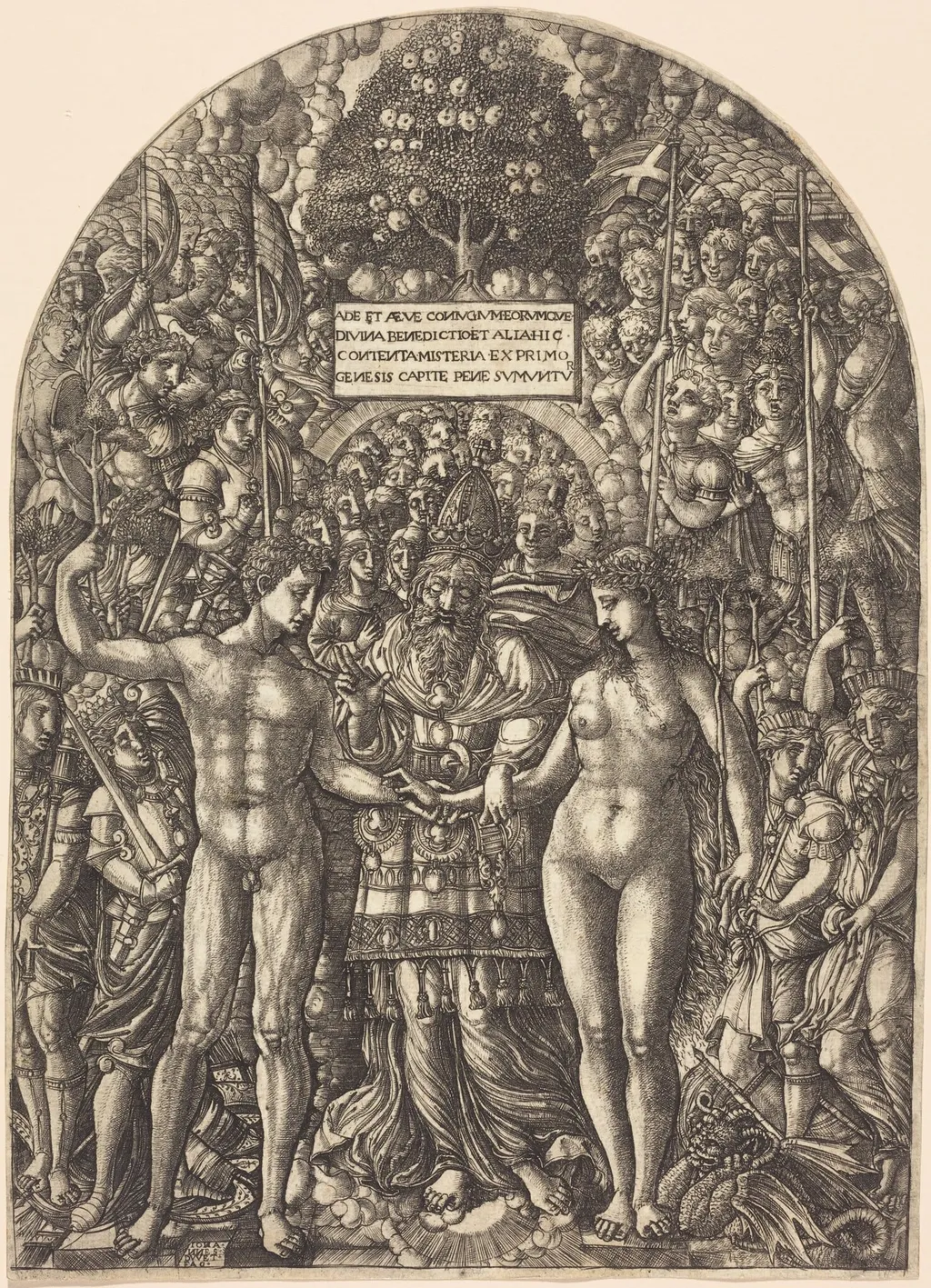
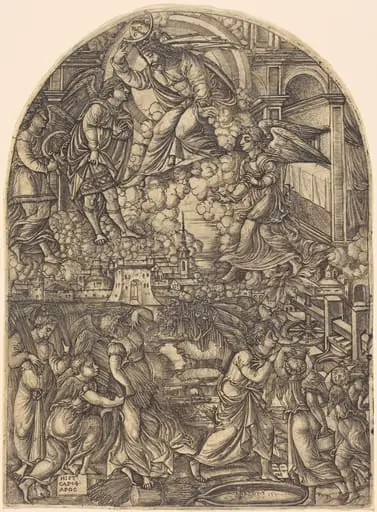
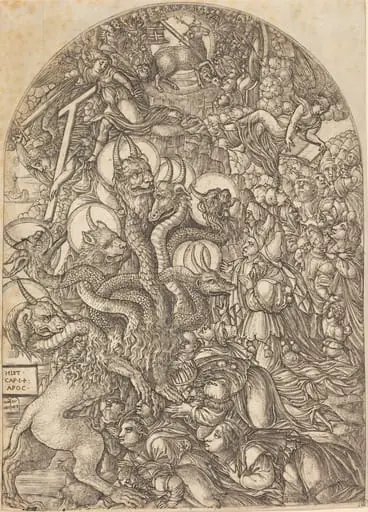
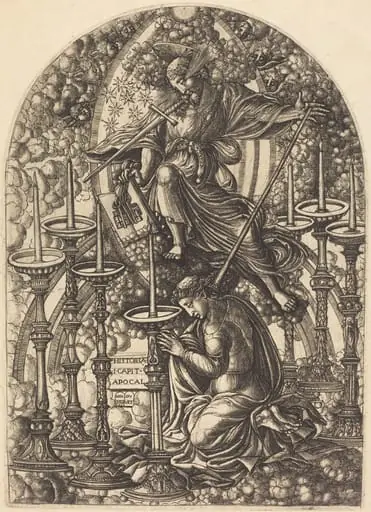
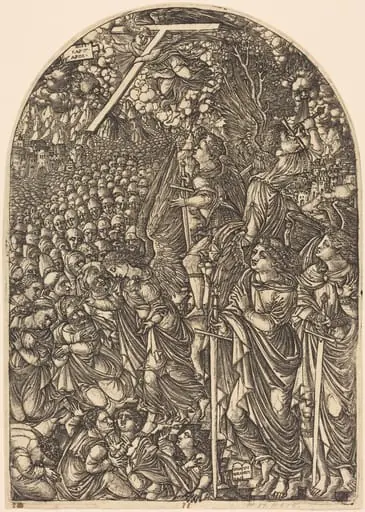
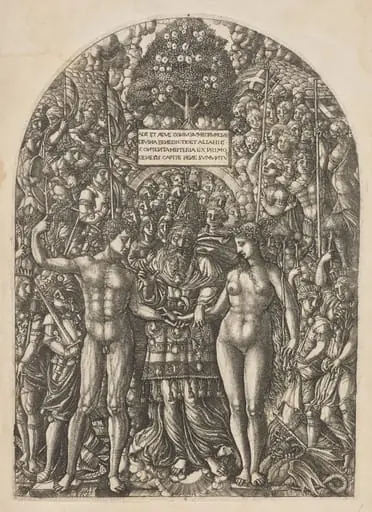
The Marriage of Adam and Eve is an ink print by the Renaissance artist Jean Duvet. It dates from 1548 and is held in the collection of the National Gallery of Art.
About this work
Overview
Jean Duvet, a French goldsmith turned engraver of the mid‑sixteenth century, produced the print *The Marriage of Adam and Eve* circa 1548. Executed on laid paper, the work presents the biblical couple standing naked, hand in hand, amid an intricate backdrop of miniature figures and foliage.
Subject & Meaning
The central focus is the union of Adam and Eve, rendered as a simple, intimate gesture. Encircling them is a dense forest populated by tiny human faces and diminutive figures, some bearing tools or weapons, suggesting a chorus of witnesses or spiritual entities observing the first marriage.
Technique & Style
Duvet employed a fine, direct engraving technique that yields sharply delineated lines and a richly layered surface. The composition is densely packed, with each minute face and branch incised with precision, creating a texture that resembles carved wood rather than a conventional print.
History & Provenance
Recognized as one of the earliest significant French printmakers, Duvet produced around 73 engravings in his career, all marked by religious subject matter and compact compositions. *The Marriage of Adam and Eve* reflects his mature style and remains a key example of his output from the late 1540s.
Context
The crowded, symbolic arrangement aligns with Renaissance tendencies to embed allegorical details within biblical narratives. Duvet’s approach parallels contemporary Northern European prints, while his expressive immediacy anticipates later visionary artists such as William Blake.
Artist & collection

Artist
Jean Duvet (1485 – after 1562) was a French Renaissance goldsmith and engraver, now best known for his engravings.