Artwork
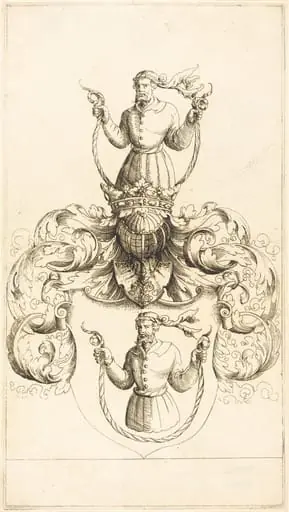
A Donor with a Coat of Arms (Schildbegleiter und Wappenschild mit Schrägbalken)
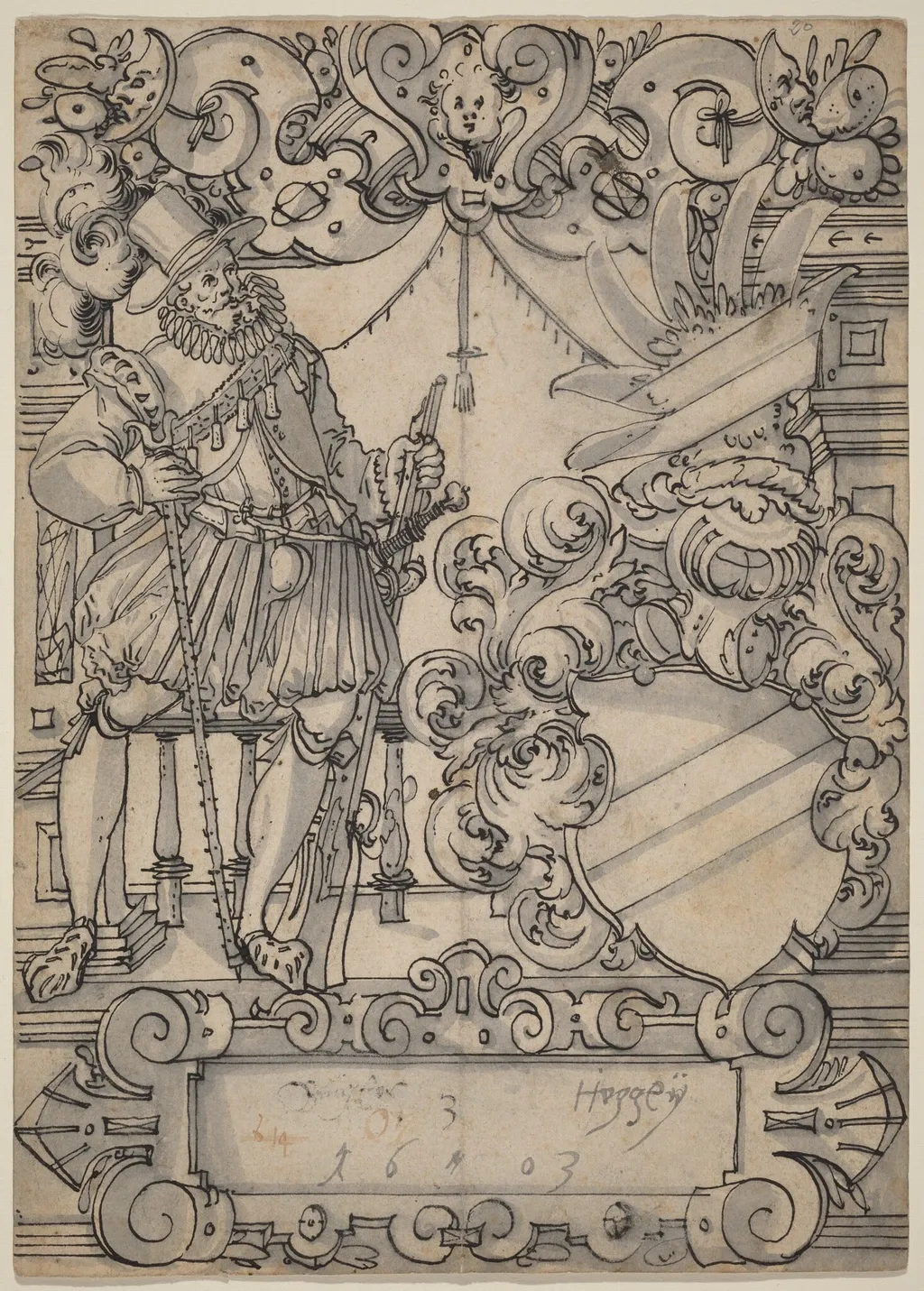
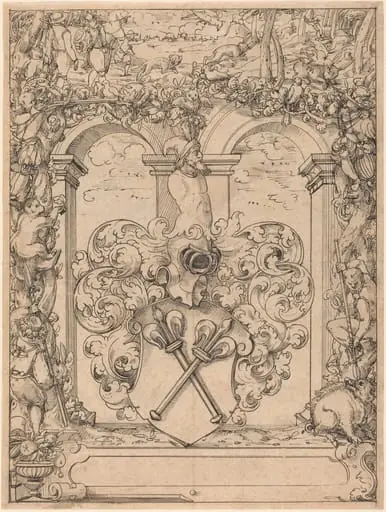
A Donor with a Coat of Arms (Schildbegleiter und Wappenschild mit Schrägbalken) is an ink drawing by the Baroque artist Hans II Jegli. It dates from 1603 and is held in the collection of the National Gallery of Art.
About this work
Overview
A Donor with a Coat of Arms is a drawing by Hans II Jegli, executed in 1603 using pen and black ink with brush and gray wash on laid paper.
Subject & Meaning
The drawing depicts a dignified figure, likely of noble or high social standing, indicated by his ornate attire, hat, and ruffled collar. He is portrayed in a pose of authority, with a sword in his right hand and a staff in his left, leaning on a pedestal. A prominently displayed coat of arms and banner in the background further emphasize his status.
Technique & Style
The work showcases Jegli's mastery of pen and ink techniques, combined with expressive gray washes. The intricate designs, patterns, and possibly implied use of cross-hatching techniques (common in detailed, depth-achieving artworks of the period) contribute to the drawing's textured, dimensional quality.
History & Provenance
Created in 1603 by Hans II Jegli, specific details about the work's ownership history or exhibitions are not provided in the available information.
Context
The drawing reflects the artistic tendencies of its time, aligning with practices of artists who valued intricate, detailed designs. The emphasis on heraldic elements (coat of arms) also situates it within the tradition of portraying social hierarchy through art.
Legacy
While specific impacts or notable recognitions of 'A Donor with a Coat of Arms' are not detailed, it contributes to the broader understanding of 17th-century drawing techniques and the representation of nobility in early modern European art.
Artist & collection