Artwork
Coat of Arms of Unknown Man
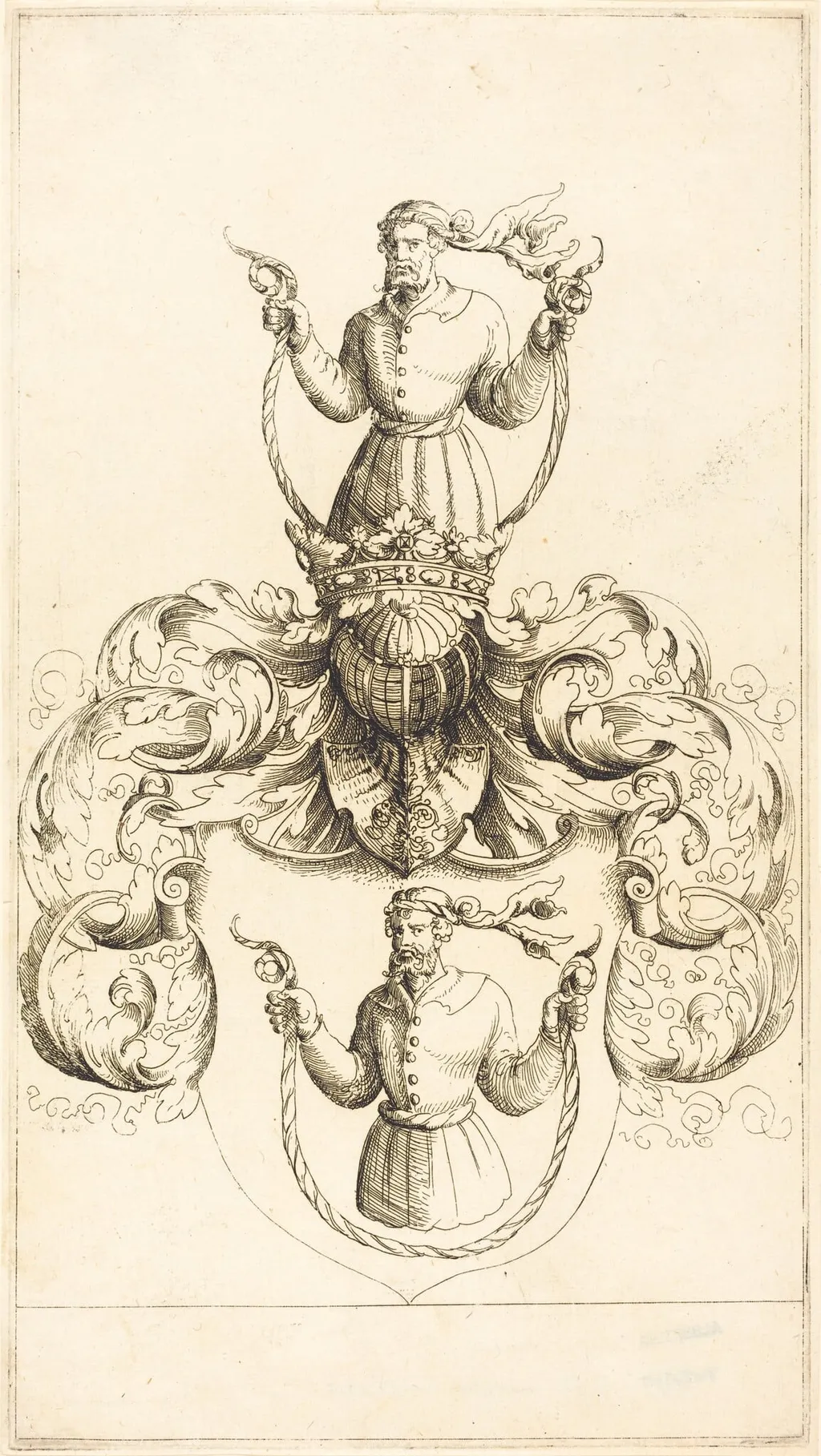
Coat of Arms of Unknown Man is an ink print by the Renaissance artist Augustin Hirschvogel. It dates from 1528 and is held in the collection of the National Gallery of Art.
About this work
Overview
Coat of Arms of Unknown Man is a 1528 etching by Augustin Hirschvogel, a multifaceted German artist associated with the Danube School. This print features a unique composition centered around two identical figures.
Subject & Meaning
The etching depicts two robed, identical men with four outstretched arms each, holding unspecified objects, floating above a crown and globe. Surrounding swirling clouds and ornate decorations frame the scene, suggesting themes of power, control, and possibly dominion over multiple realms.
Technique & Style
As an etching, the work showcases Hirschvogel's proficiency in this medium, characteristic of the Danube School's attention to detail and ornateness. The intricate, symbolic design reflects the artist's mathematical and cartographic influences.
History & Provenance
Created in 1528, this etching predates Hirschvogel's notable series of thirty-five landscape etchings (1545-1549). The subject's identity remains unknown, adding to the work's enigmatic nature.
Context
Within the broader context of 16th-century German art, this piece blends the symbolic complexity of the Danube School with the technical precision of early etching practices, reflecting the artistic and intellectual explorations of its time.
Artist & collection
Artist
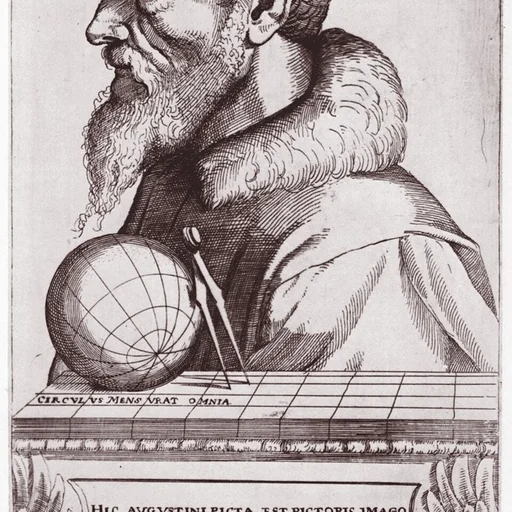
Augustin Hirschvogel (1503 – February 1553) was a German artist, mathematician, and cartographer known primarily for his etchings.

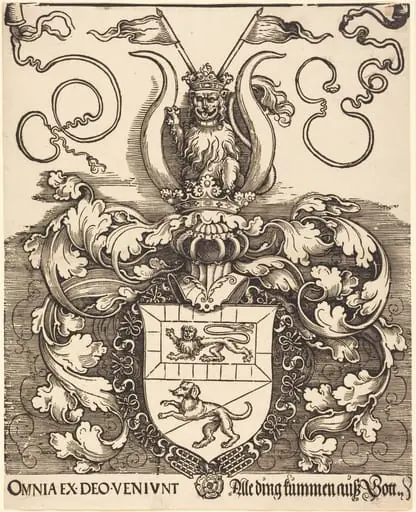 Coat of Arms of Lorenz Staiber
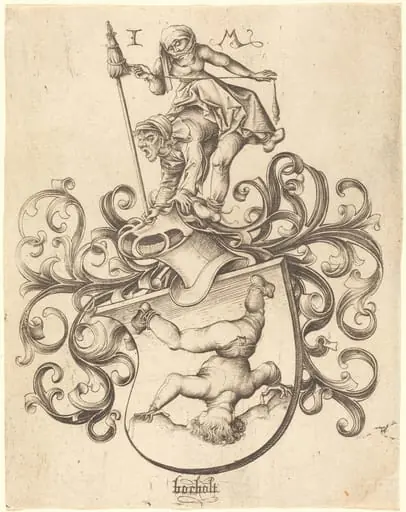 Coat of Arms with Tumbling Boy
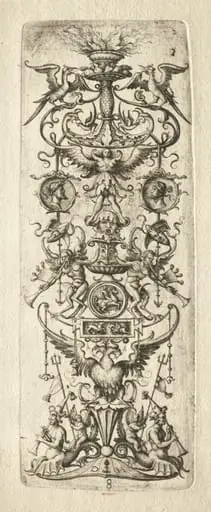 Ornament Fillet
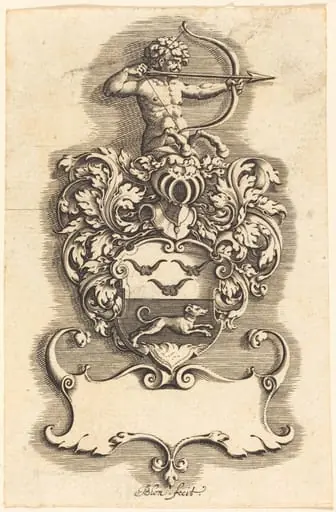 Crest
Crest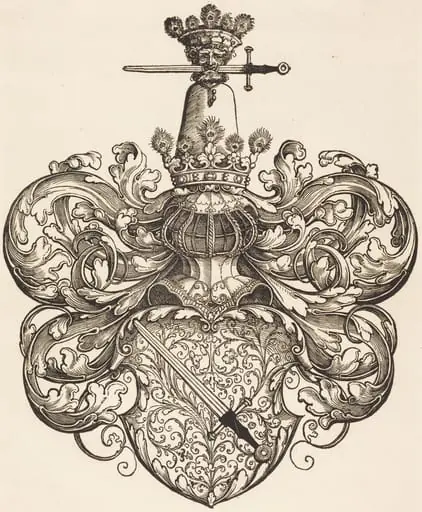 Coat of Arms of the Kress von Kressenstein Family
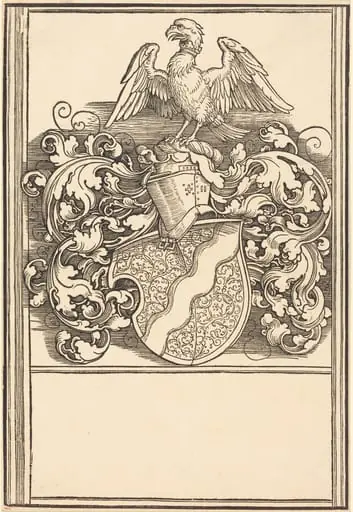 Coat of Arms of Michael Behaim
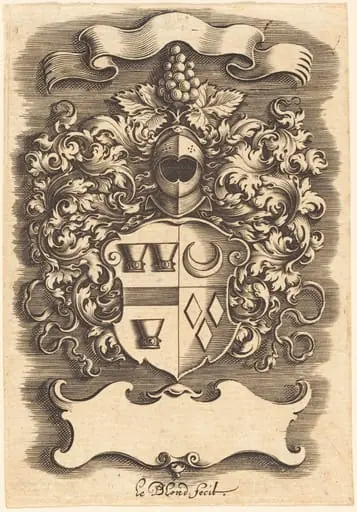 Crest
Crest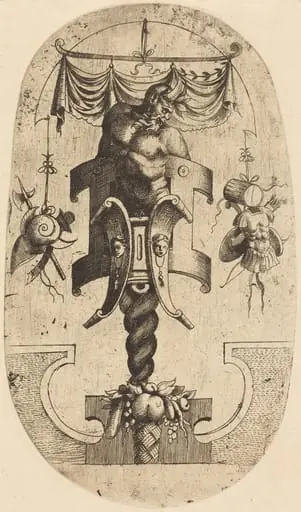 Satyr Bending Towards the Right
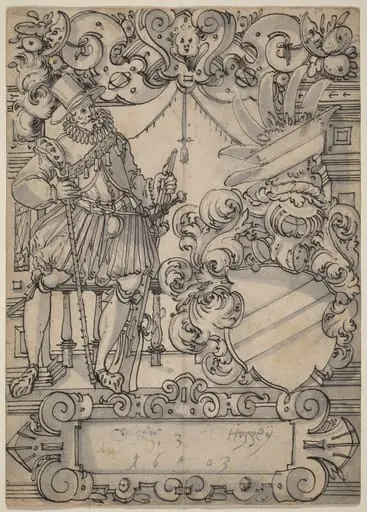 A Donor with a Coat of Arms (Schildbegleiter und Wappenschild mit Schrägbalken)
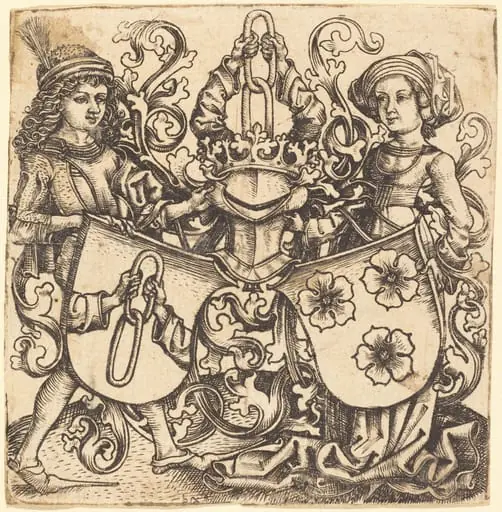 Arms of Rohrbach and Holzhausen