Artwork
Death and the Lansquenet
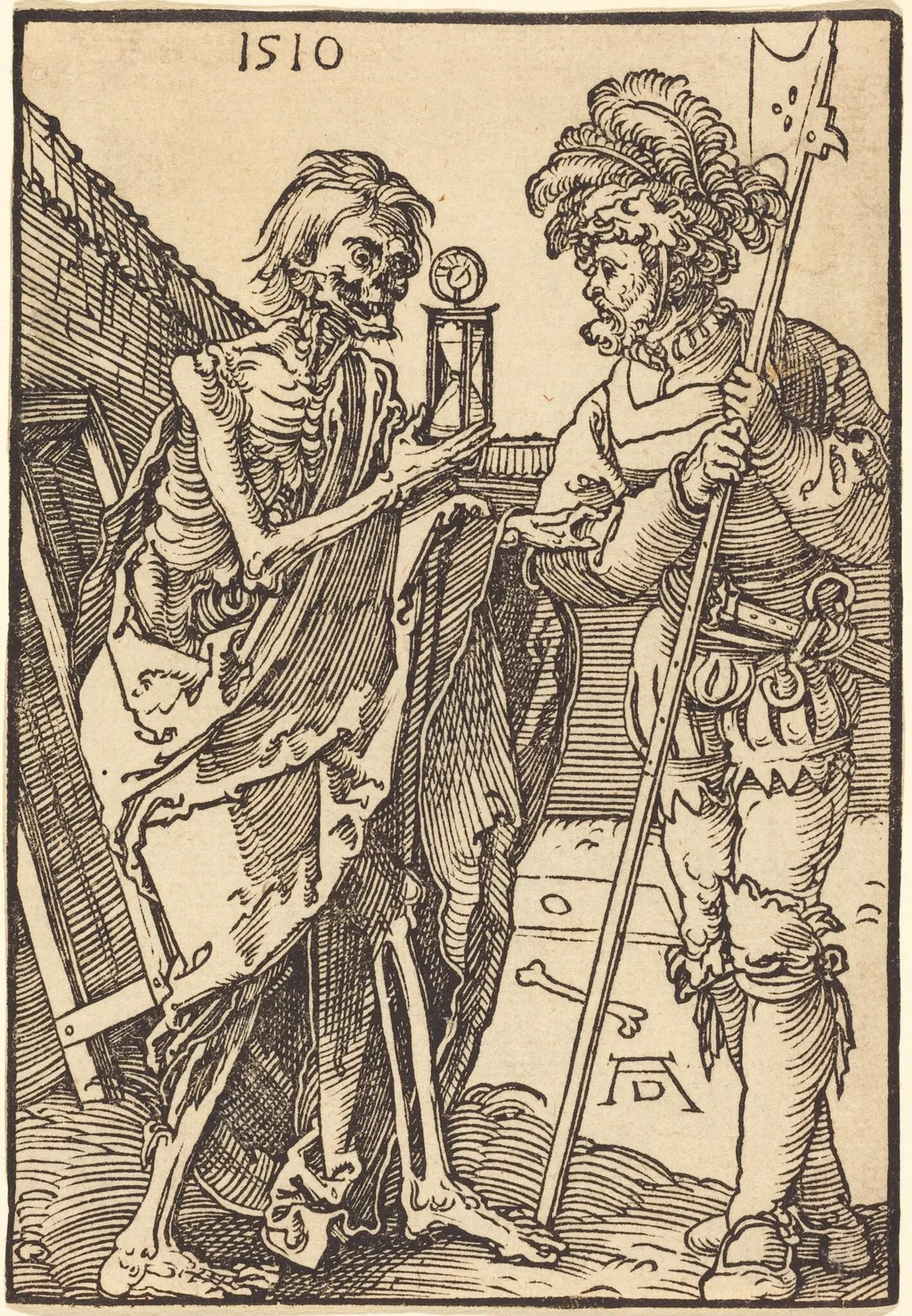
Death and the Lansquenet is an ink print by the Northern Renaissance artist Albrecht Dürer. It dates from 1510 and is held in the collection of the Staatsgalerie Stuttgart.
About this work
Overview
Created in 1510, this woodcut by Albrecht Dürer depicts two figures in stark contrast: a skeletal figure and a fully armed soldier.
Created in 1510, this woodcut by Albrecht Dürer depicts two figures in stark contrast: a skeletal figure and a fully armed soldier. Rendered on laid paper, the image is part of a series of prints exploring moral and existential themes. The composition is tightly framed, with minimal background detail, directing focus to the interaction between the two figures. The medium’s sharp lines and tonal contrasts enhance the symbolic weight of the scene.
Subject & Meaning
The skeleton, holding a lantern and staff, embodies death as an inevitable, guiding force. The armored figure, identified as a lansquenet—a mercenary soldier—represents human ambition and martial pride. Their side-by-side stance suggests an encounter, not a confrontation. The lantern may symbolize the fleeting illumination of life, while the soldier’s weapons are rendered powerless against the figure of mortality. The image conveys the futility of earthly power in the face of death.
Technique & Style
Dürer employed precise woodcut techniques to achieve fine linear detail and dramatic chiaroscuro. The skeleton’s elongated form and flowing hair are rendered with fluid, controlled cuts, contrasting with the rigid, angular lines of the soldier’s armor. The background’s faint architectural outline adds depth without distraction. The print’s clarity and economy of line reflect Dürer’s mastery of the medium, balancing expressiveness with technical discipline.
History & Provenance
The print was produced during Dürer’s mature period, shortly after his return from Italy, when his engagement with humanist themes deepened. It circulated widely through prints, reaching audiences beyond elite collectors. Early impressions are held in major European collections, including the Albertina and the British Museum. Its survival in multiple states suggests consistent demand and scholarly interest throughout the 16th century.
Context
In early 16th-century Europe, the theme of death confronting the living was common in religious and moral art, especially amid plague and political instability. Mercenaries like the lansquenet were familiar figures in the Holy Roman Empire, often viewed with ambivalence. Dürer’s image aligns with broader Northern Renaissance concerns about virtue, transience, and the soul’s fate, reflecting both popular piety and intellectual currents of the time.
Legacy
The print influenced later allegorical imagery in Northern Europe, particularly in the depiction of death as an active, personified force. Its concise visual language became a model for moralizing prints well into the 17th century. Dürer’s integration of classical form with vernacular subject matter helped elevate printmaking as a serious artistic medium, securing its place in the broader canon of Western art.
Artist & collection
Artist
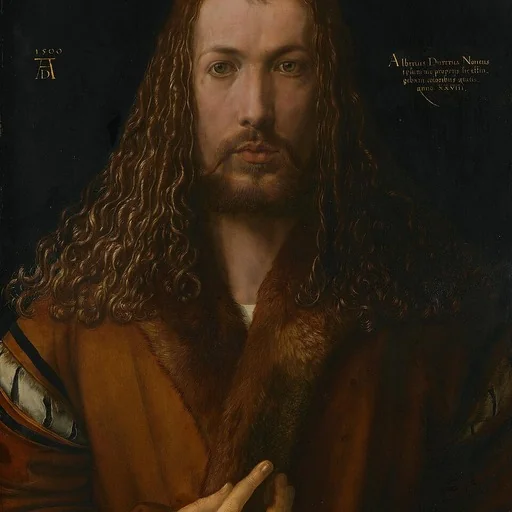
Albrecht Dürer spent his life in Nuremberg, a busy German city where artists traded prints like currency.

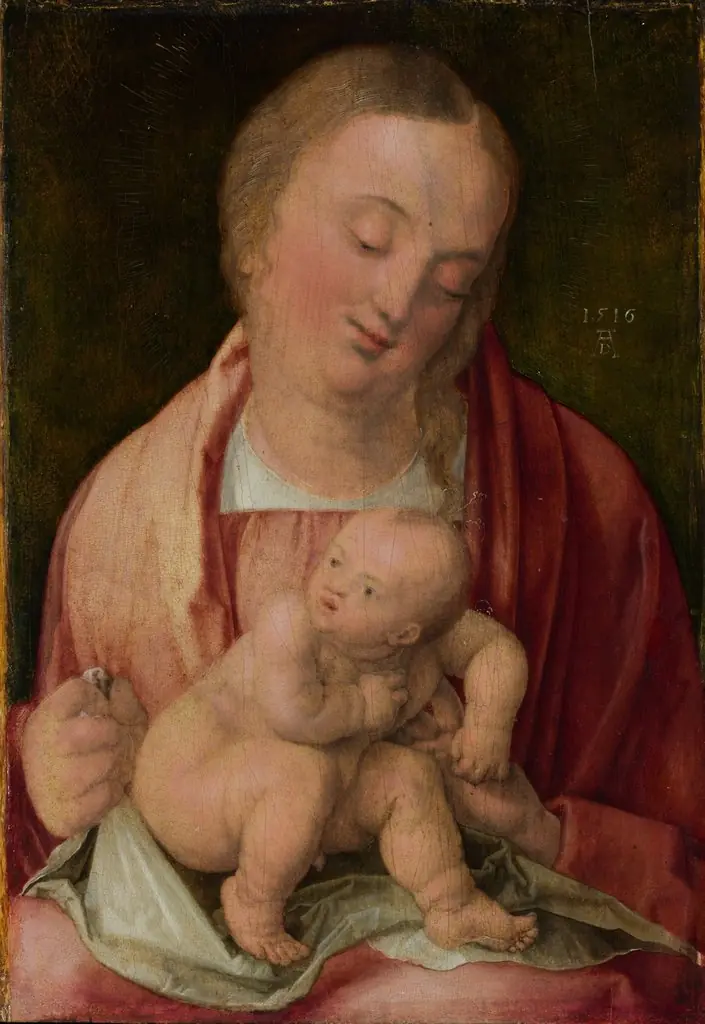
![Madonna and Child [obverse], by Albrecht Dürer](https://artifactworldgallery.com/img/albrecht-durer--madonna-and-child-obverse--d7b8ebf05d22ebe5-w320.webp)
![Lot and His Daughters [reverse], by Albrecht Dürer](https://artifactworldgallery.com/img/albrecht-durer--lot-and-his-daughters-reverse--b4ebf9b282faa17a-w320.webp)