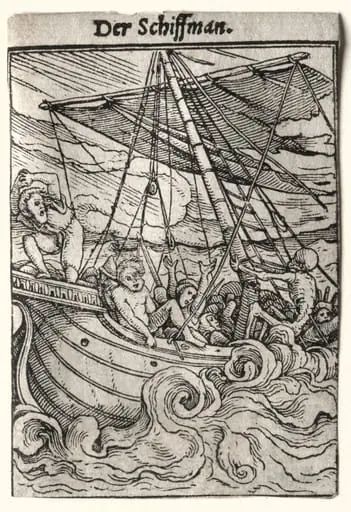
Artwork
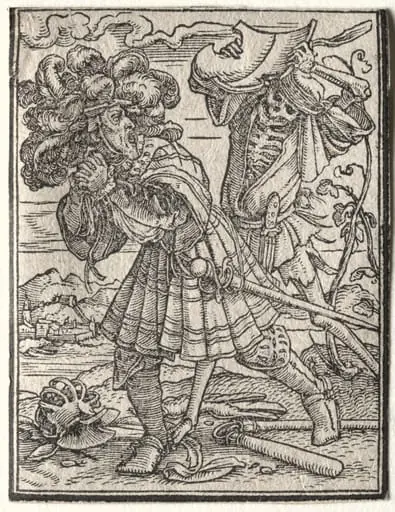
Dance of Death: The Count
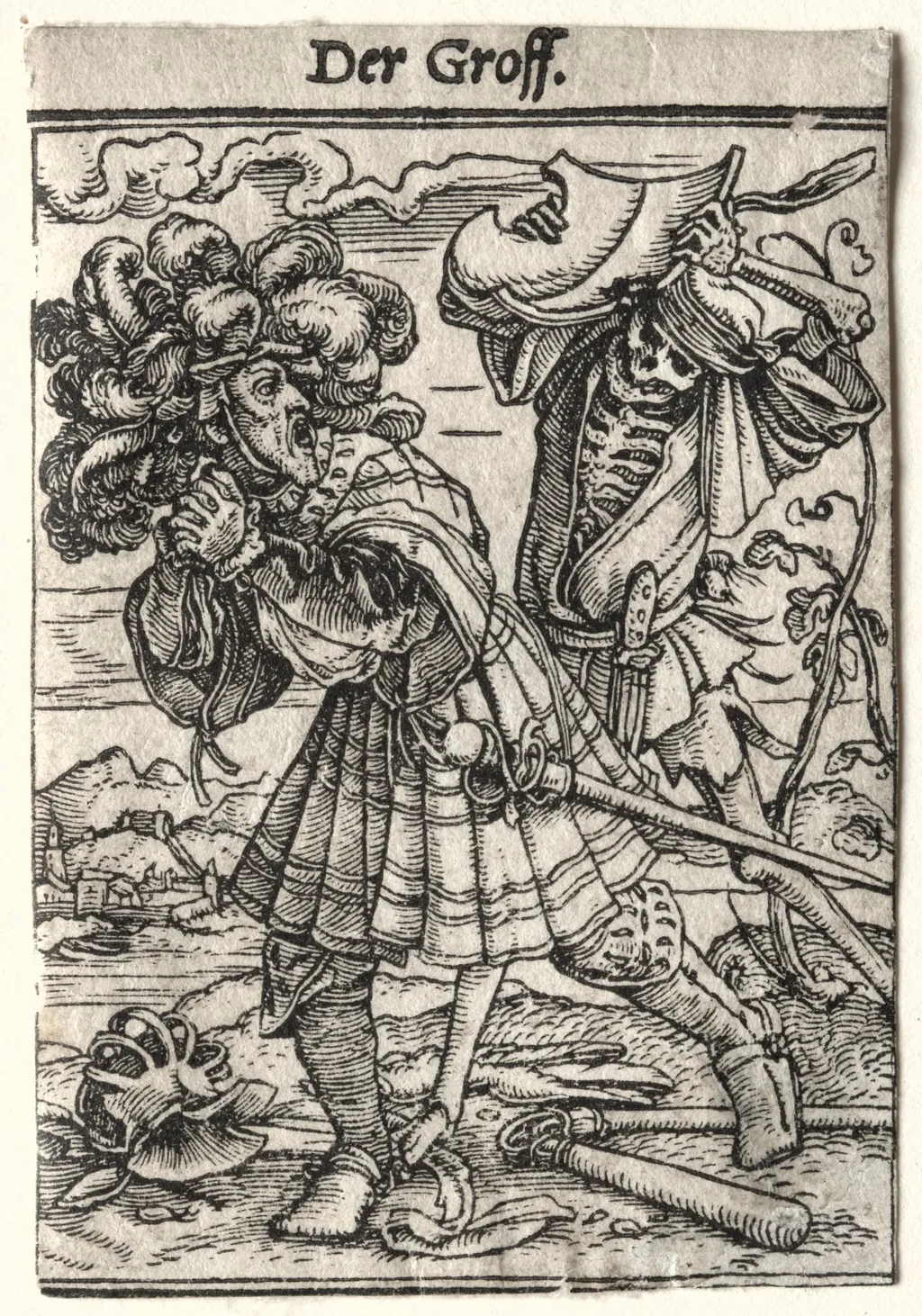
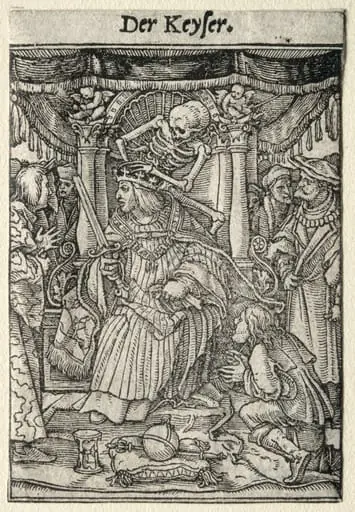
Dance of Death: The Count is a print by the Renaissance artist Hans Holbein the Younger. It dates from 1526 and is held in the collection of the Cleveland Museum of Art.
About this work
Overview
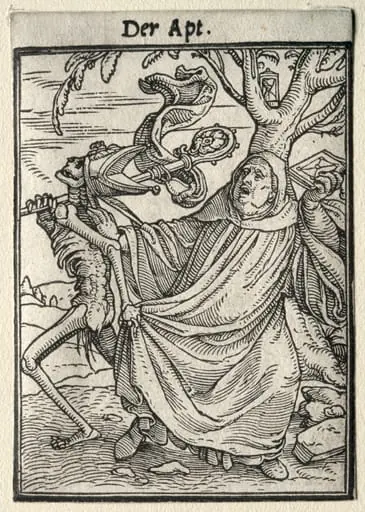
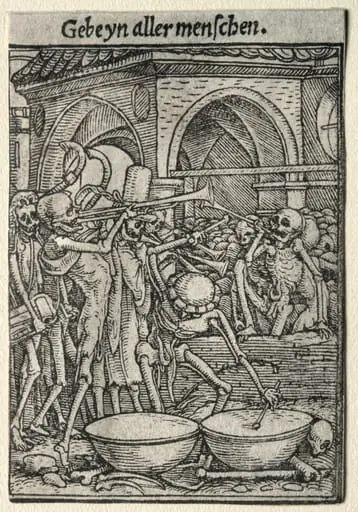
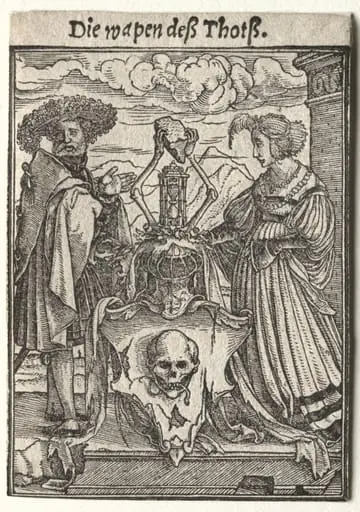
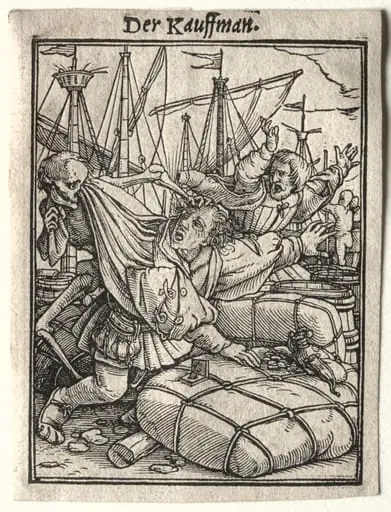
Dance of Death: The Count is a woodcut from Hans Holbein's renowned series Dance of Death, comprising 41 prints that visualize the medieval allegory of death's universality.
Subject & Meaning
The print depicts a nobleman, identified as a Count, standing alongside a skeletal figure representing Death, who holds an hourglass, symbolizing the inevitability and timing of mortality.
Technique & Style
The woodcut was cut by Hans Lützelburger, showcasing Holbein's design skill and Lützelburger's technical proficiency in translating Holbein's work into a detailed print.
History & Provenance
The Dance of Death series was published posthumously in 1538, although the blocks were cut before Lützelburger's death in 1526, originating from a 14th-century dramatic tradition that emerged in response to widespread epidemics.
Context
The work reflects the medieval preoccupation with mortality, using the Dance of Death motif to remind viewers of the transience of life and the need to prepare for the Last Judgement.
Artist & collection
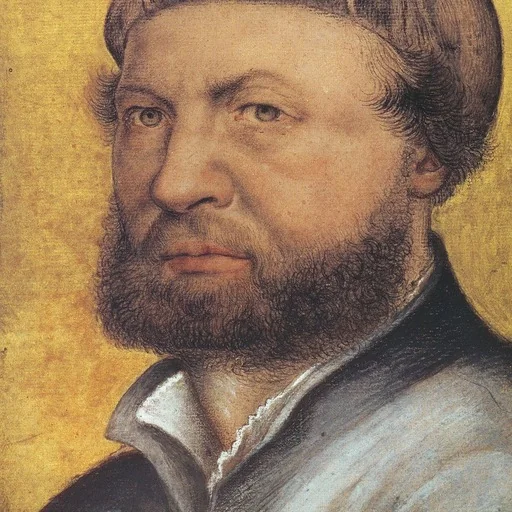
Artist
Hans Holbein the Younger (UK: HOL-byne, US: HOHL-byne, HAWL-; German: Hans Holbein der Jüngere; c.