Artwork
Dance of Death: The Advocate
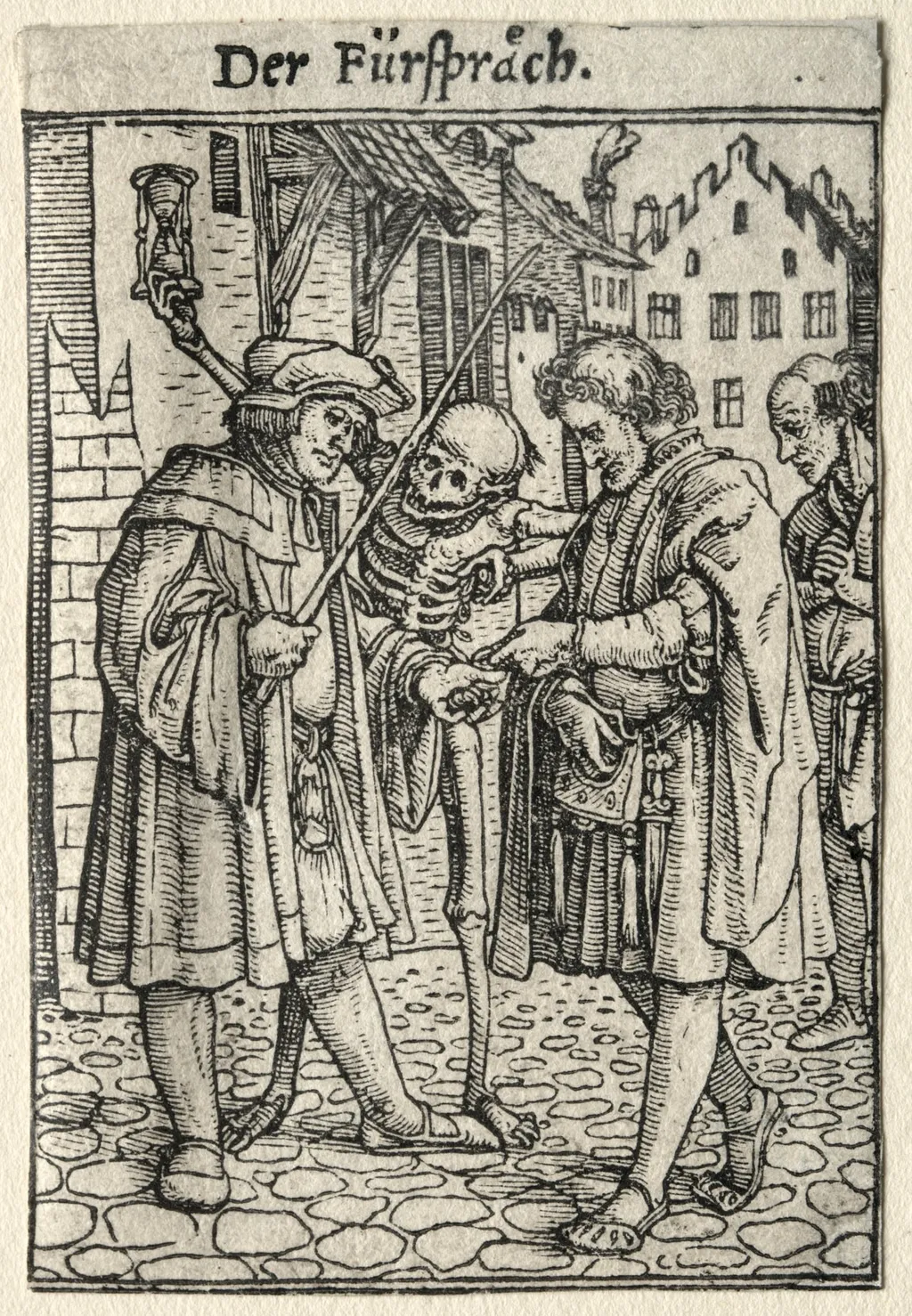
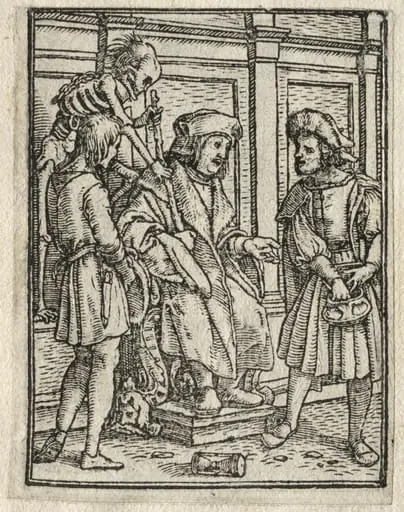
Dance of Death: The Advocate is a print by the Renaissance artist Hans Holbein the Younger. It dates from 1526 and is held in the collection of the Cleveland Museum of Art.
About this work
Overview
Created during his time in Basel, the print was intended for mass distribution through printed books.
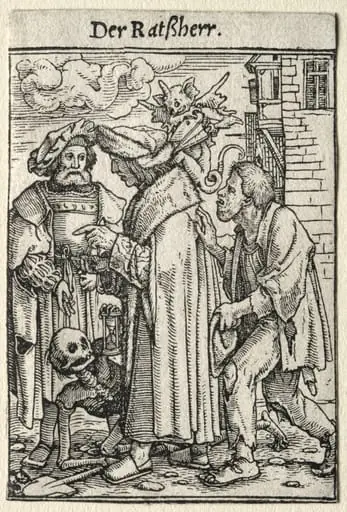
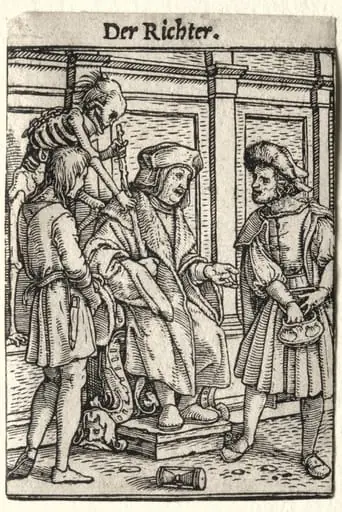
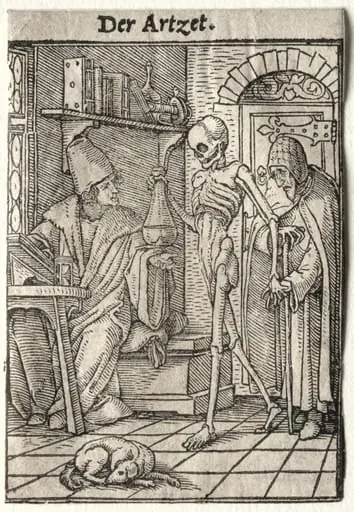
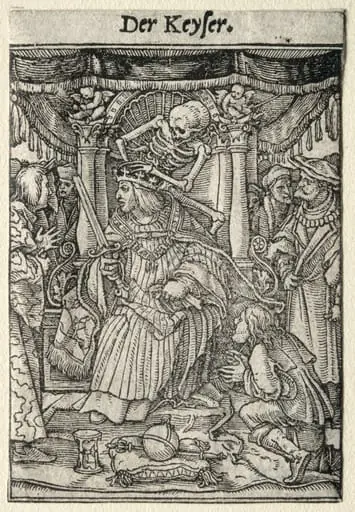
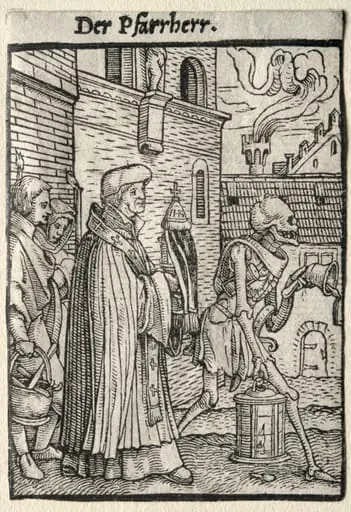
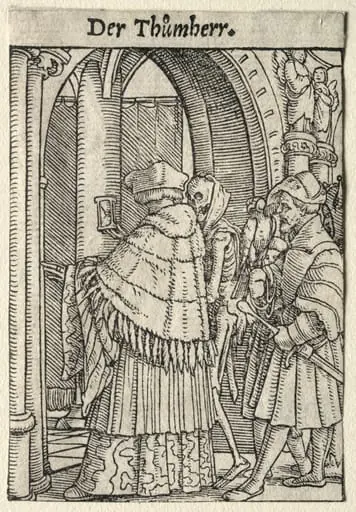
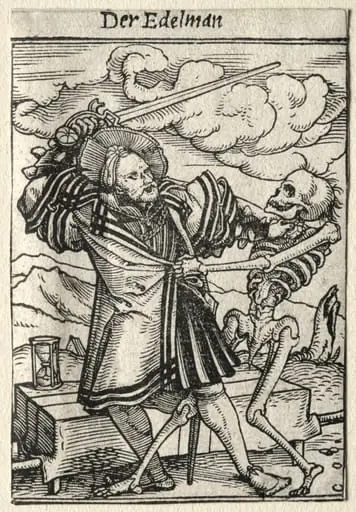
Hans Holbein the Younger produced 'Dance of Death: The Advocate' circa 1526 as one of forty-one woodcuts in a series illustrating the medieval theme of Death’s impartial reach. Created during his time in Basel, the print was intended for mass distribution through printed books. Holbein’s precise line work and restrained composition reflect the Northern Renaissance emphasis on clarity and moral gravity, aligning the image with the era’s growing interest in human vulnerability.
Subject & Meaning
The print portrays a legal advocate, identified by his robe and hat, being led by a skeleton who grips his right hand. The advocate holds a sword—symbol of his authority—but it is powerless against death. The scene strips away social status, asserting that no profession, however respected, offers immunity from mortality. The composition avoids drama, instead presenting death as an inevitable companion, neutral and unyielding, reinforcing the allegory’s core message: all human endeavors end in the same fate.
Technique & Style
Holbein executed the image as a woodcut, using fine, controlled lines to define form and texture with minimal detail. The figures are rendered in stark contrast against a plain background, focusing attention on their interaction. The skeleton’s elongated limbs and the advocate’s rigid posture create a visual tension between life and decay. The style is unadorned, avoiding embellishment to heighten the moral clarity of the scene, characteristic of Holbein’s approach to narrative printmaking.
History & Provenance
The print was originally published in 1538 as part of a book titled 'Dance of Death,' printed in Lyon after Holbein’s designs. It circulated widely across Europe, influencing later moral and satirical imagery. The Cleveland Museum of Art acquired the print as part of its broader collection of early modern European prints, preserving it as a key example of Reformation-era visual culture and the dissemination of printed allegory in the 16th century.
Context
Created during the Protestant Reformation, the series responded to widespread religious and social upheaval. By depicting figures from all walks of life—clergy, nobles, merchants, and laborers—facing death equally, Holbein challenged the Church’s claims to spiritual privilege and questioned earthly power structures. The work resonated with reformist critiques of corruption and vanity, offering a visual sermon on humility and the futility of worldly status.
Legacy
Holbein’s 'Dance of Death' series became a foundational model for later moral allegories in print and visual art. Its influence extended into the 17th and 18th centuries, shaping how death was represented in popular imagery. The series’ enduring power lies in its unflinching equality: no rank, wealth, or profession shields one from mortality. As a work of both artistic precision and social critique, it remains a significant artifact of early modern European thought.
Artist & collection
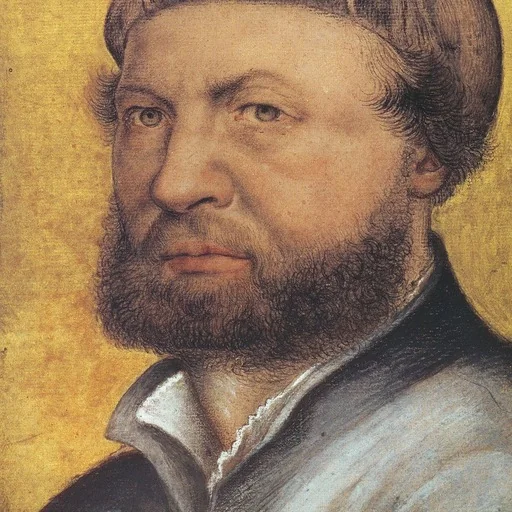
Artist
Hans Holbein the Younger (UK: HOL-byne, US: HOHL-byne, HAWL-; German: Hans Holbein der Jüngere; c.