Artwork
Dance of Death: The Old Woman
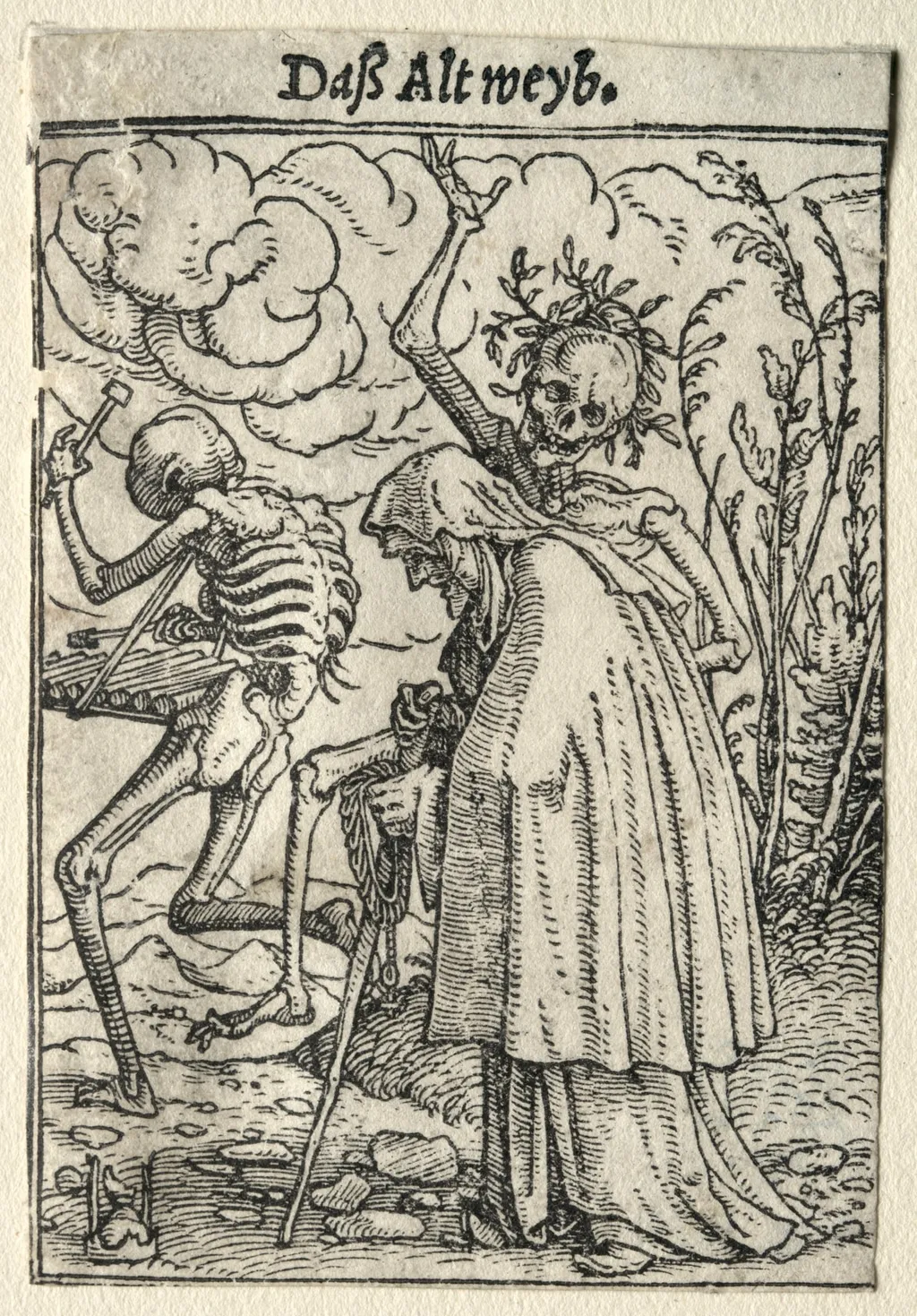
Dance of Death: The Old Woman is a print by the Renaissance artist Hans Holbein the Younger. It dates from 1526 and is held in the collection of the Cleveland Museum of Art.
About this work
Overview
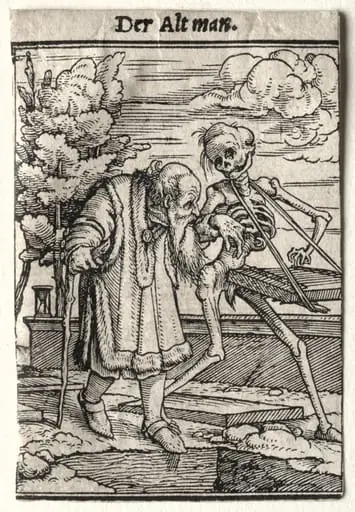
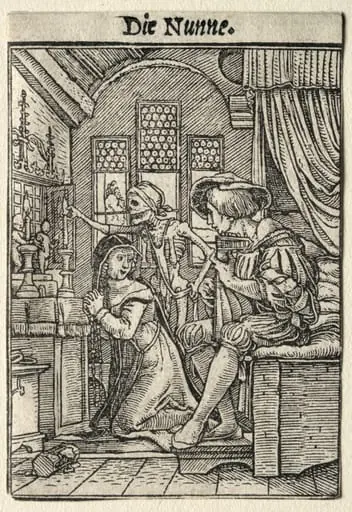
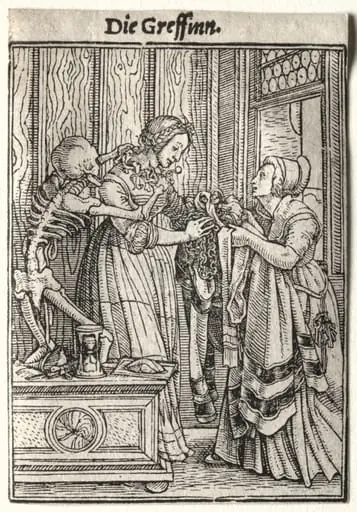
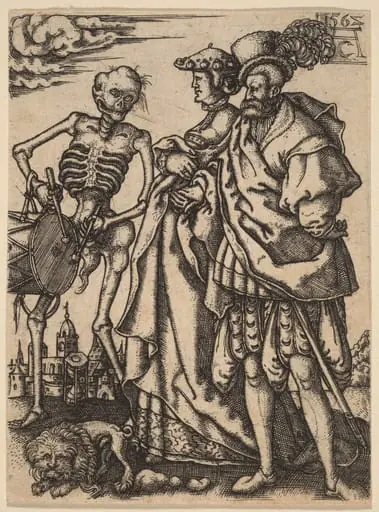
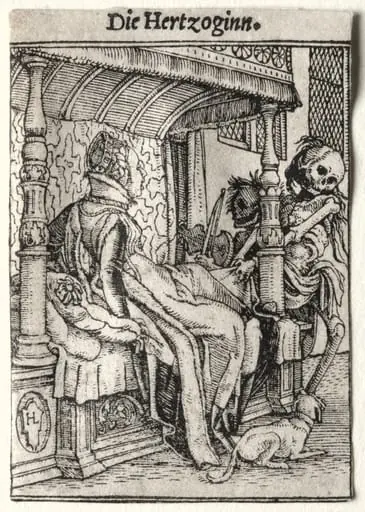
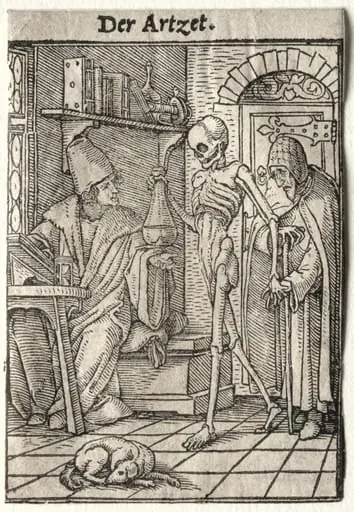
Dance of Death: The Old Woman is a print created by Hans Holbein the Younger around 1526, exemplifying the Northern Renaissance style. It is one part of a larger series, Dance of Death, which uniformly portrays skeletal figures escorting individuals from all walks of life towards their demise.
Subject & Meaning
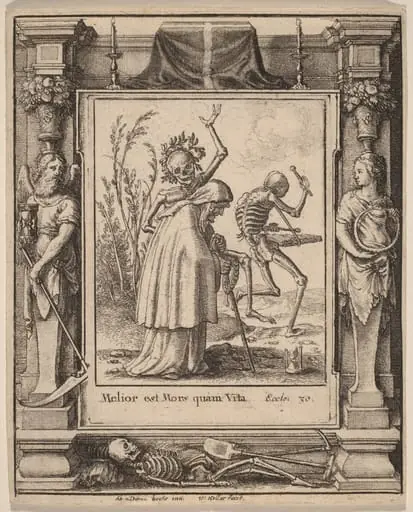
The print depicts a skeleton gently guiding an elderly woman, symbolizing the inevitability of death across all ages and social statuses. The serene yet ominous interaction underscores the universal reach of mortality.
Technique & Style
Executed in black-and-white, the print utilizes simple, expressive lines to achieve a contrasting atmosphere of eeriness and calm. The dreamy background of trees and clouds enhances the poignant encounter between the living and the dead.
History & Provenance
Created circa 1526 by Hans Holbein the Younger, a renowned German-Swiss painter and printmaker of the Northern Renaissance, known for his versatility in portraits, religious works, satire, and design.
Context
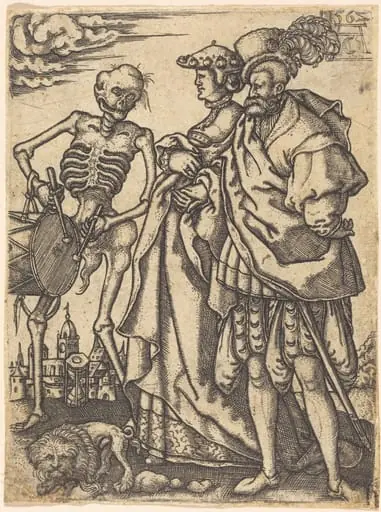
The Dance of Death series aligns with Renaissance themes exploring mortality and the equalizing force of death. This motif was common in 16th-century art, serving as a reminder of life’s transience.
Legacy
As part of Holbein’s acclaimed Dance of Death series, The Old Woman contributes to the artist’s lasting influence on Northern Renaissance art, particularly in the depiction of mortality themes with nuanced emotional depth.
Artist & collection
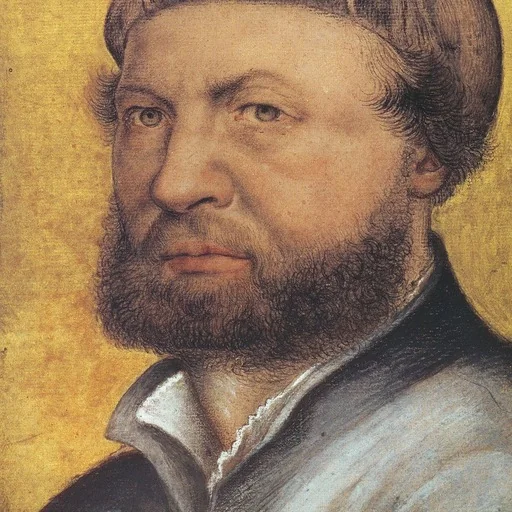
Artist
Hans Holbein the Younger (UK: HOL-byne, US: HOHL-byne, HAWL-; German: Hans Holbein der Jüngere; c.