Artwork
Melencolia I
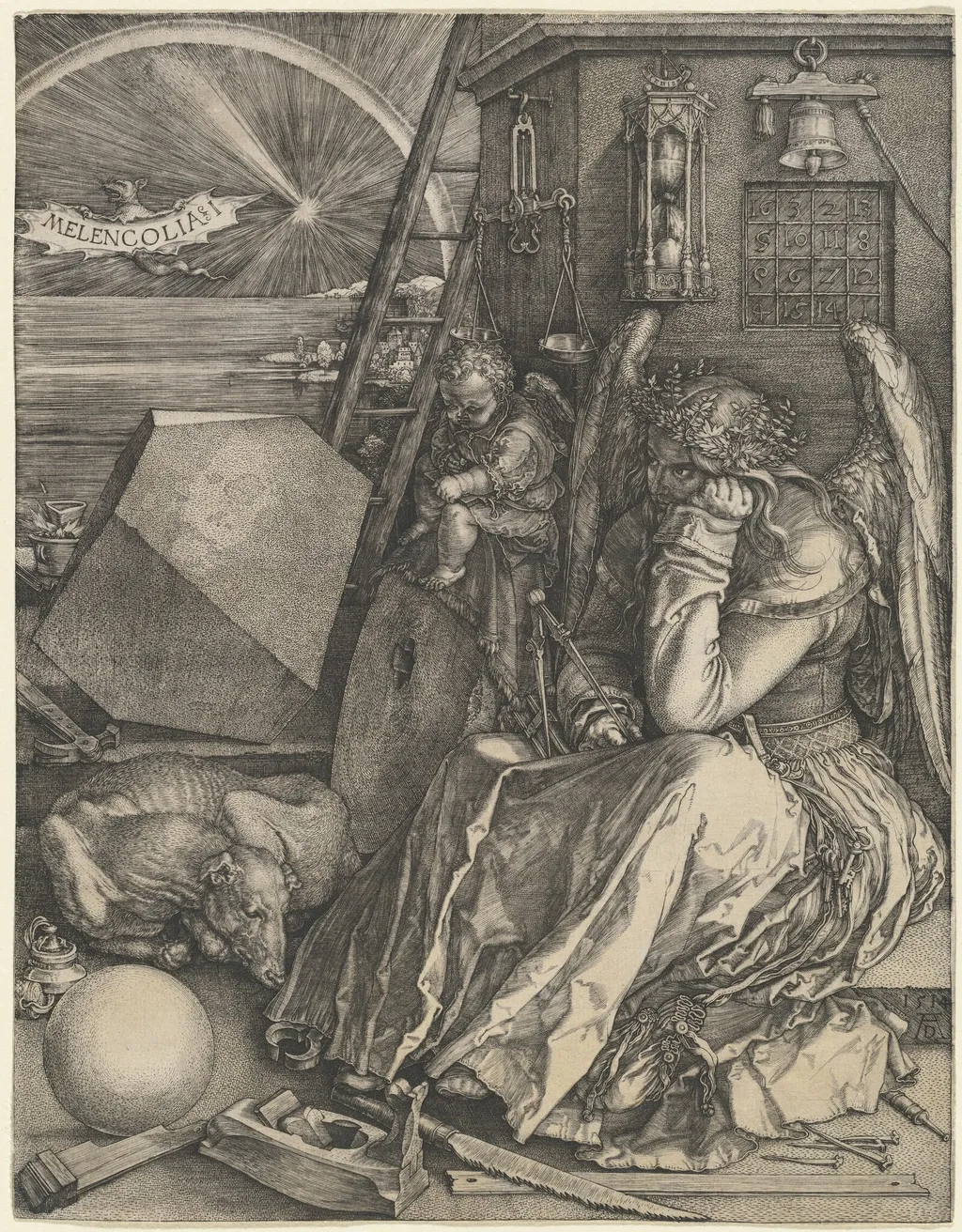
Melencolia I is an ink print by the Northern Renaissance artist Albrecht Dürer. It dates from 1514 and is held in the collection of the Princeton Art Museum.
About this work
Overview
Albrecht Dürer’s 1514 engraving, Melencolia I, presents a complex tableau on a sheet of laid paper. At its centre sits a winged female figure, her posture contemplative as she rests her hand on her head. Around her, a dense assortment of objects—tools, scientific instruments, and symbolic motifs—fills the space, creating a scene that intertwines artistic craft with intellectual inquiry.
Subject & Meaning
The surrounding implements—ranging from carpentry tools to alchemical symbols—serve as visual metaphors for the burdens and aspirations of learned endeavor.
The central figure is commonly interpreted as an embodiment of melancholy, a mood linked in Renaissance thought to the intellectual temperament. Her gaze drifts beyond the immediate clutter, suggesting a yearning or frustration that accompanies scholarly pursuits. The surrounding implements—ranging from carpentry tools to alchemical symbols—serve as visual metaphors for the burdens and aspirations of learned endeavor.
Technique & Style
Executed as an engraving, Dürer employed fine incised lines to achieve intricate detail and tonal variation. The medium allows for precise rendering of textures, from the smoothness of metal tools to the delicate feathering of the winged figure’s attire. The composition balances dense foreground elements with a more open background, guiding the eye through layers of symbolic content.
History & Provenance
Created in the early sixteenth century, Melencolia I quickly entered the circulation of prints that spread Dürer’s reputation across Europe. Original impressions survive in several major collections, including the British Museum and the Albertina, reflecting the work’s early popularity and its role in disseminating Renaissance ideas through reproducible media.
Context & Legacy
The engraving reflects contemporary debates about the relationship between art, science, and emotion, echoing the period’s fascination with the four humors and the notion of the melancholic genius. Its intricate symbolism influenced later artists and scholars, who have examined the piece for insights into Renaissance epistemology and the visual language of intellectual struggle.
Artist & collection
Artist
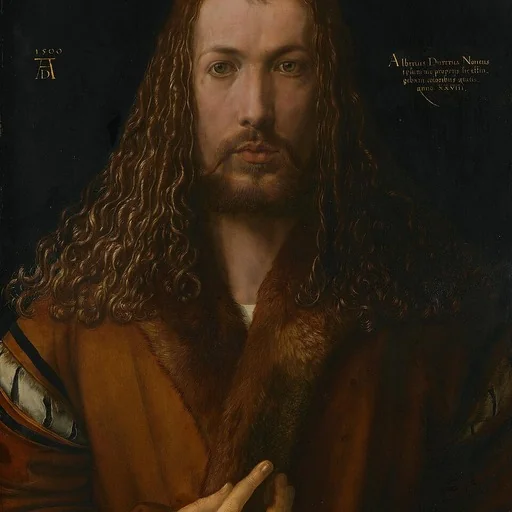
Albrecht Dürer spent his life in Nuremberg, a busy German city where artists traded prints like currency.

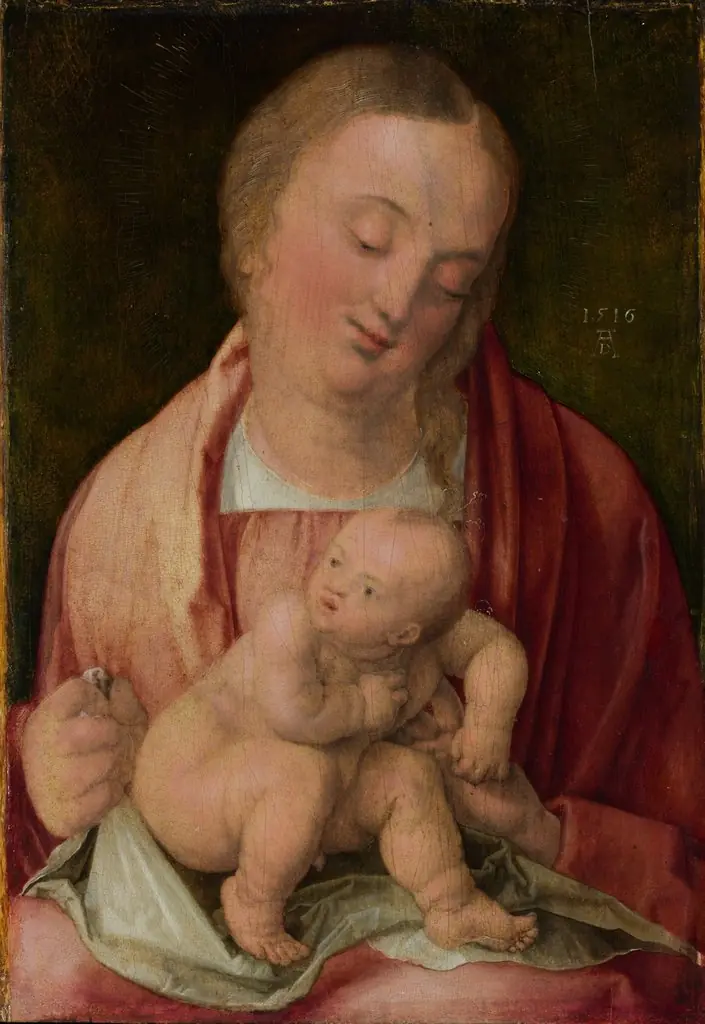
![Madonna and Child [obverse], by Albrecht Dürer](https://artifactworldgallery.com/img/albrecht-durer--madonna-and-child-obverse--d7b8ebf05d22ebe5-w320.webp)
![Lot and His Daughters [reverse], by Albrecht Dürer](https://artifactworldgallery.com/img/albrecht-durer--lot-and-his-daughters-reverse--b4ebf9b282faa17a-w320.webp)