Artwork
Satan Bound for a Thousand Years
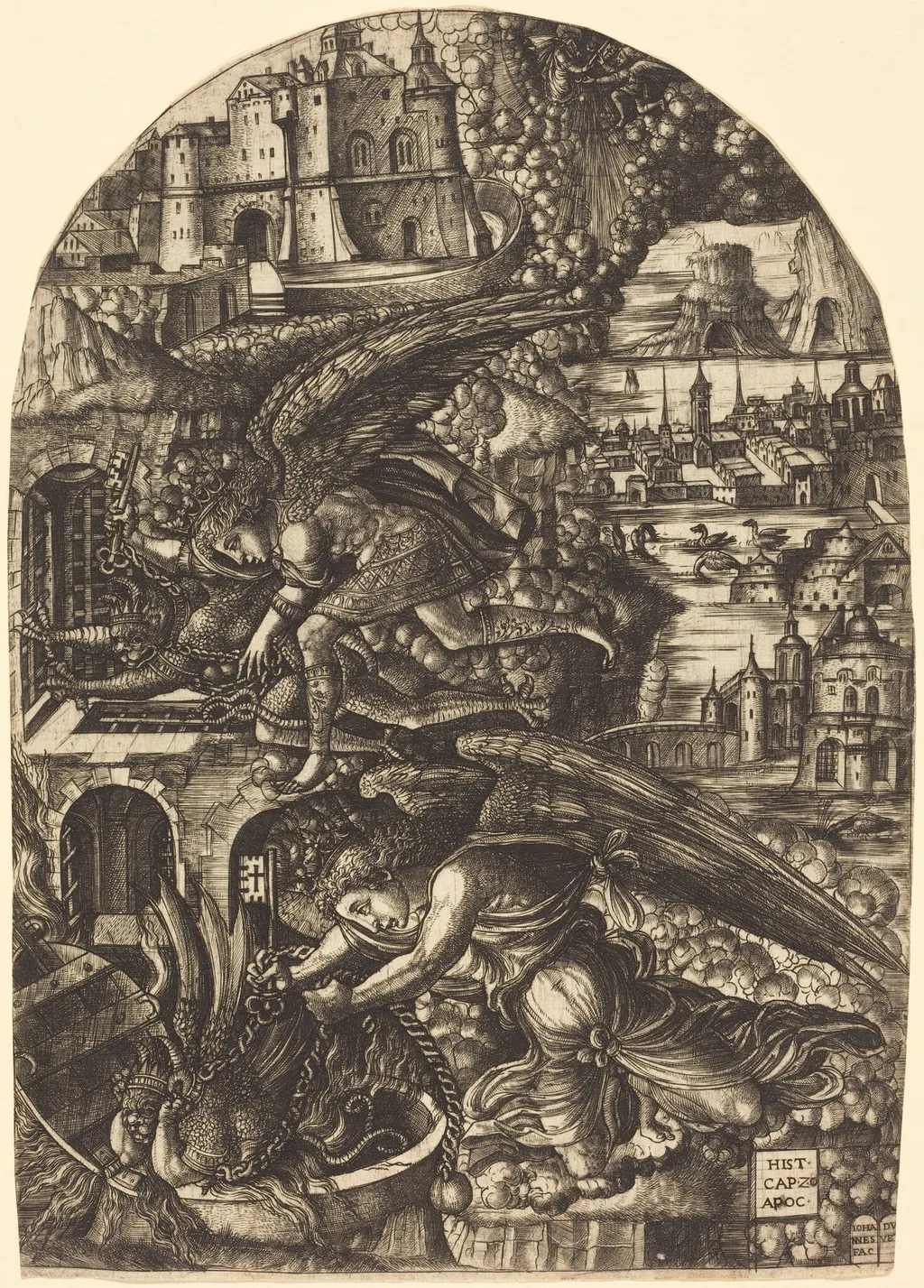
Satan Bound for a Thousand Years is an ink print by the Renaissance artist Jean Duvet. It dates from 1551 and is held in the collection of the National Gallery of Art.
About this work
Overview
Satan Bound for a Thousand Years is a 1551 engraving on laid paper by Jean Duvet, a pioneering French Renaissance goldsmith and printmaker. Characterized by dense composition and intense religious subject matter, the work exemplifies Duvet’s distinctive style within 16th-century French art.
Subject & Meaning
The engraving depicts a chaotic scene illustrating a passage from the Book of Revelation (referenced as *Hist. Cap. Zo Apoc.* at the bottom). A giant, winged figure (Satan) is dragged down by chains amidst floating figures, buildings, and a cityscape, rich in symbolic detail to convey the narrative of Satan’s binding.
Technique & Style
Duvet’s engraving showcases sharp, busy lines and swirling movement, with meticulous attention to tiny details. This busy, naive, and expressive style, marked by freedom and immediacy, distinguishes his work from conventional Renaissance printmaking.
History & Provenance
Created in 1551, *Satan Bound for a Thousand Years* is part of Duvet’s oeuvre of approximately 73 plates. As the first significant French printmaker, Duvet’s influence and the piece’s provenance are not detailed here due to limited information.
Context
This work reflects Duvet’s personal artistic voice within the broader landscape of 16th-century French art, notable for its religious themes and unique stylistic approach compared to his contemporaries.
Legacy
Duvet’s innovative printmaking style, as seen in *Satan Bound for a Thousand Years*, has drawn comparisons to later artists like William Blake, highlighting his enduring influence on the freedom and immediacy in artistic expression.
Artist & collection

Artist
Jean Duvet (1485 – after 1562) was a French Renaissance goldsmith and engraver, now best known for his engravings.

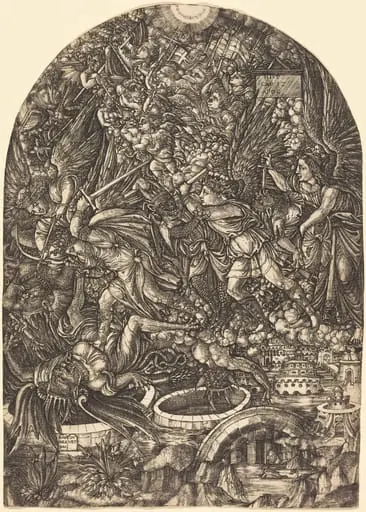 Saint Michael and the Dragon
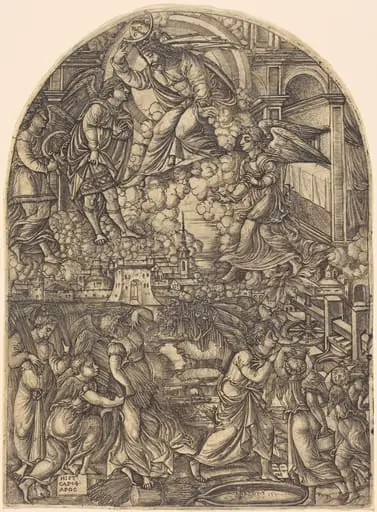
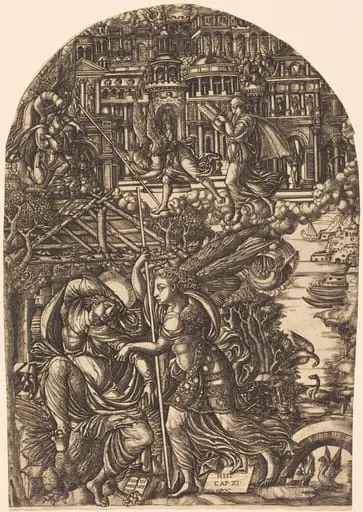 The Angel Shows Saint John the New Jerusalem
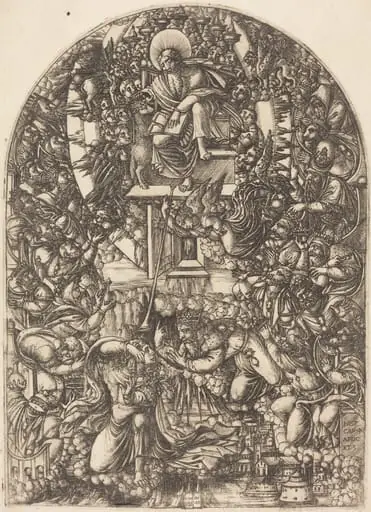 Saint John Summoned to Heaven
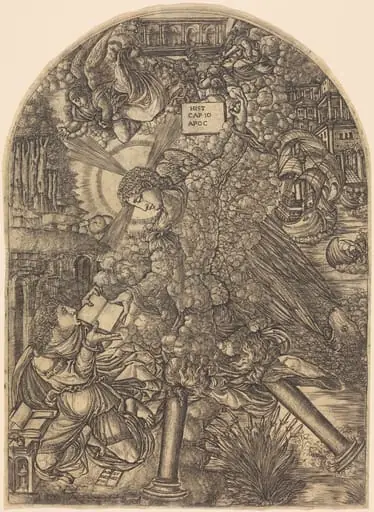 The Angel Gives Saint John the Book to Eat
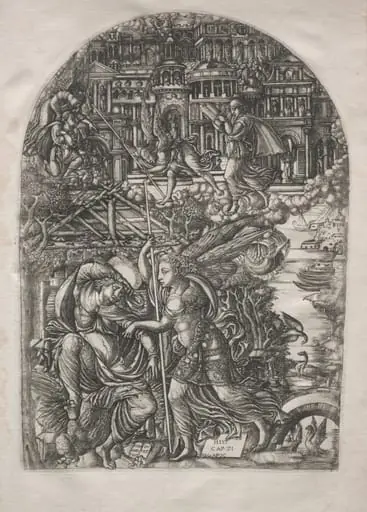 The Apocalypse: The Angel Shows St. John the New Jerusalem
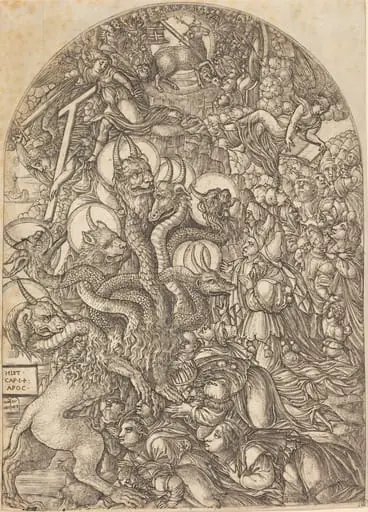
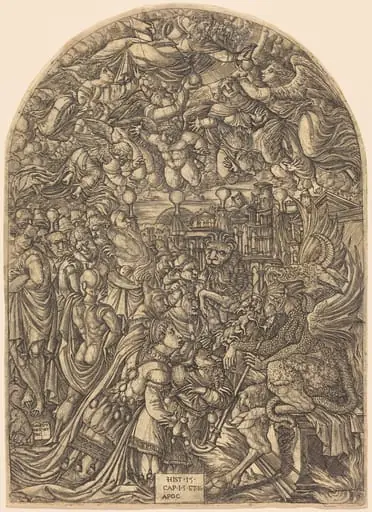 The Dragon and the Beast
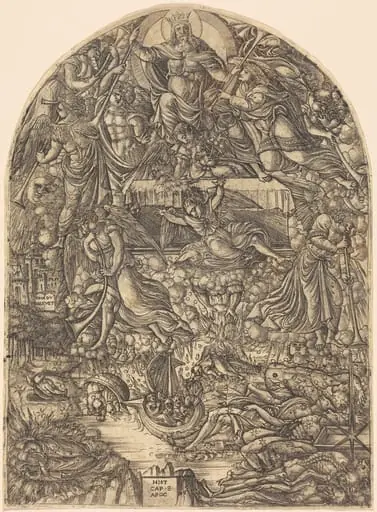 The Opening of the Seventh Seal
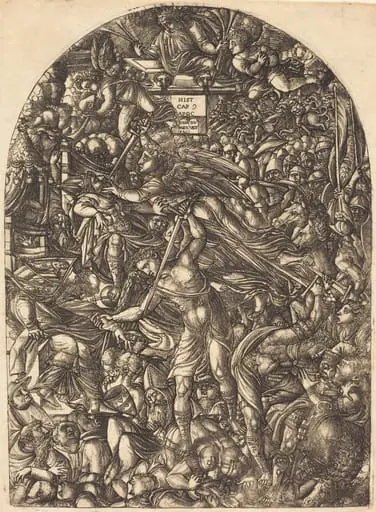 The Angel Sounding the Sixth Trumpet
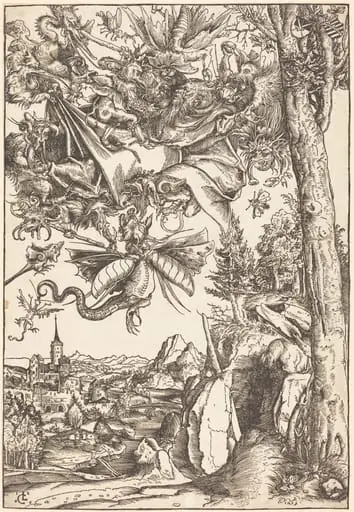 The Temptation of Saint Anthony
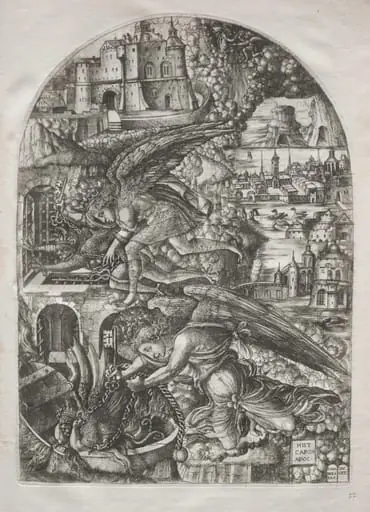 The Apocalypse: Satan Bound for a Thousand Years