Artwork
The Vision of St. Francis
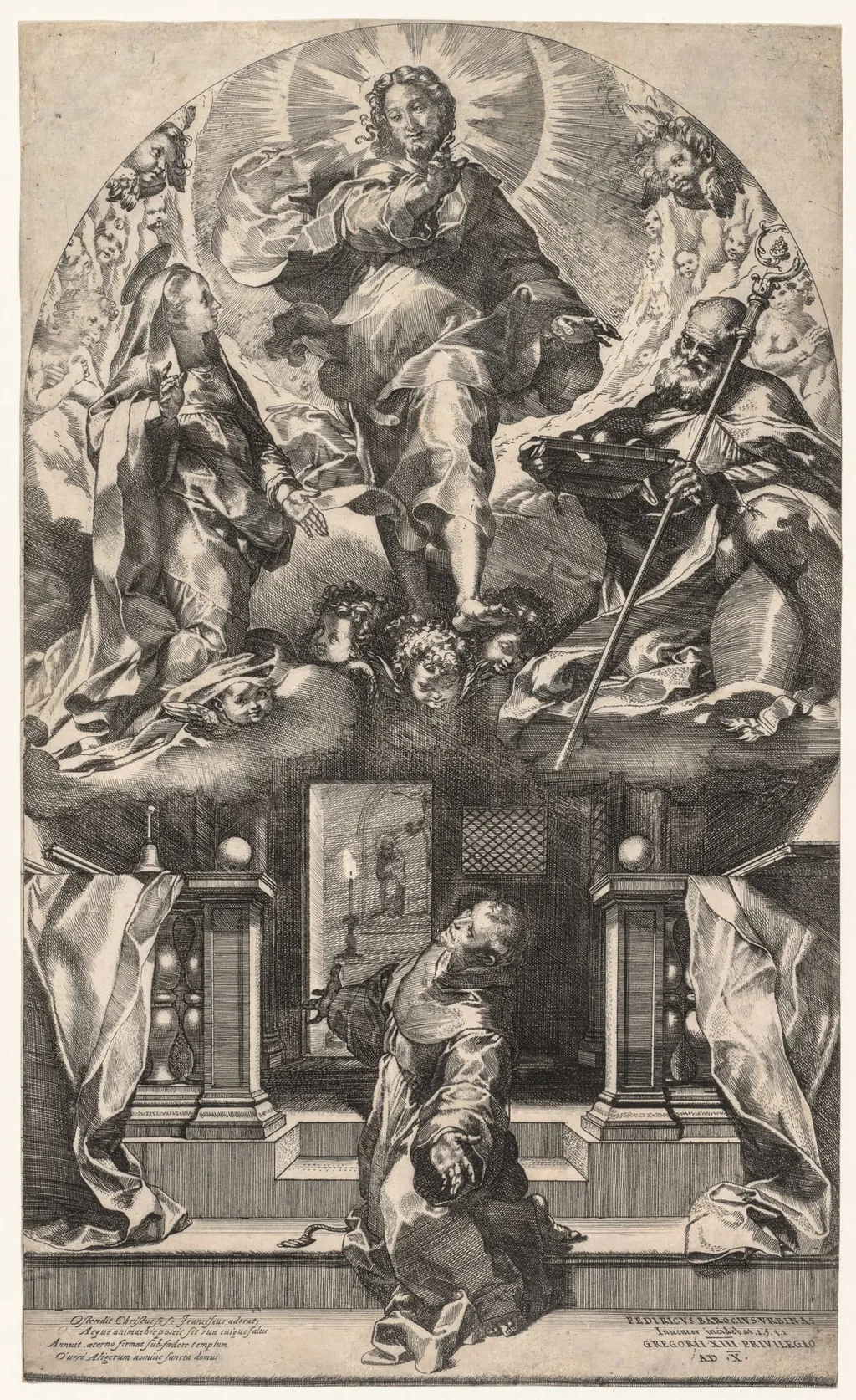
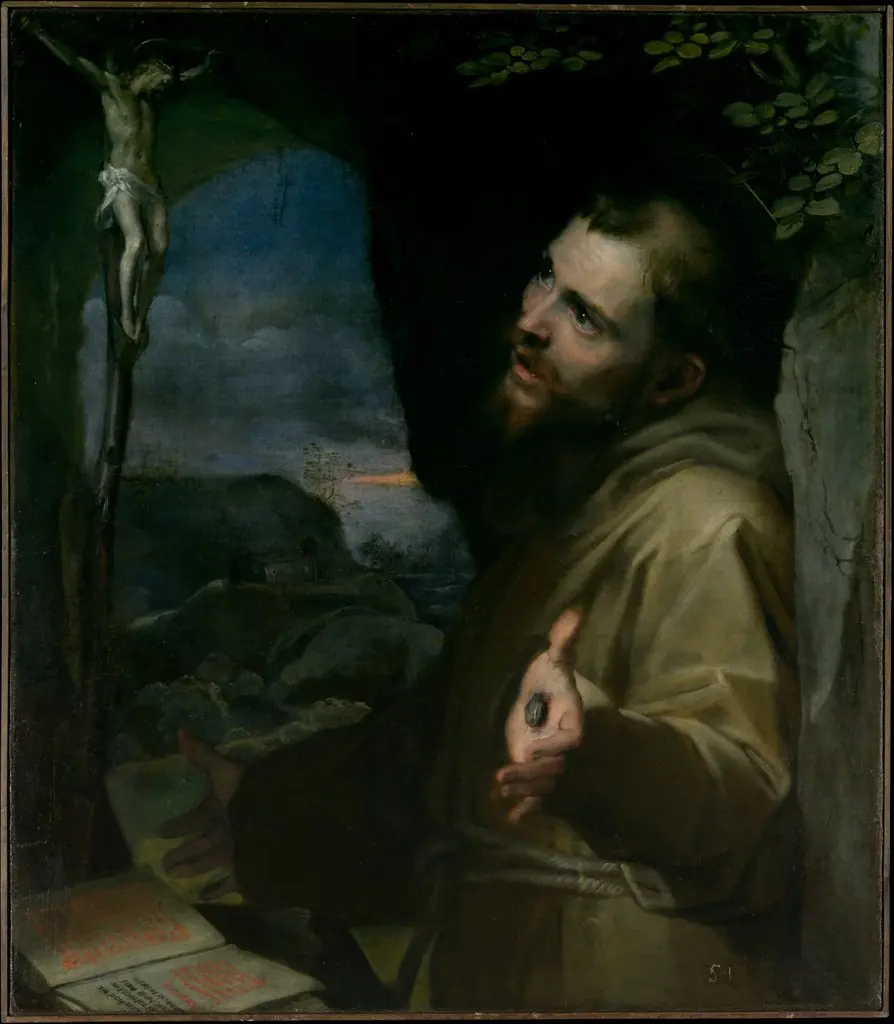
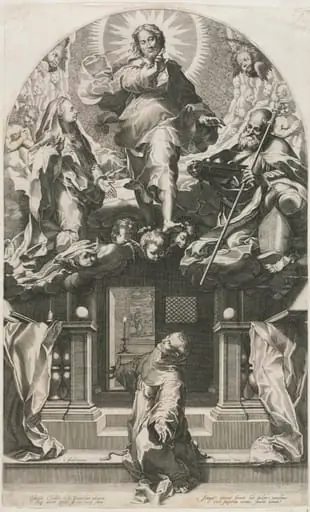
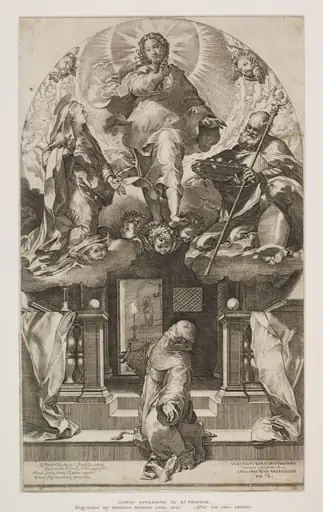
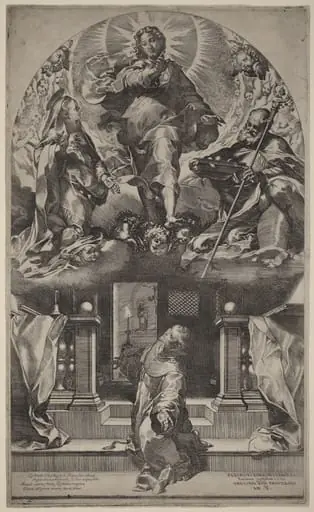
The Vision of St. Francis is a print by the Renaissance artist Federico Barocci. It dates from 1581 and is held in the collection of the Cleveland Museum of Art.
About this work
Overview
Barocci, a central Italian artist known for his emotional intensity and technical precision, worked at the transition between Renaissance and Baroque styles.
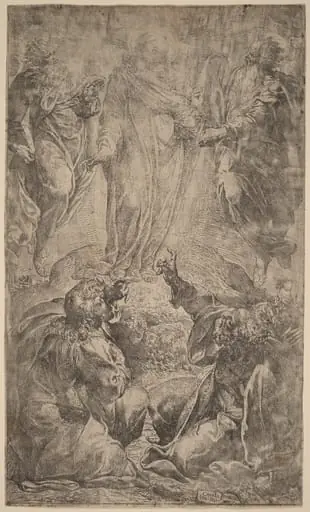
Created in 1581 by Federico Barocci, this print captures a moment of divine encounter involving St. Francis of Assisi. Barocci, a central Italian artist known for his emotional intensity and technical precision, worked at the transition between Renaissance and Baroque styles. The composition emphasizes spiritual revelation through controlled contrasts of light and shadow, a hallmark of his approach to sacred subjects.
Subject & Meaning
The scene portrays St. Francis kneeling in prayer as a celestial figure, likely Christ or an angel, hovers above, radiating light. Surrounding figures include two elderly men holding a lute and a staff with a book, possibly representing earthly witnesses or symbolic guardians of music and scripture. The vision suggests divine favor and the sanctity of Francis’s devotion, reinforcing the Franciscan ideal of humility before the sacred.
Technique & Style
Barocci employs chiaroscuro to heighten the drama of the vision, using stark contrasts between the luminous celestial form and the dimly lit earthly figures. Delicate linework defines robes and facial expressions, while the background’s architectural elements—columns and a small wall painting—anchor the scene in a tangible space. The interplay of light and shadow guides the viewer’s focus toward the central spiritual moment.
History & Provenance
The print was produced during Barocci’s mature period, when his religious works were widely admired in papal and monastic circles. Though originally conceived as a painting, this print version likely served to disseminate his imagery more broadly. Its survival reflects the demand for devotional imagery in Counter-Reformation Italy, where visual piety played a key role in religious life.
Context
Made during the height of the Catholic Reformation, the image aligns with efforts to renew spiritual focus through emotionally resonant art. Barocci’s depiction of St. Francis echoes contemporary reforms emphasizing personal devotion and mystical experience. The inclusion of musical instruments may allude to the harmony of divine order, a theme favored in Franciscan spirituality and Counter-Reformation theology.
Legacy
Barocci’s treatment of sacred vision influenced later Baroque artists through his integration of psychological depth and dynamic lighting. While not as widely reproduced as some contemporaries, this print exemplifies his role in shaping devotional imagery that prioritized emotional authenticity over idealized form. His approach helped transition religious art toward greater narrative immediacy.
Artist & collection
Artist
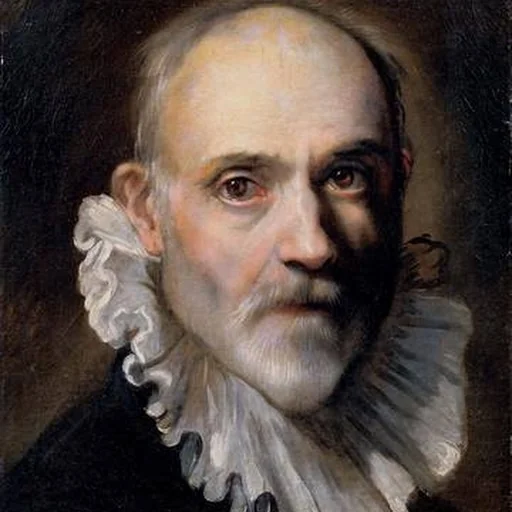
Federico Barocci (also written Barozzi) (c. 1535 – 30 September 1612) was an Italian Renaissance painter and printmaker. His original name was Federico Fiori, and he was nicknamed Il Baroccio. His work was highly…