Artwork
Pilate Washing His Hands
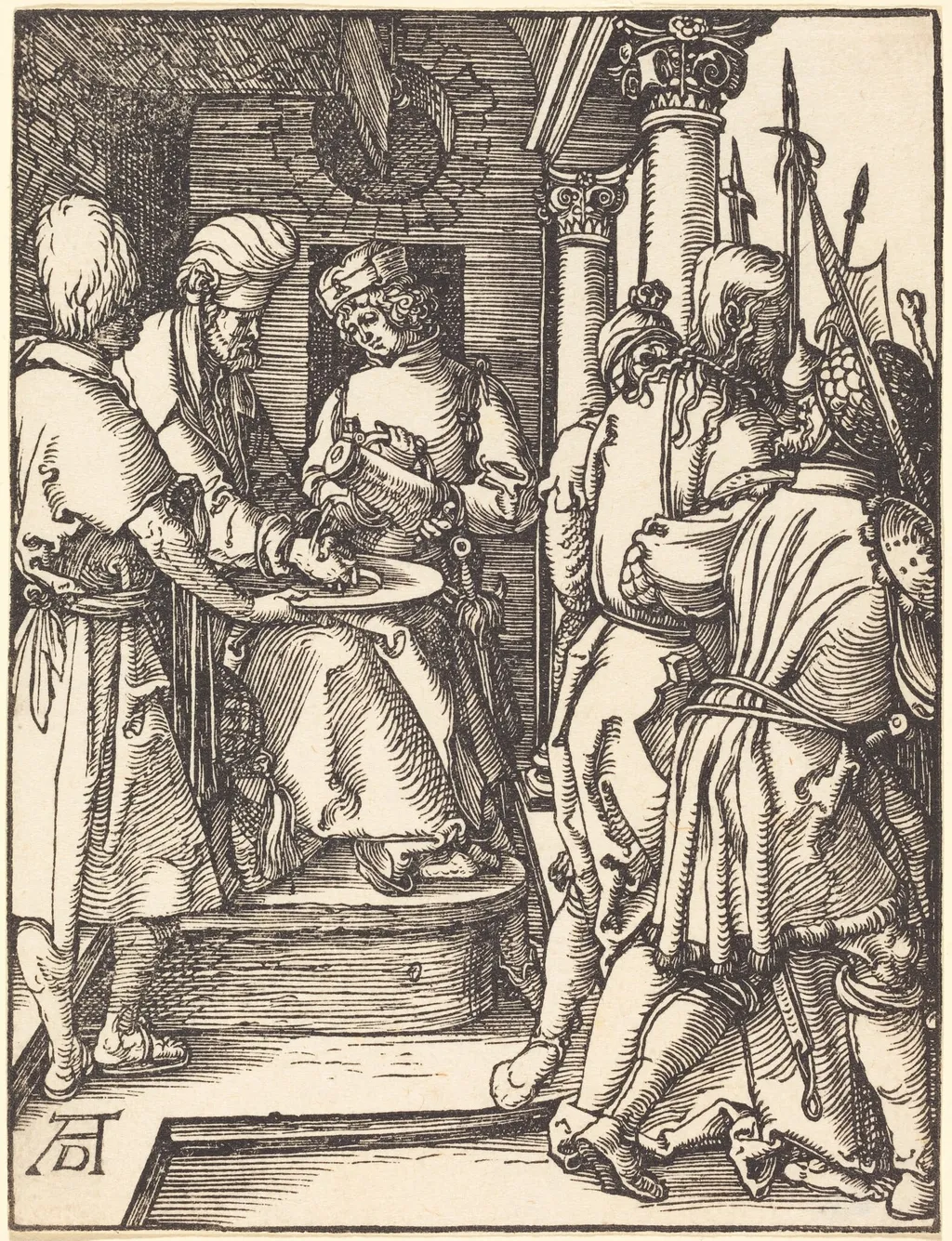
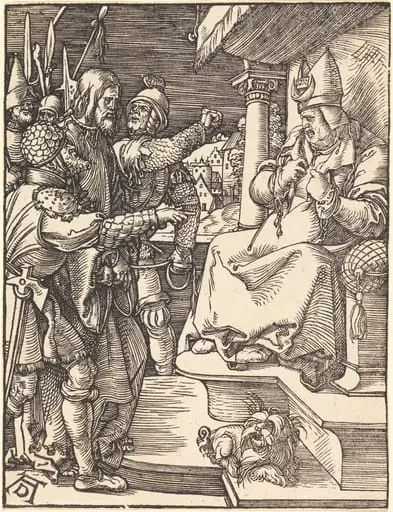
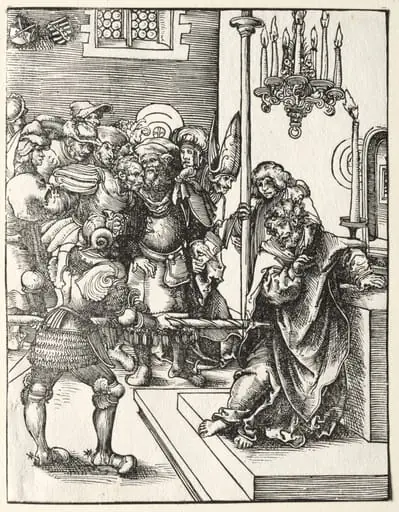
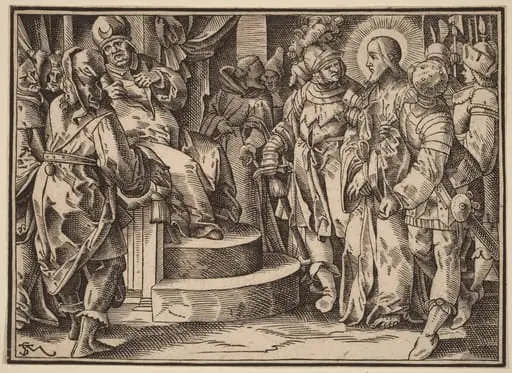
Pilate Washing His Hands is an ink print by the Northern Renaissance artist Albrecht Dürer. It dates from 1510 and is held in the collection of the National Gallery of Art.
About this work
Overview
Albrecht Dürer’s woodcut *Pilate Washing His Hands*, executed around 1510, presents a compact scene of the biblical moment when Pontius Pilate attempts to absolve himself of responsibility for Jesus’ fate. Rendered in black and white on laid paper, the image measures roughly 12 by 7 inches, concentrating the narrative within a modest format.
Subject & Meaning
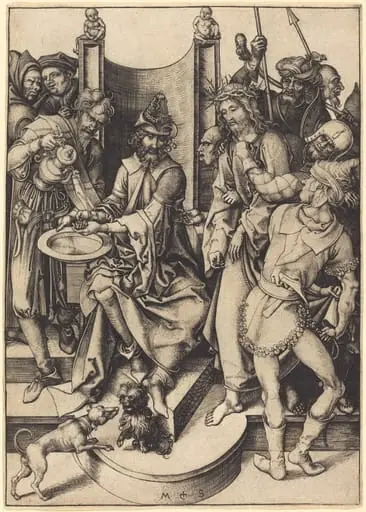
The composition shows Pilate, his expression troubled, gesturing toward an assembled crowd while a servant pours water over his hands. Behind Pilate, a bound figure identified as Jesus stands, awaiting his destiny. The juxtaposition of the official’s ritual cleansing and the condemned’s silent presence underscores themes of guilt, denial, and the transfer of culpability.
Technique & Style
Dürer employs his characteristic fine line work to model shadows and facial features, achieving a sense of three‑dimensionality despite the monochrome medium. The delicate hatching creates depth, while the careful arrangement of figures conveys tension. The print’s precise incisions reflect the high technical standards of German Renaissance engraving.
History & Provenance
Created during the height of the German Renaissance, the woodcut was part of Dürer’s broader engagement with religious subjects for a growing market of print collectors. Original impressions survive in several European museum collections, confirming its circulation among early 16th‑century patrons and its preservation as a representative work of Dürer’s print oeuvre.
Artist & collection
Artist
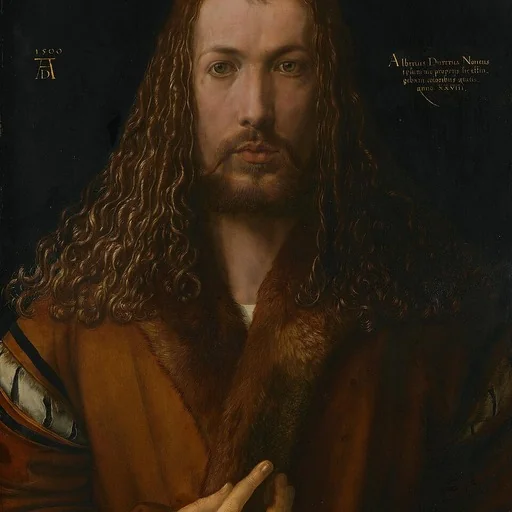
Albrecht Dürer spent his life in Nuremberg, a busy German city where artists traded prints like currency.

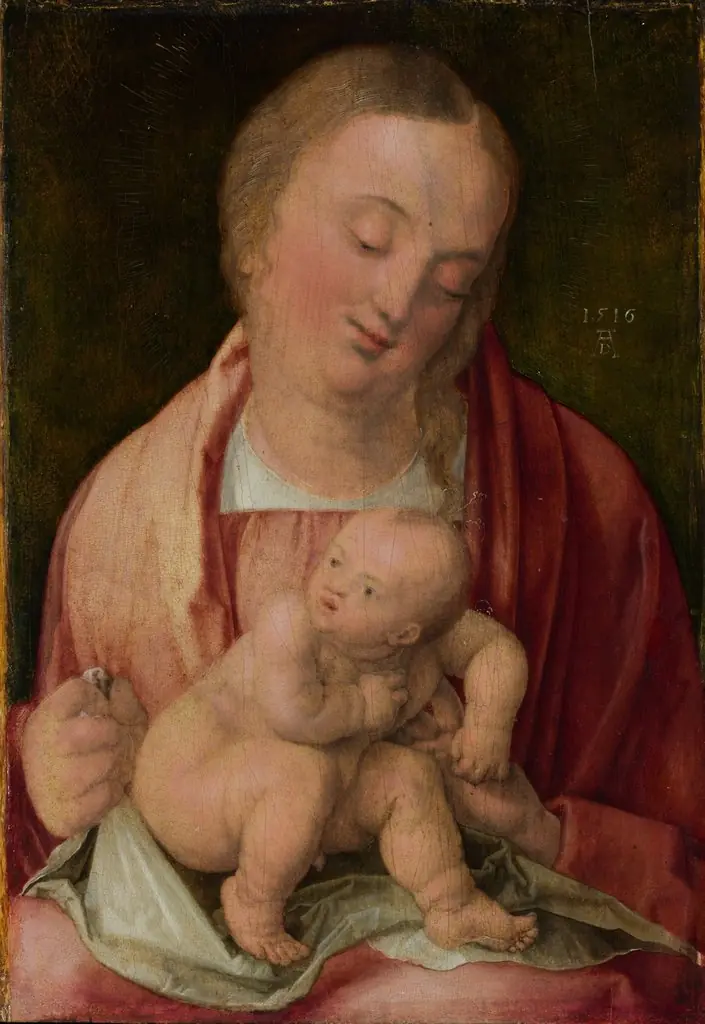
![Madonna and Child [obverse], by Albrecht Dürer](https://artifactworldgallery.com/img/albrecht-durer--madonna-and-child-obverse--d7b8ebf05d22ebe5-w320.webp)
![Lot and His Daughters [reverse], by Albrecht Dürer](https://artifactworldgallery.com/img/albrecht-durer--lot-and-his-daughters-reverse--b4ebf9b282faa17a-w320.webp)