Artwork
The Holy Kinship
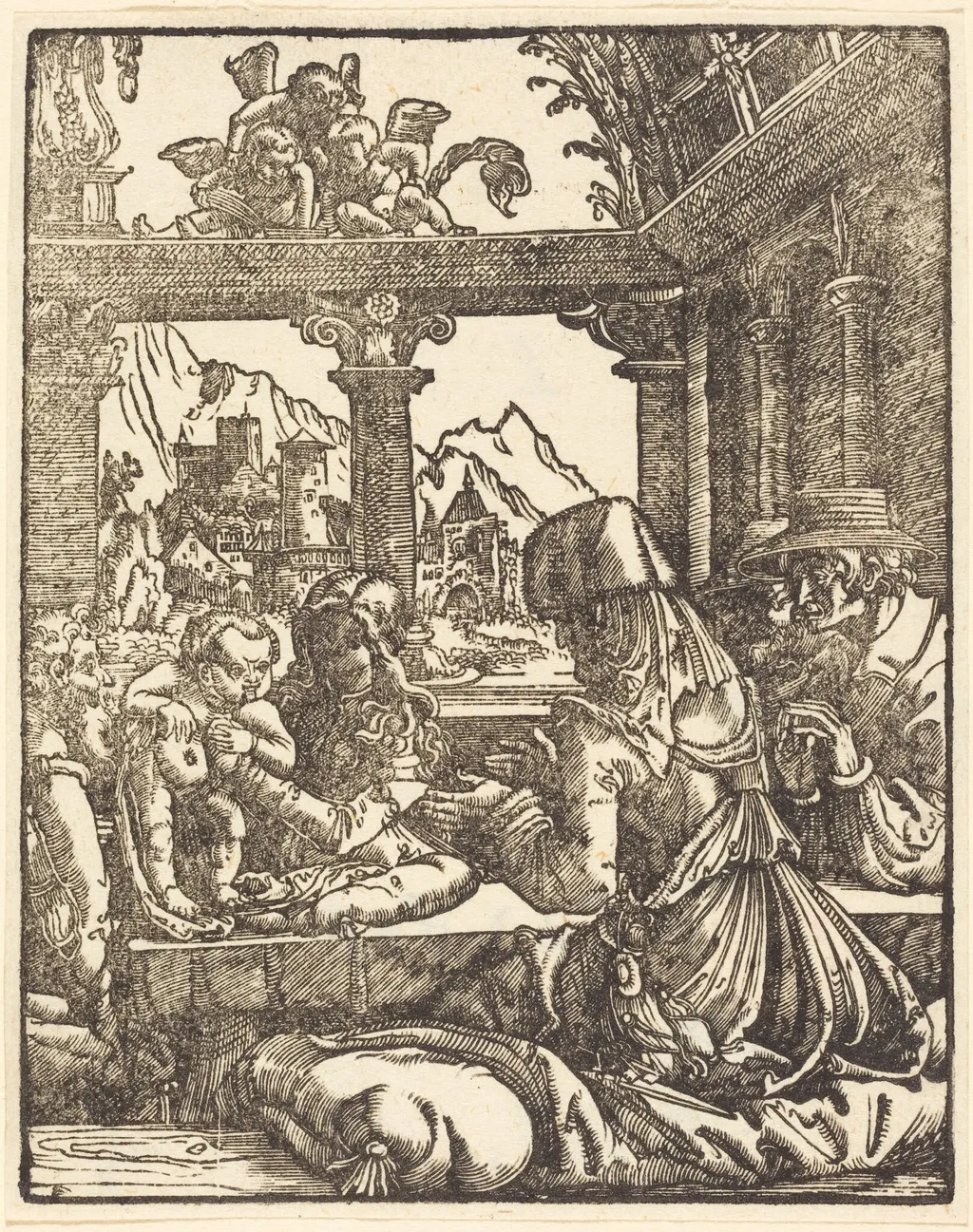
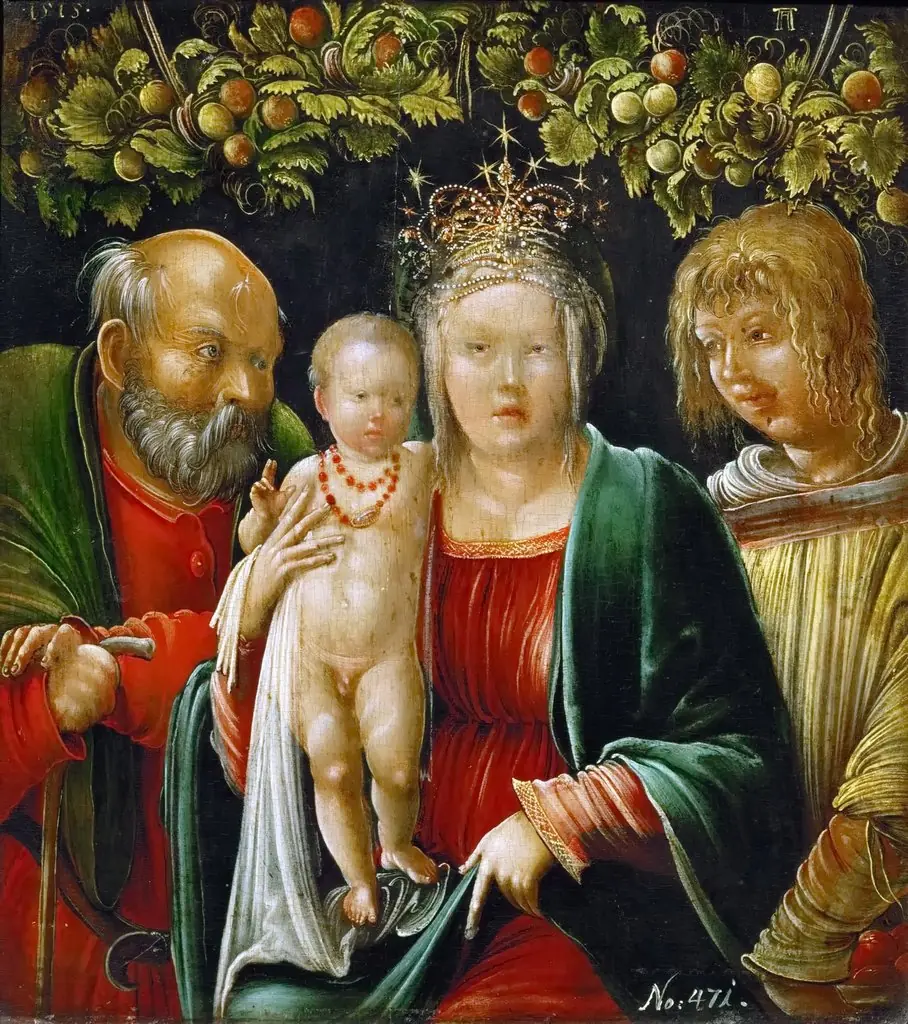
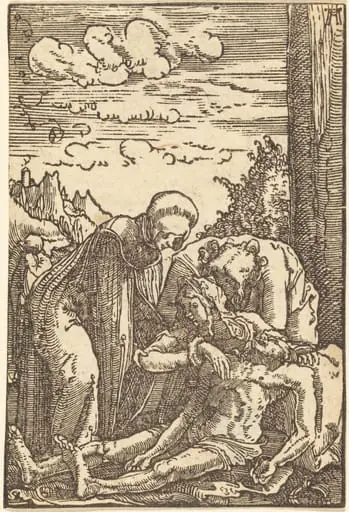
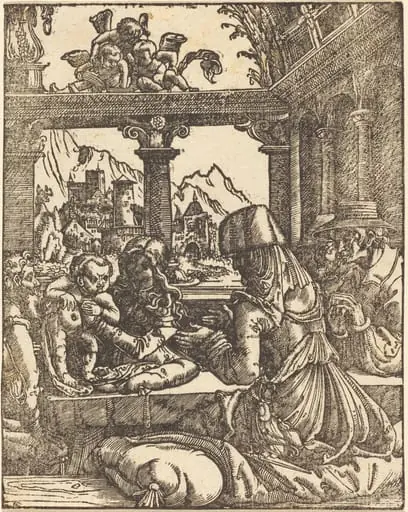
The Holy Kinship is an ink print by the Renaissance artist Albrecht Altdorfer. It dates from 1520 and is held in the collection of the National Gallery of Art.
About this work
Overview
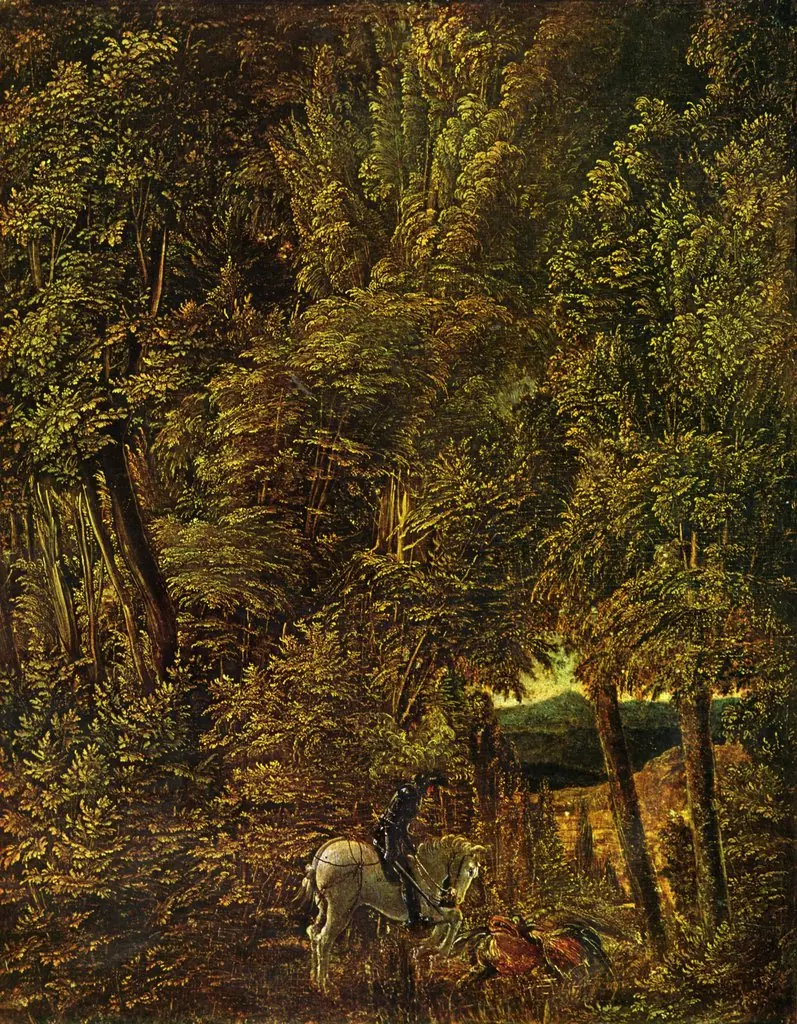
As a key member of the Danube School, Altdorfer elevated landscape beyond mere setting, integrating it as an active element in religious narratives.
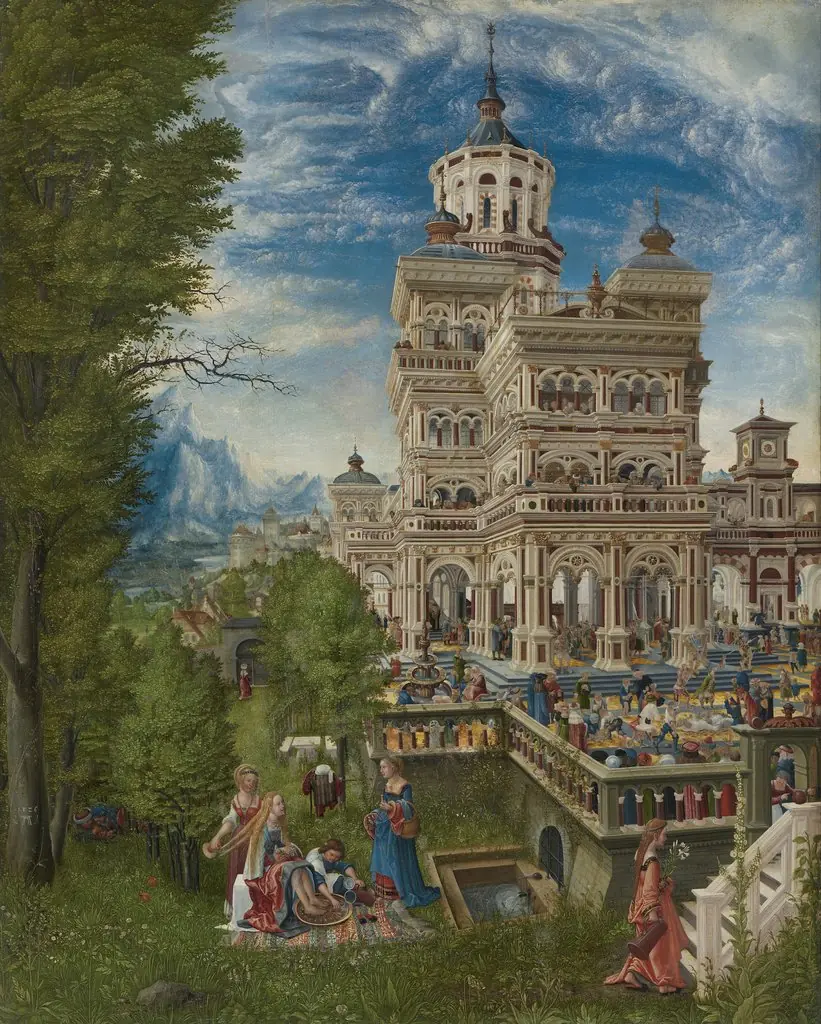
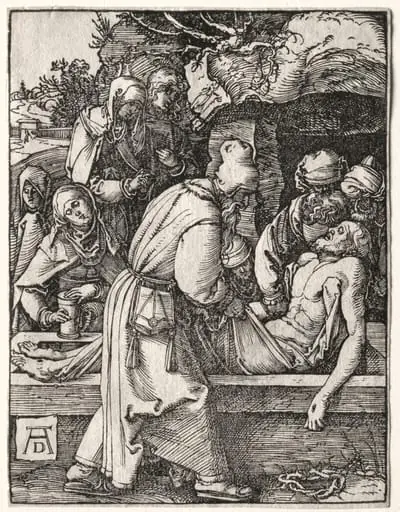
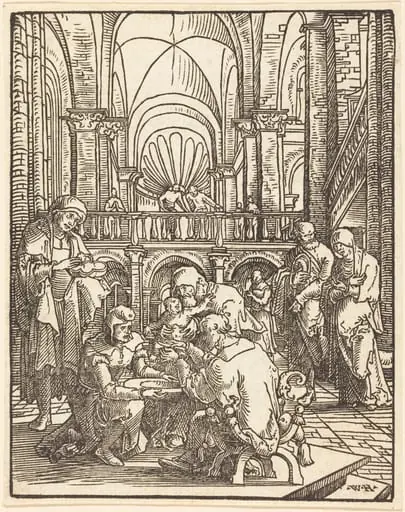
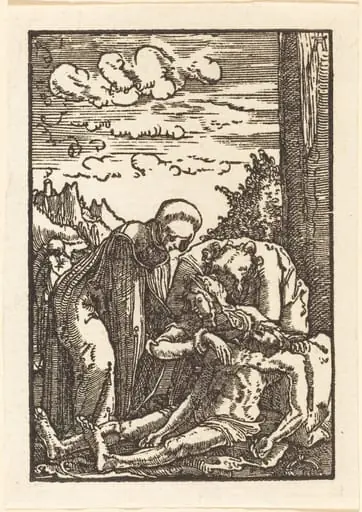
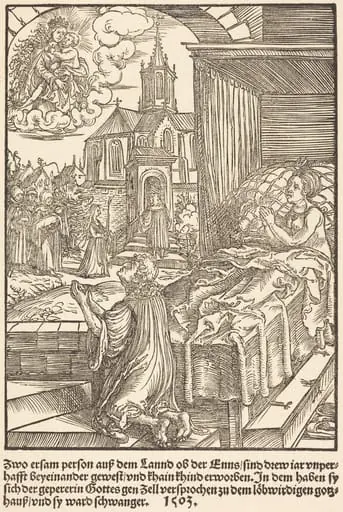
Created in 1520, *The Holy Kinship* is a woodcut by Albrecht Altdorfer, a German artist based in Regensburg. As a key member of the Danube School, Altdorfer elevated landscape beyond mere setting, integrating it as an active element in religious narratives. This print exemplifies his skill in fine-line carving and dense composition, producing a small-scale work rich in detail and emotional resonance.
Subject & Meaning
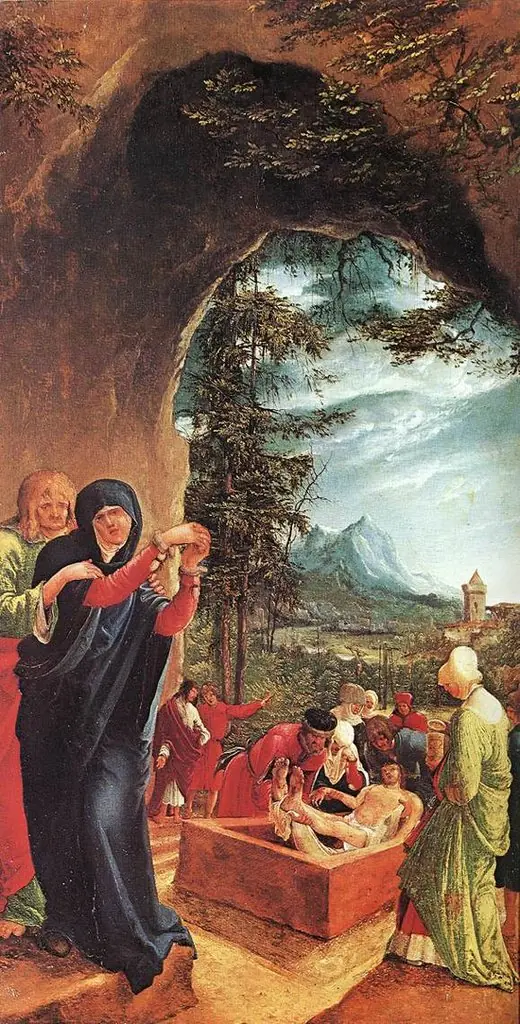
The scene depicts the extended family of the Virgin Mary, known as the Holy Kinship, gathered in a rocky, intimate space. Figures in flowing garments interact with quiet solemnity—some gazing upward, others downward—as if in contemplation or shared reverence. The composition suggests a moment of familial and spiritual connection, rooted in late medieval devotional traditions that emphasized Christ’s earthly lineage.
Technique & Style
Altdorfer employed woodcut technique with exceptional precision, carving fine lines to render texture in clothing, rock, and architecture. The print’s small size belies its complexity: towers, river, and foliage are rendered with meticulous detail. His use of dense, interwoven forms and subtle tonal contrasts reflects both the influence of Nuremberg’s Little Masters and his own innovative approach to narrative compression.
History & Provenance
Produced during Altdorfer’s mature period in Regensburg, the print was likely made for private devotion or scholarly circulation. Few original impressions survive, and those that do are held in major European collections. Its production coincided with the rise of print culture in the early Reformation, when religious imagery was increasingly disseminated through affordable, portable formats.
Context
In early 16th-century Germany, depictions of the Holy Kinship were popular in southern regions, reflecting local devotional interests in Mary’s ancestry. Altdorfer’s version diverges from conventional iconography by embedding the figures within a naturalistic, almost wilderness-like setting, aligning with broader trends in Danube School art that emphasized atmosphere and emotional depth over doctrinal clarity.
Legacy
Altdorfer’s *The Holy Kinship* contributed to the elevation of printmaking as a medium capable of profound narrative and emotional expression. His integration of landscape as a psychological space influenced later Northern Renaissance artists. Though not widely reproduced in his lifetime, the work remains a touchstone for understanding the intersection of spirituality, nature, and technical innovation in early German printmaking.
Artist & collection
Artist
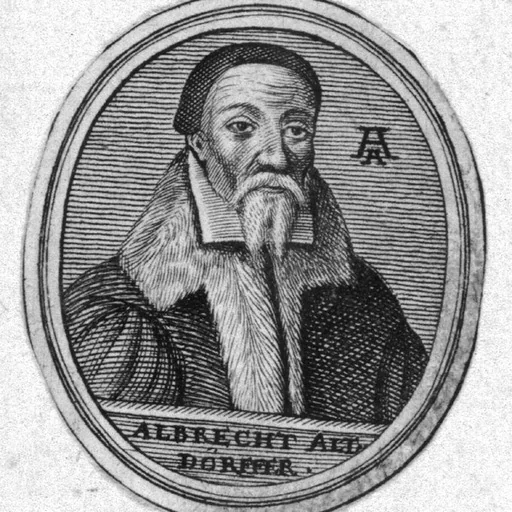
Albrecht Altdorfer (c. 1480 – 12 February 1538) was a German painter, engraver and architect of the Renaissance working in Regensburg. Along with Lucas Cranach the Elder and Wolf Huber he is regarded to be the main…