Artwork
Saint Eustace
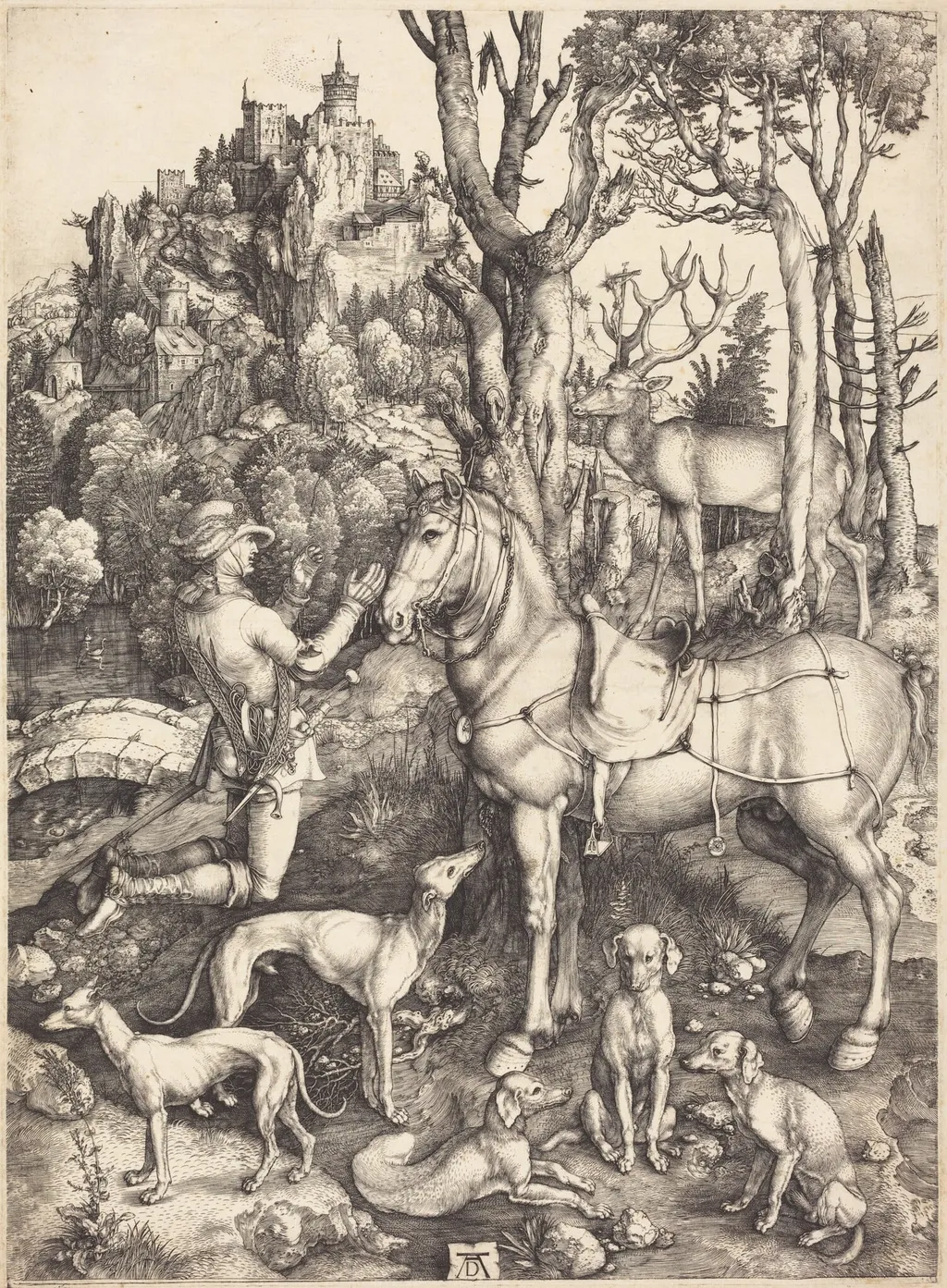
Saint Eustace is an ink print by the Northern Renaissance artist Albrecht Dürer. It dates from 1500 and is held in the collection of the Metropolitan Museum of Art.
About this work
Overview
Part of his broader body of religious prints, the work exemplifies the technical precision and narrative clarity characteristic of his graphic output.
Albrecht Dürer’s *Saint Eustace* is an engraving on laid paper, dated approximately 1500. Part of his broader body of religious prints, the work exemplifies the technical precision and narrative clarity characteristic of his graphic output. Its composition balances figural representation with intricate landscape elements, reflecting the artist’s engagement with both sacred iconography and natural observation.
Subject & Meaning
The engraving portrays the moment of Saint Eustace’s conversion, a legend in which a stag bearing a crucifix between its antlers appears to the Roman general Placidus—later Eustace—while hunting. The scene captures the saint’s sudden spiritual revelation, marked by his kneeling posture and upward gaze. The presence of the cross-laden deer symbolizes divine intervention, reinforcing themes of faith and transformation central to Christian hagiography.
Technique & Style
Dürer’s mastery of engraving is evident in the work’s dense network of fine lines, which model form, texture, and light with remarkable precision. The meticulous detailing of foliage, fur, and armor demonstrates his ability to render both organic and inorganic surfaces through controlled incisions. This approach aligns with the broader aesthetic of the German Renaissance, where clarity of line and spatial depth were prioritized in printmaking.
History & Provenance
Created around the turn of the 16th century, *Saint Eustace* circulated as part of Dürer’s printed oeuvre, reaching collectors and patrons across Europe. Like many of his engravings, it was produced as a standalone work rather than a book illustration, reflecting the growing market for independent prints. Its survival in multiple impressions attests to its popularity and the durability of the medium.
Context
The engraving emerges from a period of heightened interest in religious narratives and naturalistic representation in Northern Europe. Dürer’s engagement with the legend of Saint Eustace—also depicted by other artists—reflects the era’s fascination with saints’ lives as moral exemplars. The work’s detailed landscape further underscores the Renaissance emphasis on empirical observation, even within devotional subjects.
Legacy
As one of Dürer’s most intricate engravings, *Saint Eustace* influenced subsequent generations of printmakers, who admired its technical virtuosity and compositional balance. Its depiction of the conversion scene became a reference point for later artists interpreting the same legend. The print’s enduring appeal lies in its synthesis of religious narrative and naturalistic detail, a hallmark of Dürer’s contribution to Renaissance art.
Own this work as a print
Artist & collection
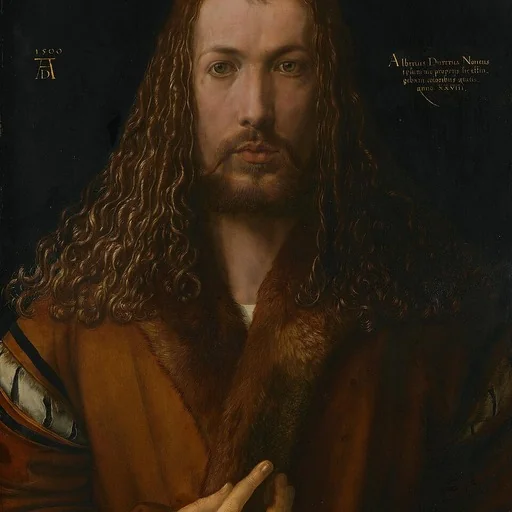
Artist
Albrecht Dürer spent his life in Nuremberg, a busy German city where artists traded prints like currency.

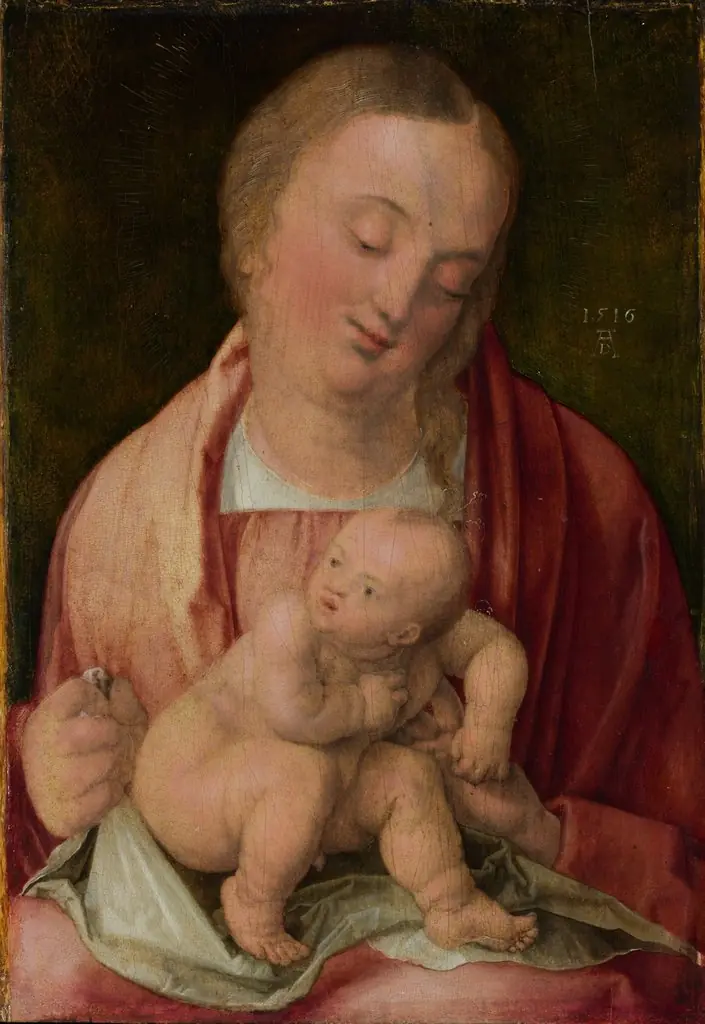
![Madonna and Child [obverse], by Albrecht Dürer](https://artifactworldgallery.com/img/albrecht-durer--madonna-and-child-obverse--d7b8ebf05d22ebe5-w320.webp)
![Lot and His Daughters [reverse], by Albrecht Dürer](https://artifactworldgallery.com/img/albrecht-durer--lot-and-his-daughters-reverse--b4ebf9b282faa17a-w320.webp)
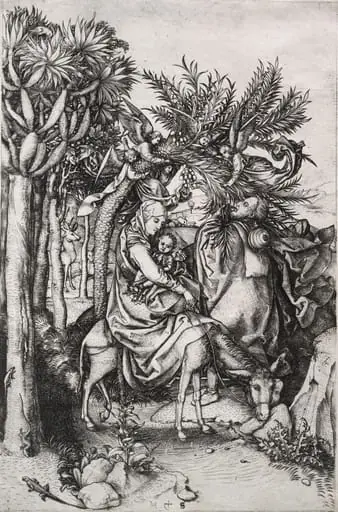 The Flight into Egypt
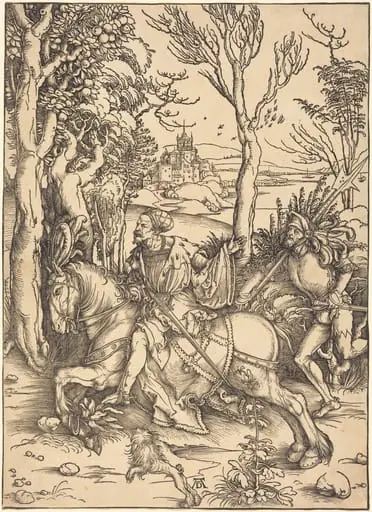 The Knight on Horseback and the Lansquenet
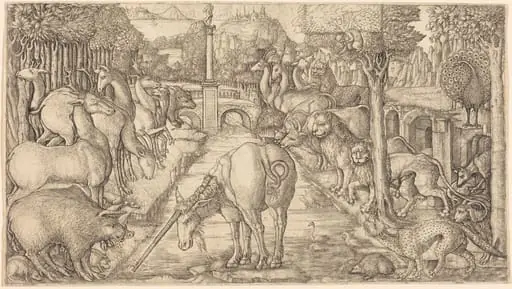 The Unicorn Purifies the Water with Its Horn
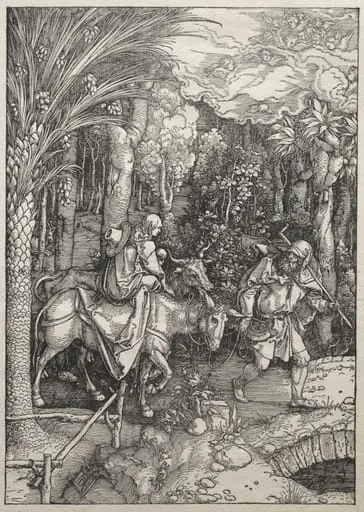 Life of the Virgin: Flight into Egypt
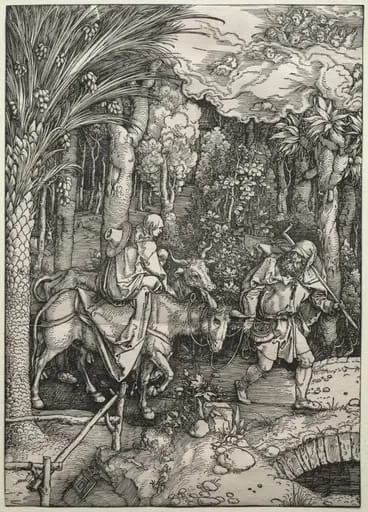 The Flight into Egypt
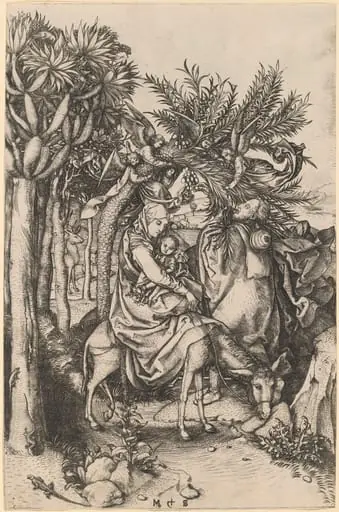 The Flight into Egypt
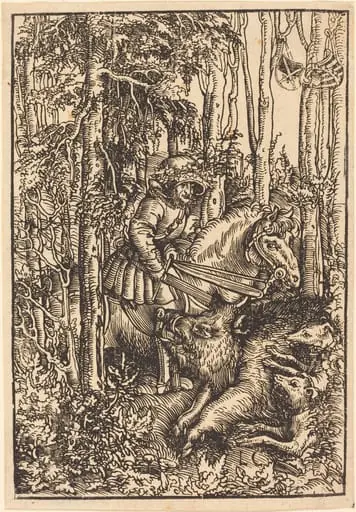 Hunter on Horseback Hunting a Wild Boar
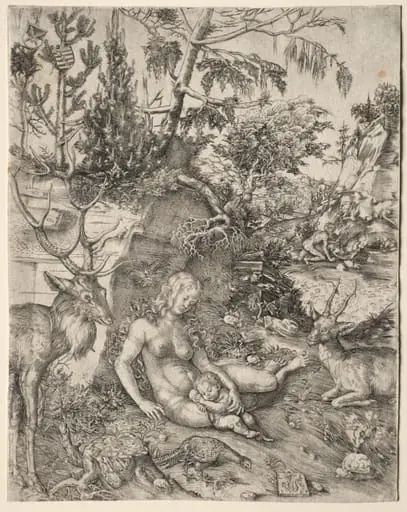 The Penance of St. John Chrysostom
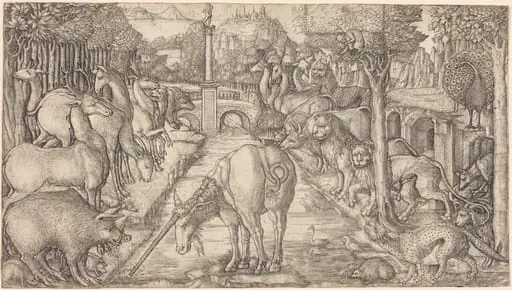 The Unicorn Purifies the Water with Its Horn
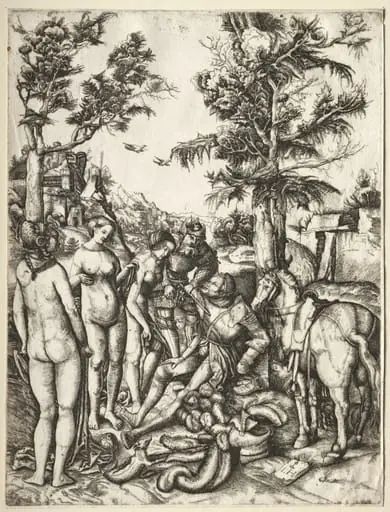 Judgment of Paris
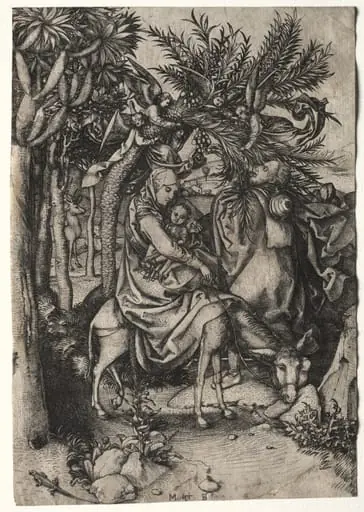 Life of the Virgin: The Flight into Egypt
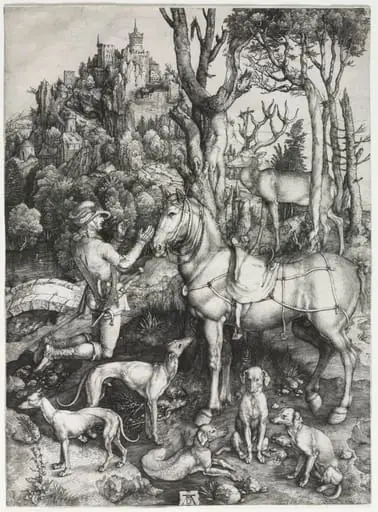 Saint Eustace