Artwork
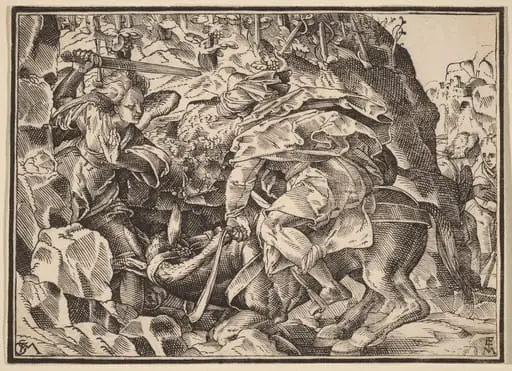
Hunter on Horseback Hunting a Wild Boar
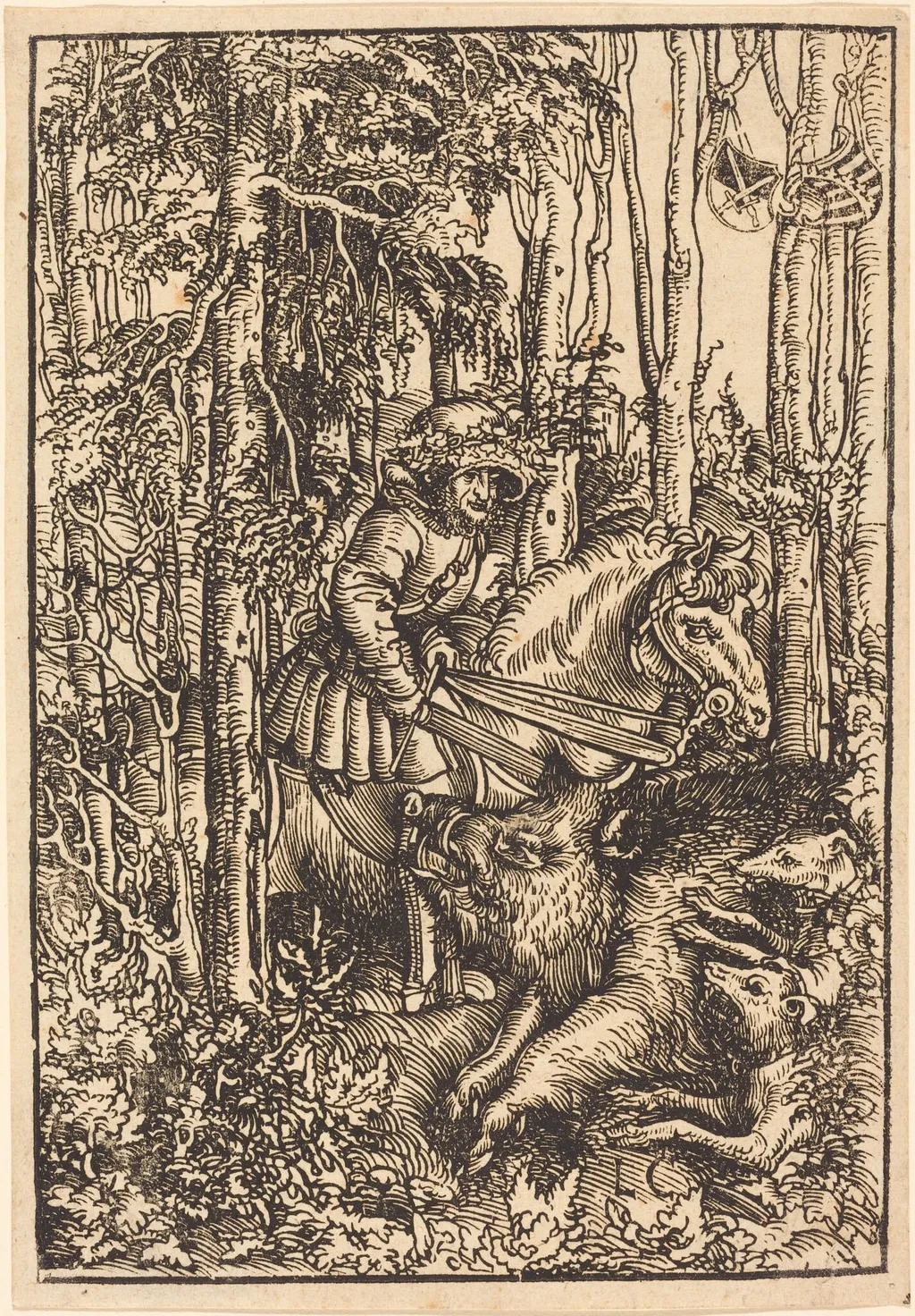
Hunter on Horseback Hunting a Wild Boar is an ink print by the Renaissance artist Lucas Cranach the Elder. It dates from 1506 and is held in the collection of the National Gallery of Art.
About this work
Overview
Created around 1506, this woodcut by Lucas Cranach the Elder presents a vigorous chase: a hunter on horseback drives a wild boar through a forest. The composition captures movement and tension, characteristic of early German Renaissance printmaking.
Subject & Meaning
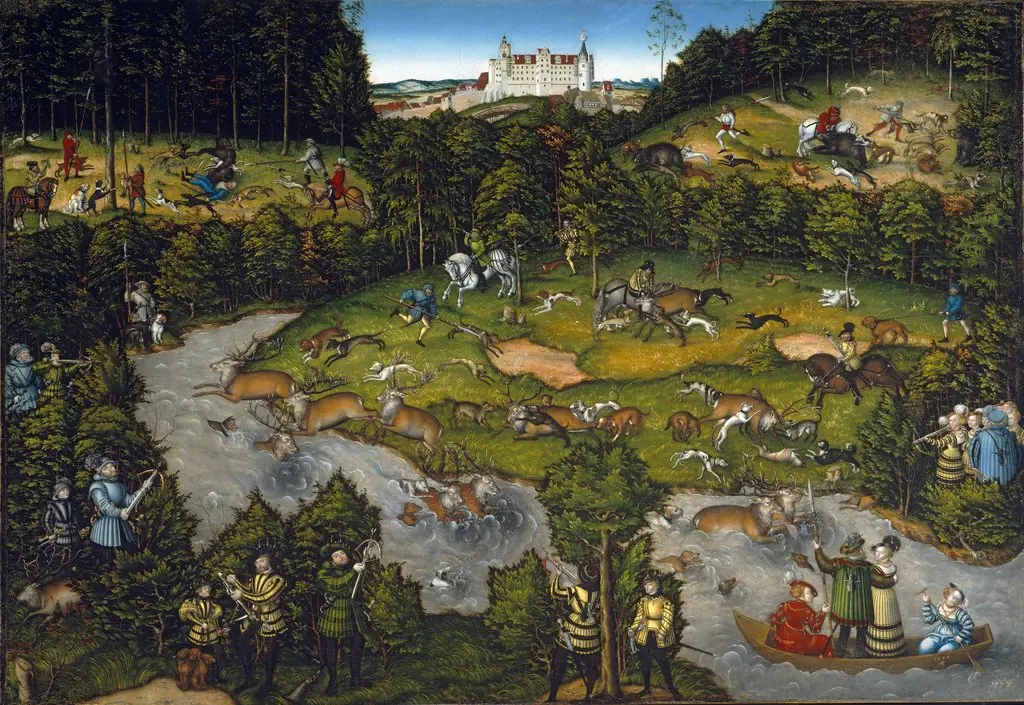
The image illustrates a hunting episode, a popular motif that allowed artists to explore human interaction with nature. By portraying the hunter’s determined pursuit of the boar, the work reflects contemporary fascination with realistic observation of wildlife and the drama of the hunt.
Technique & Style
Executed as a woodcut, the design relies on bold, linear incisions that define figures, foliage, and terrain. Cranach’s handling of the medium demonstrates how simple, clean lines can convey texture and depth, a hallmark of his print practice.
History & Provenance
Cranach, the court painter to the Electors of Saxony, produced this print during his early career, before his close association with the Protestant Reformation and Martin Luther. The work circulated among patrons and collectors interested in both artistic innovation and narrative prints.
Context
In the early 16th‑century German lands, hunting scenes served both decorative and didactic purposes, echoing aristocratic pastimes and the emerging interest in naturalistic detail. Cranach’s print aligns with these trends while showcasing his emerging reputation as a leading printmaker.
Artist & collection
Artist
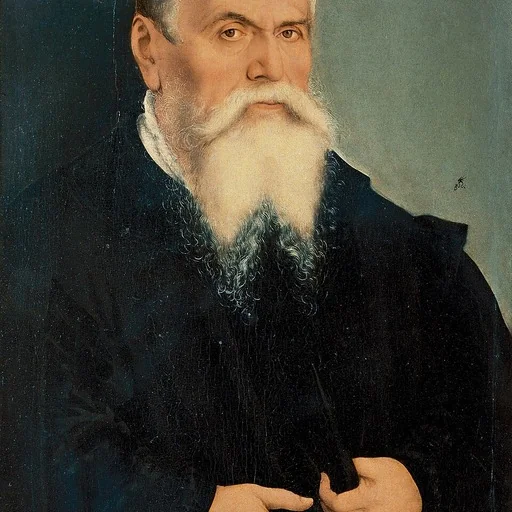
Lucas Cranach the Elder was a German Renaissance painter and printmaker in woodcut and engraving.

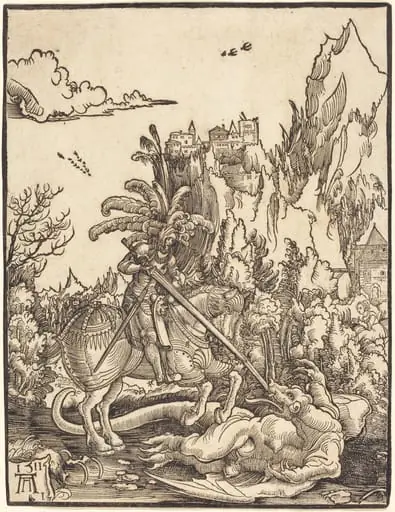 Saint George Slaying the Dragon
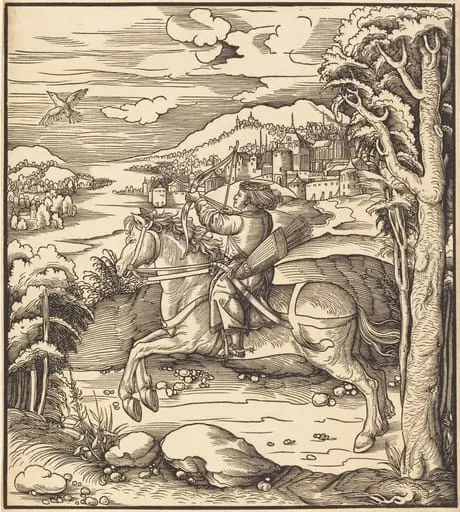 The Prince at the Bird-Catching
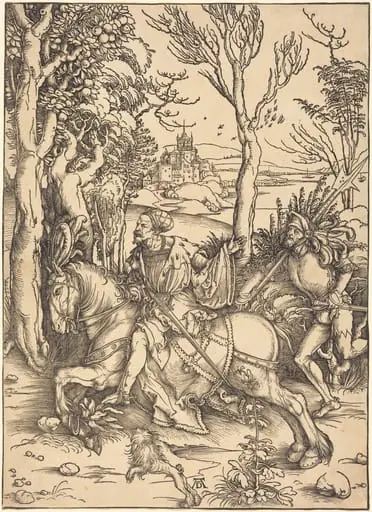 The Knight on Horseback and the Lansquenet
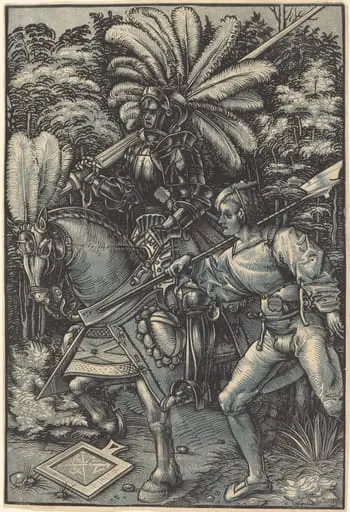 Knight and the Servant
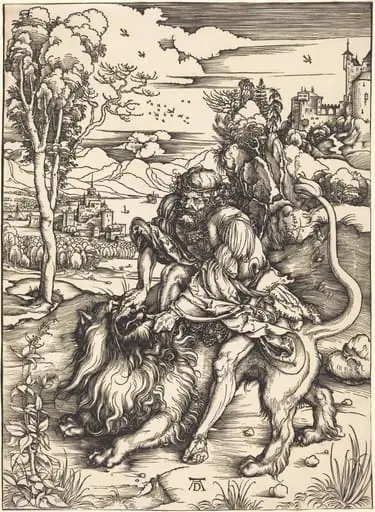 Samson Fighting with the Lion
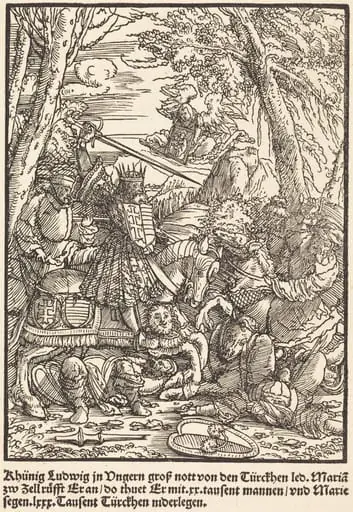 Khunig Ludwig ...
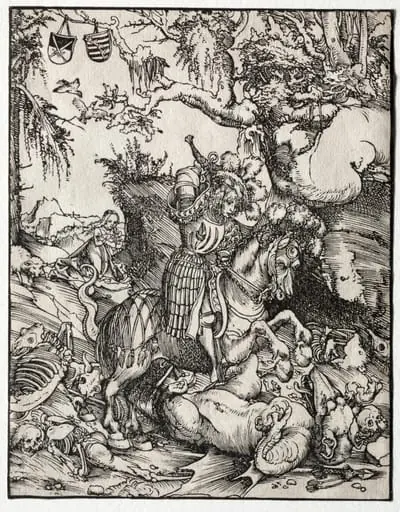 St. George Slaying the Dragon
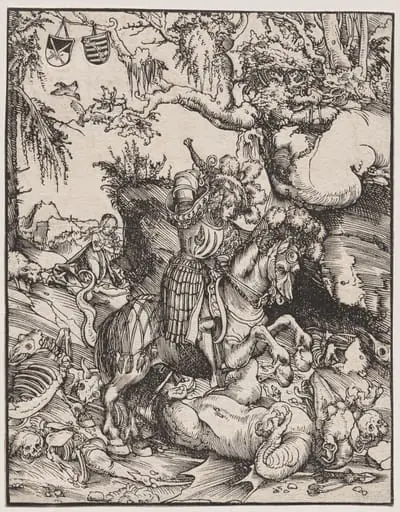 Saint George Slaying the Dragon
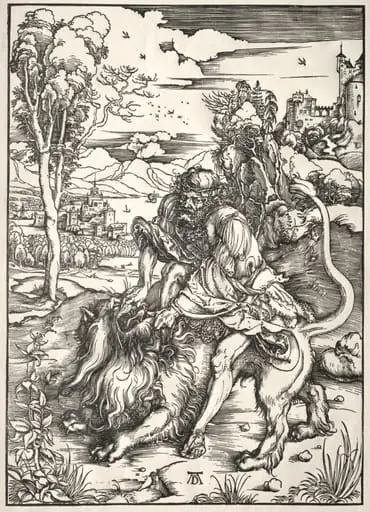 Samson and the Lion
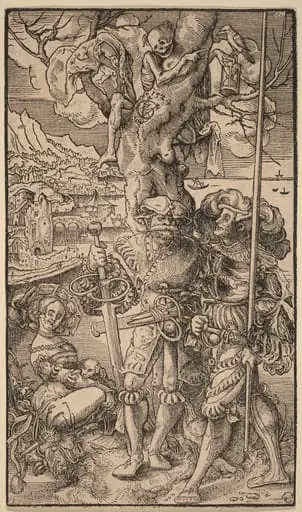 Two Mercenaries and a Woman
 Christ Tells His Disciples of the Last Judgment
 The Flight into Egypt