Artwork
Saint Jerome Penitent in the Wilderness
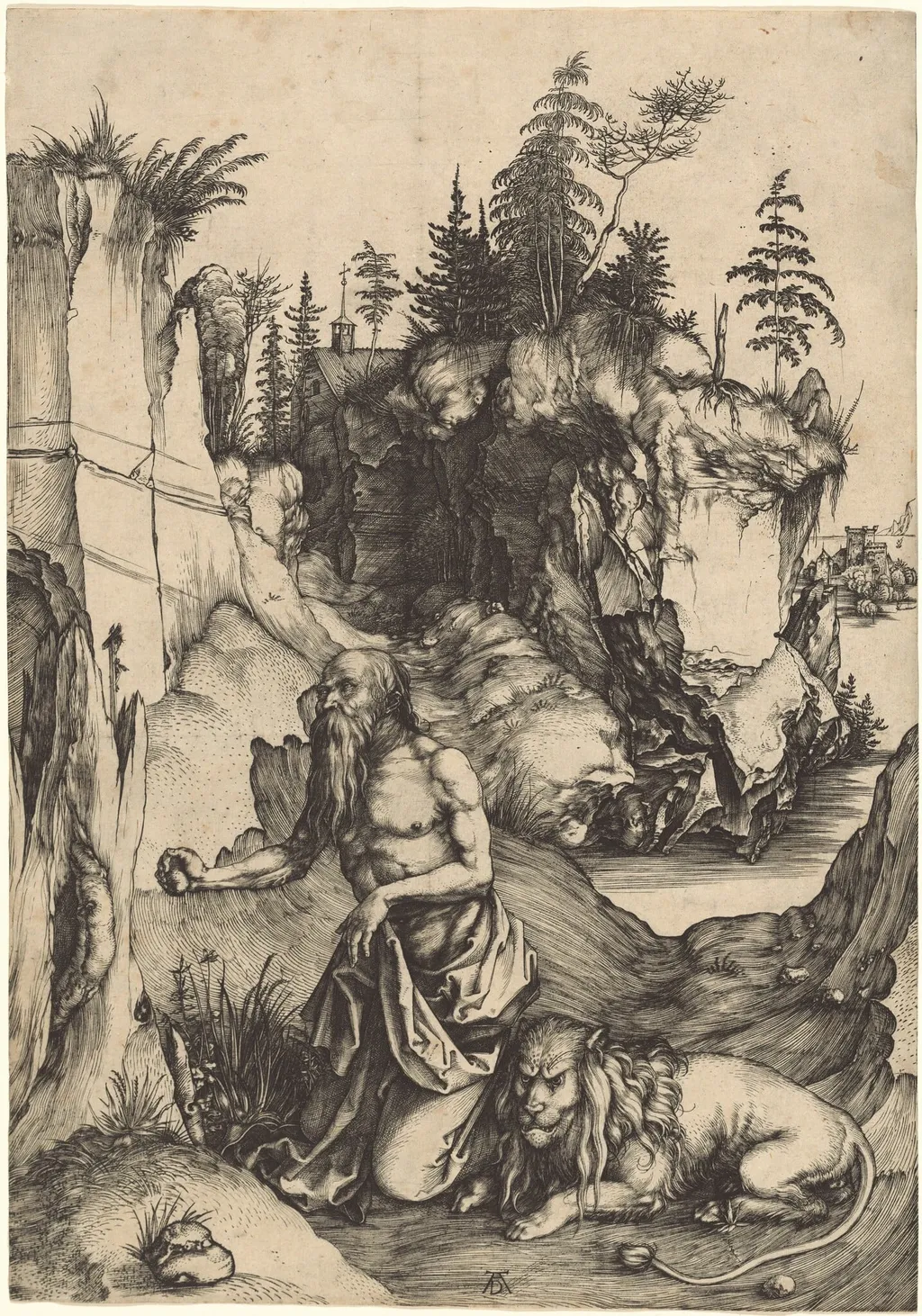
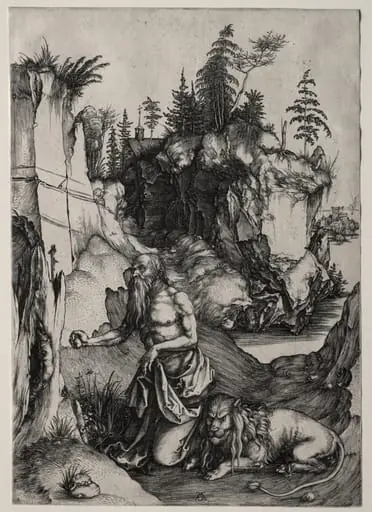
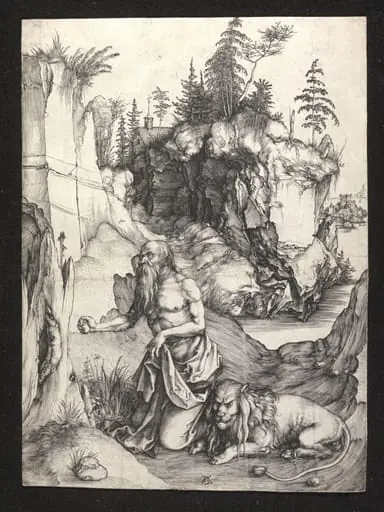
Saint Jerome Penitent in the Wilderness is an ink print by the Northern Renaissance artist Albrecht Dürer. It dates from 1496 and is held in the collection of the Rijksmuseum.
About this work
Overview
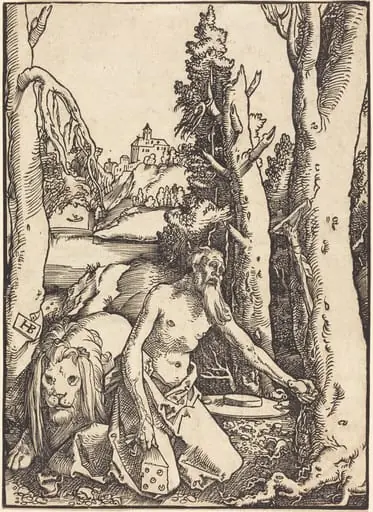
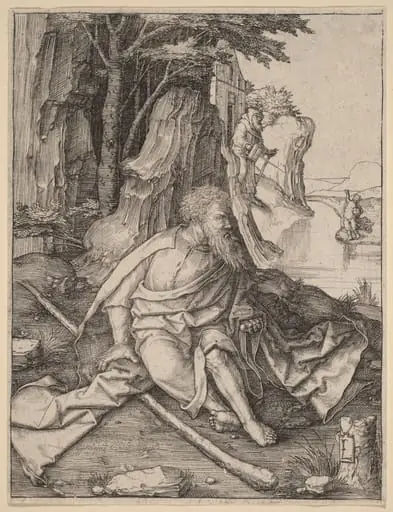
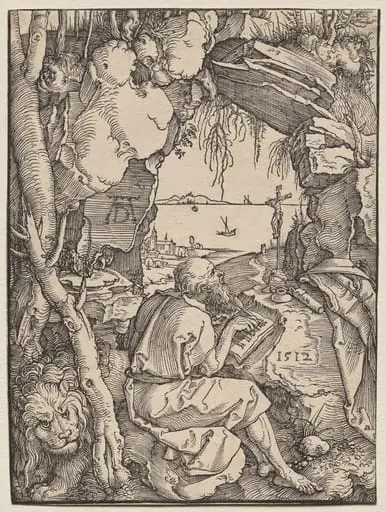
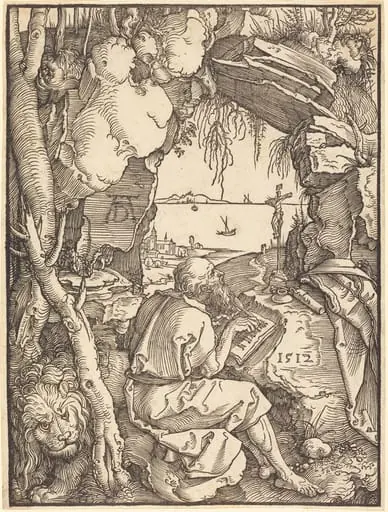
Created around 1496, this engraving by Albrecht Dürer portrays Saint Jerome in a solitary natural setting. Executed in fine lines on laid paper, the work belongs to the printmaking tradition of late 15th-century Northern Europe. It captures the saint in a moment of quiet devotion, surrounded by elements of the wilderness that reflect his ascetic life.
Subject & Meaning
The figure is Saint Jerome, a Church Father known for translating the Bible into Latin and for retreating to the desert in penitence. He kneels before a crucifix, his gaze directed upward in prayer. A lion rests nearby, referencing the legend in which Jerome removed a thorn from the lion’s paw, symbolizing compassion and harmony between man and nature in spiritual solitude.
Technique & Style
Dürer employed engraving, a method involving incised lines on a metal plate inked and pressed onto paper. The composition reveals meticulous cross-hatching and fine detailing in rocks, foliage, and fabric, demonstrating his mastery of texture and light. The landscape is rendered with precision, balancing naturalism with symbolic depth, typical of his early printmaking period.
History & Provenance
Early impressions were widely circulated among scholars and clergy, contributing to his reputation.
The print was produced during Dürer’s formative years, shortly after his return from Italy, when he was integrating Italian compositional ideas with Northern European detail. Early impressions were widely circulated among scholars and clergy, contributing to his reputation. Surviving examples are held in major European and American collections, with provenance tracing through private and institutional holdings since the 16th century.
Context
In the late 1490s, religious imagery in print form became increasingly accessible, allowing private devotion beyond church walls. Dürer’s depiction of Jerome aligns with contemporary monastic ideals and the humanist revival of early Christian figures. The engraving reflects a broader cultural interest in personal piety and scholarly retreat, mirroring the saint’s own life as a translator and ascetic.
Legacy
This engraving helped establish Dürer as a leading figure in Northern Renaissance printmaking. Its influence extended to later artists who adopted his detailed line work and psychological depth in religious subjects. The image remains a reference point for the intersection of spiritual themes and technical innovation in early modern print culture.
Artist & collection
Artist
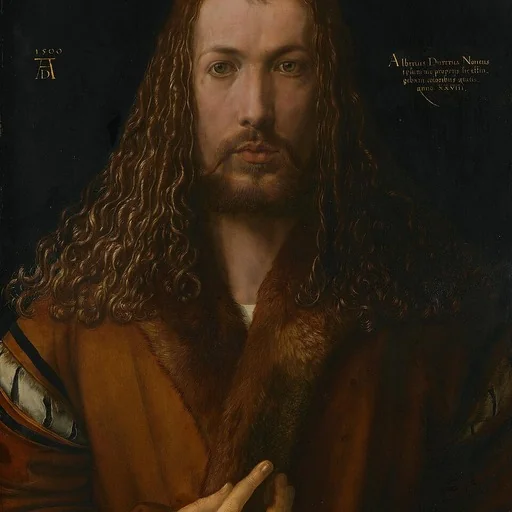
Albrecht Dürer spent his life in Nuremberg, a busy German city where artists traded prints like currency.

![Madonna and Child [obverse], by Albrecht Dürer](https://artifactworldgallery.com/img/albrecht-durer--madonna-and-child-obverse--d7b8ebf05d22ebe5-w320.webp)
![Lot and His Daughters [reverse], by Albrecht Dürer](https://artifactworldgallery.com/img/albrecht-durer--lot-and-his-daughters-reverse--b4ebf9b282faa17a-w320.webp)