Artwork
Saint Jerome in the Desert
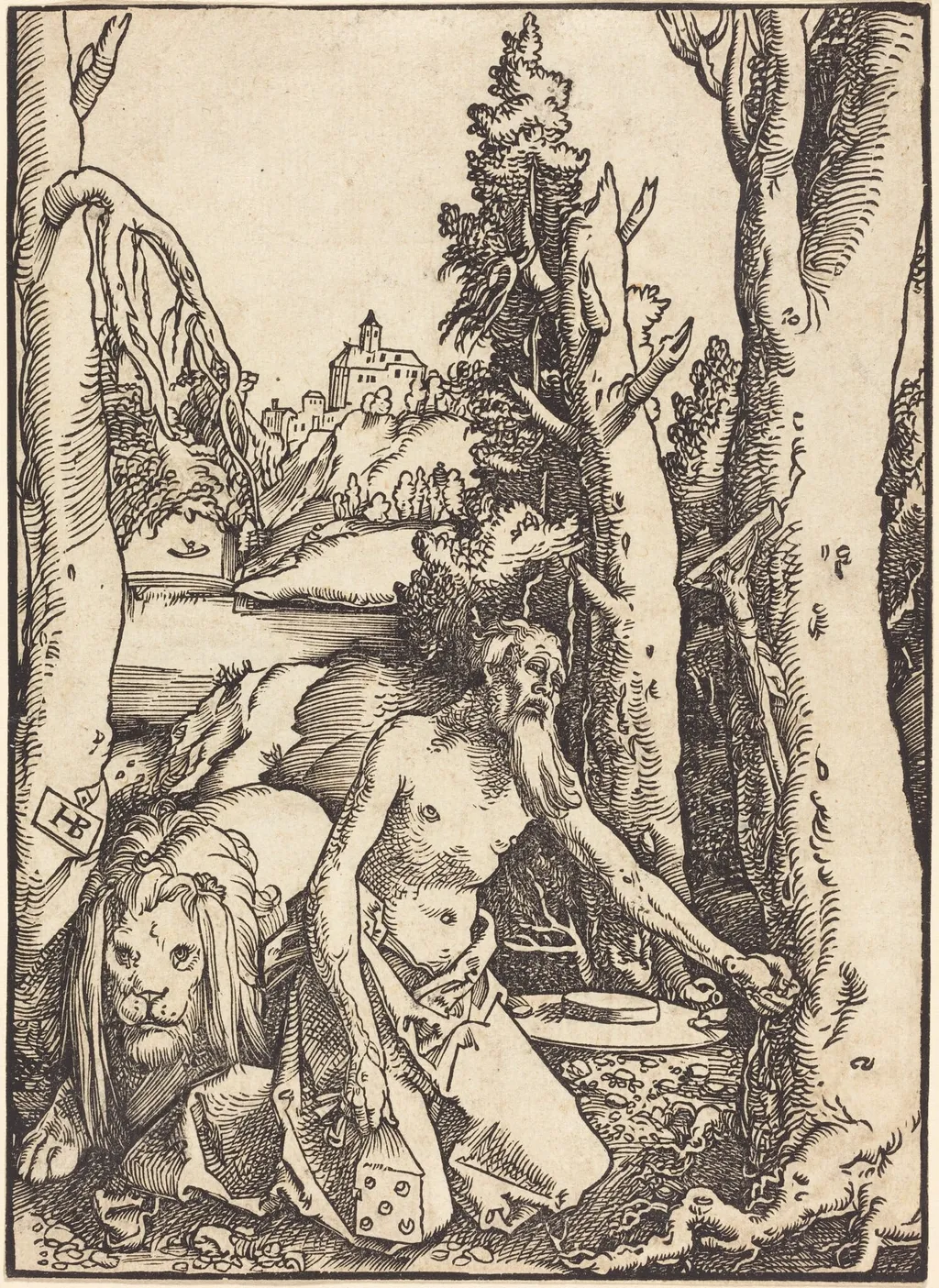
Saint Jerome in the Desert is an ink print by the Renaissance artist Hans Baldung Grien. It dates from 1511 and is held in the collection of the National Gallery of Art.
About this work
Overview
Executed in the medium of woodblock printing, the image captures the saint in solitude, surrounded by a sparse natural setting.
Hans Baldung Grien created this 1511 woodcut of Saint Jerome in the desert during the early German Renaissance. Executed in the medium of woodblock printing, the image captures the saint in solitude, surrounded by a sparse natural setting. Baldung’s technical skill in carving fine lines and tonal contrasts reflects his apprenticeship under Albrecht Dürer, while his personal interpretation introduces a distinctive emotional tone to the traditional subject.
Subject & Meaning
The figure of Saint Jerome, identified by his beard and scholarly posture, is shown reading beside a lion—a reference to the legend of the saint removing a thorn from the animal’s paw. The lion’s quiet presence signifies trust and divine harmony, contrasting with typical depictions of wild beasts as threats. The distant village hints at the saint’s withdrawal from worldly life, reinforcing themes of ascetic devotion and spiritual contemplation.
Technique & Style
As a woodcut, the image was produced by carving lines into a wooden block, inking the surface, and pressing it onto paper. Baldung employed fine, controlled incisions to render texture in the robe, foliage, and rocky terrain, while leaving areas of negative space to suggest depth. His use of rhythmic line and subtle shading reveals a Mannerist inclination toward expressive form over naturalistic accuracy, distinguishing his work from more rigid contemporary prints.
History & Provenance
Created in 1511, the print emerged during a prolific phase in Baldung’s career when he produced numerous religious prints alongside stained glass and panel paintings. It was likely circulated among educated clergy and humanist circles in southern Germany, where interest in biblical scholarship and monastic life remained strong. The work’s survival in multiple impressions suggests it was widely distributed and valued for its devotional and artistic qualities.
Context
In early 16th-century Germany, woodcuts served both religious and intellectual purposes, making them ideal for disseminating images of saints to literate audiences. Baldung’s depiction aligns with broader trends in Northern Renaissance art that emphasized personal piety and symbolic detail. Yet his treatment of the lion and the atmospheric landscape diverges from formulaic representations, reflecting a growing interest in psychological depth and natural observation.
Legacy
This woodcut exemplifies Baldung’s role in expanding the expressive potential of printmaking beyond Dürer’s influence. His integration of emotional nuance and symbolic subtlety into religious subjects helped shape later Northern Mannerist aesthetics. Though not widely known today, the print remains a significant example of how print technology enabled new forms of spiritual imagery in the Reformation era.
Artist & collection
Artist
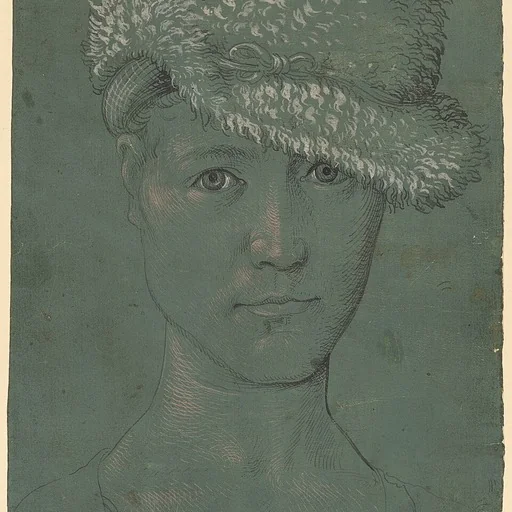
Hans Baldung (1484 or 1485 – September 1545), called Hans Baldung Grien, (being an early nickname, because of his predilection for the colour green), was a painter, printer, engraver, draftsman, and stained glass…

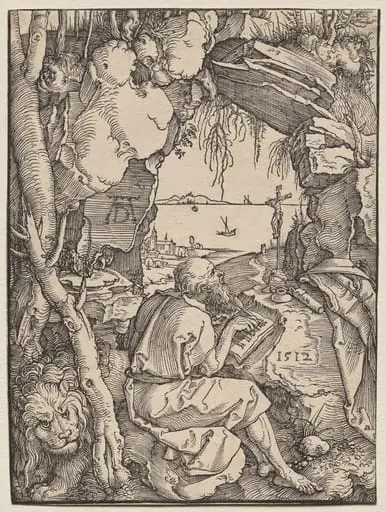 St. Jerome in a Cave
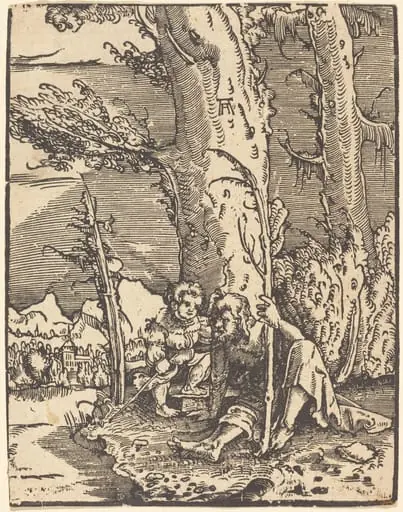 Saint Christopher Seated by a River Bank
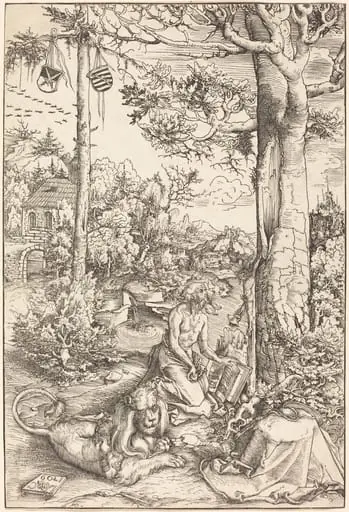 The Penitence of Saint Jerome
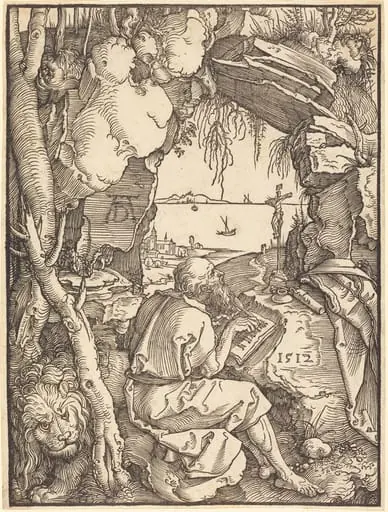 Saint Jerome in a Cave
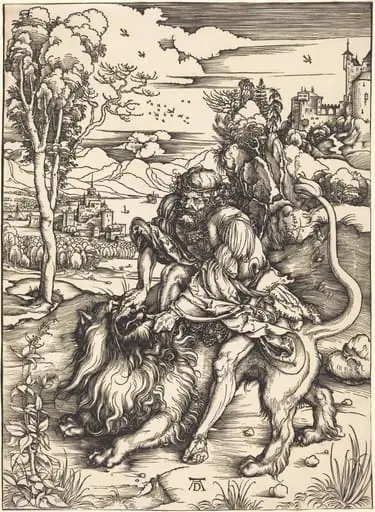 Samson Fighting with the Lion
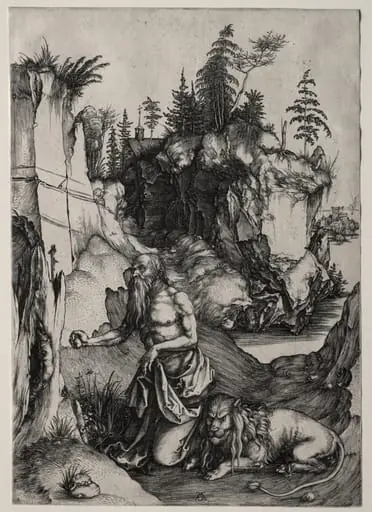 St. Jerome in Penitence
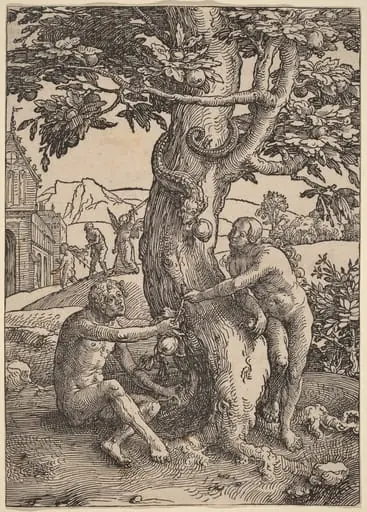 Adam and Eve
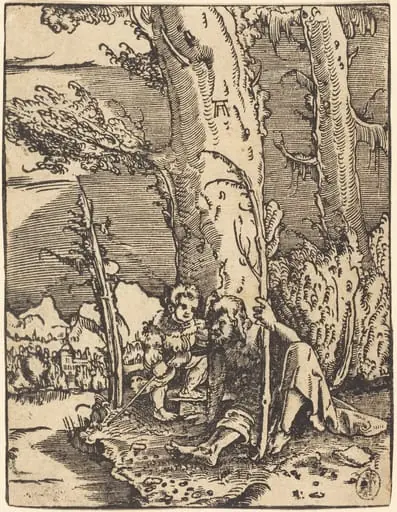 Saint Christopher Seated by a River Bank
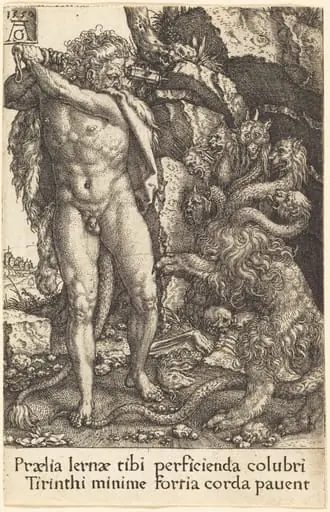 Hercules Fighting with the Hydra of Lernea
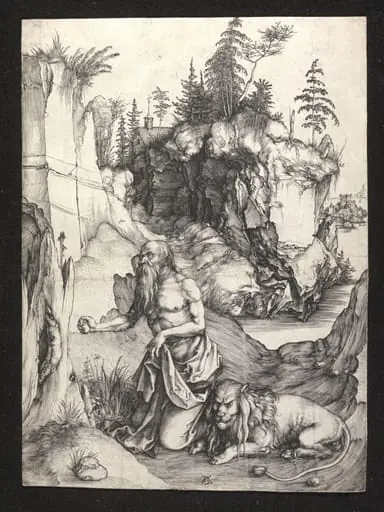 St Jerome in Penitence
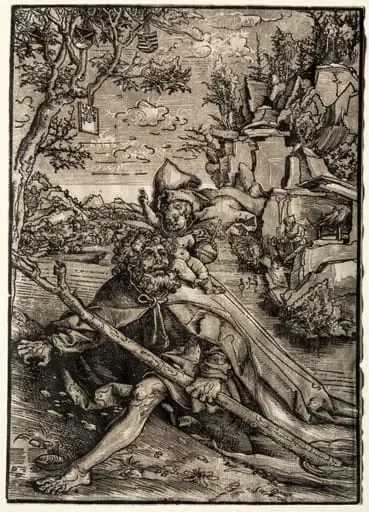 St. Christopher
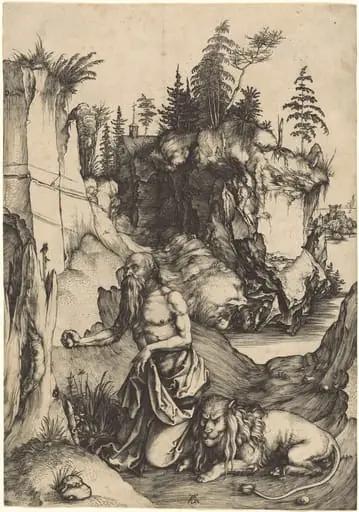 Saint Jerome Penitent in the Wilderness