Artwork
St. Jerome in a Cave
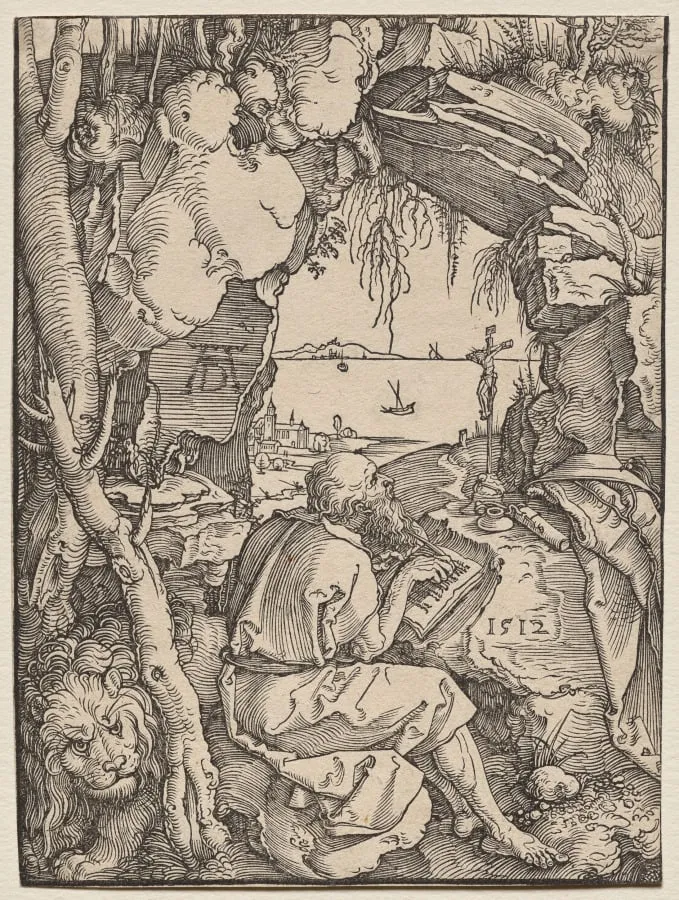
St. Jerome in a Cave is a print by the Renaissance artist Albrecht Dürer. It dates from 1512 and is held in the collection of the Cleveland Museum of Art. St.
About this work
Outside the cave, a storm rages with dark clouds, but in the distance, a small town sits peacefully by the water.
This engraving shows a bearded man sitting in a rocky cave. He’s hunched over, reading a book while a lion—looking calm—sits beside him. Outside the cave, a storm rages with dark clouds, but in the distance, a small town sits peacefully by the water.
The date "1512" is carved into a stone near the man, and the scene mixes wild nature with quiet focus. The artist used sharp lines to show light and shadow, making the cave feel real.
Next, check out Renaissance to see how this style shaped art.
Overview
St. Jerome in a Cave is a 1512 engraving by Albrecht Dürer, a prominent German Renaissance artist known for his technical skill in printmaking and painting. The work portrays the Christian scholar Saint Jerome in contemplative solitude.
Subject & Meaning
The engraving depicts Saint Jerome, a renowned Christian scholar and translator, seated in a cave, intensely focused on a book. A calm lion accompanies him, symbolizing his legendary companionship. The contrast between the turbulent storm outside and the serene cave interior, as well as the distant peaceful town, underscores Jerome's withdrawal from worldly turmoil to pursue spiritual and intellectual pursuits.
Technique & Style
Dürer employed sharp, defined lines to achieve a strong interplay of light and shadow, lending depth and realism to the cave environment. This technical approach highlights his mastery of engraving, characteristic of his detailed and introspective treatment of religious themes.
History & Provenance
Created in 1512, during the height of Dürer's career, the engraving bears the date inscribed on a stone within the scene. As a favored artist of Emperor Maximilian I, Dürer's works from this period reflect his established prominence in the German Renaissance.
Context
St. Jerome in a Cave reflects the Renaissance humanist interest in classical learning and spiritual introspection, embodied by Jerome's scholarly pursuits. The work's themes and style place it within the broader context of Northern European Renaissance art, where detailed realism and religious subjects prevailed.
Legacy
This engraving contributes to Dürer's legacy as a innovator in printmaking, influencing subsequent generations of artists. Its blend of religious depth and technical precision has made it a notable example of Renaissance art, shaping perceptions of the period's artistic values.
Artist & collection
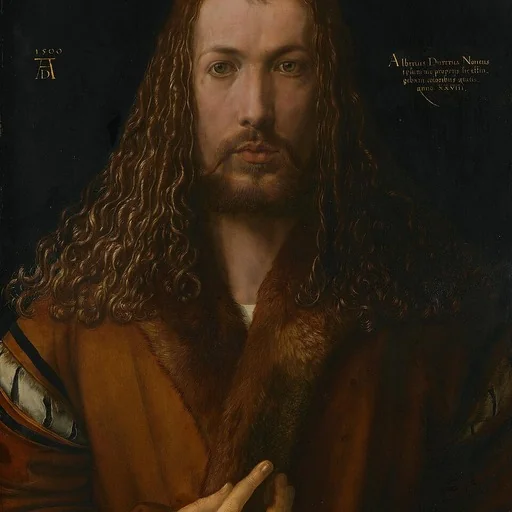
Artist
Albrecht Dürer spent his life in Nuremberg, a busy German city where artists traded prints like currency.

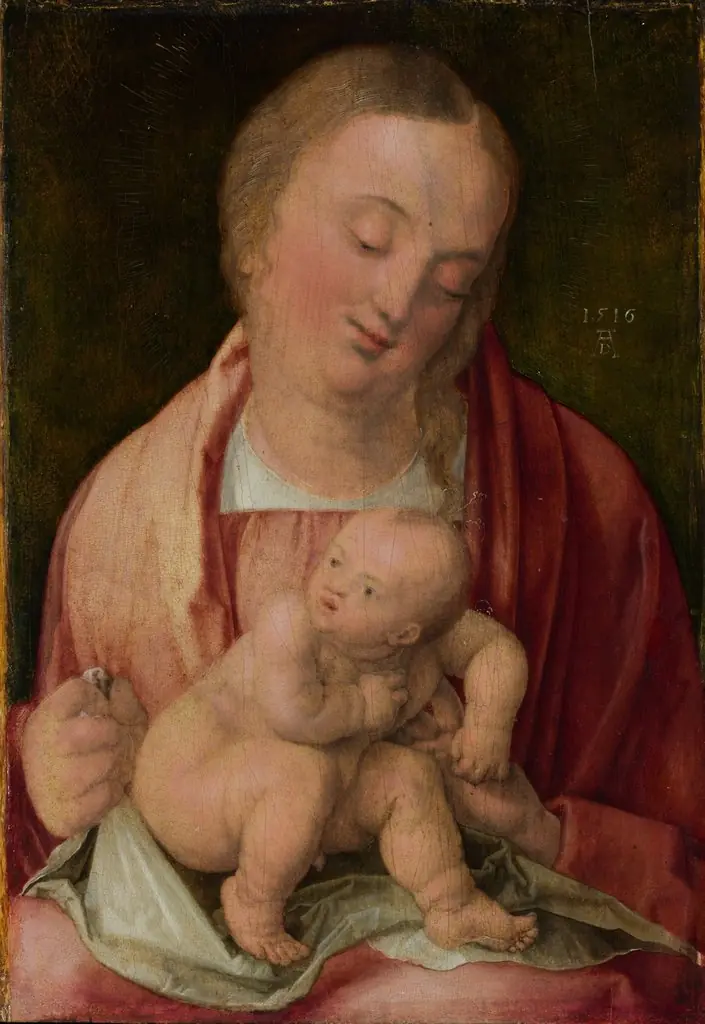
![Madonna and Child [obverse], by Albrecht Dürer](https://artifactworldgallery.com/img/albrecht-durer--madonna-and-child-obverse--d7b8ebf05d22ebe5-w320.webp)
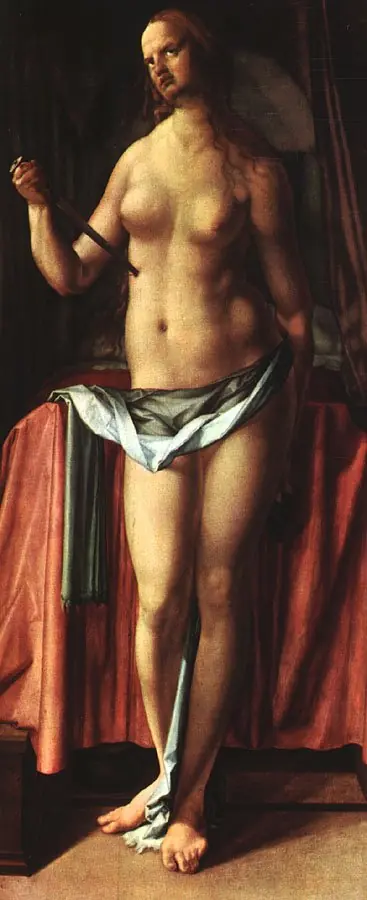
![Lot and His Daughters [reverse], by Albrecht Dürer](https://artifactworldgallery.com/img/albrecht-durer--lot-and-his-daughters-reverse--b4ebf9b282faa17a-w320.webp)
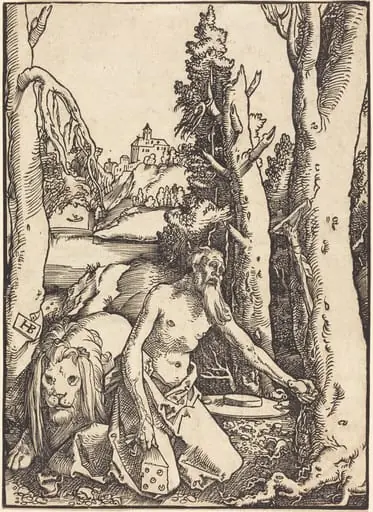 Saint Jerome in the Desert
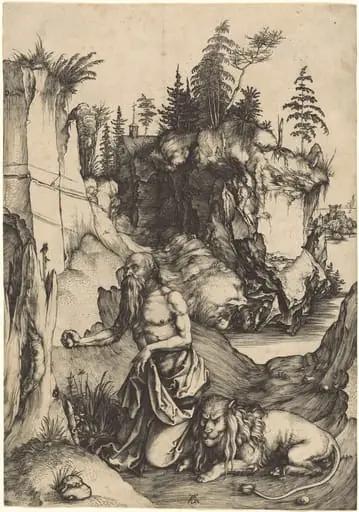 Saint Jerome Penitent in the Wilderness
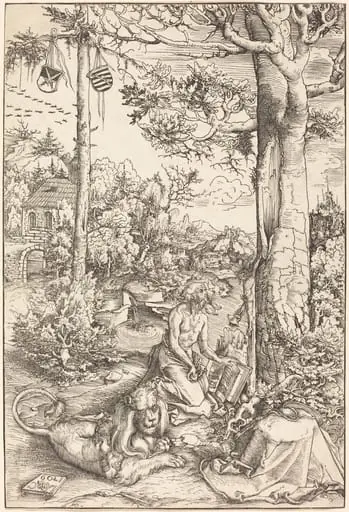 The Penitence of Saint Jerome
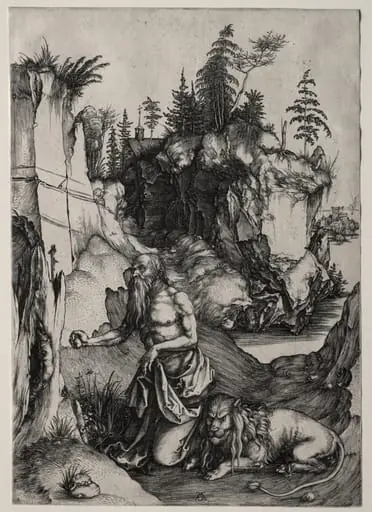 St. Jerome in Penitence
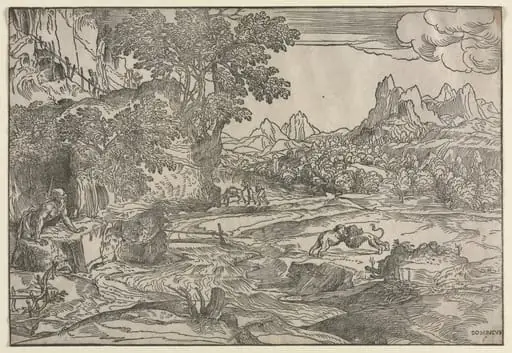 Landscape with Saint Jerome and Two Lions
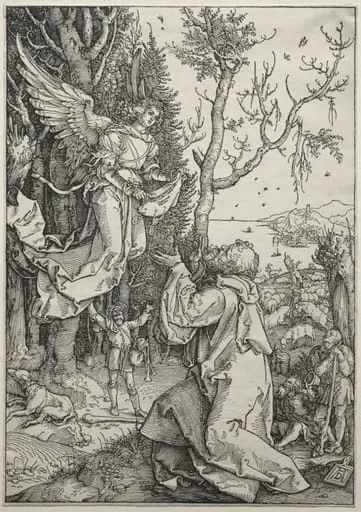 The Life of the Virgin: Joachim and the Angel
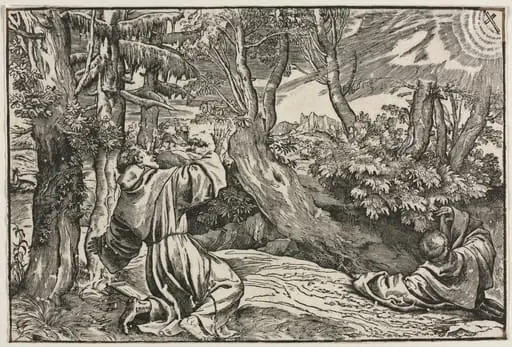 Saint Francis Receiving the Stigmata
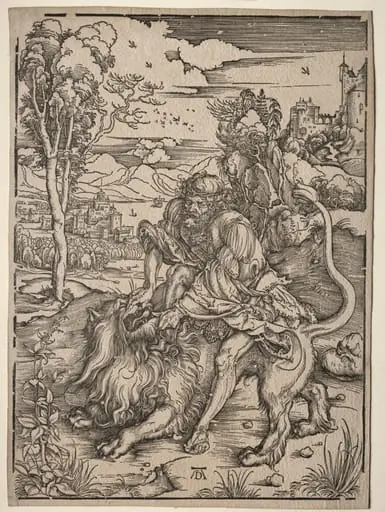 Samson Killing the Lion
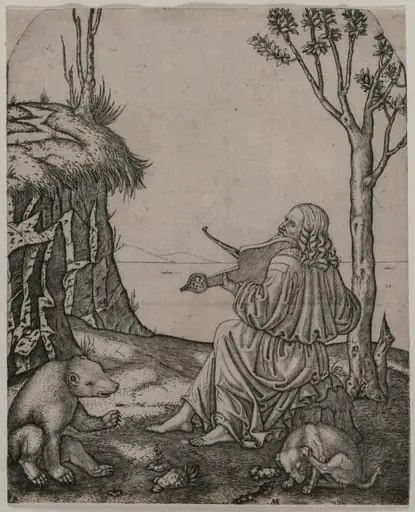 Orpheus Charming the Animals
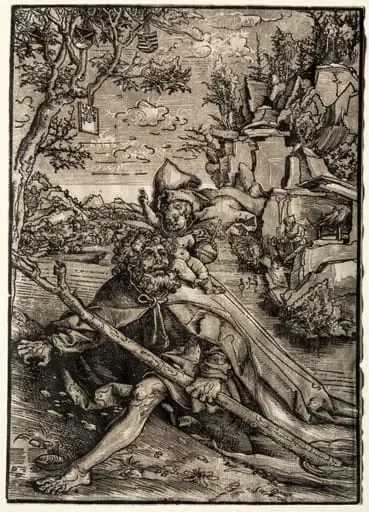 St. Christopher
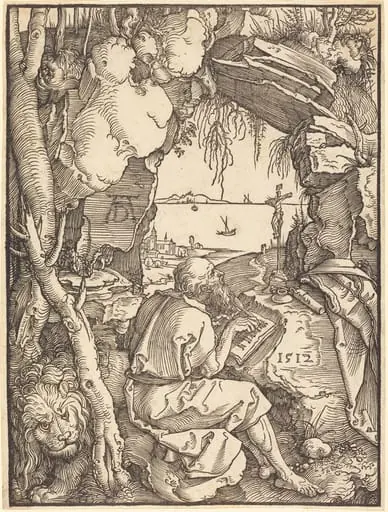 Saint Jerome in a Cave
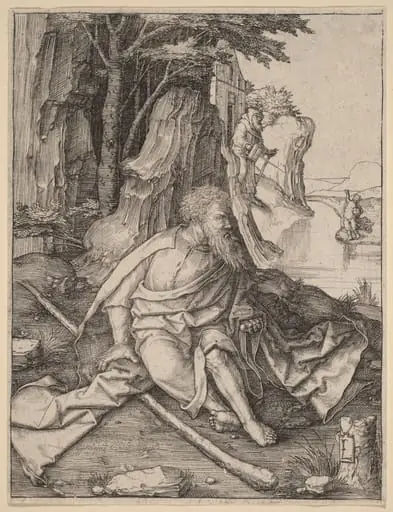 Saint Christopher at the Border of a River