Artwork
Saint Matthias
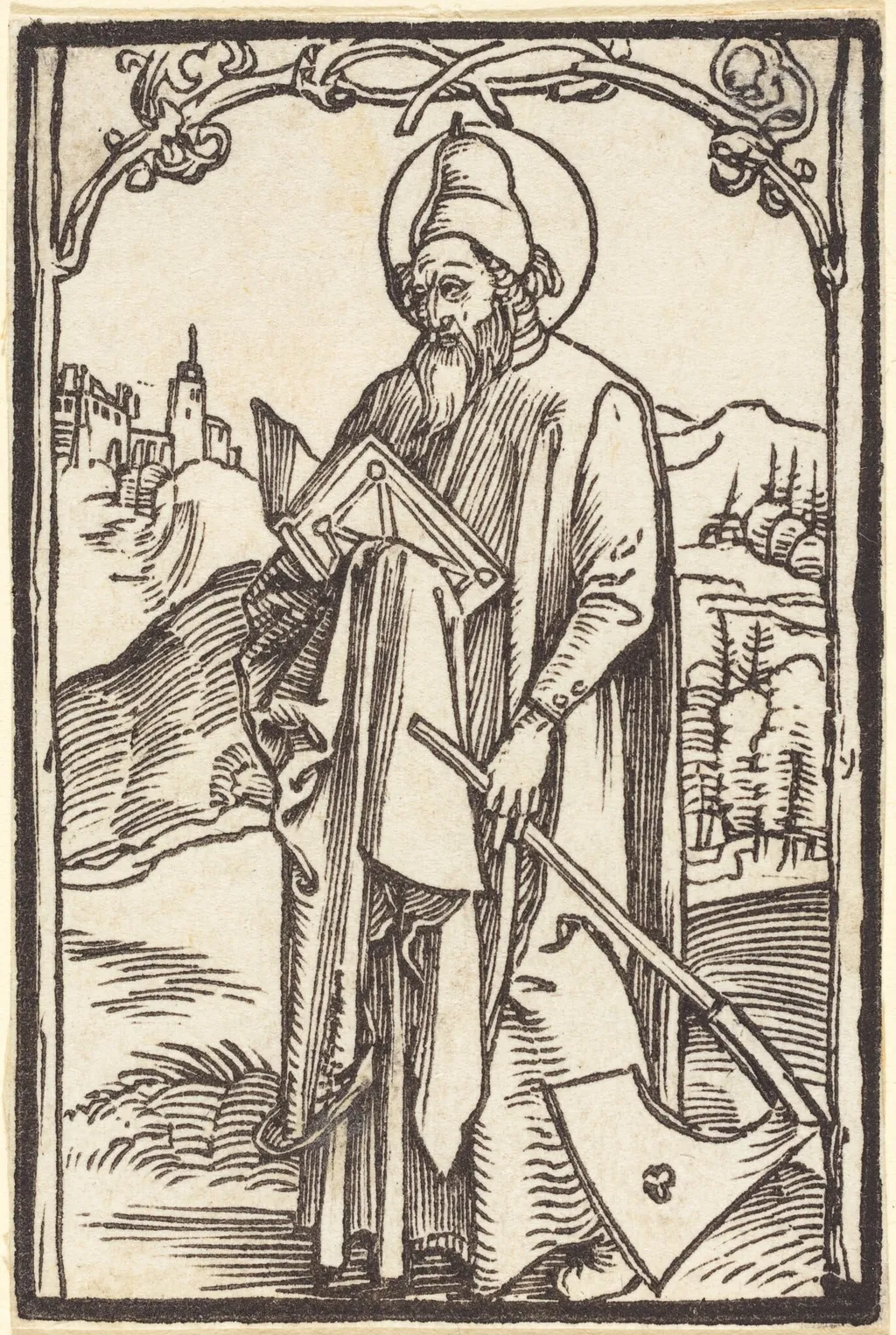
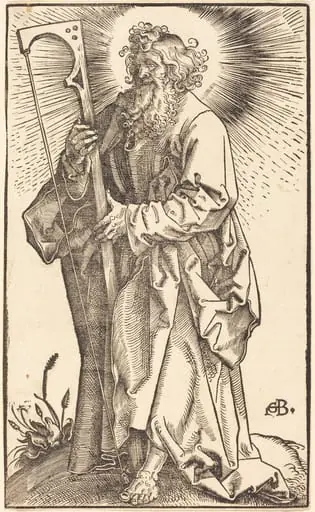
Saint Matthias is an ink print by the Northern Renaissance artist Albrecht Dürer. It dates from 1500 and is held in the collection of the National Gallery of Art.
About this work
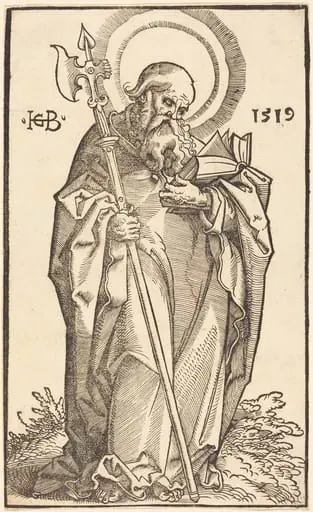
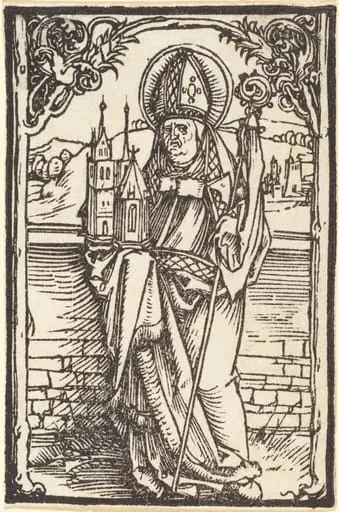
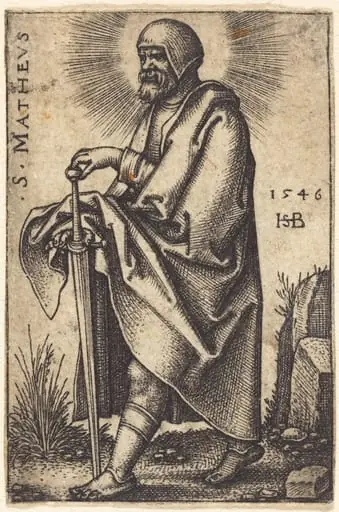
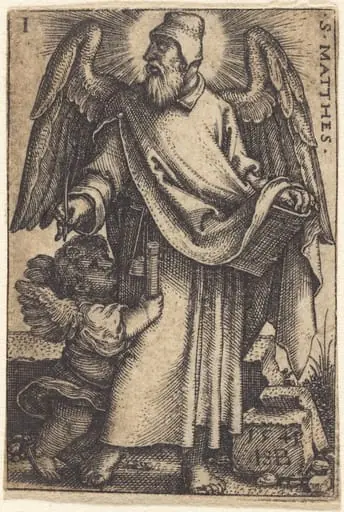
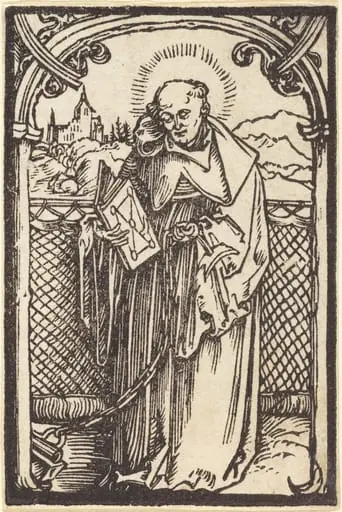
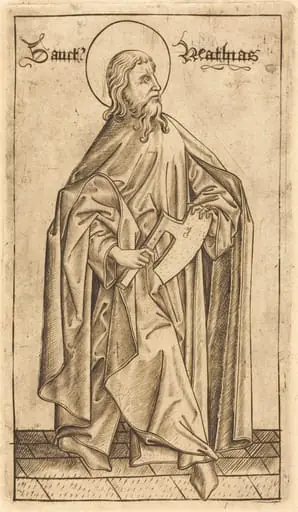
You see a picture of Saint Matthias, an apostle, in a simple setting.
He's the main figure in this small woodcut.
The interesting thing about this work is that it shows Dürer's skill in creating detailed scenes using just black and white.
Dürer made this woodcut around 1500, and it's a great example of his early work.
Check out the technique of woodcut.
Overview
Albrecht Dürer’s woodcut Saint Matthias, dated to around the year 1500, presents the apostle as the sole figure within a modest compositional space. Executed in black ink on paper, the print exemplifies the artist’s early engagement with the medium of woodcut, a popular method for disseminating religious imagery in the early sixteenth century.
Subject & Meaning
The image portrays Matthias, the apostle chosen to replace Judas Iscariot, standing in a simple setting that emphasizes his identity rather than narrative action. By focusing on the solitary figure, Dürer underscores the saint’s role as a steadfast witness to the early Church, a theme resonant with contemporary devotional practices.
Technique & Style
Dürer’s mastery of line is evident in the intricate hatching and cross‑hatching that generate tonal variation despite the absence of colour. The crisp, controlled cuts convey the texture of clothing and the subtle modelling of the face, demonstrating the artist’s ability to achieve depth and realism within the constraints of the woodcut process.
History & Provenance
Created at the turn of the sixteenth century, this print belongs to Dürer’s formative period, preceding his later, more elaborate engravings. It circulated as part of devotional prints, likely distributed through the burgeoning print market of Nuremberg, where Dürer was active.
Context
During Dürer’s early career, woodcut served both as a commercial vehicle and as a platform for artistic experimentation. Saint Matthias aligns with the period’s emphasis on accessible religious imagery, reflecting the growing demand for portable, reproducible works that could reach a broad audience beyond elite patrons.
Legacy
Although modest in scale, the print illustrates Dürer’s early contribution to the elevation of woodcut from a purely utilitarian craft to a respected artistic medium. Its precise line work foreshadows the technical innovations that would later define his more celebrated engravings and paintings.
Artist & collection
Artist
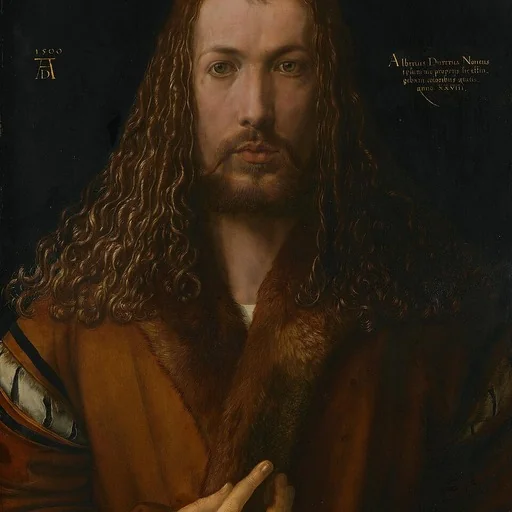
Albrecht Dürer spent his life in Nuremberg, a busy German city where artists traded prints like currency.

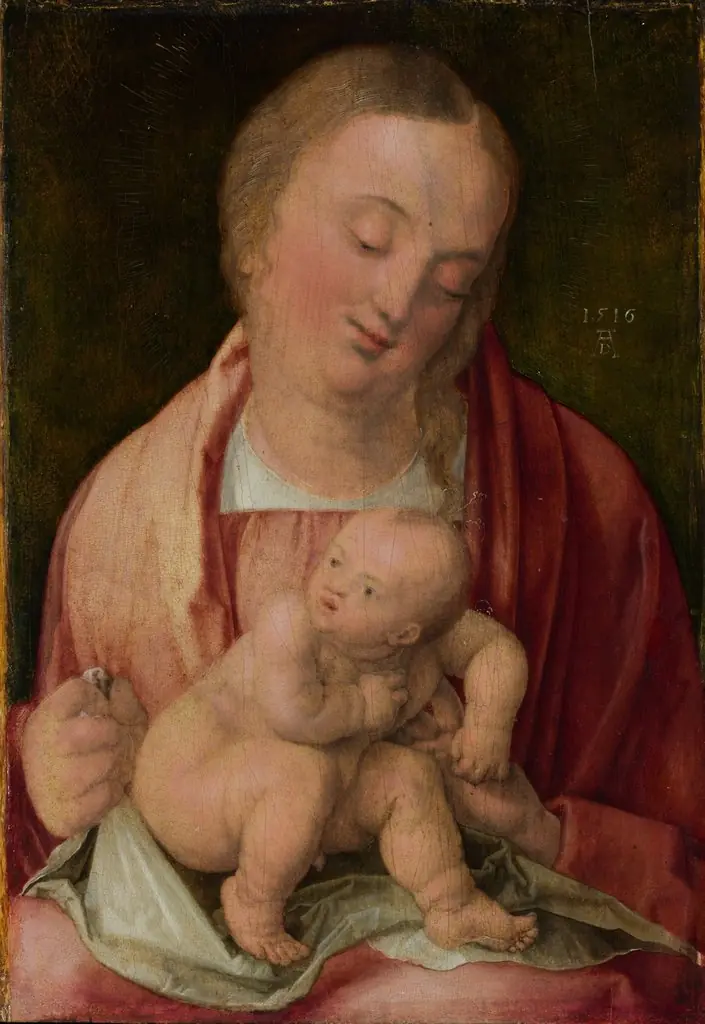
![Madonna and Child [obverse], by Albrecht Dürer](https://artifactworldgallery.com/img/albrecht-durer--madonna-and-child-obverse--d7b8ebf05d22ebe5-w320.webp)
![Lot and His Daughters [reverse], by Albrecht Dürer](https://artifactworldgallery.com/img/albrecht-durer--lot-and-his-daughters-reverse--b4ebf9b282faa17a-w320.webp)