Artwork
Saint Matthias (?)
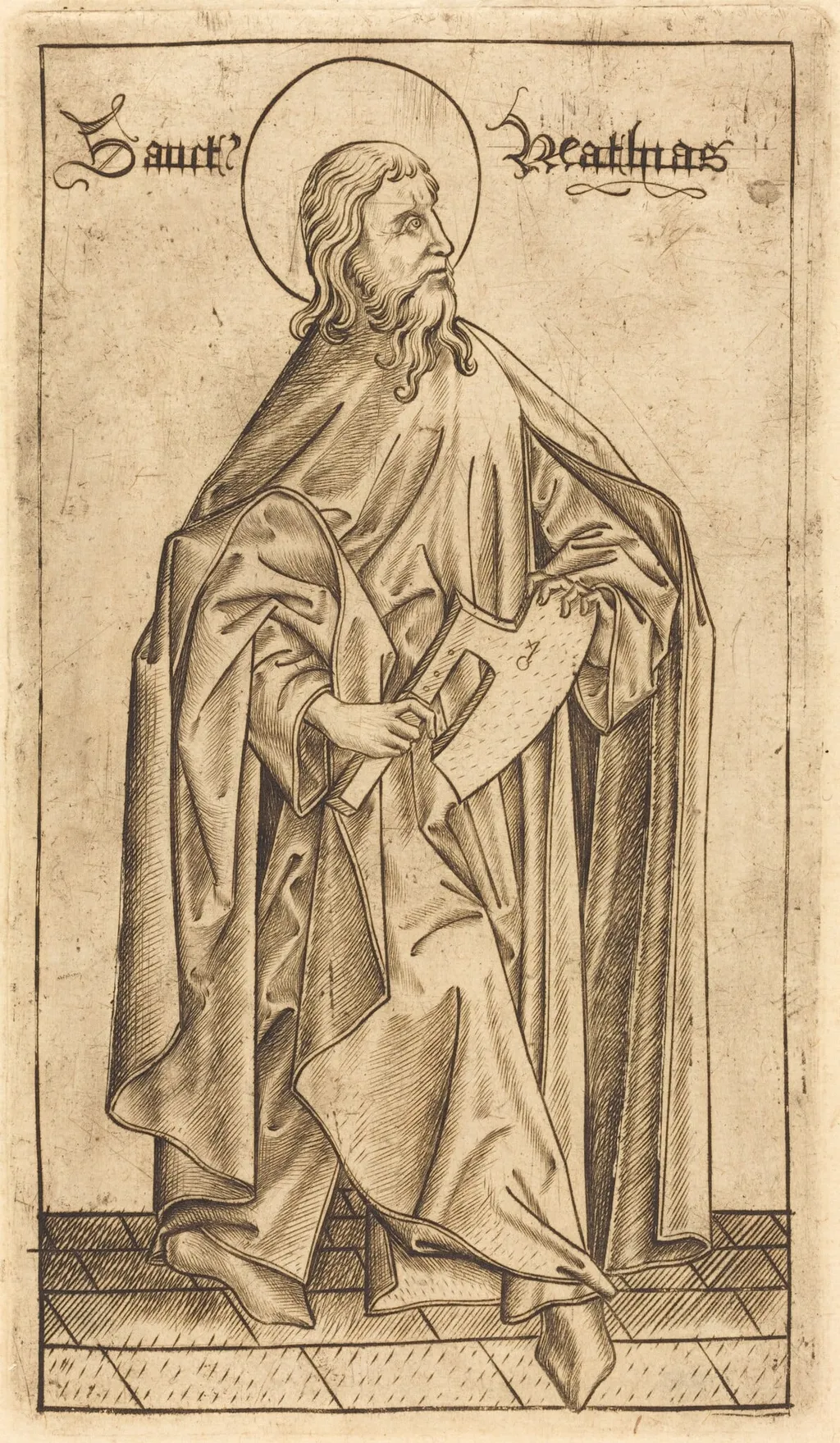
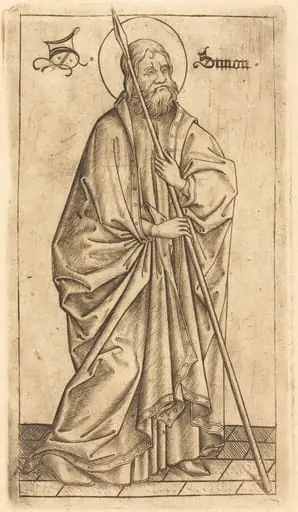
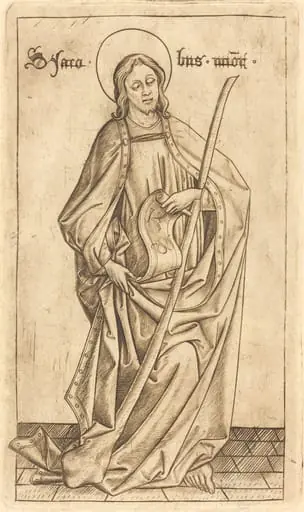
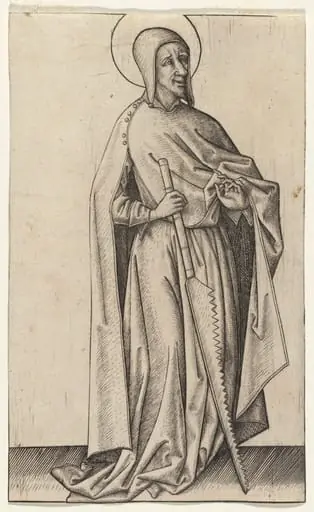
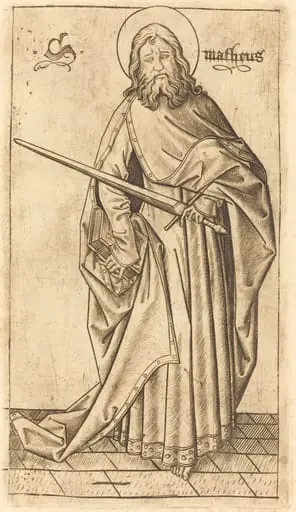
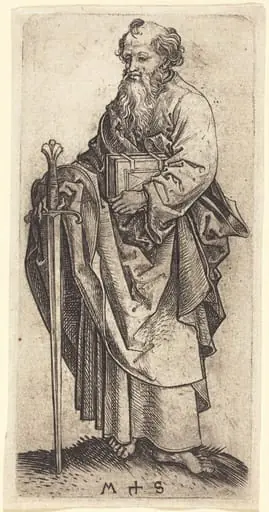
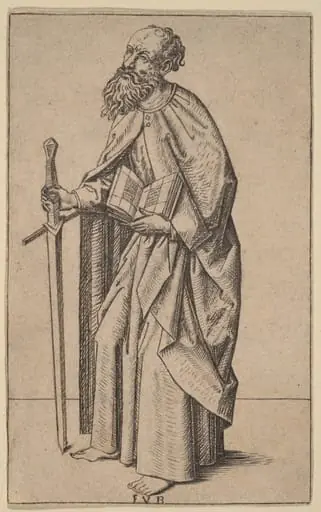
Saint Matthias (?) is an ink print by the Renaissance artist Israhel van Meckenem. It dates from 1475 and is held in the collection of the National Gallery of Art.
About this work
Overview
The image reflects the era’s devotional print culture, where religious figures were reproduced for private contemplation and instruction.
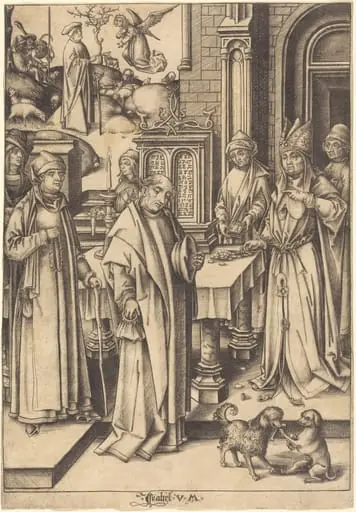
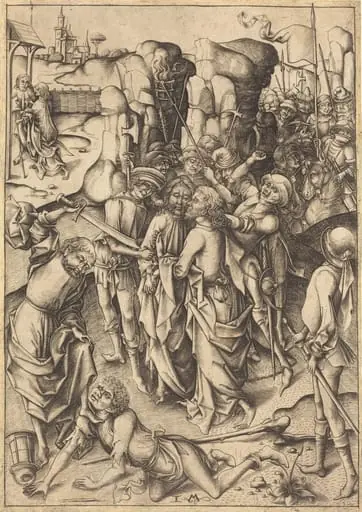
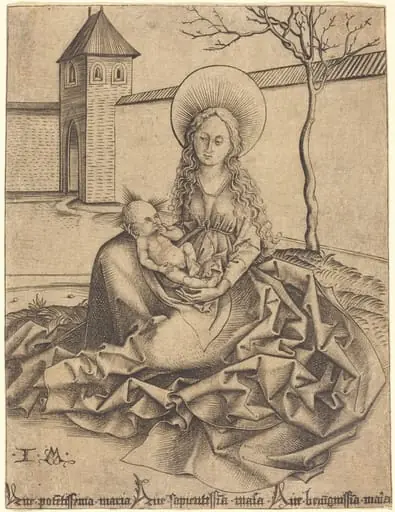
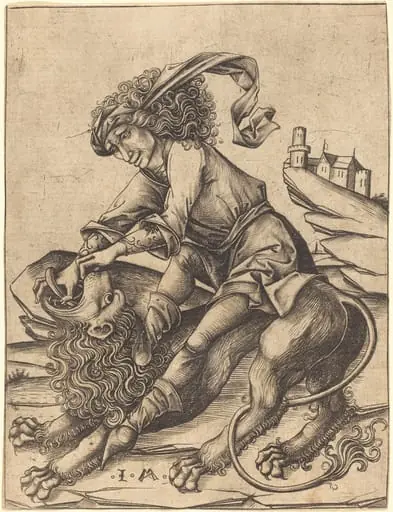
Created around 1475 by Israhel van Meckenem, this engraving on laid paper is one of over six hundred prints produced by the German artist, who was among the most active printmakers of the late 15th century. Though unsigned, the work bears the inscription 'Sanctus Mathias,' identifying its subject as the apostle Matthias. The image reflects the era’s devotional print culture, where religious figures were reproduced for private contemplation and instruction.
Subject & Meaning
The figure depicted is traditionally understood as Saint Matthias, the apostle chosen to replace Judas Iscariot. He is shown standing solemnly, one hand over his heart and the other holding a scroll—symbols of his role as a witness to Christ’s teachings. The halo confirms his sanctity, while the plain background focuses attention on his contemplative posture, aligning with medieval ideals of piety and inner devotion.
Technique & Style
Van Meckenem employed fine, controlled lines to model the folds of the saint’s robes, creating subtle gradations of light and shadow that suggest volume. The engraving’s precision reveals his training as a goldsmith, where detail and clarity were essential. The use of laid paper, with its characteristic chain lines, was standard for prints of the period, offering a textured ground that enhanced the ink’s contrast.
History & Provenance
The print emerged during a period of expanding print circulation in Northern Europe, when artists like van Meckenem reproduced religious imagery for a growing lay audience. Though no early ownership records are documented, its survival in multiple institutional collections suggests it was widely circulated and preserved as a devotional object. Its attribution to van Meckenem rests on stylistic comparison with his authenticated works.
Context
In the decades before the Reformation, printed images of saints served as tools for personal prayer and moral instruction. Van Meckenem’s output, including this engraving, responded to demand for affordable religious art among urban middle classes. His practice of copying earlier compositions—often from Netherlandish sources—helped standardize iconography across regions, reinforcing shared devotional practices.
Legacy
Van Meckenem’s prolific output helped establish engraving as a viable medium for mass-producing religious imagery. While his works were not always original, their technical consistency and accessibility influenced later printmakers. This engraving, though modest in scale, exemplifies how small-format prints contributed to the visual literacy of late medieval audiences, bridging ecclesiastical tradition and private devotion.
Artist & collection
Artist
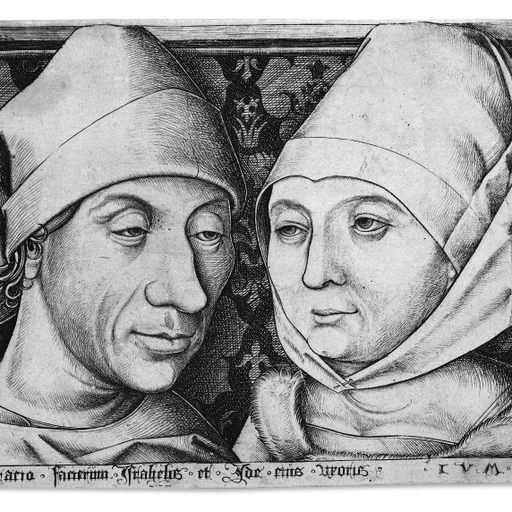
Israhel van Meckenem (c. 1445 – 10 November 1503), also known as Israhel van Meckenem the Younger, was a German printmaker and goldsmith, perhaps of a Dutch family origin. He was the most prolific engraver of the…