Artwork
Saint Sebaldus
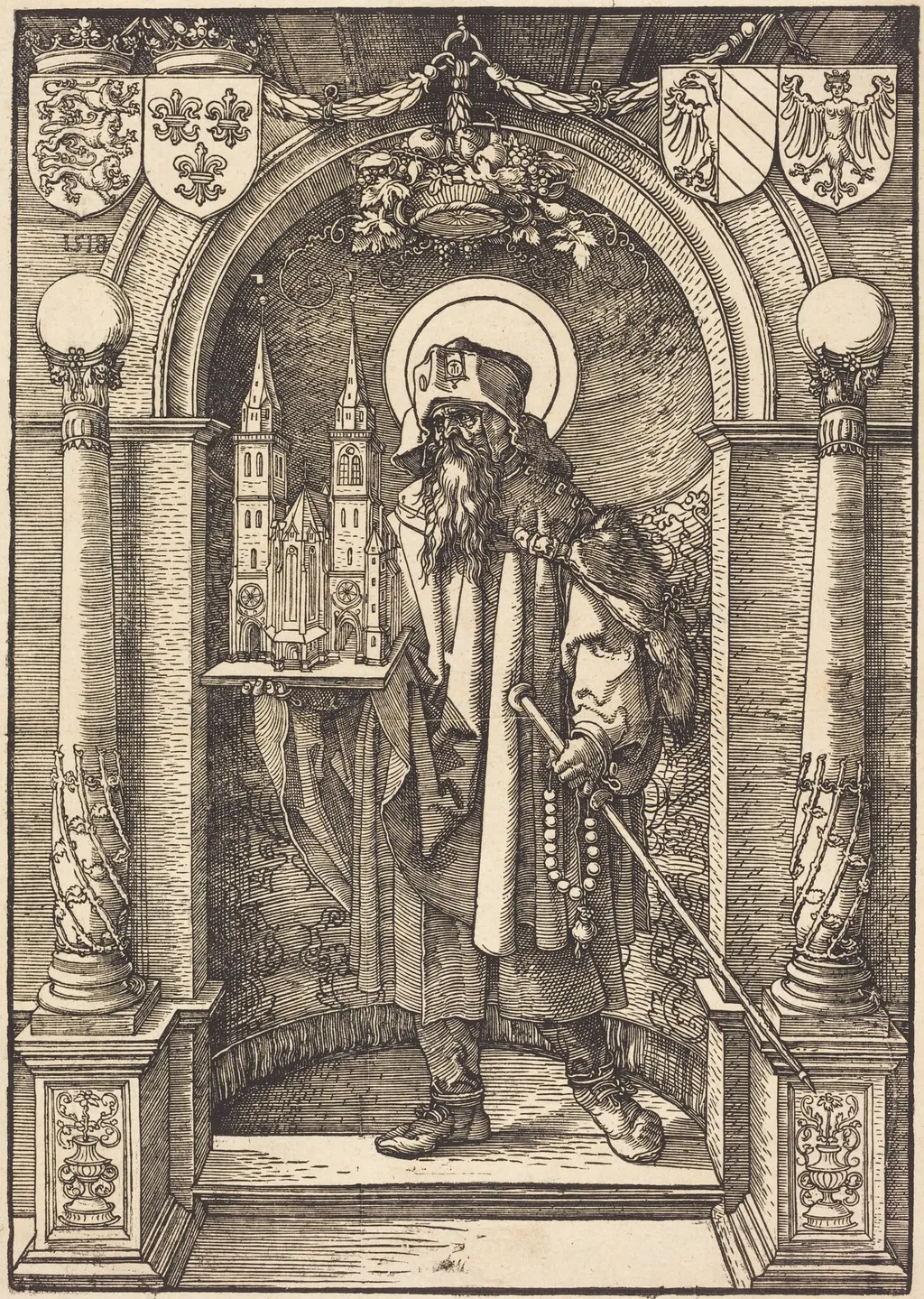
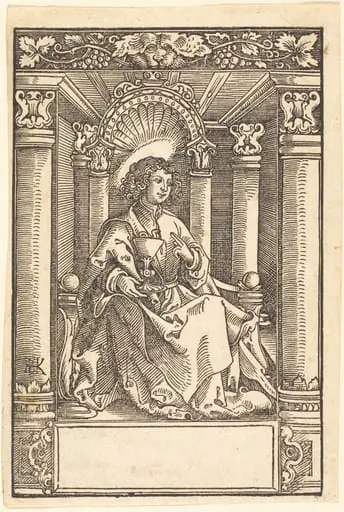
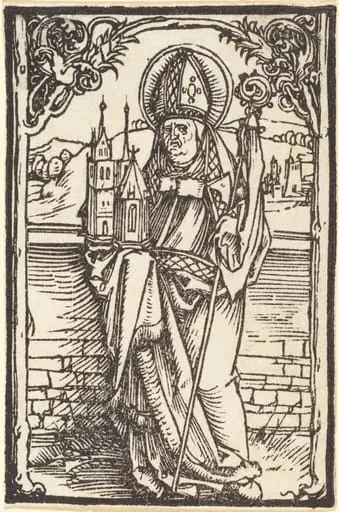
Saint Sebaldus is an ink print by the Renaissance artist Hans Springinklee. It dates from 1518 and is held in the collection of the National Gallery of Art.
About this work
Overview
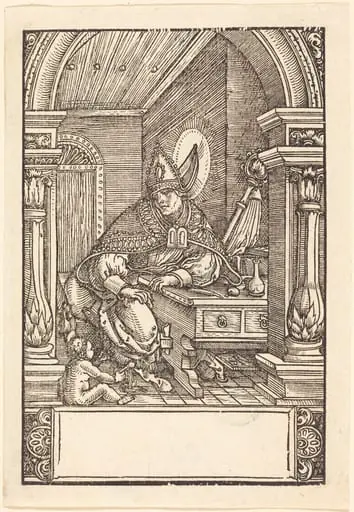
Created in 1518 by Hans Springinklee, a Nuremberg-based artist and former student of Albrecht Dürer, this woodcut depicts Saint Sebaldus, a local patron saint of Nuremberg. As a printmaker specializing in woodcuts, Springinklee produced this work within the religious visual culture of early 16th-century Germany, where devotional imagery was widely circulated through printed media.
Subject & Meaning
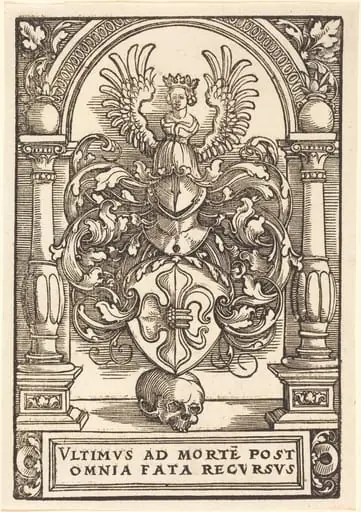
The inclusion of coats of arms suggests a connection to local patrons or institutions that commissioned or venerated the image.
The figure of Saint Sebaldus is shown as an elderly, bearded bishop, holding a pastoral staff and a miniature church, symbolizing his role as founder and protector of Nuremberg’s main church. The halo and architectural backdrop reinforce his sanctity and civic importance. The inclusion of coats of arms suggests a connection to local patrons or institutions that commissioned or venerated the image.
Technique & Style
Springinklee employed fine, precise lines to carve intricate patterns into the woodblock, filling every space with decorative detail—architectural motifs, heraldic shields, and textured backgrounds. The sharp contrasts and dense linework are characteristic of Northern Renaissance woodcuts, where clarity and ornamentation served both aesthetic and devotional purposes, enhancing the image’s legibility and symbolic richness.
History & Provenance
The woodcut was produced in Nuremberg during a period of flourishing print culture, likely intended for private devotion or institutional use. While its earliest ownership records are unclear, its style and subject align with other works commissioned by Nuremberg’s civic and ecclesiastical circles, indicating it was part of a broader effort to promote local religious identity through accessible imagery.
Context
In early 16th-century Germany, woodcuts were a primary medium for disseminating religious imagery, especially before the Reformation reshaped visual piety. Springinklee’s work reflects the persistence of Catholic devotional traditions in Nuremberg, even as reformist ideas gained ground. The emphasis on local saints and elaborate framing mirrored the city’s pride in its spiritual heritage.
Legacy
Though Springinklee is less known than Dürer, his woodcuts, including this one, contributed to the standardization of devotional iconography in southern Germany. The image of Saint Sebaldus endured in regional religious art and print collections, preserving a visual link between Nuremberg’s medieval past and its early modern identity through the enduring medium of the printed block.
Artist & collection

Artist
Hans Springinklee (c.1490/c.1495 – c.1540) was a German artist from Nuremberg, best known for his woodcuts. He was a pupil of Albrecht Dürer.