Artwork
The Expulsion from Paradise
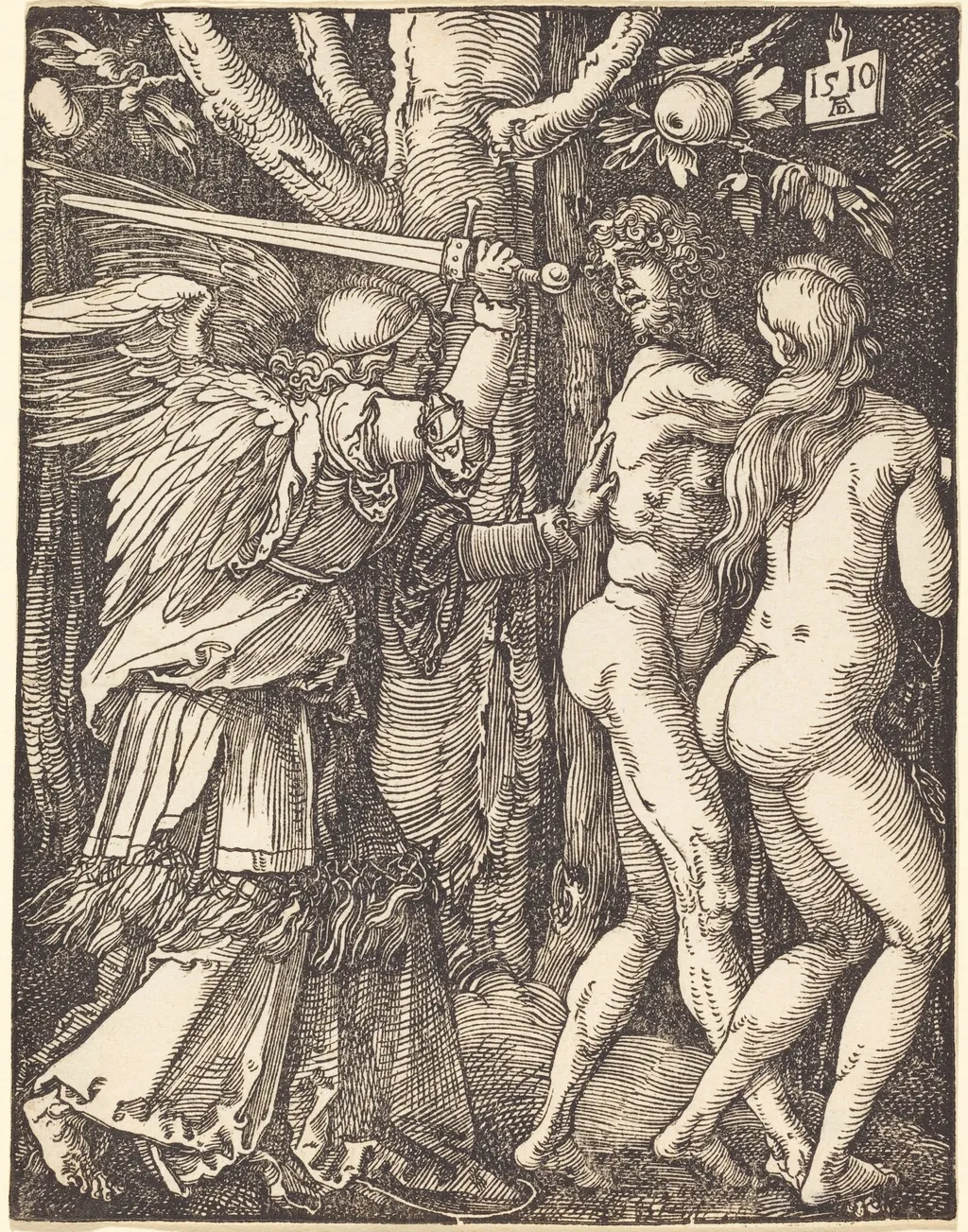
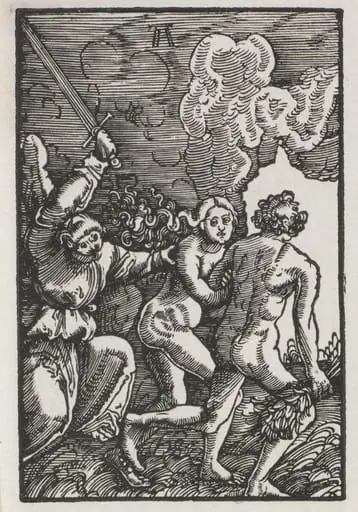
The Expulsion from Paradise is an ink print by the Northern Renaissance artist Albrecht Dürer. It dates from 1510 and is held in the collection of the Rosenwald Collection.
About this work
Overview
Albrecht Dürer's 'The Expulsion from Paradise' is a woodcut executed in 1510, depicting the biblical narrative of Adam and Eve's banishment from Eden.
Albrecht Dürer's 'The Expulsion from Paradise' is a woodcut executed in 1510, depicting the biblical narrative of Adam and Eve's banishment from Eden. The composition features the couple driven forward by a winged angel wielding a flaming sword. Eve is portrayed with a distinct expression of anguish, turning her head back toward the lost paradise, while Adam strides forward yet casts an upward glance at the divine messenger. Dürer utilizes the woodcut medium to achieve remarkable tonal variation and linear precision, characteristic of his mature printmaking style. The artist employs dense cross-hatching and varied line weights to model the figures' anatomy and the surrounding foliage, creating a sense of volume and dramatic movement within a two-dimensional plane. This work exemplifies Dürer's synthesis of Northern European detail with Italian Renaissance principles of proportion and perspective. Created during a period when the artist was refining his printmaking techniques to reach a broader European audience, the piece stands as a significant contribution to religious iconography of the German Renaissance. It demonstrates his ability to convey complex emotional states and theological themes through the stark contrast of black and white ink on laid paper.
Subject & Meaning
The image captures the theological theme of humanity’s fall, emphasizing the contrast between the innocence of the first humans and the divine judgment that follows. Eve’s backward gaze and pained expression convey remorse, whereas Adam’s forward stride, coupled with his upward glance, suggests a complex mix of resignation and contemplation of the divine presence.
Technique & Style
Created through the woodcut process, Dürer carved the design into a block of laid paper‑grade wood, leaving the lines in relief. Ink applied to the raised surfaces was transferred onto paper, producing the final print. Dürer’s characteristic fine line work renders delicate facial expressions and dynamic movement, allowing subtle emotional nuance within the medium’s stark contrasts.
History & Provenance
The print dates to 1510, a period when Dürer was exploring religious subjects alongside his renowned portraiture and landscape works. As a single‑sheet woodcut, it would have been produced in limited numbers for circulation among collectors and devotional audiences. Surviving copies are held in several European museum collections, reflecting its continued scholarly interest.
Artist & collection
Artist
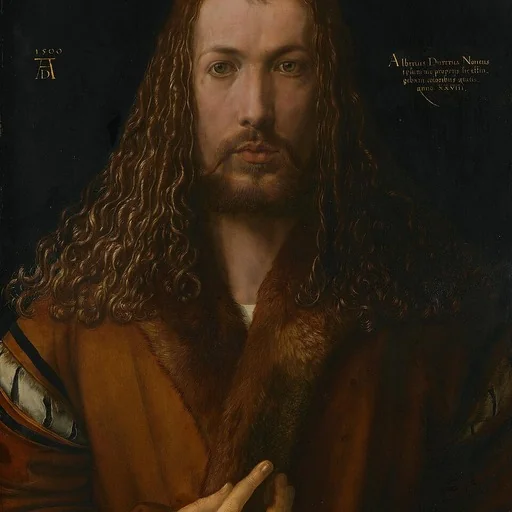
Albrecht Dürer spent his life in Nuremberg, a busy German city where artists traded prints like currency.
![Madonna and Child [obverse], by Albrecht Dürer](https://artifactworldgallery.com/img/albrecht-durer--madonna-and-child-obverse--d7b8ebf05d22ebe5-w320.webp)
![Lot and His Daughters [reverse], by Albrecht Dürer](https://artifactworldgallery.com/img/albrecht-durer--lot-and-his-daughters-reverse--b4ebf9b282faa17a-w320.webp)