Artwork
The Death of the Virgin
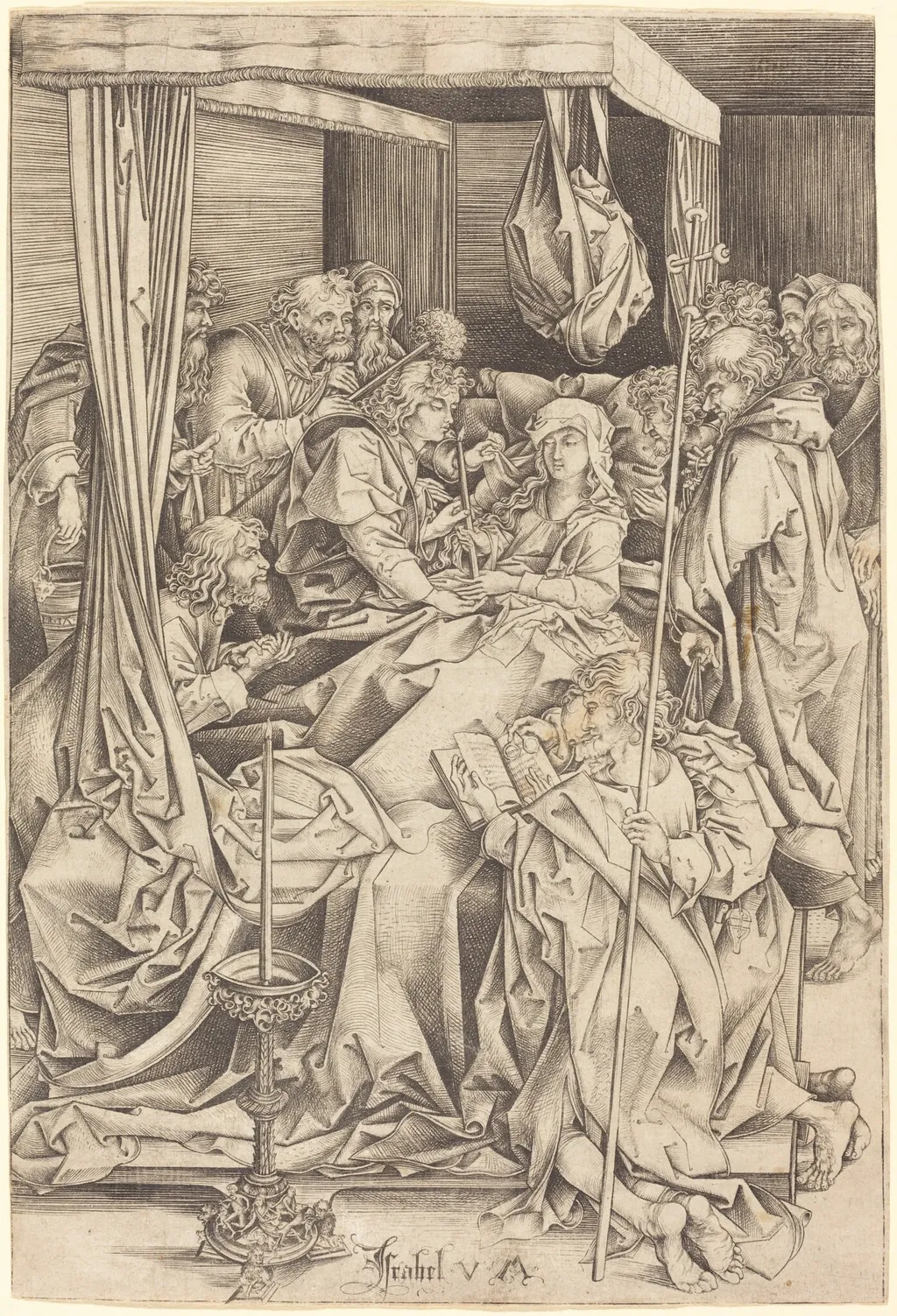
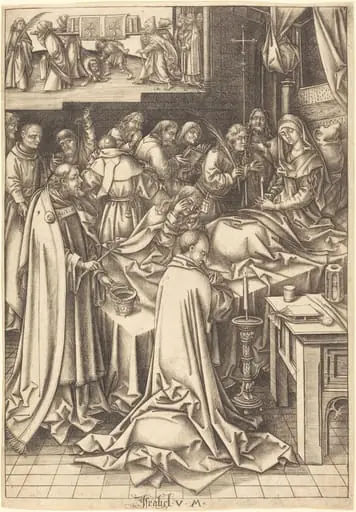
The Death of the Virgin is an ink print by the Renaissance artist Israhel van Meckenem. It dates from 1485 and is held in the collection of the National Gallery of Art.
About this work
Overview
As one of the most active printmakers of the late 15th century, van Meckenem often reproduced existing compositions, adapting them for the medium of engraving.
Created around 1485 by Israhel van Meckenem, a German engraver and goldsmith, this print is one of over six hundred works he produced during his career. As one of the most active printmakers of the late 15th century, van Meckenem often reproduced existing compositions, adapting them for the medium of engraving. This piece captures a widely circulated religious scene: the passing of the Virgin Mary, rendered with meticulous line work characteristic of Northern European printmaking of the era.
Subject & Meaning
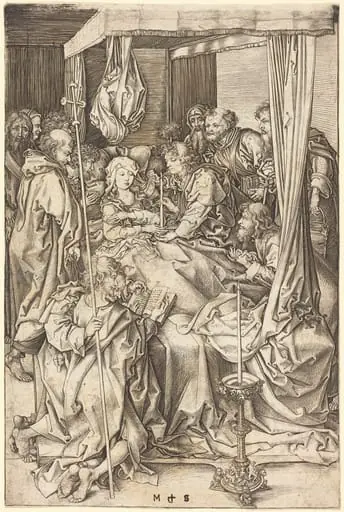
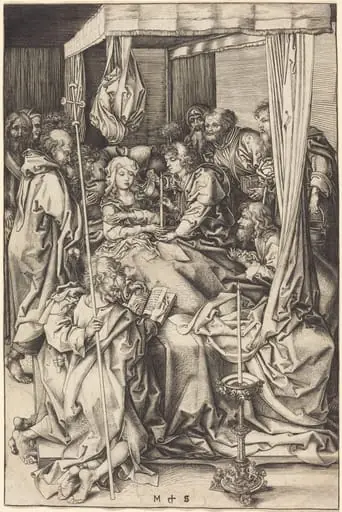
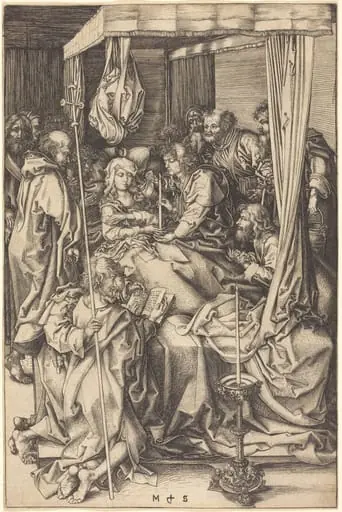
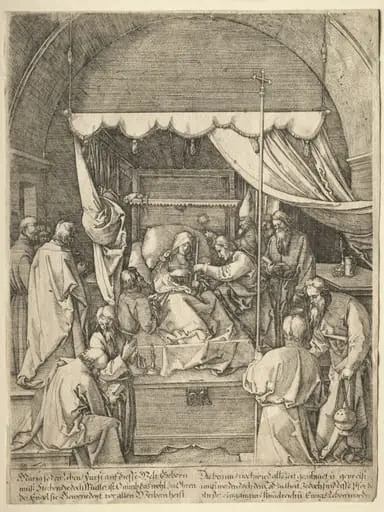
The scene portrays the Virgin Mary on her deathbed, surrounded by mourners in a modest interior. Figures kneel, stand, and reach toward her, expressing grief through gesture and posture. A candle and staff suggest ritual observance, while a child’s outstretched hand conveys innocence confronting mortality. The subject, drawn from apocryphal traditions, was a common theme in devotional art, intended to inspire contemplation of death, faith, and divine grace.
Technique & Style
Van Meckenem employed fine, controlled engraving lines to model form and depth, creating contrast through dense hatching and delicate crosshatching. The textures of fabric, wood, and skin are suggested not by tone but by the density and direction of incised lines. The composition is tightly packed, with figures arranged in a shallow space behind the central bed, enhancing the intimacy and emotional weight of the moment through precise draftsmanship.
History & Provenance
The print was made during van Meckenem’s most productive years in Bocholt, Germany, where he operated a workshop that produced both original designs and copies of works by other artists. While no specific early ownership records survive, the print’s survival in multiple impressions suggests it circulated widely among religious households and collectors. Its technical quality and subject matter made it suitable for private devotion and educational use.
Context
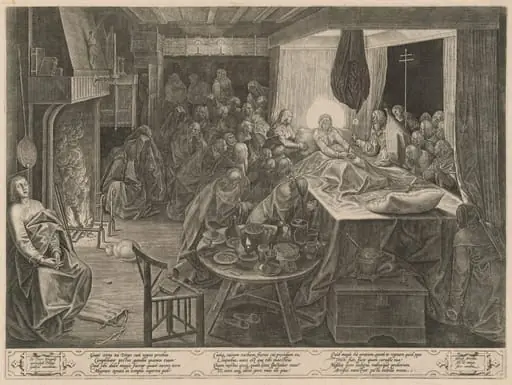
In the late 15th century, engraved prints became accessible tools for personal piety, especially in urban centers of the Holy Roman Empire. The Death of the Virgin was a popular theme in both painting and print, reflecting broader devotional trends emphasizing Mary’s humanity and the sanctity of death. Van Meckenem’s version aligns with northern European traditions that favored emotional immediacy and detailed narrative over idealized forms.
Legacy
Van Meckenem’s engraving contributed to the standardization of religious imagery in print form, influencing later artists who adapted his compositions. Though not original in subject, his technical precision helped elevate engraving as a medium capable of conveying complex emotional narratives. His prolific output ensured wide dissemination, embedding this depiction of the Virgin’s passing into the visual culture of early modern Europe.
Artist & collection
Artist
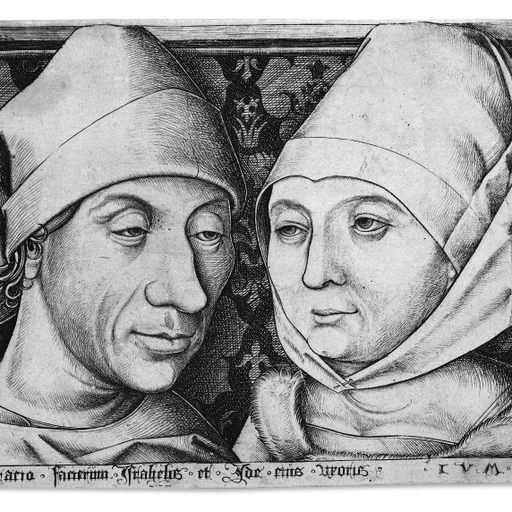
Israhel van Meckenem (c. 1445 – 10 November 1503), also known as Israhel van Meckenem the Younger, was a German printmaker and goldsmith, perhaps of a Dutch family origin. He was the most prolific engraver of the…