Artwork
The Virgin and Child on a Crescent with a Sceptre and a Starry Crown
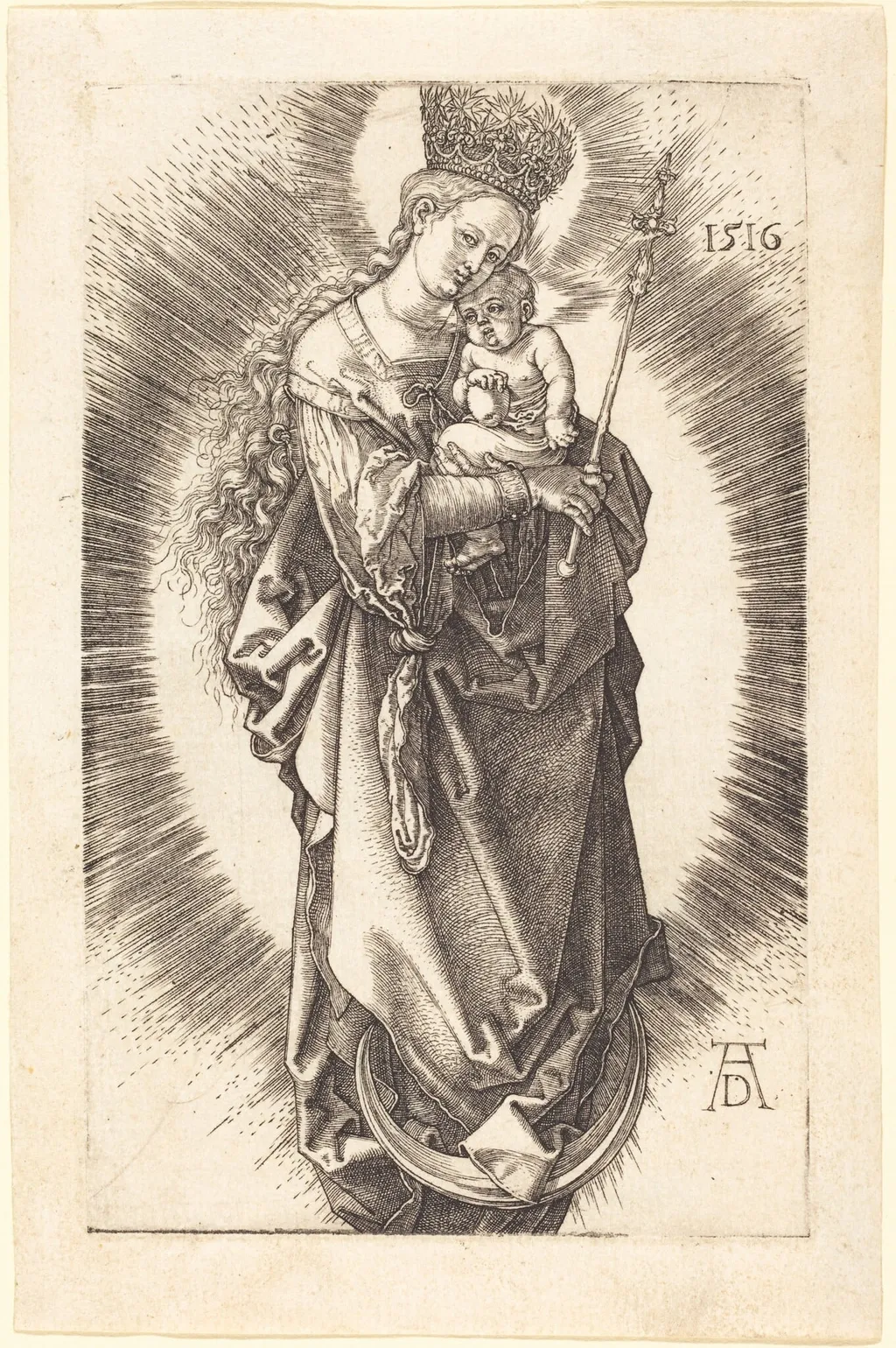
The Virgin and Child on a Crescent with a Sceptre and a Starry Crown is an ink print by the Northern Renaissance artist Albrecht Dürer. It dates from 1516 and is held in the collection of the British Museum.
About this work
Overview
The work depicts the Virgin Mary standing upon a crescent moon, a visual reference to the Woman of the Apocalypse described in Revelation 12:1.
Created in 1516, The Virgin and Child on a Crescent with a Sceptre and a Starry Crown is an engraving by Albrecht Dürer, a central figure of the German Renaissance. The work depicts the Virgin Mary standing upon a crescent moon, a visual reference to the Woman of the Apocalypse described in Revelation 12:1. She holds the Christ Child on her left arm while grasping a sceptre in her right hand. Her head is adorned with a starry crown, and she is surrounded by a dense array of stars against a dark background. Dürer executed the piece using his masterful engraving technique on laid paper, characterized by precise, intricate cross-hatching that creates depth and texture without the use of color. The composition balances the celestial symbolism with the human forms, emphasizing Mary's role as the Queen of Heaven. This print reflects Dürer's continued engagement with religious iconography and his ability to synthesize Northern European detail with Italianate compositional harmony during the later phase of his career. The work stands as a significant example of his graphic output, demonstrating his technical precision and theological engagement.
Subject & Meaning
The image portrays Mary as the celestial queen, holding the Christ Child who rests gently on the moon’s curve. The sceptre signifies divine authority, while the star‑filled crown alludes to the heavens and the notion of Mary as the “Woman of the Apocalypse.” Together, these symbols convey a theological synthesis of earthly motherhood and cosmic sovereignty.
Technique & Style
Created through copperplate engraving, Dürer incised fine lines that translate into delicate tonal variations on laid paper. The method allows for precise rendering of textures—such as the soft folds of garments and the shimmering surface of the moon—while maintaining the crispness characteristic of his later prints. The composition reflects the Northern Renaissance’s interest in detailed naturalism combined with symbolic complexity.
History & Provenance
The engraving was produced in Dürer’s final decade, a period marked by his deepening engagement with religious subjects. Early impressions circulated among collectors in the Holy Roman Empire, and the print appears in several 16th‑century inventories. Surviving copies are held in major European institutions, attesting to its continued relevance in the study of Dürer’s print oeuvre.
Context
In the early 16th century, the motif of the Virgin on a crescent moon derived from medieval apocalyptic imagery and the Book of Revelation. Dürer’s incorporation of a starry crown reflects contemporary fascination with astronomy and the symbolic alignment of celestial bodies with divine order, a theme also explored in his contemporaries’ devotional works.
Artist & collection
Artist
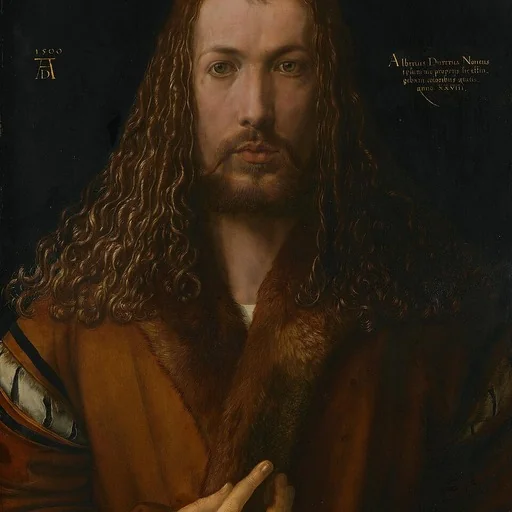
Albrecht Dürer spent his life in Nuremberg, a busy German city where artists traded prints like currency.

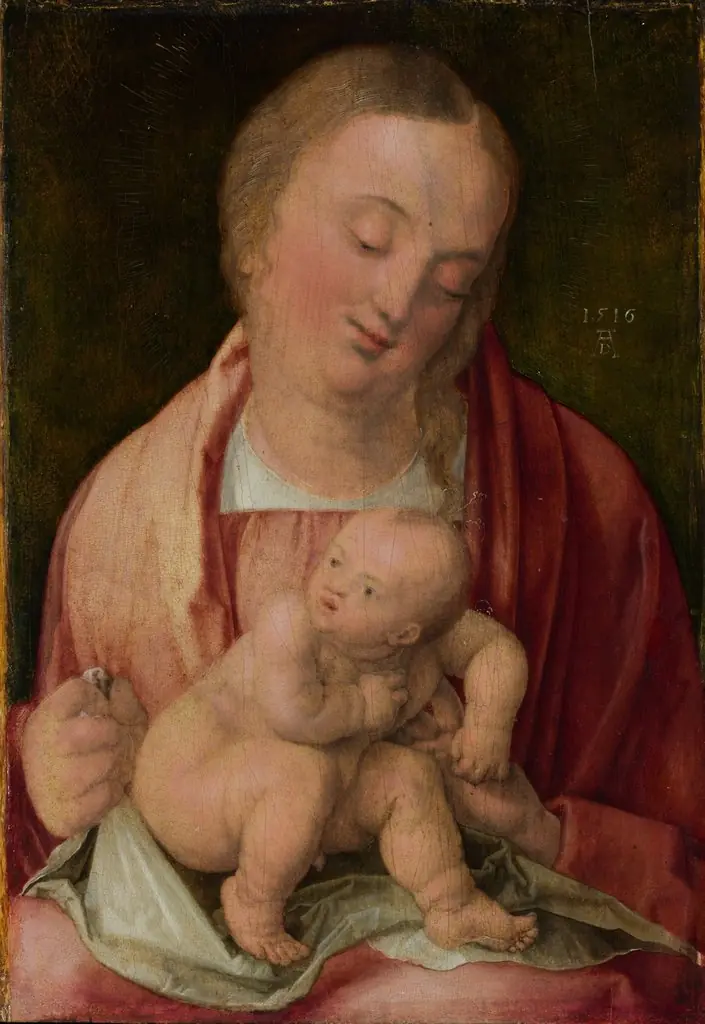
![Madonna and Child [obverse], by Albrecht Dürer](https://artifactworldgallery.com/img/albrecht-durer--madonna-and-child-obverse--d7b8ebf05d22ebe5-w320.webp)
![Lot and His Daughters [reverse], by Albrecht Dürer](https://artifactworldgallery.com/img/albrecht-durer--lot-and-his-daughters-reverse--b4ebf9b282faa17a-w320.webp)
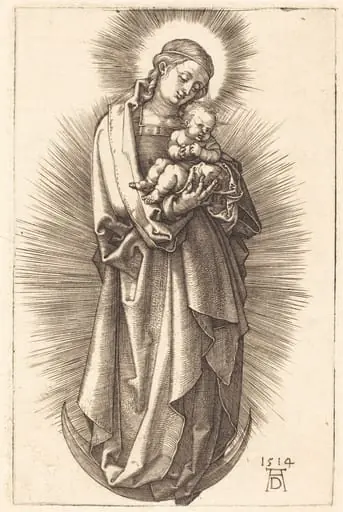 The Virgin and Child on a Crescent with a Diadem
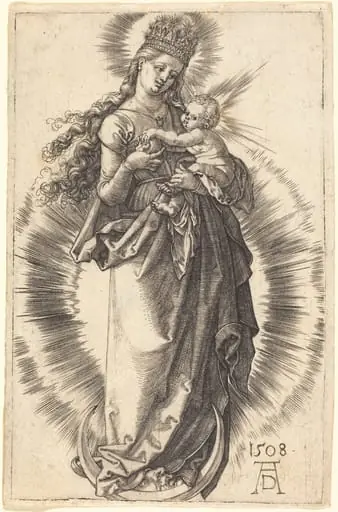 The Virgin and Child on a Crescent with a Starry Crown
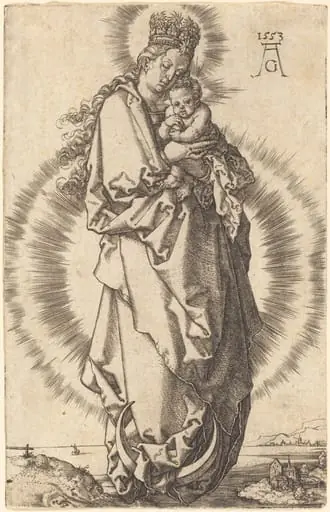 The Virgin with the Child on the Crescent
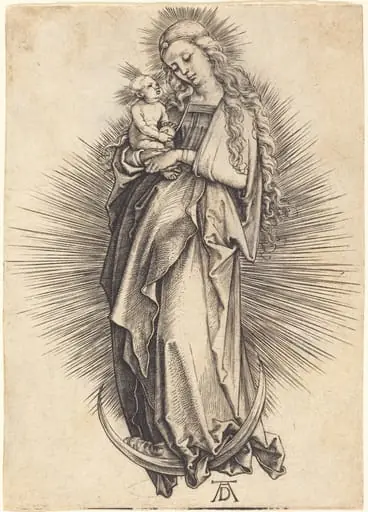 The Virgin on the Crescent
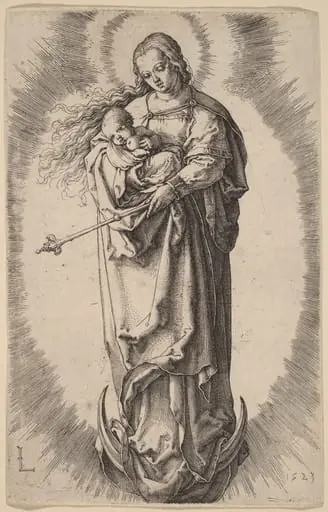 The Virgin and Child on the Crescent
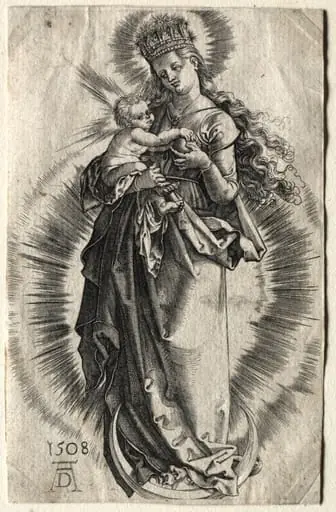 Virgin on a Crescent with a Starry Crown
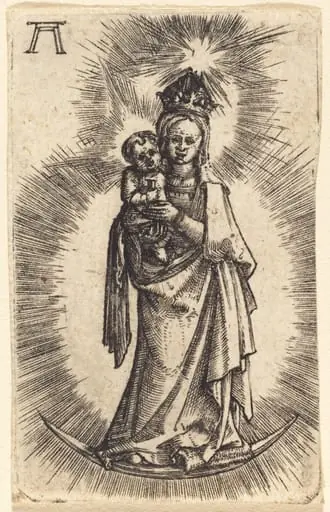 The Virgin on the Crescent
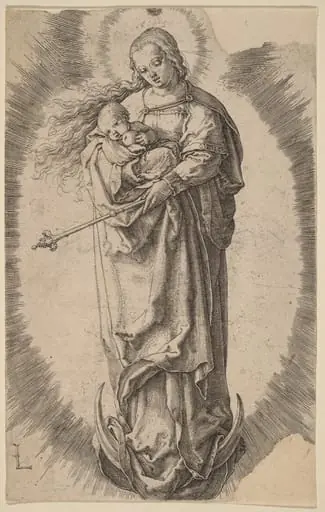 The Virgin and Child on the Crescent
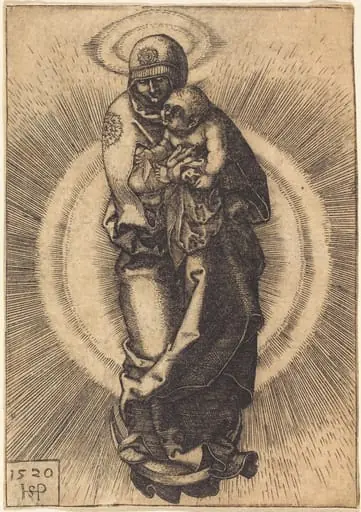 The Virgin and Child on the Crescent
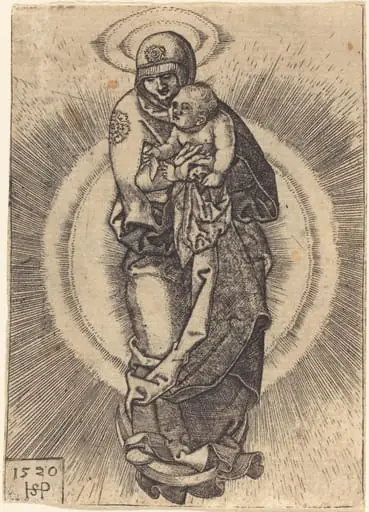 The Virgin and Child on the Crescent
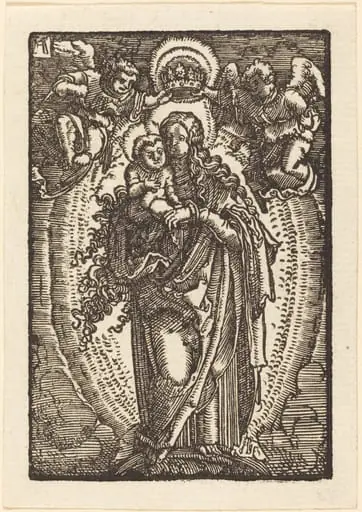 The Virgin and Child on a Crescent
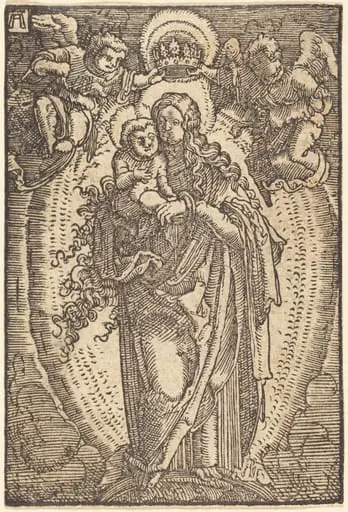 The Virgin and Child on a Crescent