Artwork
Strada Gabroveni
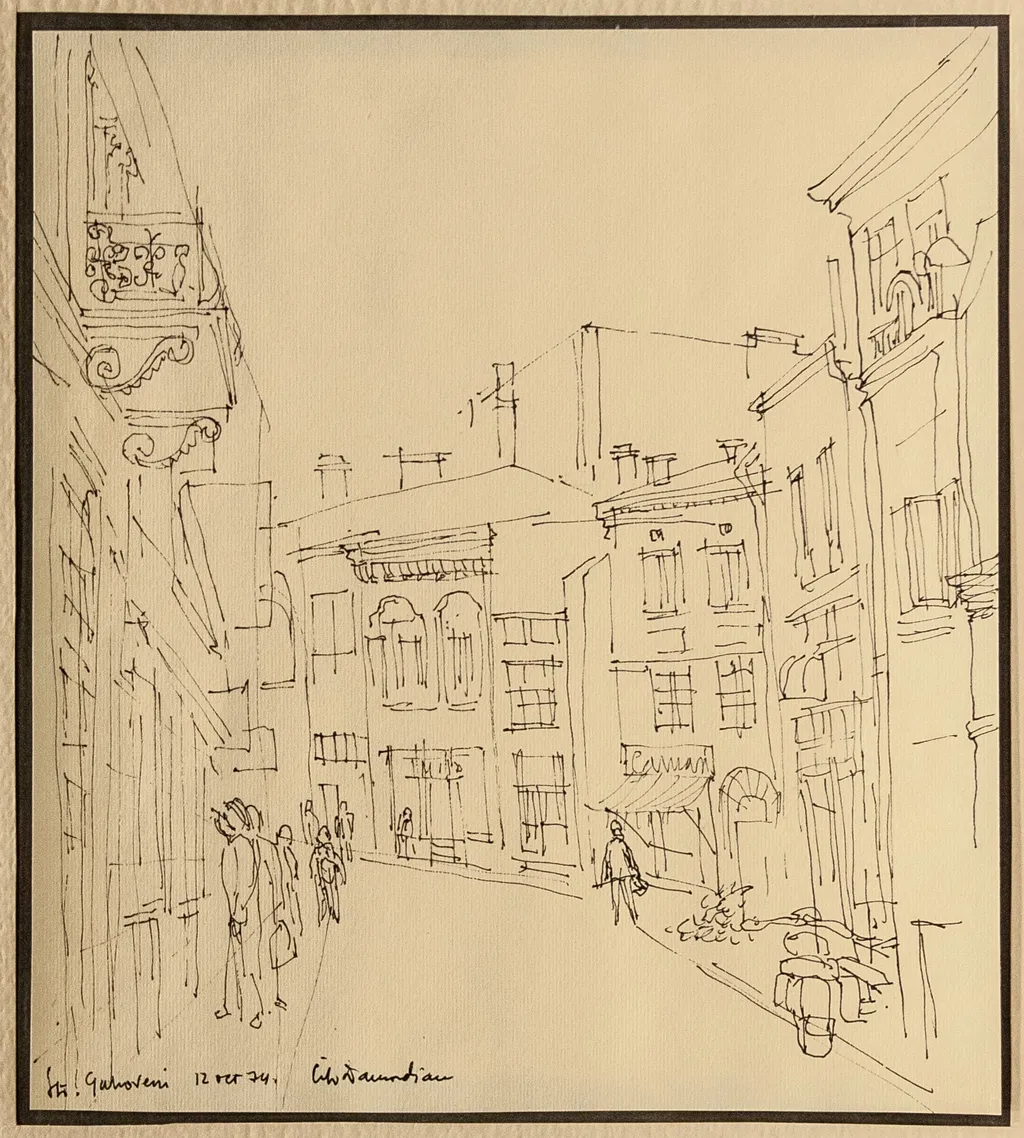
Strada Gabroveni is a drawing by Cik Damadian. It dates from 1950 and is held in the collection of the Gavrila Simion Eco-Museum Research Institute Tulcea.
About this work
Overview
Strada Gabroveni is a pencil sketch from around 1950 by Cik Damadian, currently in the collection of the Museum of Ethnography.
Strada Gabroveni is a pencil sketch from around 1950 by Cik Damadian, currently in the collection of the Museum of Ethnography. Rendered with minimal detail and fluid, overlapping lines, the drawing captures a momentary impression of an urban street scene rather than a polished depiction. Its informal quality suggests it was made as a quick observational study, likely during a walk through the neighborhood.
Subject & Meaning
The scene depicts a modest urban thoroughfare in Bucharest, with row houses, a distant church spire, and a horse-drawn cart moving along the pavement. Pedestrians are suggested by sparse, gestural marks. The inclusion of everyday elements—signs, windows, a cart—points to an interest in ordinary life, not grand architecture or ceremony. The work reflects an unidealized view of the city’s daily rhythm.
Technique & Style
Damadian employed loose, rapid pencil strokes with minimal shading. Lines overlap to imply spatial depth rather than using perspective rules. Cross-hatching appears sparingly, used more to suggest texture on walls or shadows than to model form. The absence of fine detail and the sketchy handling convey immediacy, as if the artist recorded the scene in real time, prioritizing movement over precision.
History & Provenance
The drawing entered the Museum of Ethnography’s collection after its creation, likely through donation or acquisition tied to the artist’s broader documentation of Romanian urban life. No record of exhibition or public display prior to its institutional acquisition is known. Its preservation suggests it was valued for its ethnographic insight rather than its artistic finish.
Context
Created in postwar Romania, the sketch reflects a period of modest urban renewal and persistent traditional elements in city life. Horse-drawn transport still coexisted with emerging motorized vehicles, and many buildings retained prewar forms. Damadian’s focus on such details aligns with broader efforts among local artists to document the changing face of Romanian towns during social transition.
Legacy
Strada Gabroveni remains a quiet example of mid-century Romanian observational drawing. It contributes to a modest but significant body of work that records everyday urban environments before rapid modernization transformed them. Though not widely exhibited, it serves as a reference for scholars studying vernacular visual culture in Eastern Europe during the 1950s.
Artist & collection
Artist
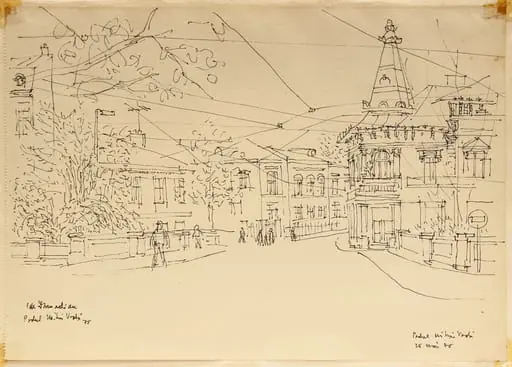
Cik Damadian made street scenes and buildings in ink and clay. Their drawings like Podul Mihai Vodă show bridges and rivers with quick lines, while sculptures such as Strada Ilfov turn sidewalks and storefronts into…
Museum
Gavrila Simion Eco-Museum Research Institute Tulcea
Continue through works from the same source collection.
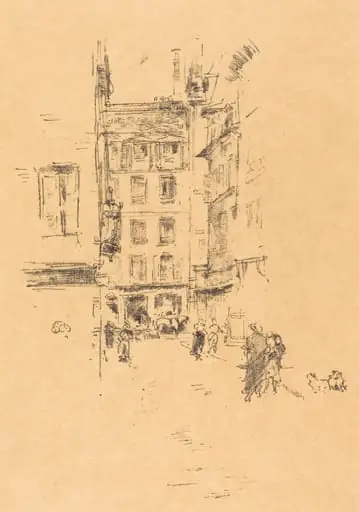 Rue Furstenburg
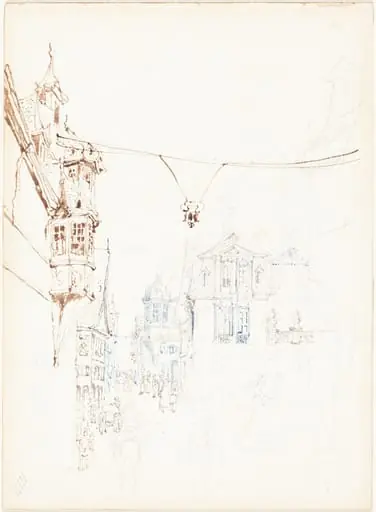 Continental Street Scene
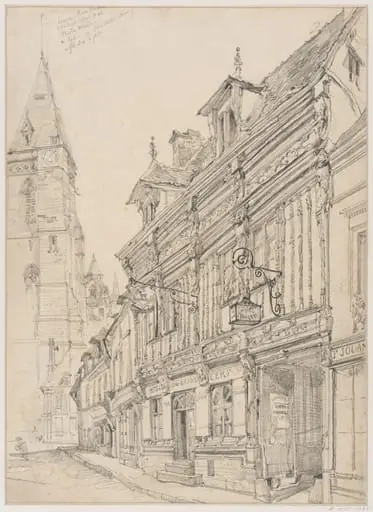 Hôtel du Grand Cerf, Les Andelys
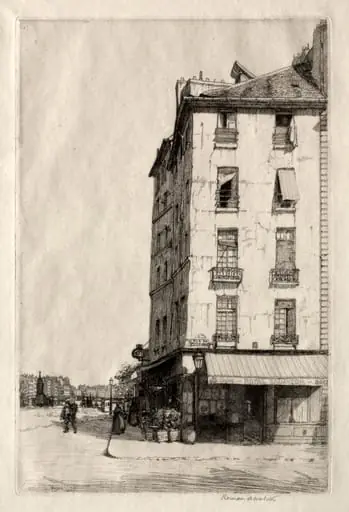 Quay Montebello
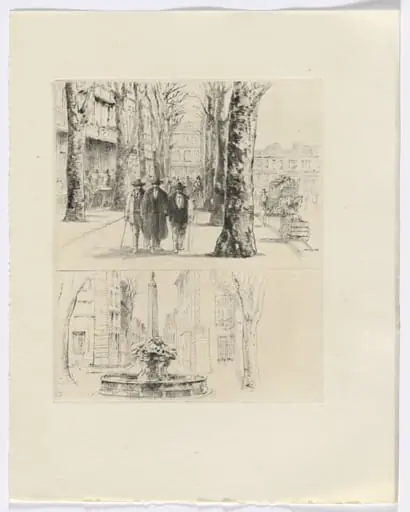 Frédéric Mistral: Mémoires et Recits by Frédéric Mistral: city street scene/ fountain (insert after p. 120)
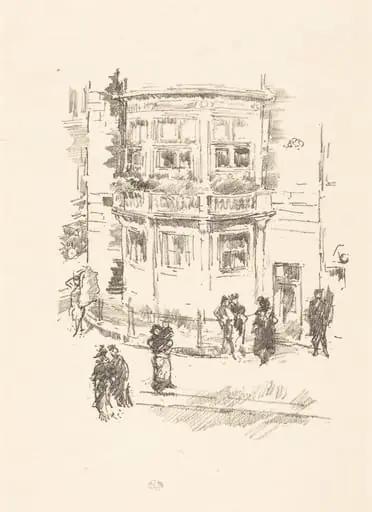 The Manager's Window, Gaiety Theatre
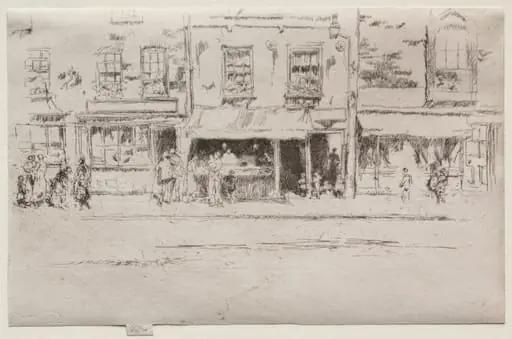 Fish Shop, Chelsea
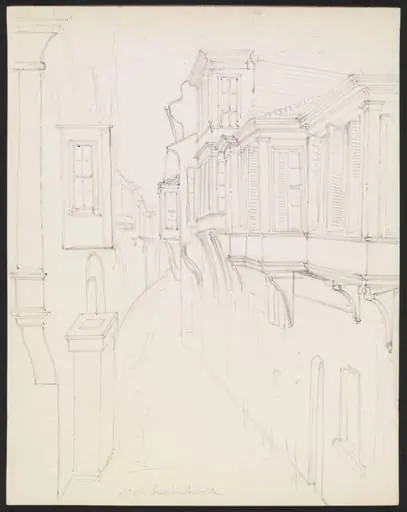 Constantinople
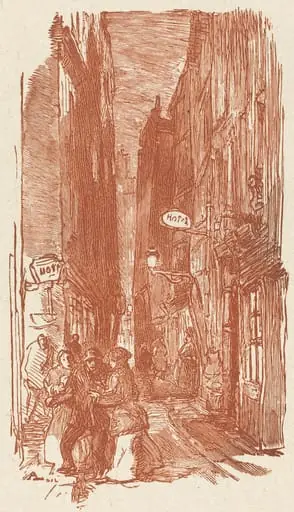 Rue Saint-Severin
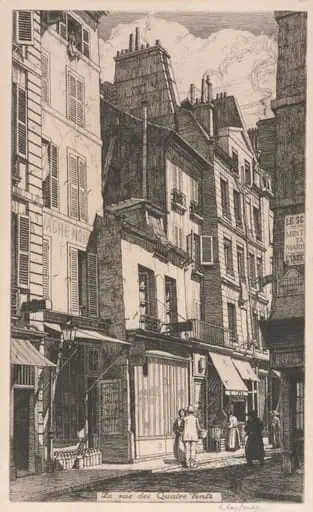 La rue des Quatre Vents
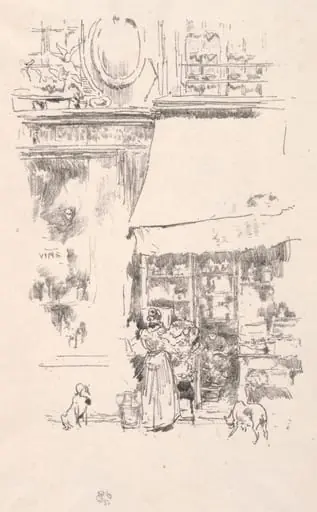 La fruitière de la Rue de Grenelle