Artwork
Continental Street Scene
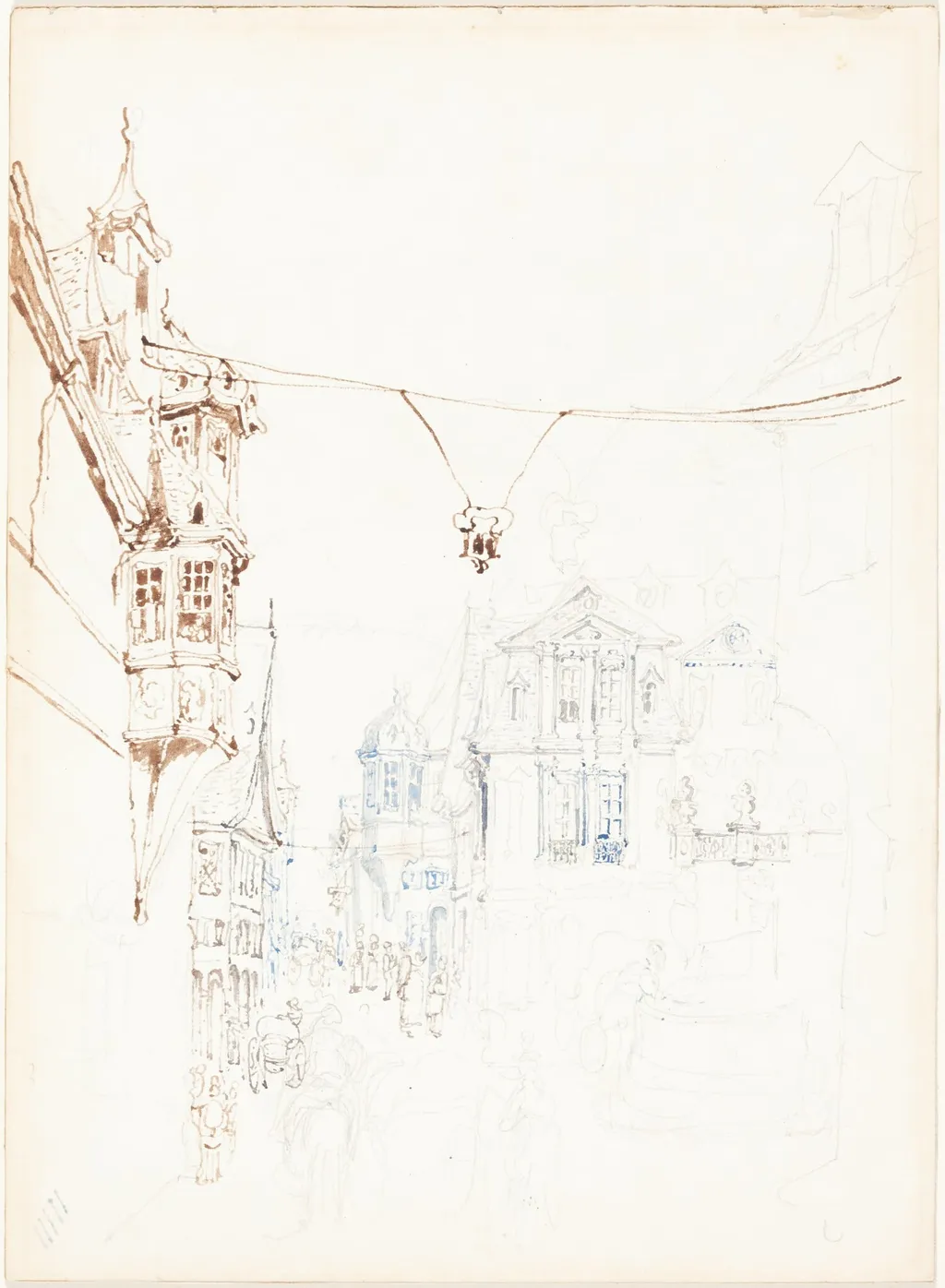
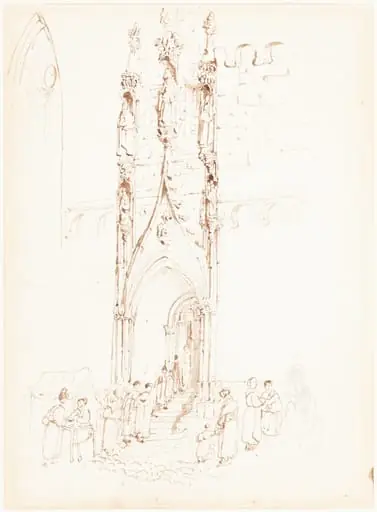
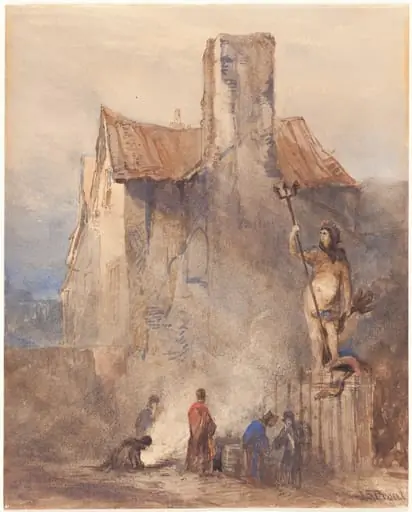
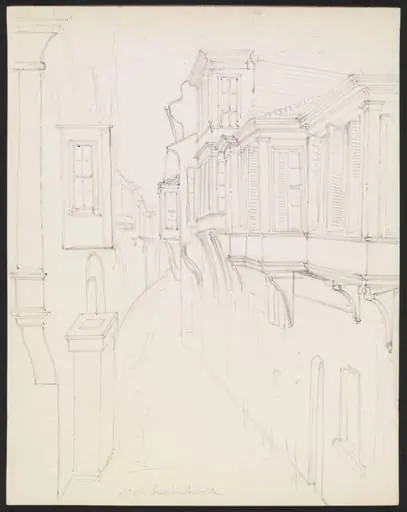
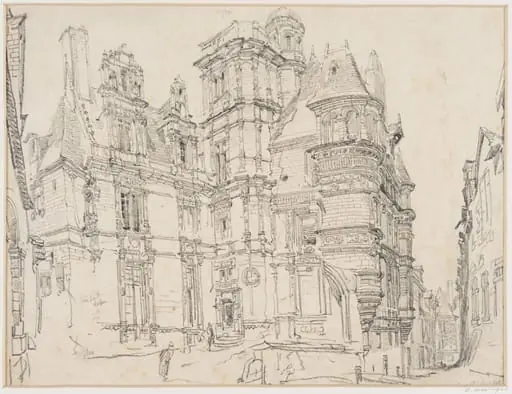
Continental Street Scene is a graphite drawing by the Impressionist artist John Skinner Prout. It dates from 1865 and is held in the collection of the National Gallery of Art.
About this work
Overview
Though Prout spent much of his career in Australia during the 1840s, this work reflects his continued engagement with European urban subjects later in life.
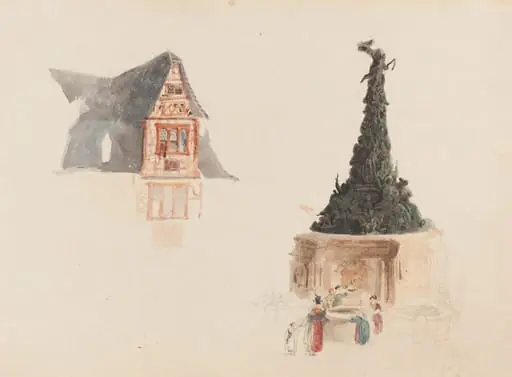
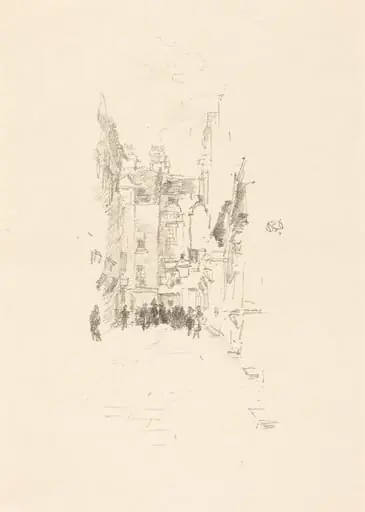
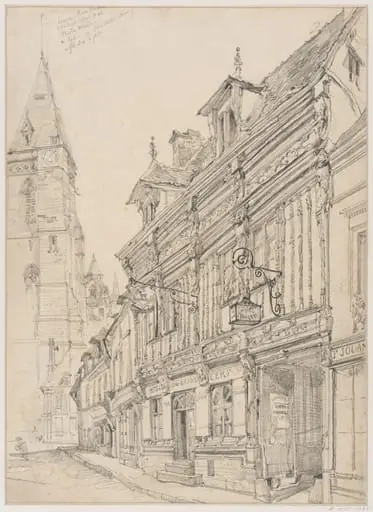
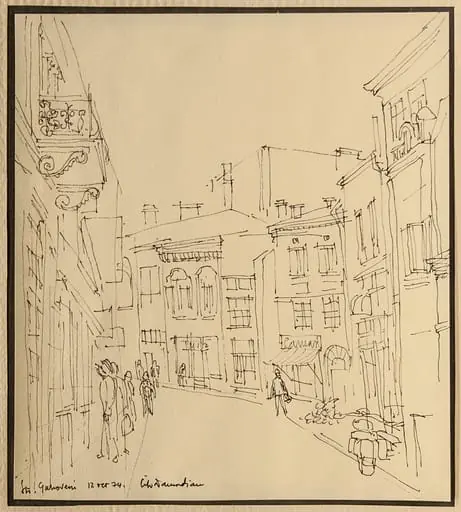
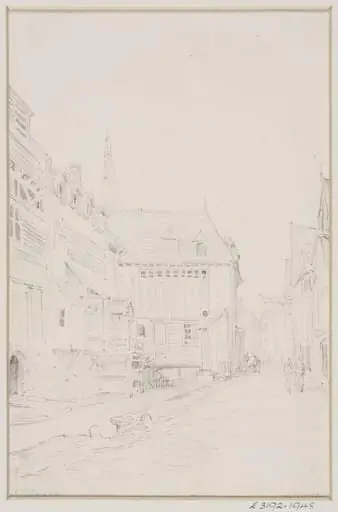
Created in 1865, *Continental Street Scene* is a drawing by John Skinner Prout, executed in graphite, pen, and brown and blue inks on wove paper. Though Prout spent much of his career in Australia during the 1840s, this work reflects his continued engagement with European urban subjects later in life. The piece captures a fleeting moment in a foreign city, rendered with minimal finish and an emphasis on observation over polish.
Subject & Meaning
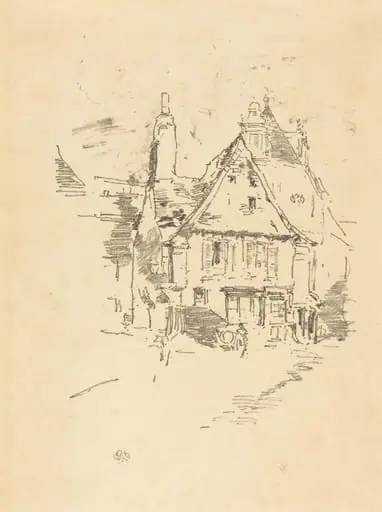
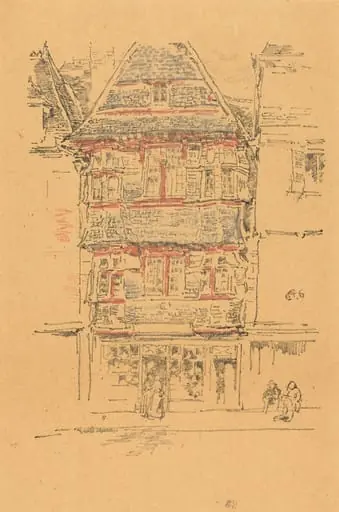
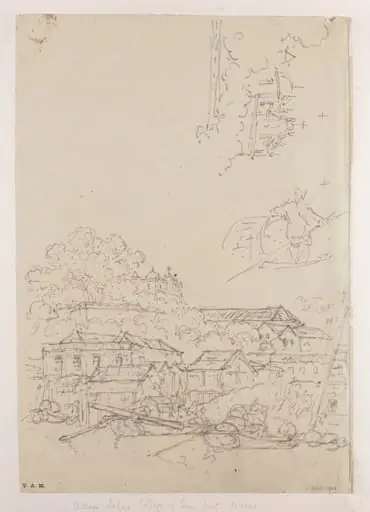
The drawing portrays a narrow street corner in a continental European town, dominated by two contrasting buildings: a tall, slender structure with arched windows on the left and a broader, classical-style façade receding into the background. A handful of indistinct figures move along the pavement, suggesting daily life without narrative focus. The scene conveys quiet urban rhythm rather than a specific event, emphasizing atmosphere over detail.
Technique & Style
Prout employed light pencil lines and fluid ink strokes to suggest architecture and movement, avoiding heavy definition. Brown and blue inks create a muted, earthy palette, with the blue adding subtle coolness to shadows and highlights. The sketch’s unfinished quality—loose contours, sparse cross-hatching, and minimal shading—reflects a spontaneous, on-site approach, characteristic of his graphic practice as a record of visual experience.
History & Provenance
Prout produced this work after returning to England from Australia, during a period when he revisited European subjects through drawing. The piece likely stems from his personal travels or studies of continental urban environments. Its intimate scale and informal execution suggest it was made for private use rather than public display, possibly as a preparatory study or personal record.
Context
In the mid-19th century, artists increasingly turned to sketching as a means of direct observation, influenced by emerging practices in topographical drawing and the rise of travel literature. Prout’s work aligns with this trend, valuing immediacy and personal perception over idealized composition. His background as a lithographer and teacher informed his disciplined yet flexible handling of line and tone.
Legacy
Though not widely exhibited during his lifetime, Prout’s drawings like this one contribute to an understated tradition of British artists documenting foreign cities with quiet precision. His use of ink and graphite to capture transient urban moments influenced later generations of sketchers, particularly those interested in the documentary potential of rapid, unpolished mark-making.
Artist & collection

Artist
John Skinner Prout (19 December 1805 – 29 August 1876) was a British painter, writer, lithographer and art teacher who worked in Australia in the 1840s.