Artwork
Rue Saint-Severin
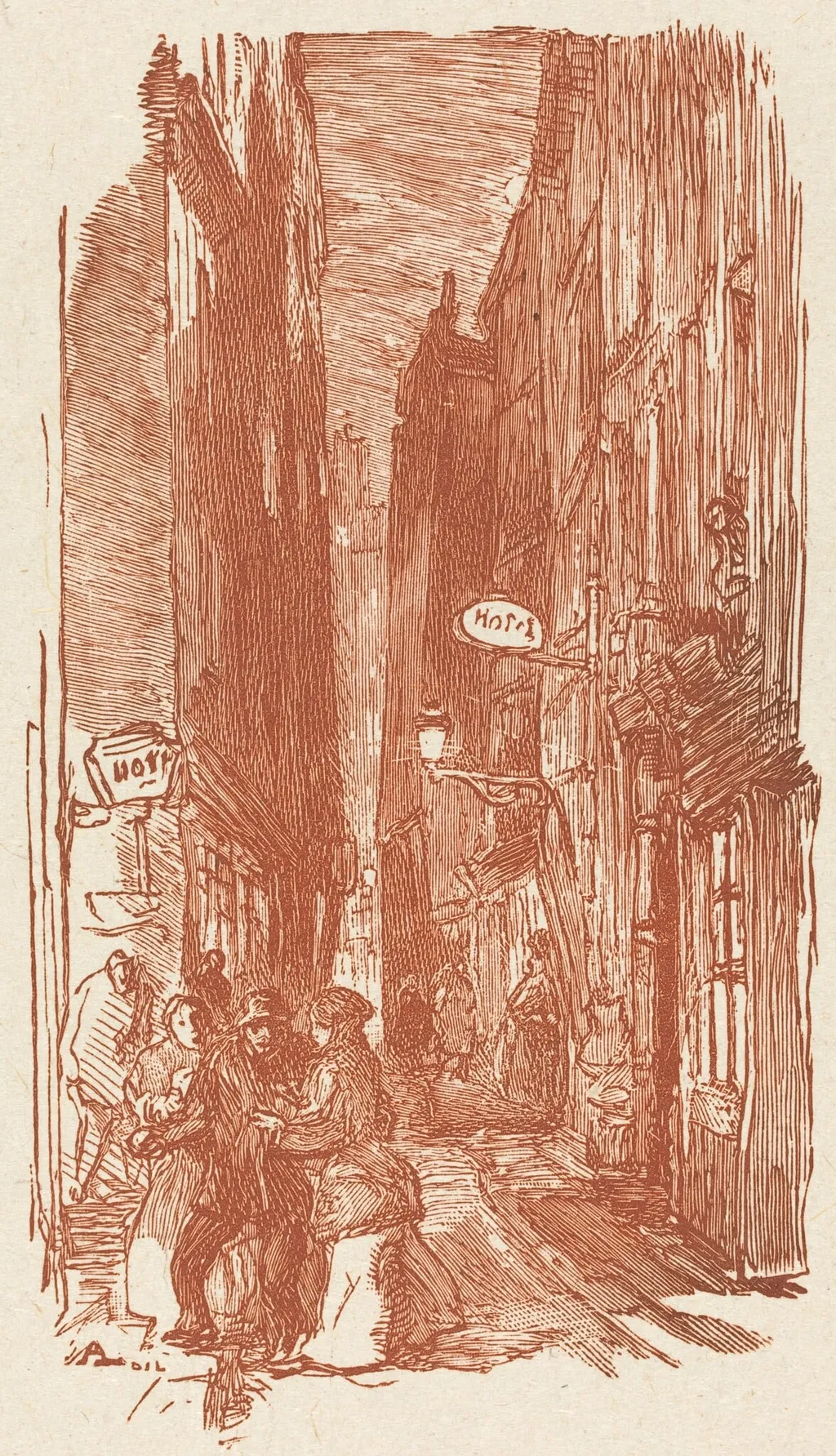
Rue Saint-Severin is an ink print by Auguste Lepère. It dates from 1901 and is held in the collection of the National Gallery of Art.
About this work
Overview
Created in 1901, *Rue Saint‑Severin* is a wood engraving printed in sanguine by French artist Auguste Lepère. The print captures a narrow Parisian street flanked by tall, muted façades, its quiet atmosphere emphasized by the sparse presence of a few figures near the lower left. The work exemplifies Lepère’s dedication to the wood engraving medium during a period of renewed interest across Europe.
Subject & Meaning
The composition presents an empty thoroughfare that recedes into distance, its architecture rendered in subdued tones that suggest early morning or evening light. A handful of pedestrians gathered at the corner provide a subtle narrative of urban life, inviting contemplation of the street’s stillness amid the bustle of the city.
Technique & Style
Lepère employs fine cross‑hatching and varied line density to model form and convey texture, allowing the sanguine ink to shift between deep shadows and soft highlights. The meticulous carving of the wood block creates a tactile surface, while the limited palette of reddish‑brown tones unifies the scene and enhances its atmospheric depth.
History & Provenance
Born in 1849, Lepère emerged as a leading figure in the late‑19th‑century revival of wood engraving, a medium that had fallen out of favor to lithography and photography. *Rue Saint‑Severin* was produced during the height of his printmaking career and reflects his commitment to reestablishing engraving as a vehicle for artistic expression in France and beyond.
Artist & collection
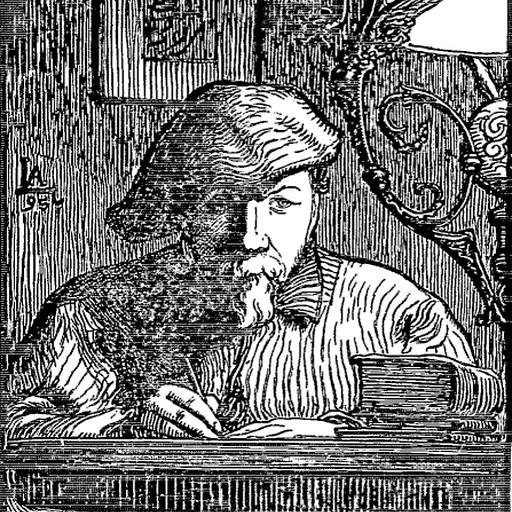
Artist
Louis-Auguste Lepère (30 November 1849 – 20 November 1918) was a French painter and etcher. Lepère is also considered a leader in the creative revival of wood engraving in Europe.

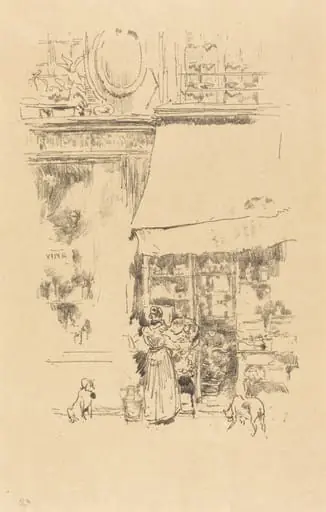 La Fruitière de la rue de Grenelle
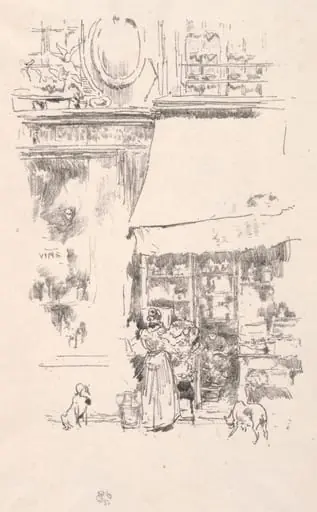 La fruitière de la Rue de Grenelle
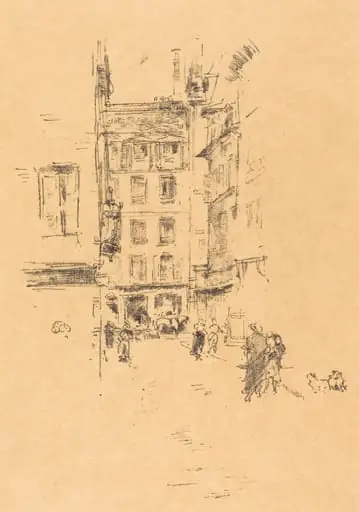 Rue Furstenburg
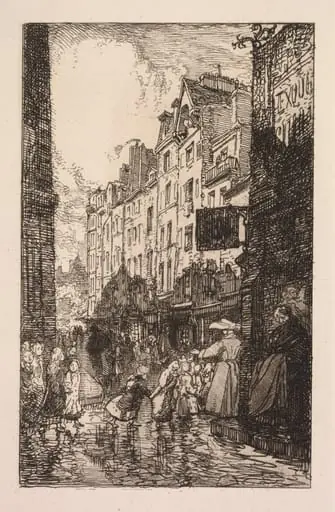 La Biévre, Les Gobelins, Saint-Séverin: Le Quartier Saint-Séverin: La Rue des Prêtres Saint-Séverin
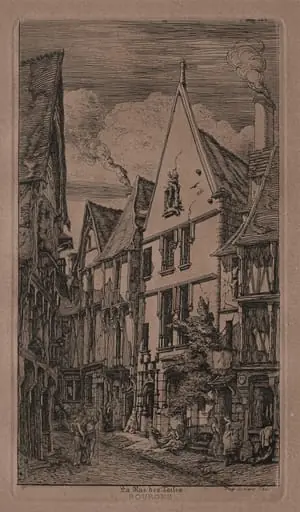 Rue des Toilés, Bourges
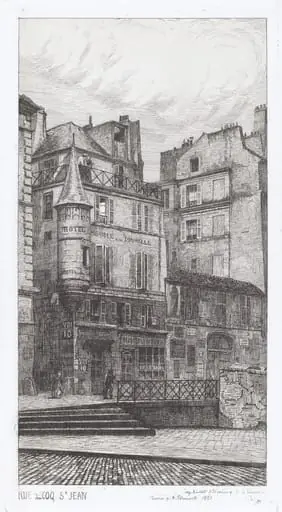 Rue du Coq St. Jean
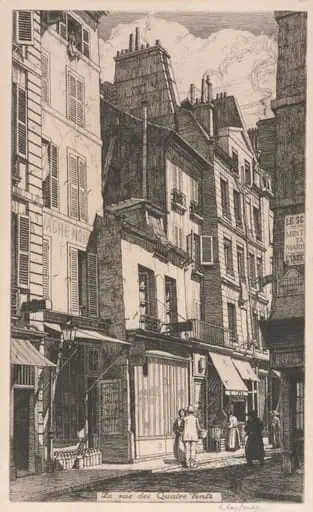 La rue des Quatre Vents
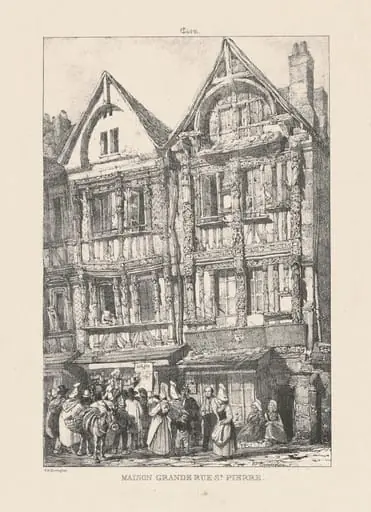 Maison Grande Rue St. Pierre
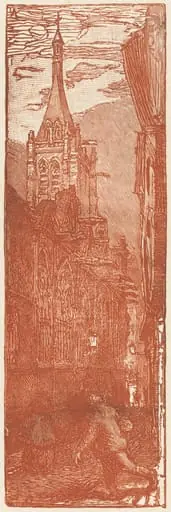 Saint-Severin
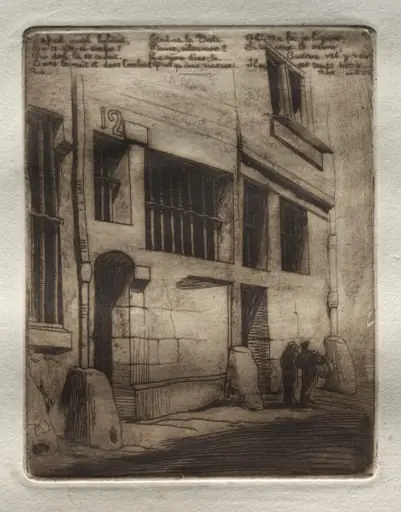 La Rue des Mauvais Garçons