Artwork
Le juge de mesle
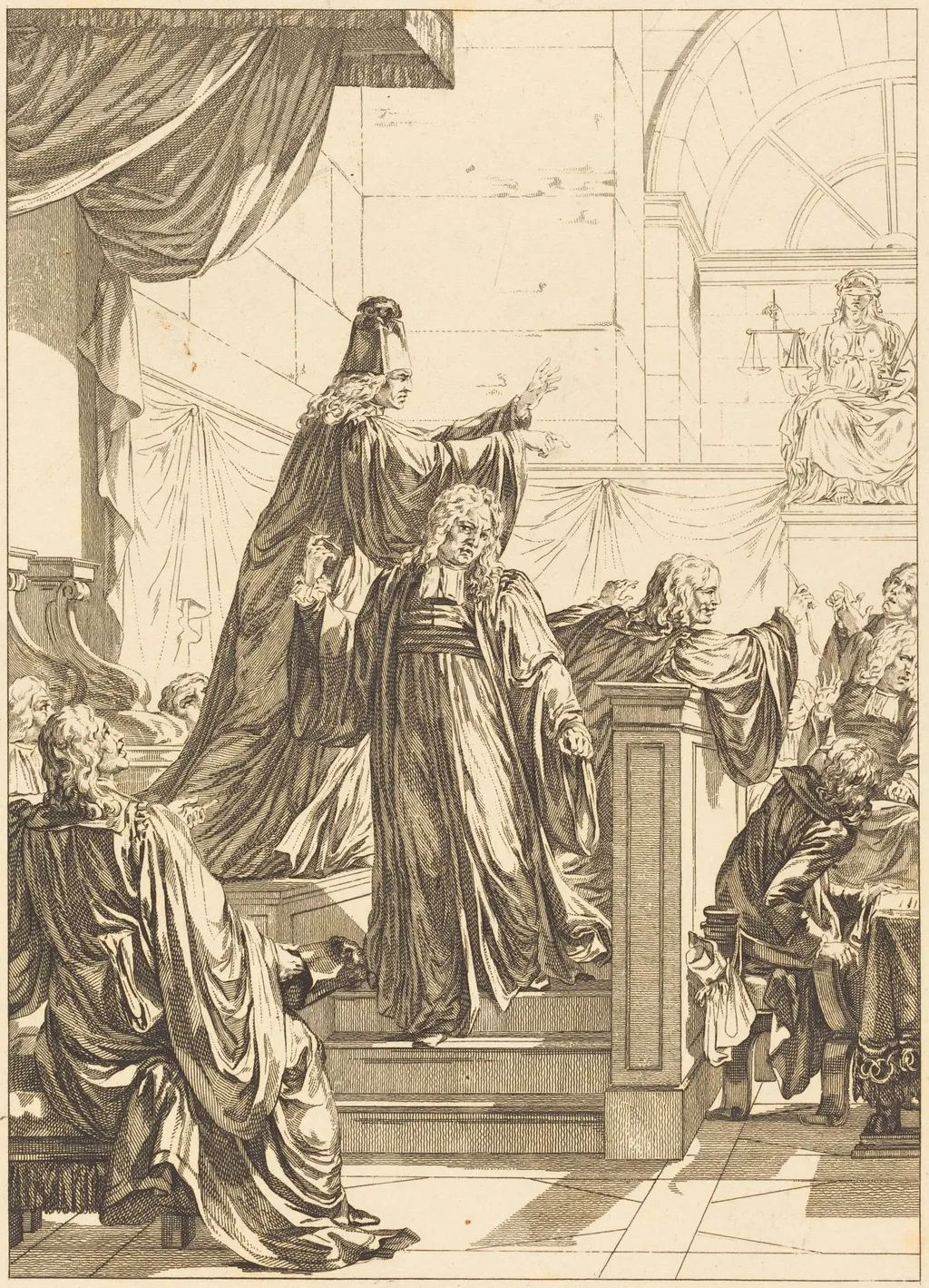
Le juge de mesle is an ink print by the Baroque artist Jean Dambrun. It dates from 1774 and is held in the collection of the National Gallery of Art.
About this work
Overview
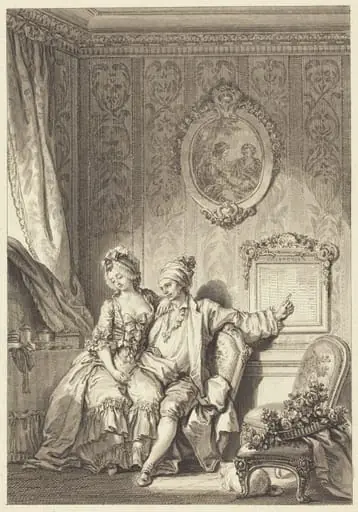
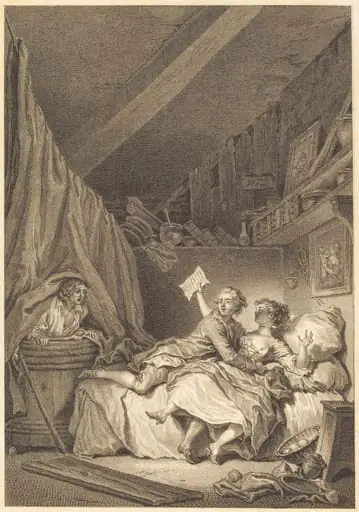
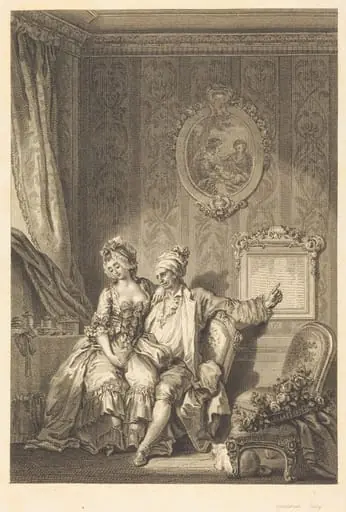
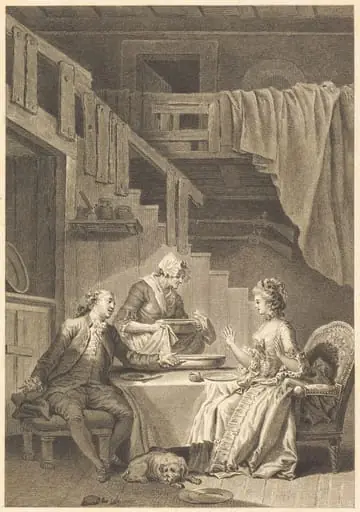
Jean Dambrun’s 1774 etching titled *Le juge de mesle* presents a theatrical courtroom interior. The composition centers on a robed magistrate elevated on a dais, his arm extended in a decisive gesture, while a wig‑clad figure reaches upward. Spectators line the space, their gazes fixed on the unfolding drama, and a solemn statue occupies the background behind heavy drapery.
Subject & Meaning
The work captures a pivotal moment of legal authority, suggesting a judgment of considerable consequence. The juxtaposition of the judge’s commanding posture with the attentive crowd underscores themes of power, obedience, and the public nature of judicial proceedings in the eighteenth‑century French legal system.
Technique & Style
Executed as an etching, the image relies on crisp, incised lines to delineate the textures of fabric, woodwork, and stone. Dambrun employs strong contrasts of light and shadow, enhancing the sense of depth and tension within the confined space, while the fine hatching conveys the intricate details of clothing and architectural elements.
Context
Created in the late Ancien Régime, the print reflects contemporary interest in the formalities of court life and the visual culture of authority. Etchings such as this were often circulated among educated audiences, serving both as documentation of institutional rituals and as moral commentary on the administration of justice.
History & Provenance
The etching is catalogued as a single‑sheet print, attributed to Dambrun and dated 1774. Its survival in museum collections indicates it was likely part of a series of prints illustrating legal scenes, though specific ownership records prior to its acquisition remain limited.
Artist & collection


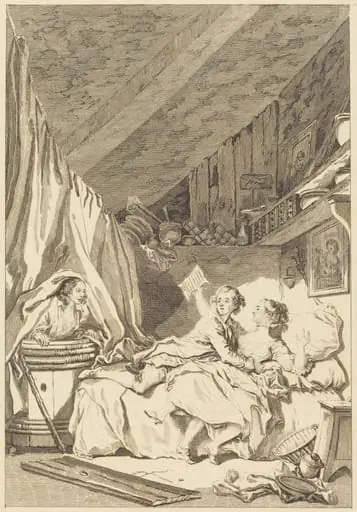
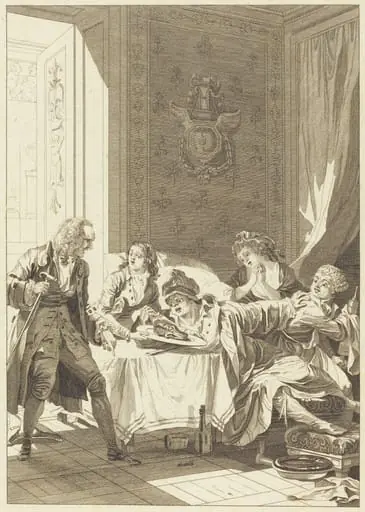 Le glouton
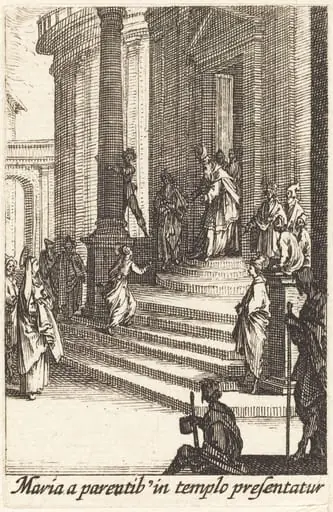 The Presentation of the Virgin
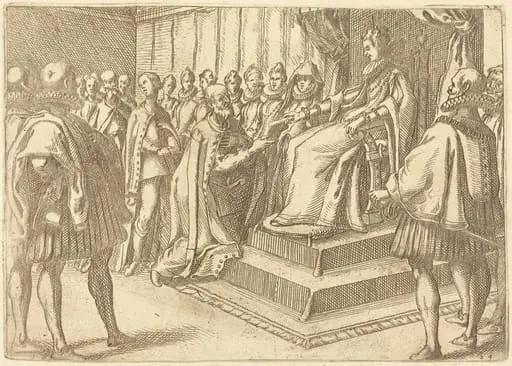 Reception of the Envoy of Poland
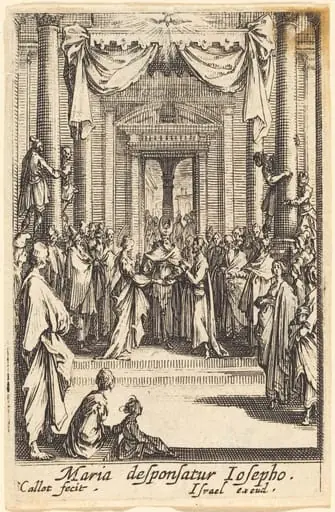 The Marriage of the Virgin
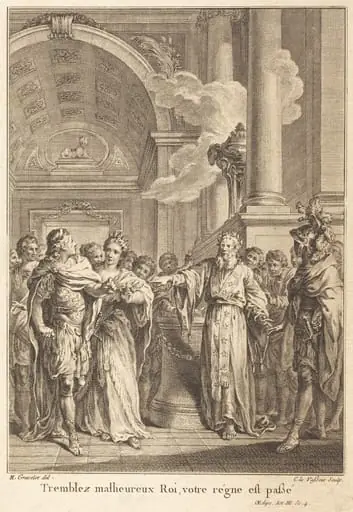 Tremblez malheureux Roi, votre régne est passé
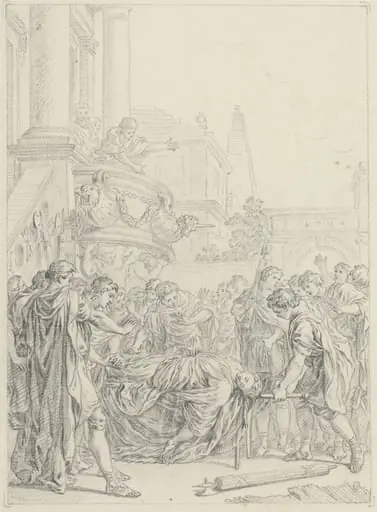 Du plus grand des Romains voilà ce qui vous reste
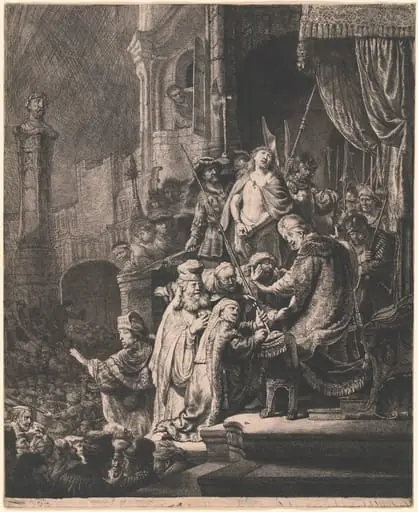 Christ before Pilate: Large Plate
 Medea, or the Marriage of Jason and Creusa
 Paul before Félix (Large Plate)
 Salome Dancing Before Herod