Artwork
Le savetier
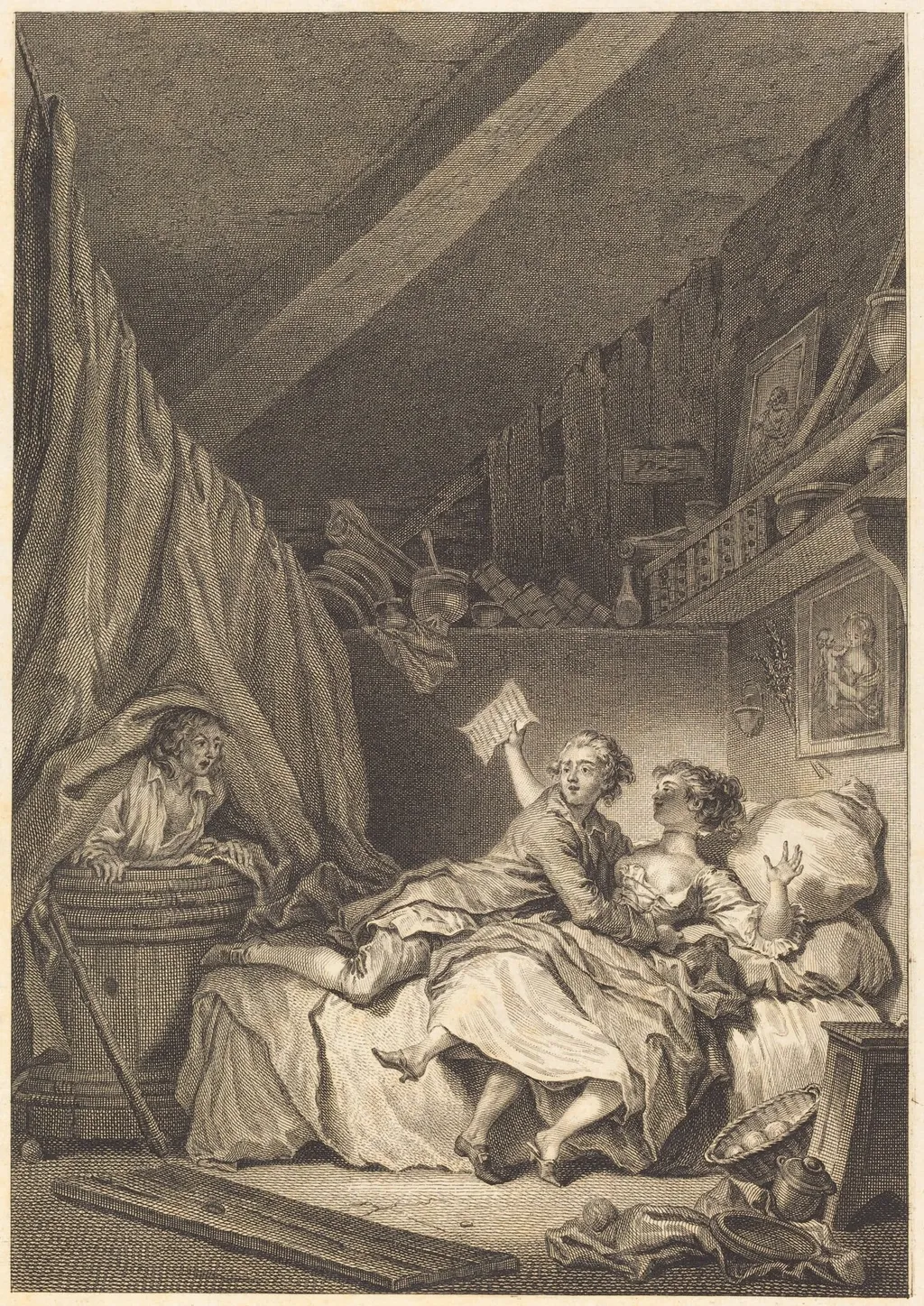
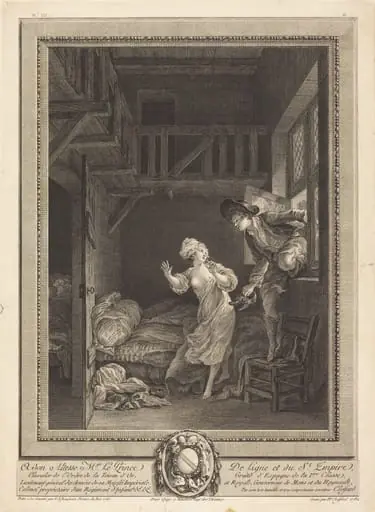
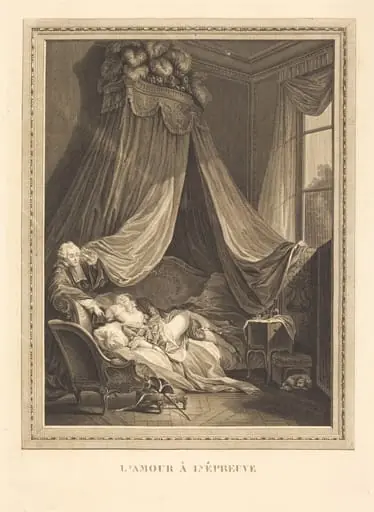
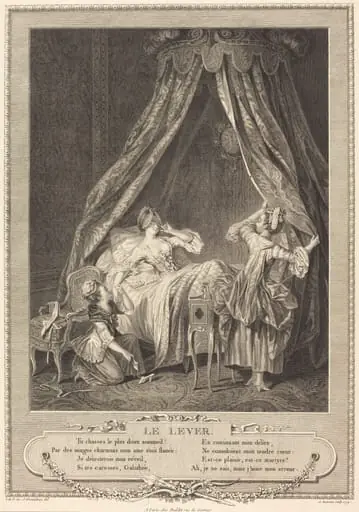
Le savetier is an ink print by the Baroque artist Jean Dambrun. It dates from 1774 and is held in the collection of the National Gallery of Art.
About this work
Overview
The composition captures a moment of stillness amid labor, with tools, books, and domestic items arranged to suggest a lived-in space.
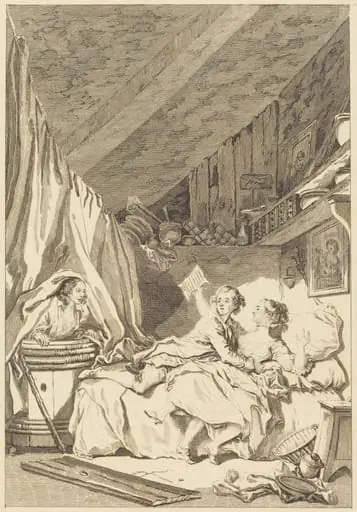
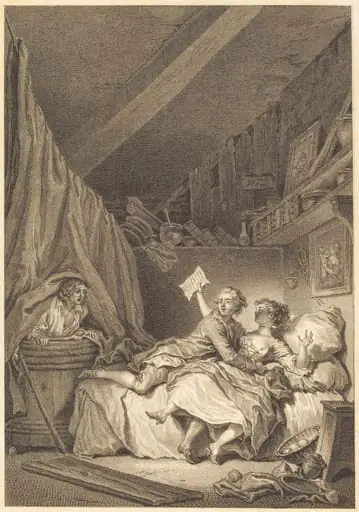
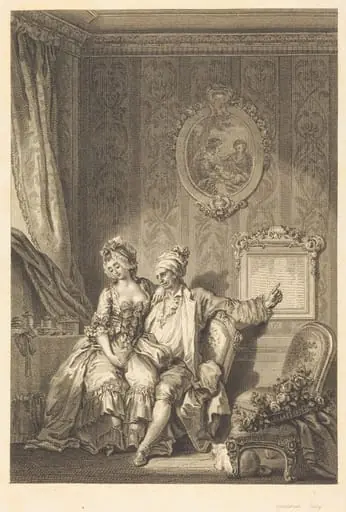
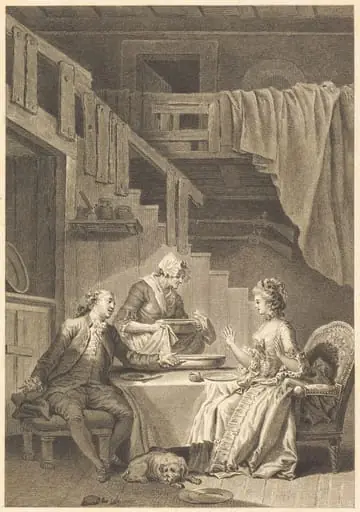
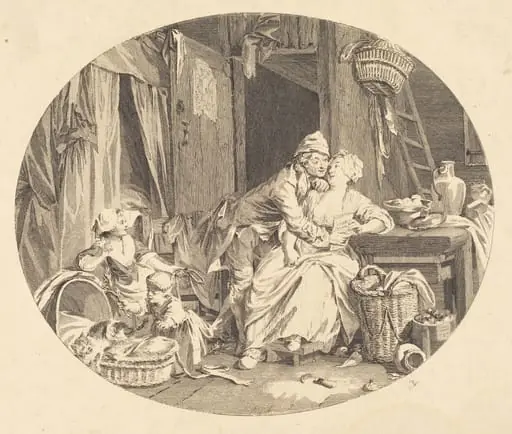
Le savetier is an 1774 print by Jean Dambrun, executed in etching and engraving. It depicts a modest interior, likely a cobbler’s workshop, where three individuals engage in quiet, everyday activities. The composition captures a moment of stillness amid labor, with tools, books, and domestic items arranged to suggest a lived-in space. The work belongs to a tradition of genre scenes that elevated ordinary life through careful detail and controlled lighting.
Subject & Meaning
The scene portrays three figures in a cobbler’s shop: one seated with a toolbox, another reclining with a book and newspaper, and a third gesturing in conversation. Their relaxed postures and unassuming actions suggest a moment of respite rather than work. The presence of books and a cup implies a blend of literacy and craft, hinting at a quiet dignity in manual labor. No grand narrative is present—only the rhythm of daily routine.
Technique & Style
Dambrun employs fine lines of etching and engraving to render textures—wood grain, fabric folds, leather tools—with precision. The lighting is soft but directional, modeling forms without theatrical contrast. The composition is intimate, with objects arranged to guide the eye across the room. While influenced by Baroque attention to detail, the tone is subdued, avoiding dramatic tension in favor of calm observation.
History & Provenance
Created in 1774, Le savetier emerged during a period when printmaking in France increasingly focused on domestic and occupational scenes. Dambrun, active in the late 18th century, was part of a generation of artists who documented everyday life for a growing middle-class audience. The print’s survival in institutional collections suggests early recognition of its quiet realism, though its specific early ownership remains undocumented.
Context
In the decades before the French Revolution, prints like this reflected a broader cultural interest in the lives of artisans and tradespeople. Unlike grand historical or mythological subjects, such works appealed to viewers seeking recognition of their own world. The inclusion of books alongside tools signals a shift in perceptions of labor, where literacy and craft coexisted in the urban working class.
Legacy
Le savetier stands as a modest but thoughtful example of 18th-century French genre printmaking. It contributed to a visual language that valued quiet observation over spectacle, influencing later realist traditions. While not widely known today, it remains a representative artifact of how ordinary life was rendered with care in pre-revolutionary France.
Artist & collection