Artwork
Le château de la mort (The House of the Dead)
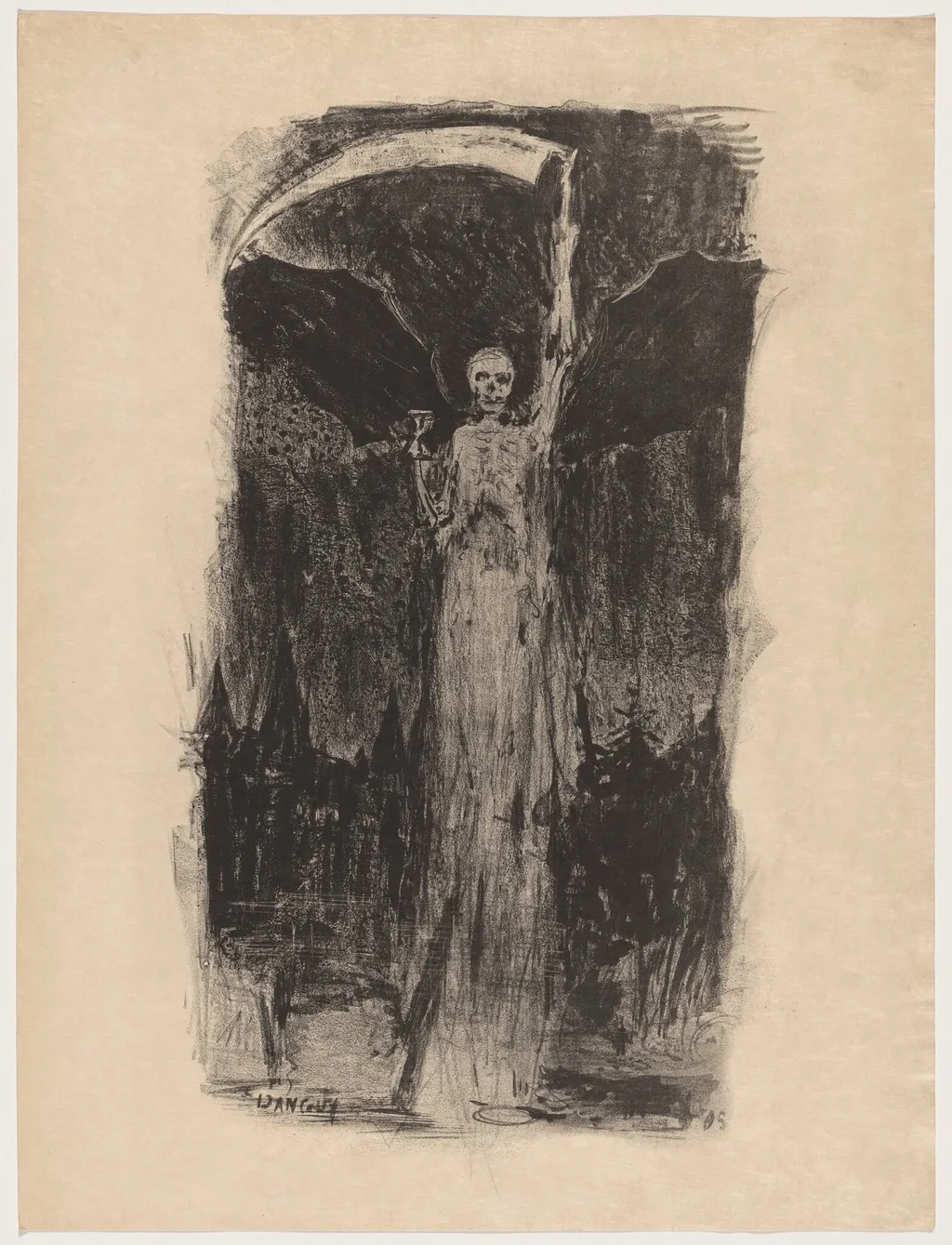
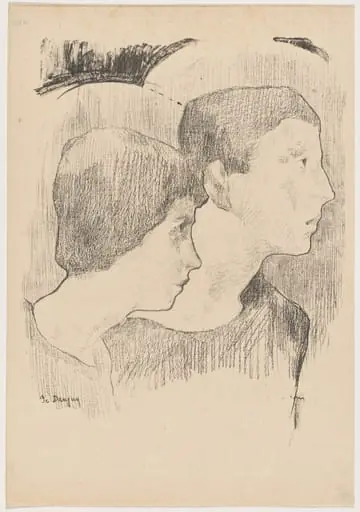
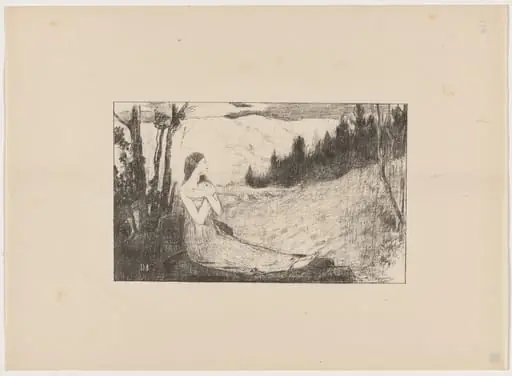
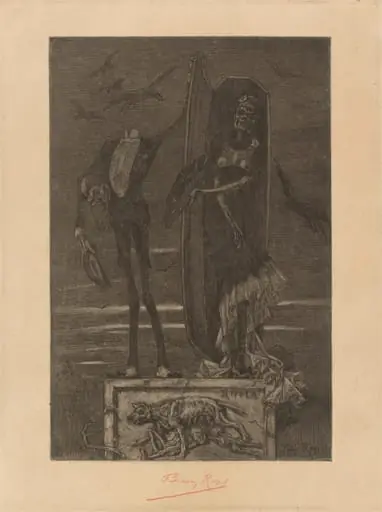
Le château de la mort (The House of the Dead) is a print by the Impressionist artist Jean Danguy. It dates from 1895 and is held in the collection of the National Gallery of Art.
About this work
Overview
Jean Danguy’s 1895 zincograph, titled Le château de la mort (The House of the Dead), is executed in black on heavy Japan paper.
Jean Danguy’s 1895 zincograph, titled Le château de la mort (The House of the Dead), is executed in black on heavy Japan paper. The print presents a stark, monochromatic composition that centers on a solitary, robed figure wielding a scythe‑like implement, set against a shadowy backdrop that hints at a distant, ruined castle. The overall effect is one of solemnity and unease, emphasizing themes of mortality.
Subject & Meaning
The central figure, cloaked in a flowing robe and holding a tool associated with reaping, functions as an allegorical personification of death. The surrounding darkness and the suggestion of a decaying fortress reinforce a narrative of inevitable decline, inviting viewers to contemplate the transience of life and the looming presence of the afterlife.
Technique & Style
Created as a zincograph, the work relies on a single black ink applied to a thick Japan paper surface, allowing for deep, velvety blacks and pronounced contrasts. Danguy employs heavy shading and dense line work to render atmospheric depth, while the limited palette heightens the dramatic tension characteristic of late‑19th‑century Symbolist printmaking.
History & Provenance
First produced in 1895, the print was part of Danguy’s exploration of macabre subjects during the fin de siècle. It entered private collections in France before being acquired by a European museum in the early 20th century, where it remains in the print and drawing department, documented in the institution’s catalogues since the 1920s.
Artist & collection

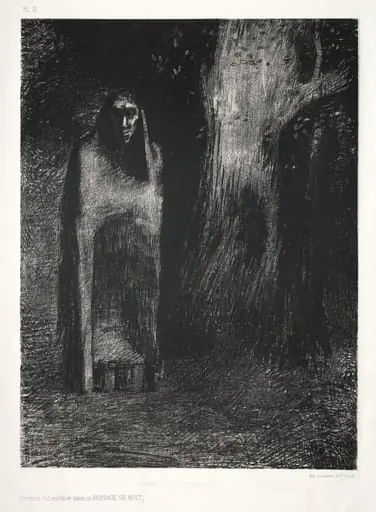 The Man Was Alone in a Night Landscape
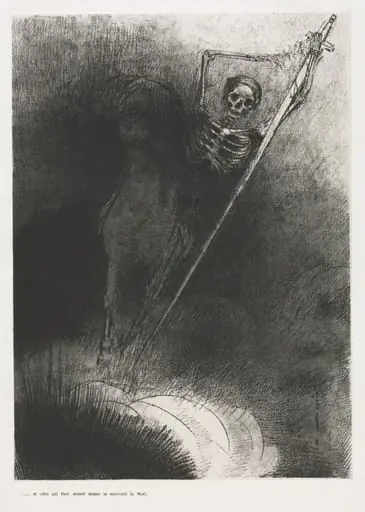 And His Name That Sat on Him Was Death
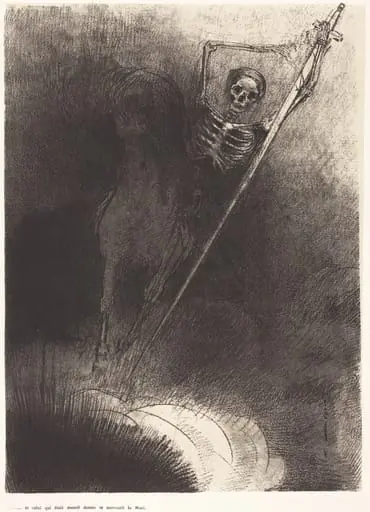 Et celui qui était monté dessus se nommait la Mort (And his name that sat on him was Death)
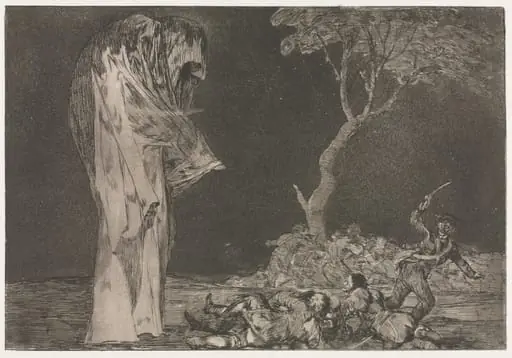 The Proverbs: Folly of Fear
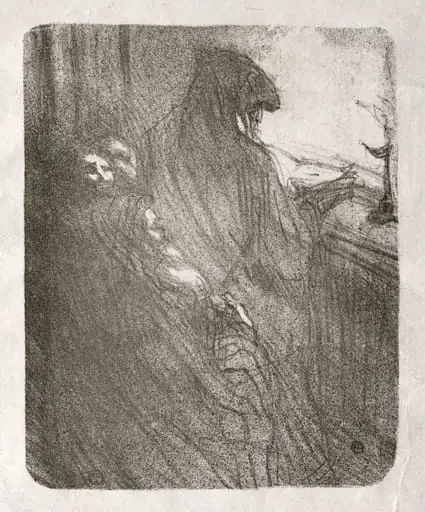 Au pied du Sinaï: La Prière des Juifs Polonais
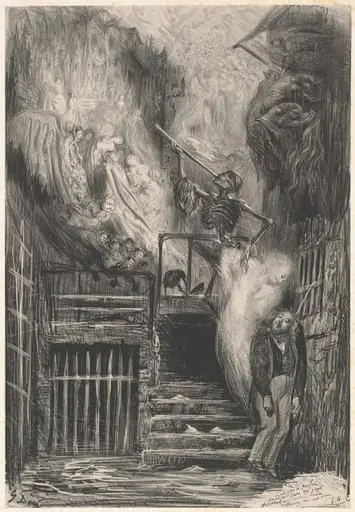 Rue de la Vieille lanterne (The Suicide of Gérard de Nerval)
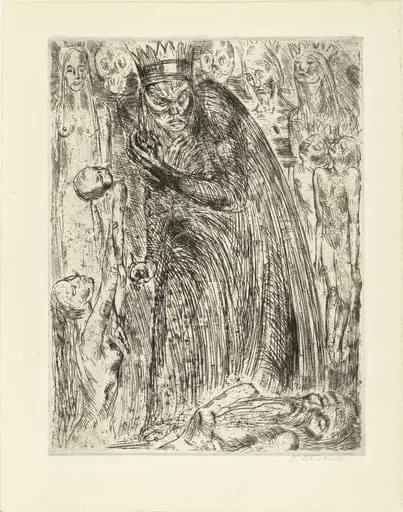 Untitled
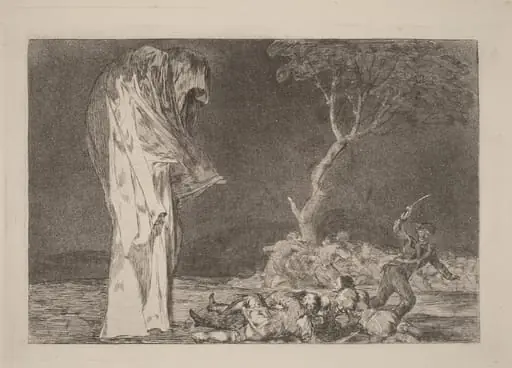 Disparate de miedo (Folly of Fear)
 Le Vice suprème: Frontispiece
 C'est le Diable