Artwork
Martyrs
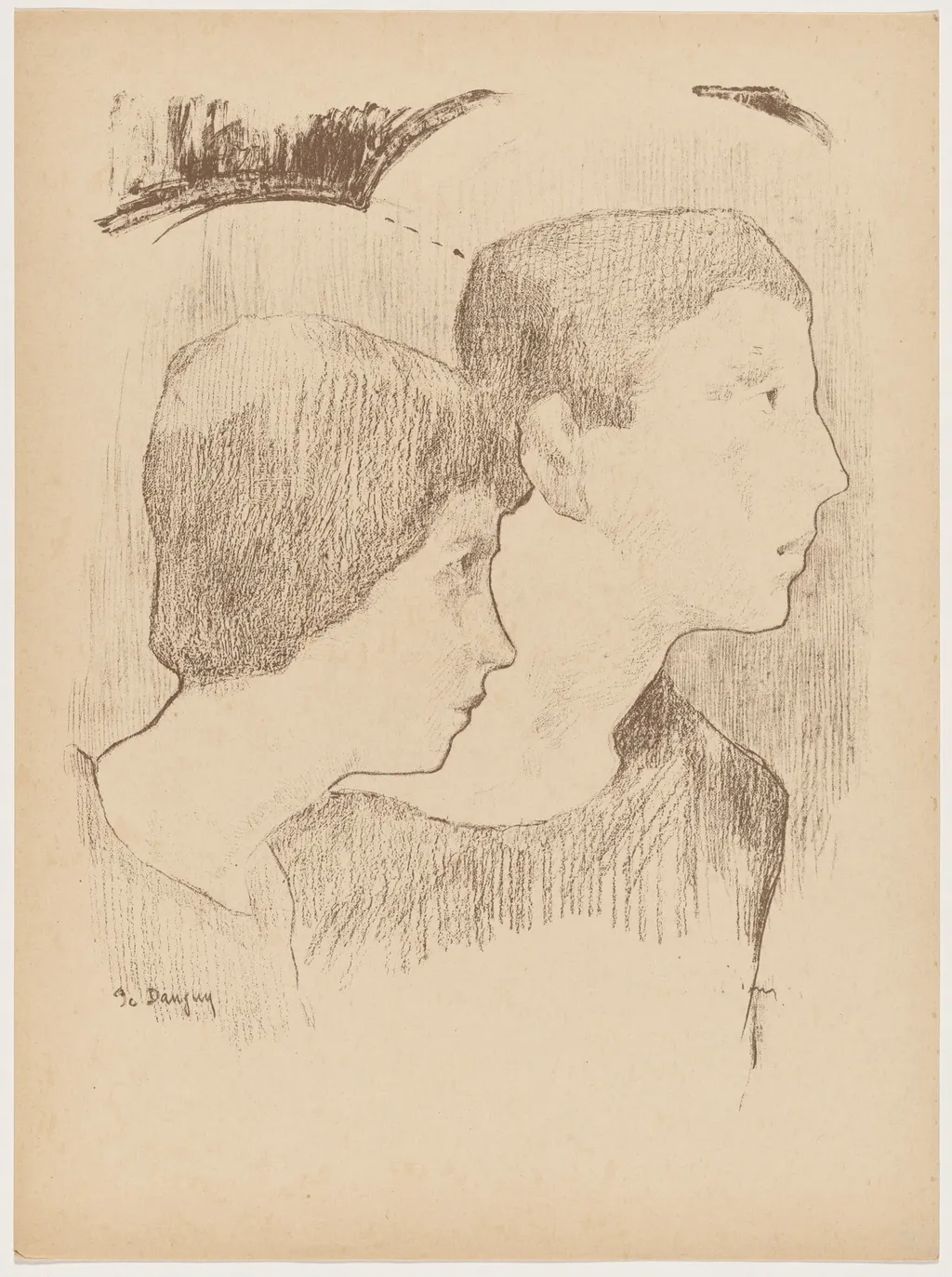
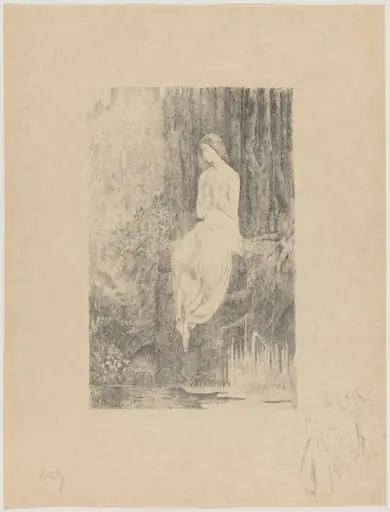
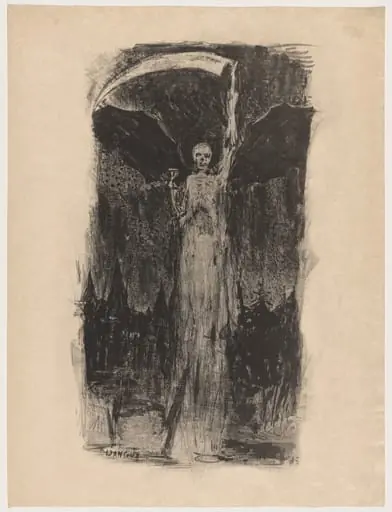
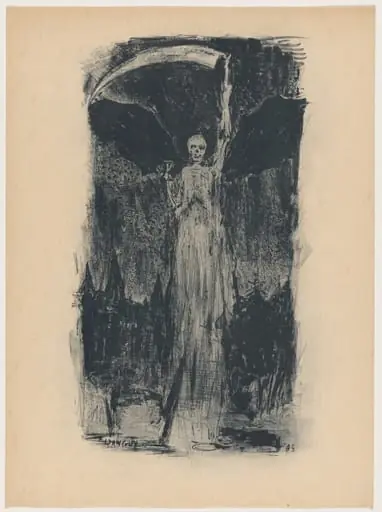
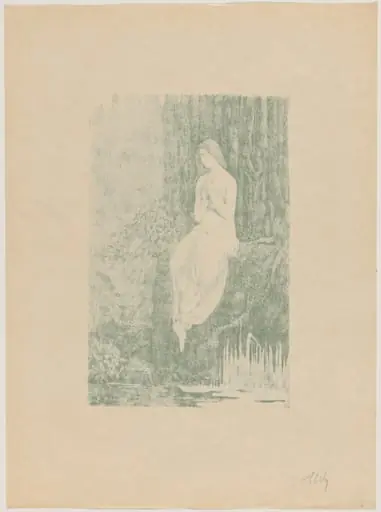
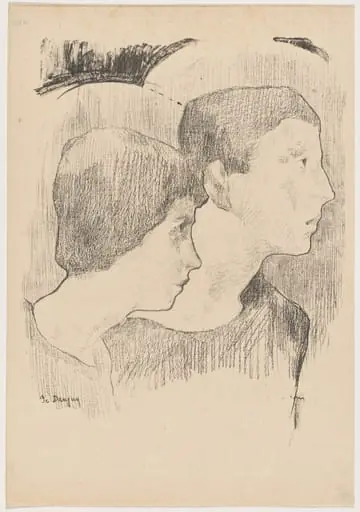
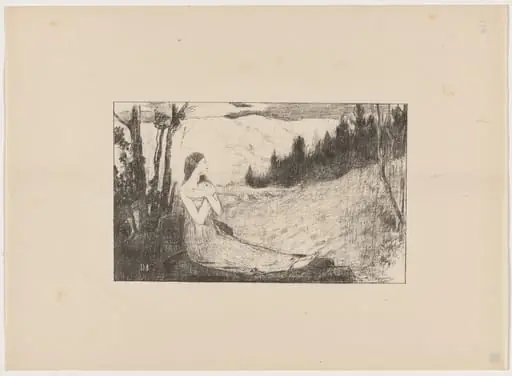
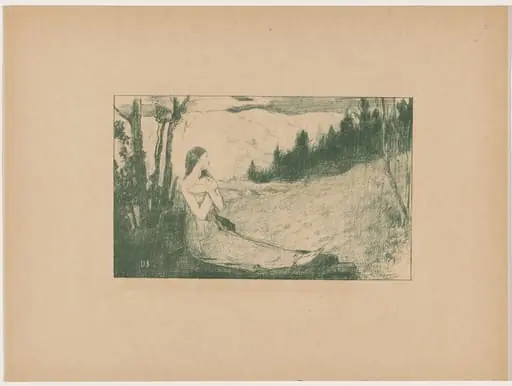
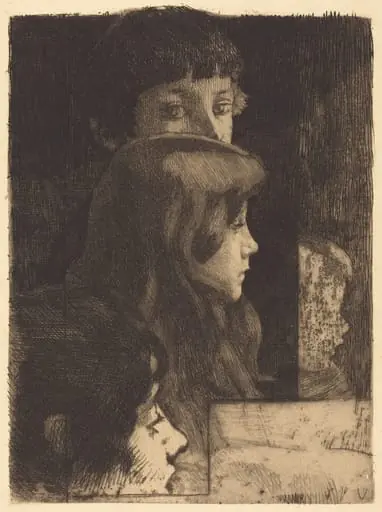
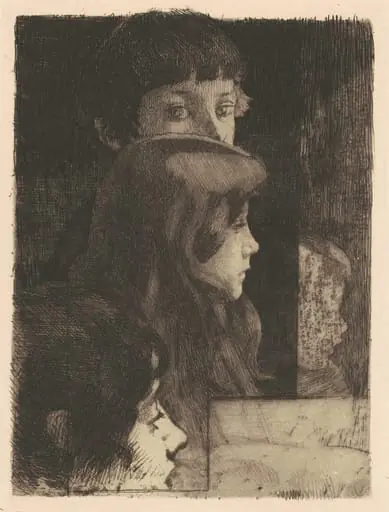
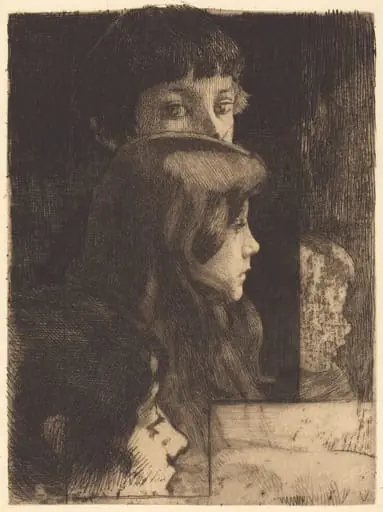
Martyrs is an ink print by the Impressionist artist Jean Danguy. It dates from 1895 and is held in the collection of the National Gallery of Art.
About this work
Overview
The restrained palette and delicate line work emphasize form over detail, conveying a somber stillness.
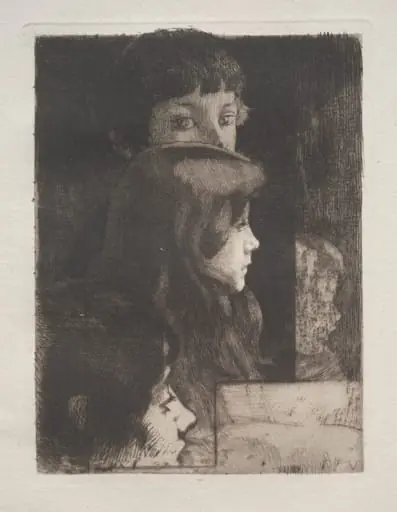
Martyrs is a lithograph executed in 1895 by Jean Danguy, printed in brown ink on thick Japanese paper. The composition features two figures facing right, one seen from behind and the other in profile. The restrained palette and delicate line work emphasize form over detail, conveying a somber stillness. The medium’s capacity for tonal nuance supports a quiet, introspective mood without overt narrative.
Subject & Meaning
The two figures appear as silent witnesses, their identities unmarked by costume or context. Their shared orientation and mirrored posture suggest a bond, perhaps of suffering or endurance. The absence of identifying symbols invites interpretation as universal figures—possibly victims, mourners, or survivors—whose inner states are rendered through posture and expression rather than story.
Technique & Style
Danguy employed lithography to achieve subtle gradations of tone, using fine hatching and soft washes to model facial contours and fabric folds. The heavy Japan paper absorbs ink evenly, enhancing the print’s matte depth. Lines are economical yet precise, avoiding excess detail while preserving anatomical accuracy. The technique favors atmosphere over drama, aligning with late 19th-century interest in psychological realism.
History & Provenance
The work was produced in 1895 during a period when lithography was gaining traction among artists seeking alternatives to traditional engraving. Danguy, though not widely documented, participated in regional print circles in France. No public record of early ownership exists, and the print remains rare in institutional collections, suggesting limited initial circulation.
Context
Created in the final years of the 19th century, Martyrs reflects broader European artistic trends favoring intimate, emotionally restrained imagery over grand historical themes. While Symbolist and Realist movements influenced contemporaries, Danguy’s approach leans toward quiet observation, aligning with lesser-known printmakers who prioritized mood over spectacle.
Legacy
The work remains an example of understated lithographic practice from a period when the medium was expanding beyond illustration into fine art. Danguy’s focus on psychological presence through minimal means contributes to a quieter lineage of printmaking that values restraint and subtlety, though his broader influence is not widely recorded.
Artist & collection