Artwork
The New Pier, Margate
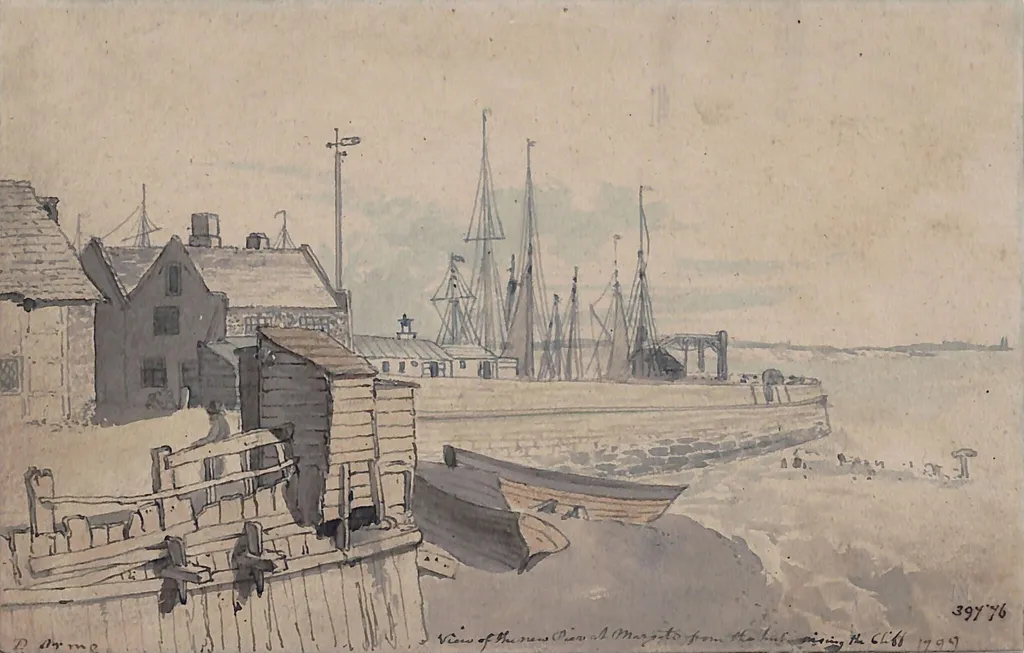
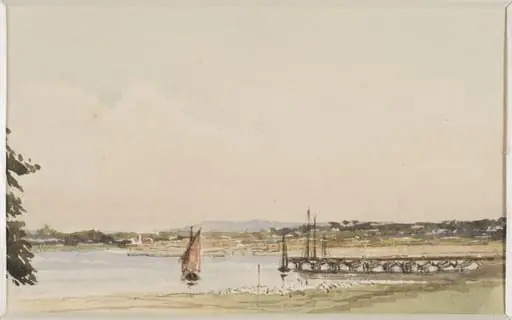
The New Pier, Margate is a watercolor work on paper by the Romanticist artist Daniel Orme. It dates from 1799 and is held in the collection of the Victoria and Albert Museum.
About this work
Overview
Its small scale and restrained palette reflect a topographical intent, documenting local development rather than idealizing the landscape.
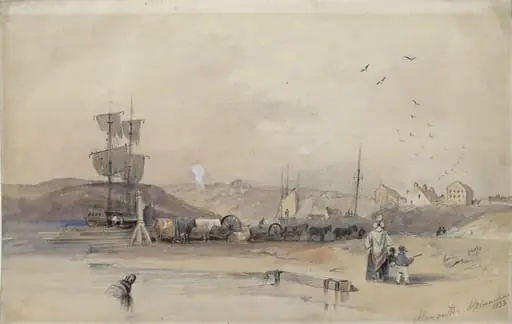
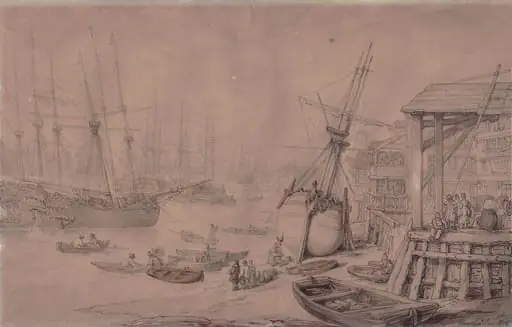
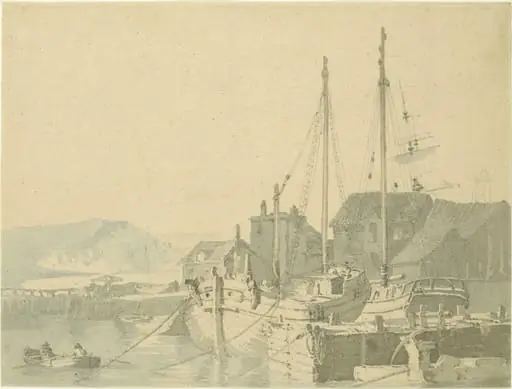
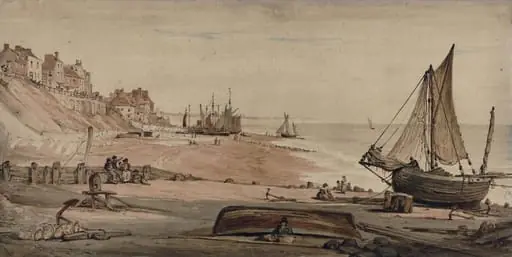
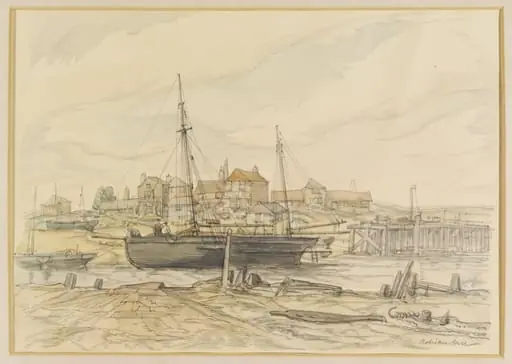
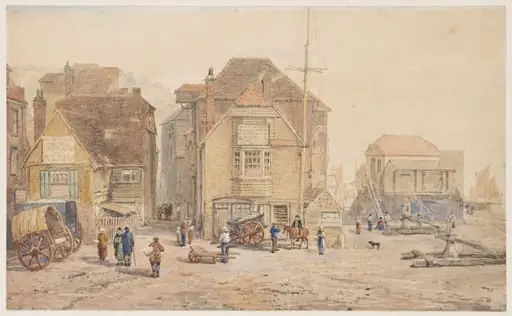
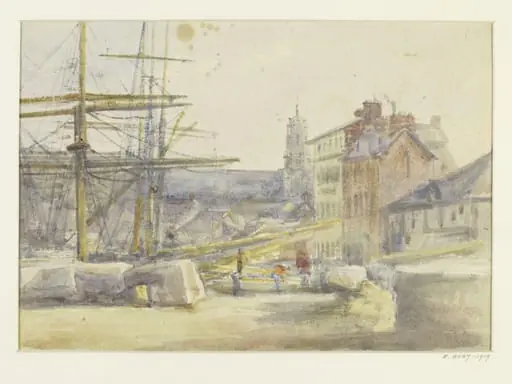
Daniel Orme’s 1799 watercolour, *The New Pier, Margate*, captures a modest seaside structure in its early years. Executed in delicate washes, the work records a functional wooden pier extending into the sea, surrounded by unadorned coastal buildings. The composition avoids theatricality, favoring quiet observation. Its small scale and restrained palette reflect a topographical intent, documenting local development rather than idealizing the landscape.
Subject & Meaning
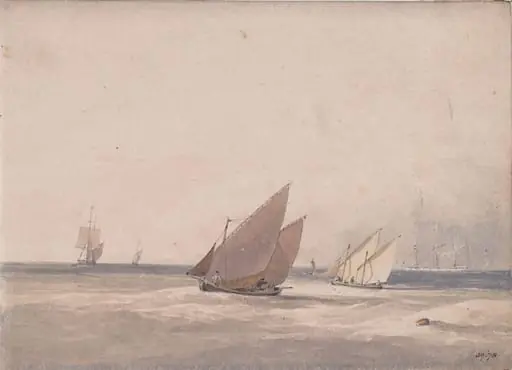
The painting portrays Margate’s newly built pier as a practical addition to the town’s infrastructure, not a symbol of grandeur. Boats moored near the shore and a distant sailing vessel suggest everyday maritime activity. The absence of crowds or spectacle underscores its role as a record of ordinary coastal life. Orme’s focus on the pier’s form and its relationship to the water implies an interest in urban growth and regional change during the late 18th century.
Technique & Style
Orme employed loose, fluid watercolour techniques, using diluted pigments to suggest light and texture without heavy detail. Muted tones of gray, brown, and pale blue dominate, creating a subdued, atmospheric effect. The brushwork appears spontaneous, with minimal refinement, evoking the immediacy of an on-site sketch. This approach prioritizes observation over finish, aligning with the tradition of topographical drawing rather than polished landscape art.
History & Provenance
The work is signed and dated 1799, placing it shortly after the pier’s construction. It likely served as a personal record or commission tied to local interest in the development. The piece entered the Victoria and Albert Museum’s collection, where it remains part of a broader archive of British topographical watercolours. Its survival suggests it was valued for its documentary quality rather than its aesthetic ambition.
Context
In the late 1790s, coastal towns like Margate were expanding as destinations for leisure and commerce. The construction of piers reflected growing public access to the sea and the rise of seaside tourism. Orme’s depiction aligns with a broader trend among British artists who recorded such infrastructure with quiet precision, capturing the transition from rural coastlines to emerging resort economies.
Legacy
Though not widely exhibited, the work contributes to the historical record of British seaside development. Its unembellished style offers insight into how artists documented everyday change during a period of social and economic transformation. Today, it stands as a quiet testament to the modest beginnings of a now-familiar coastal feature, valued for its authenticity over its spectacle.
Artist & collection

Artist
Daniel Orme was an English artist, publisher, and official Historical Engraver to George III and the Prince of Wales, the future George IV.