Artwork
Bords de Canal
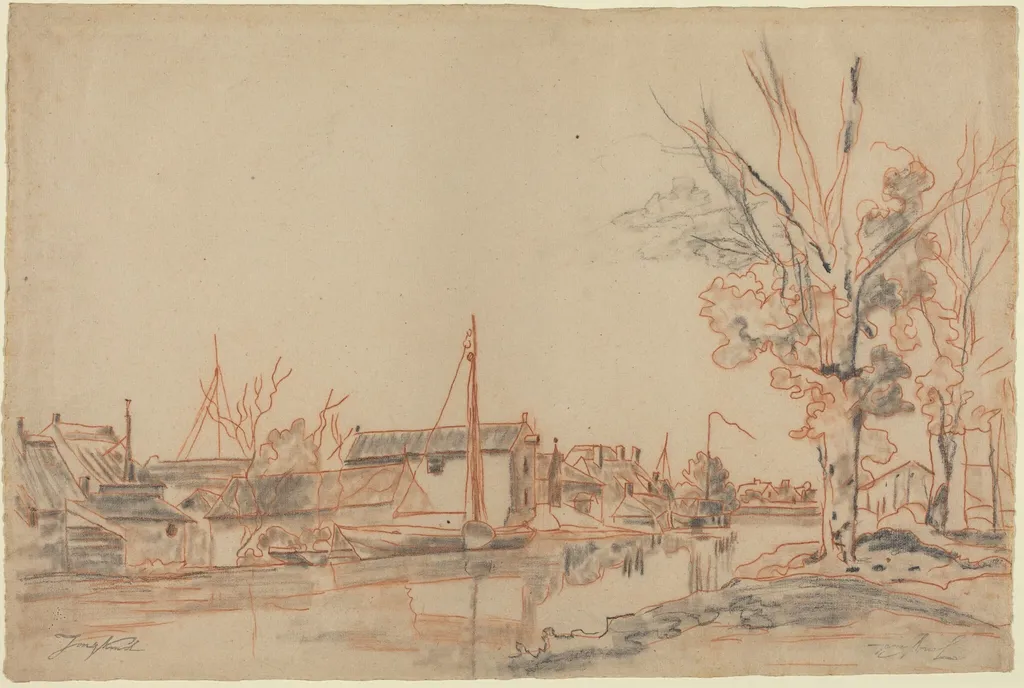
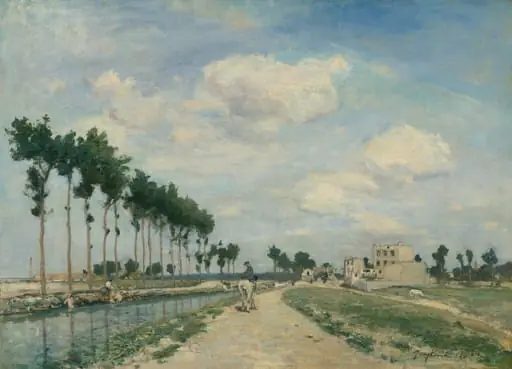
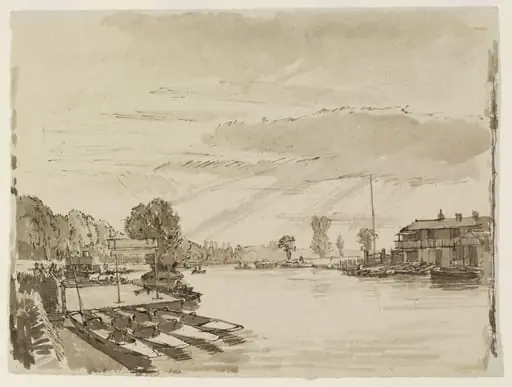
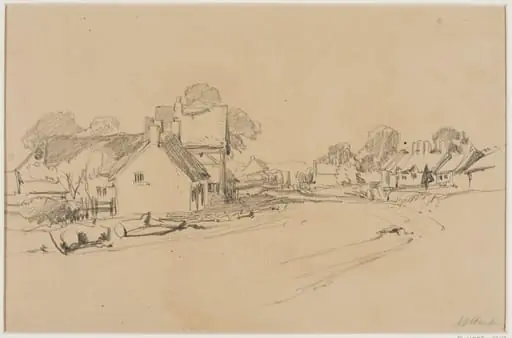
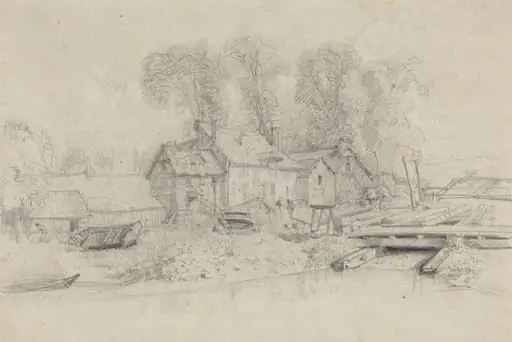
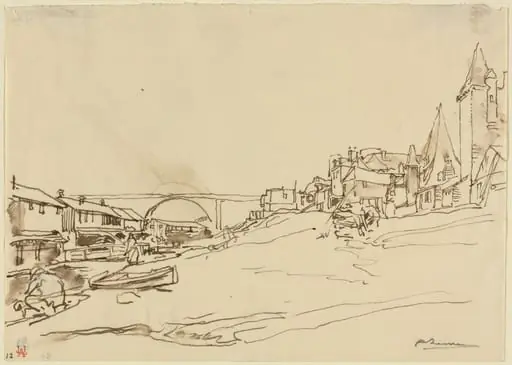
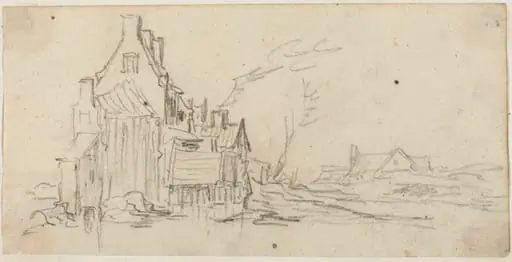
Bords de Canal is a graphite drawing by the Romanticist artist Johan Barthold Jongkind. It dates from 1855 and is held in the collection of the National Gallery of Art.
About this work
Overview
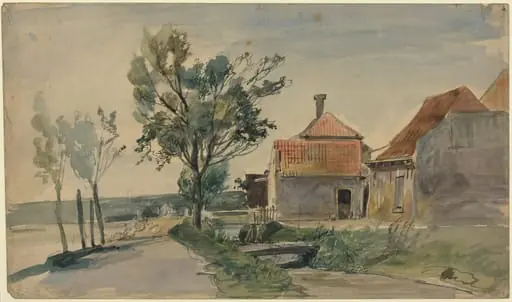
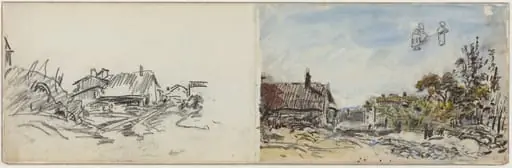
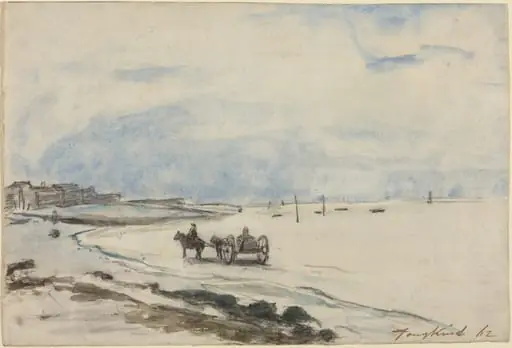
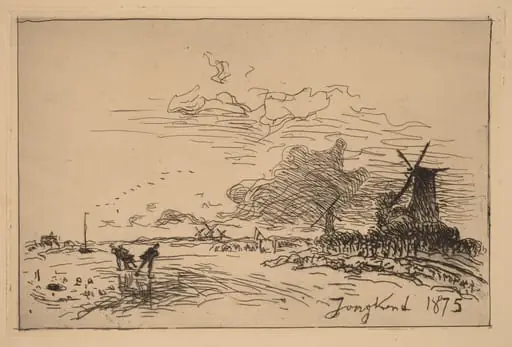
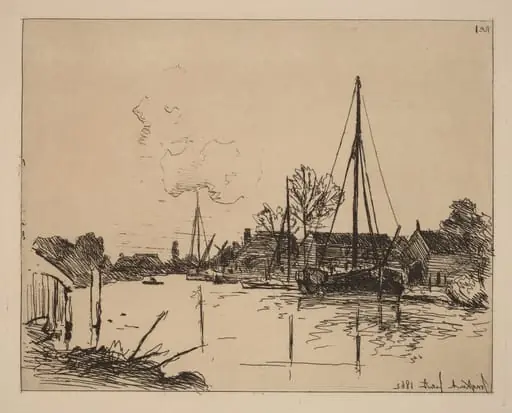
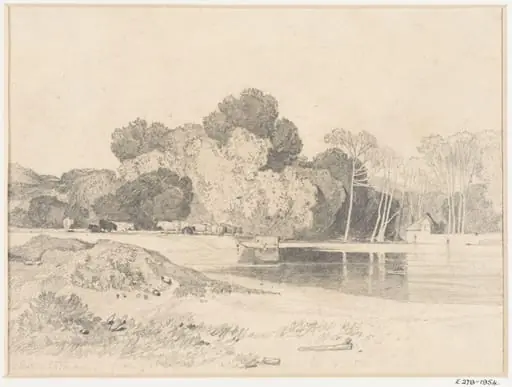
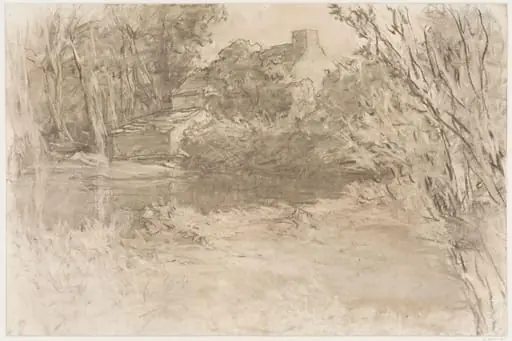
Created in 1855, Bords de Canal is a delicate drawing by Johan Barthold Jongkind, executed in red chalk and graphite on laid paper. It captures a quiet stretch of water bordered by modest buildings and foliage, rendered with subtle tonal gradations. The medium’s softness enhances the tranquil atmosphere, reflecting Jongkind’s interest in everyday landscapes over dramatic narratives.
Subject & Meaning
The scene depicts a quiet canal-side setting, with a single boat gently resting on the water and low structures lining the banks. There is no human activity visible, emphasizing stillness and solitude. The composition suggests a contemplative observation of ordinary life, avoiding idealization in favor of quiet, unembellished presence.
Technique & Style
Jongkind employed red chalk for warm, fluid contours and graphite for cooler, finer details, blending them to create atmospheric depth. The laid paper’s texture subtly interacts with the medium, softening edges and diffusing light. Lines are restrained, shading minimal, and forms suggested rather than defined—evoking mood over precision.
History & Provenance
The drawing emerged during Jongkind’s early period in the Netherlands, before his later association with the Barbizon painters and Impressionists. It reflects his personal exploration of landscape as a subject worthy of intimate study. Its survival in private collections until institutional acquisition underscores its quiet, enduring appeal among connoisseurs of 19th-century draftsmanship.
Context
His work anticipated the plein-air practices of the Impressionists, yet retained a reserved, introspective tone distinct from the movement’s later vibrancy.
In mid-19th-century Europe, Romanticism favored emotional landscapes, but Jongkind’s approach diverged by focusing on unremarkable, real-world vistas. His work anticipated the plein-air practices of the Impressionists, yet retained a reserved, introspective tone distinct from the movement’s later vibrancy. This drawing sits at the threshold between Romantic sensibility and emerging modern observation.
Legacy
Bords de Canal exemplifies Jongkind’s role as a transitional figure in landscape drawing. His sensitivity to light and quiet composition influenced later artists, particularly those seeking authenticity in ordinary scenes. Though not widely exhibited in his time, the work now stands as a quiet testament to the poetic potential of understated draftsmanship.
Artist & collection