Artwork
Two Horses at a Watering Place (Les Deux chevaux a l'abreuvoir)
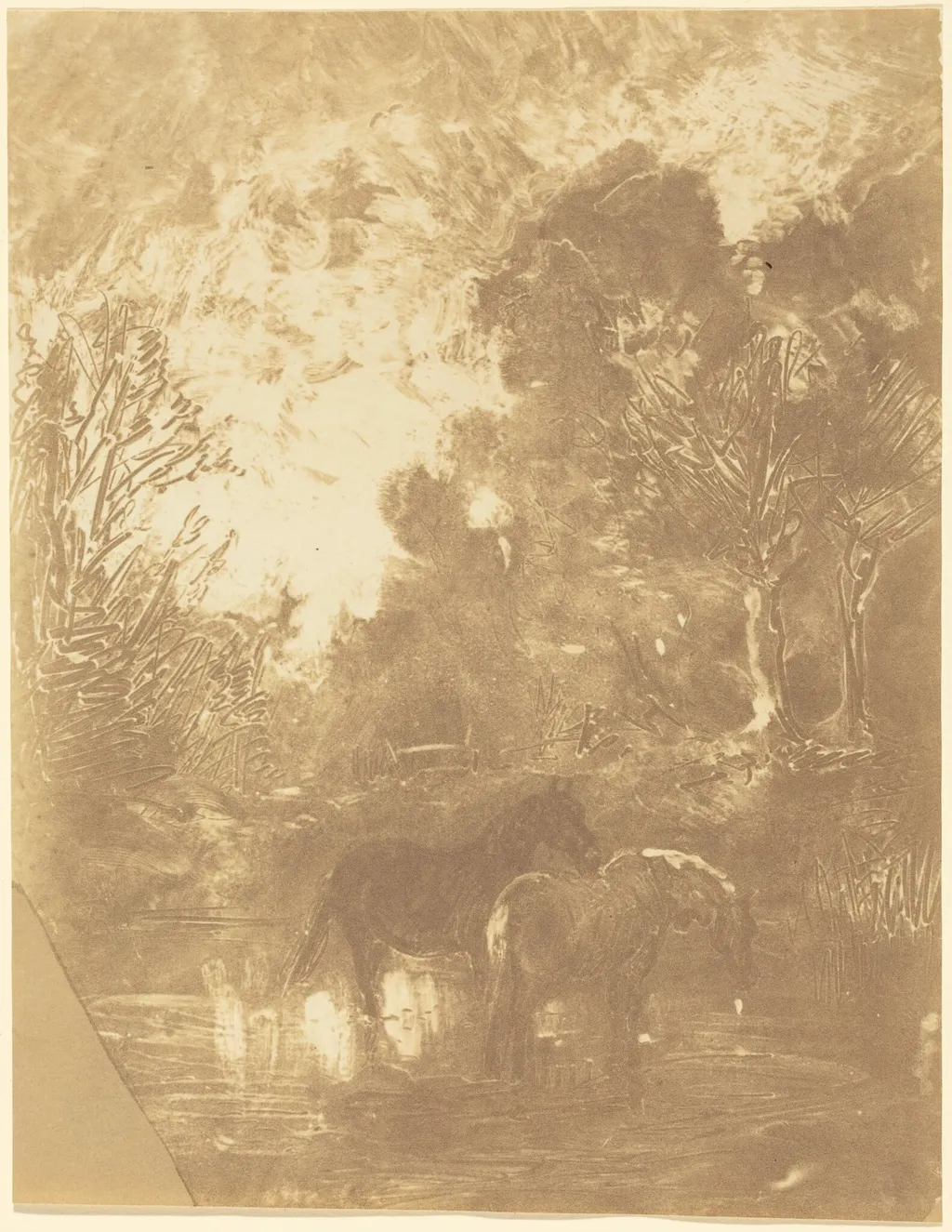
Two Horses at a Watering Place (Les Deux chevaux a l'abreuvoir) is a print by the Impressionist artist Charles François Daubigny. It dates from 1860 and is held in the collection of the National Gallery of Art.
About this work
Overview
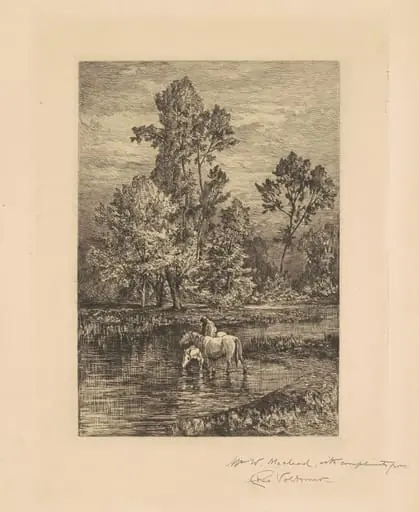
Two Horses at a Watering Place (Les Deux chevaux a l'abreuvoir), created circa 1860 by Charles-François Daubigny, is a brown cliché-verre print. This work exemplifies Daubigny's affinity for naturalistic scenes, blending elements of the Barbizon school with early Impressionist tendencies.
Subject & Meaning
The print depicts two horses drinking from a riverbank, surrounded by tall grasses, bushes, and distant trees. The serene, everyday scene reflects Daubigny's emphasis on capturing quiet, natural moments.
Technique & Style
Executed in cliché-verre, a pioneering technique combining photographic and etching processes using glass plates, the work features soft, blurry forms and a muted brown and tan palette, resulting in a distinctive dreamy, faded appearance.
History & Provenance
Daubigny, known for experimental printmaking, frequently used cliché-verre. While specific provenance details for this work are not provided, it aligns with his mid-19th-century output, characteristic of his innovative approach to printmaking.
Context
This piece sits at the intersection of the Barbizon school's realism and the emerging Impressionist movement. Daubigny's use of cliché-verre was part of a broader experimentation in 19th-century art, bridging traditional techniques with modern innovations.
Artist & collection
Artist
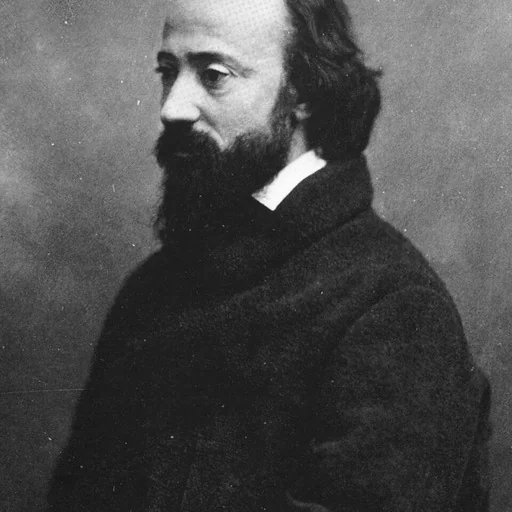
Charles-François Daubigny ( DOH-bin-yee, US: DOH-been-YEE, doh-BEEN-yee, French: ; 15 February 1817 – 19 February 1878) was a French painter, one of the members of the Barbizon school, and is considered an important precursor of…

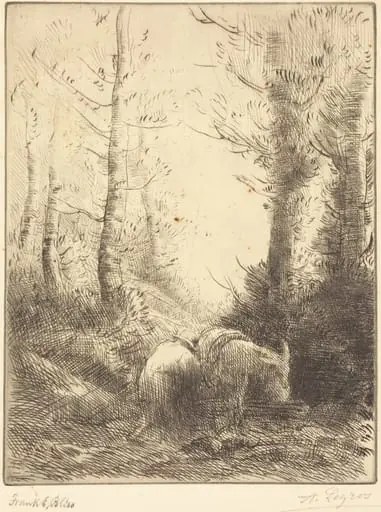 Farmer and His Donkey (Le fermier et son ane)
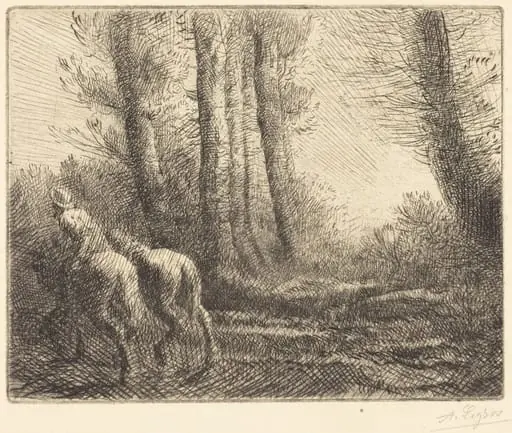 Return from the Plowing (Le retour de labourage)
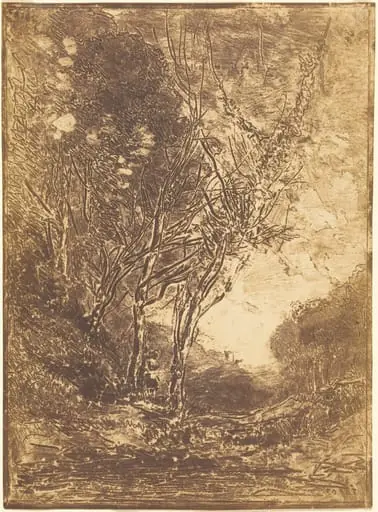 Ambush (L'Embuscade)
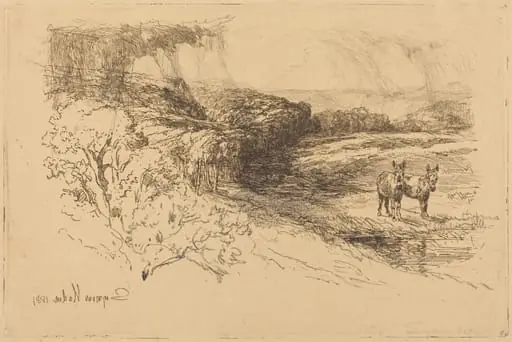 Encombe Woods (No.1)
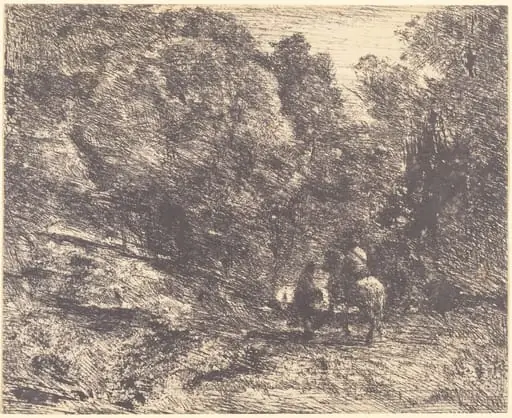 Horseman and Vagabond in the Forest (Le Cavalier en forêt et le piéton)
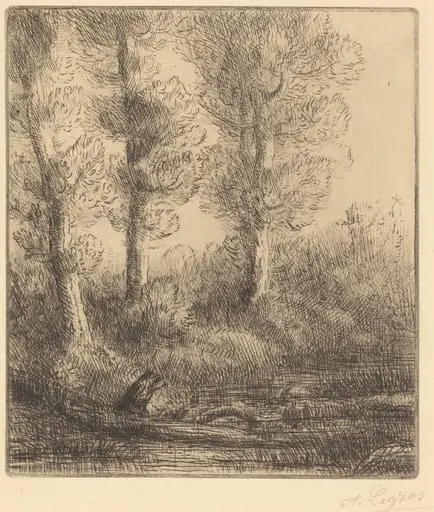 Banks of the Saint-Pre (Rive du Saint-Pre)
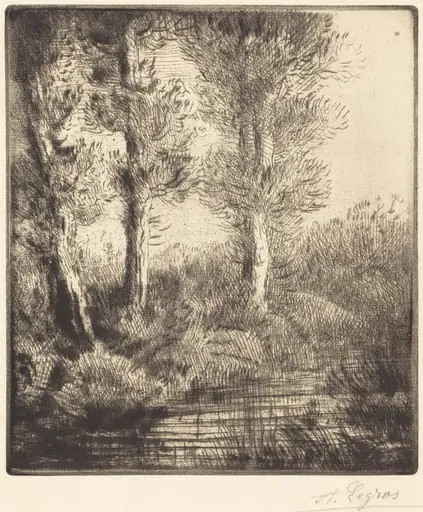 Banks of the Saint-Pre (Rive du Saint-Pre)
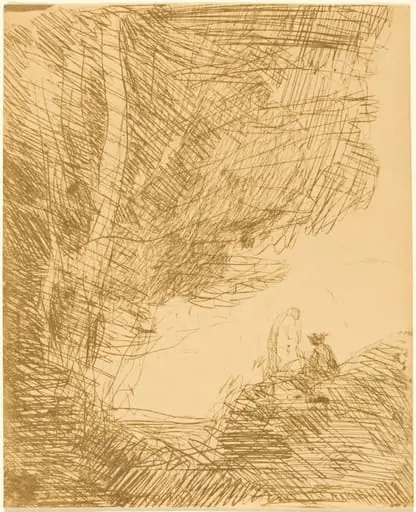 The Poet and His Muse (Le Poete et la muse)
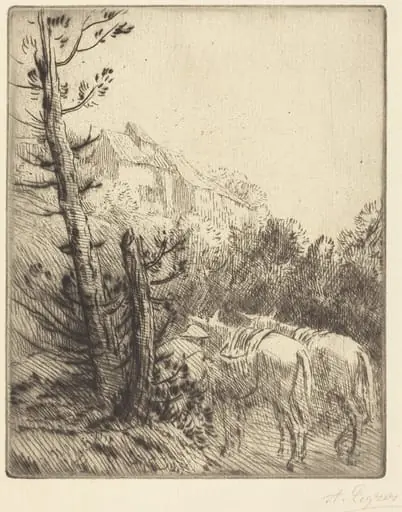 Farm on the Hillside (La ferme sur le coteau)
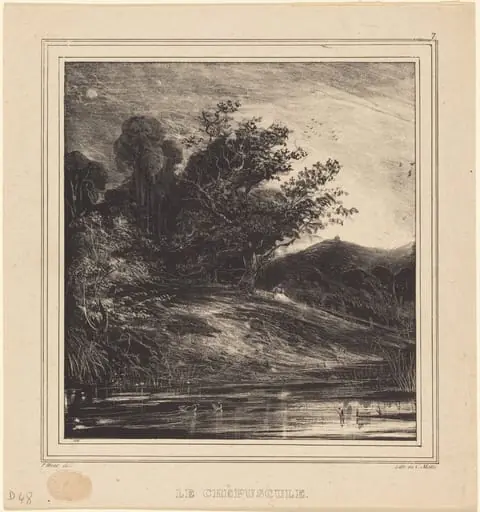 Le Crépuscule
 Landscape with Horses Drinking
 Watering Horses