Artwork
Farmer and His Donkey (Le fermier et son ane)
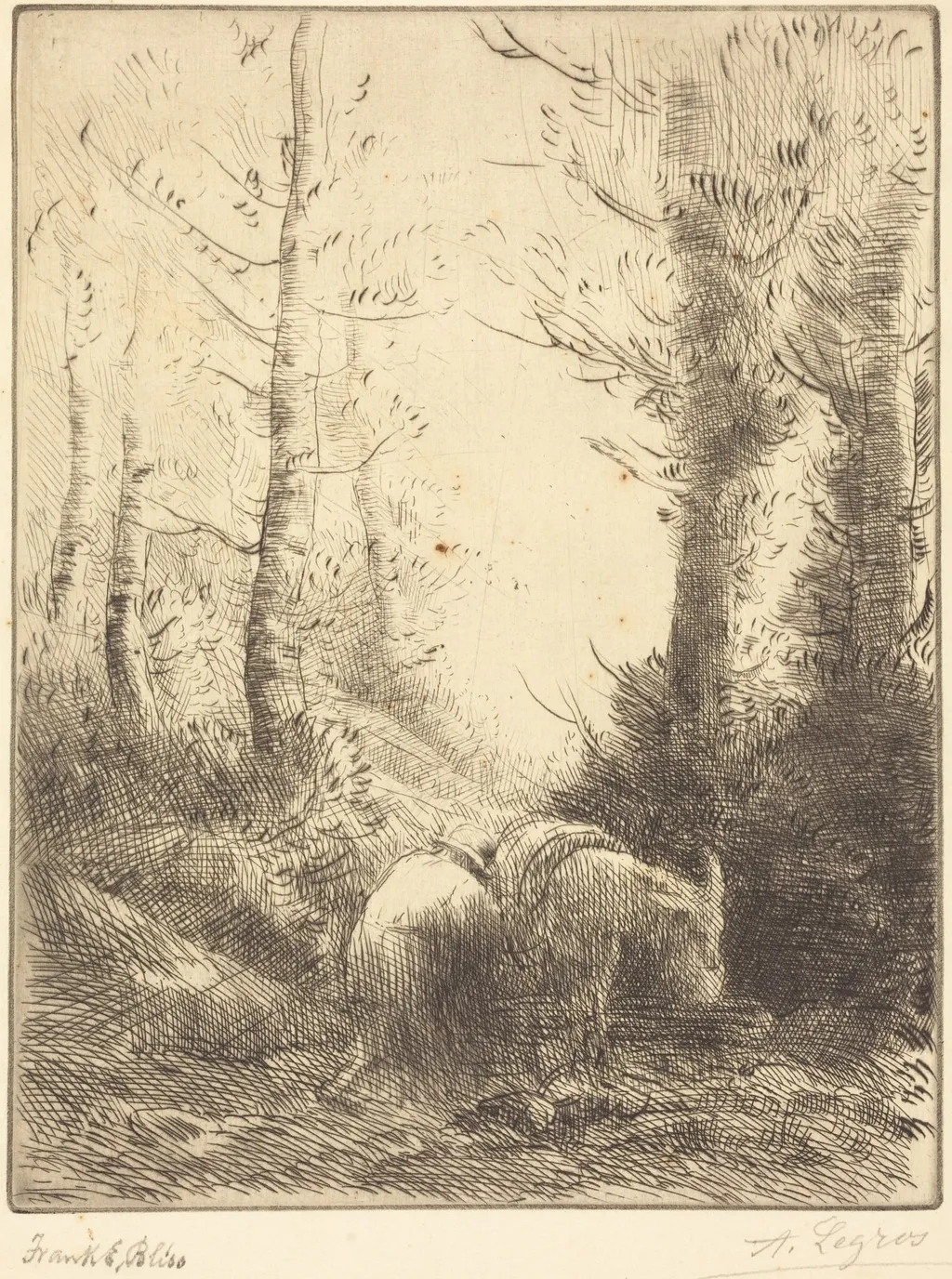
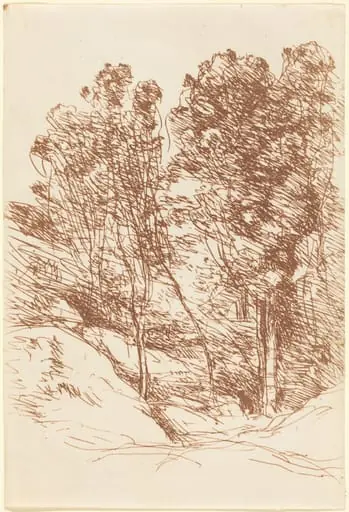
Farmer and His Donkey (Le fermier et son ane) is an ink print by the Romanticist artist Alphonse Legros. It dates from 1874 and is held in the collection of the National Gallery of Art.
About this work
Overview
Created in 1874 by Alphonse Legros, *Farmer and His Donkey* is an etching and drypoint print made after the artist moved to London.
Created in 1874 by Alphonse Legros, *Farmer and His Donkey* is an etching and drypoint print made after the artist moved to London. Legros, originally French, became a naturalized British citizen and was influential in revitalizing printmaking in England. This work exemplifies his mastery of intaglio techniques, combining delicate etched lines with the rich, textured marks of drypoint to evoke a quiet rural scene.
Subject & Meaning
The print portrays a solitary farmer guiding a donkey along a path, their forms subtly integrated into a dense, shadowed landscape. The figures are rendered with minimal detail, suggesting humility and anonymity rather than narrative drama. The composition emphasizes stillness and labor, with the human and animal figures appearing as quiet participants in an enduring rural rhythm, not as individuals with distinct identities.
Technique & Style
Legros employed drypoint to scratch directly into the metal plate, creating soft, velvety lines that hold ink differently than etched grooves. Combined with etching, this produced a range of tonal depths—from faint scratches to dense, dark areas. The background is filled with swirling, intricate lines that suggest foliage without defining it, contrasting with the simplified, shadowed forms of the figures and animal.
History & Provenance
Made during Legros’s early years in Britain, the print reflects his transition from French academic training to engagement with British artistic circles. It was likely produced for private circulation or as part of his teaching materials at the Slade School of Art, where he influenced a generation of British printmakers. The work remains part of the broader revival of etching as a serious artistic medium in late 19th-century Britain.
Context
In the 1870s, British art was undergoing a renewed interest in printmaking, moving away from industrial-era mass reproduction toward handcrafted, expressive imagery. Legros’s focus on rural life aligned with broader European trends that valued authenticity and labor. His technique, rooted in French traditions yet adapted to British sensibilities, helped bridge continental and island artistic practices during a period of cultural exchange.
Legacy
Legros’s use of drypoint in this work demonstrated how intaglio techniques could convey mood through texture rather than detail. His pedagogical role at the Slade ensured that his methods influenced British printmakers for decades. *Farmer and His Donkey* stands as a quiet example of how technical precision could serve understated subject matter, contributing to the legitimacy of etching as a medium for serious artistic expression.
Artist & collection

Artist
Alphonse Legros (French pronunciation: ; 8 May 1837 – 8 December 1911) was a French, later British, painter, etcher, sculptor, and medallist.

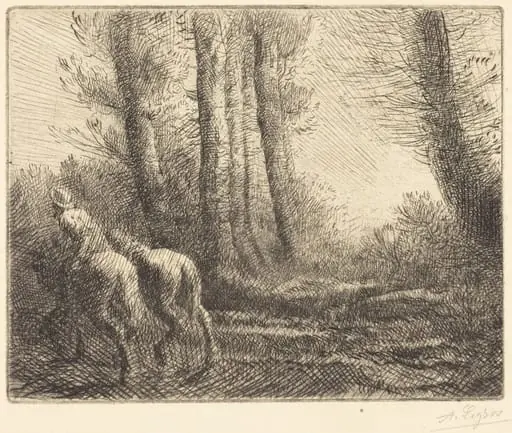 Return from the Plowing (Le retour de labourage)
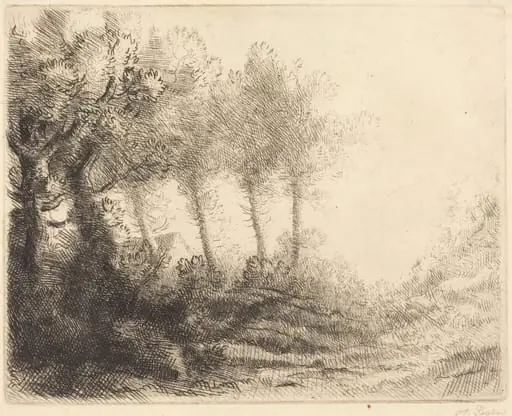 Landscape (Paysage)
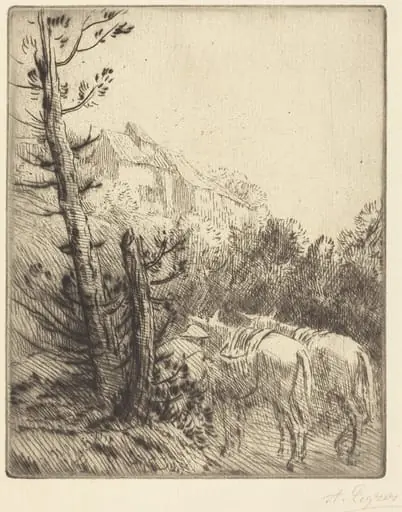 Farm on the Hillside (La ferme sur le coteau)
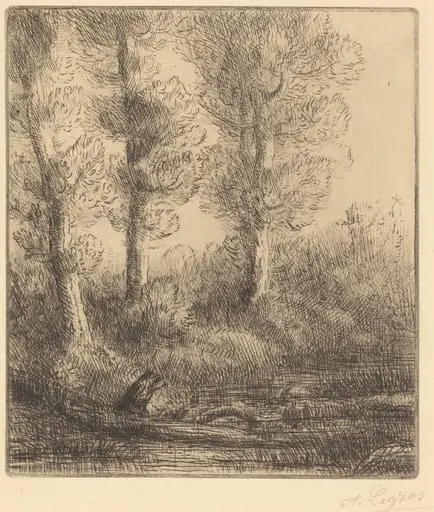 Banks of the Saint-Pre (Rive du Saint-Pre)
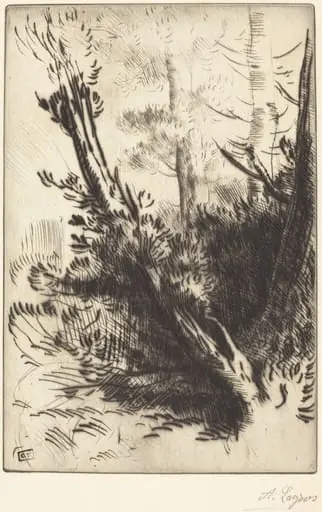 In the Woods (Dans les bois)
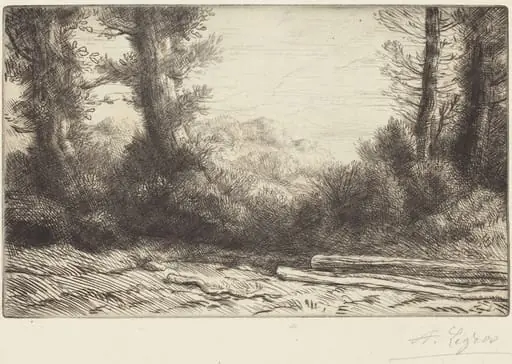 Edge of a Wood (Lisiere de bois)
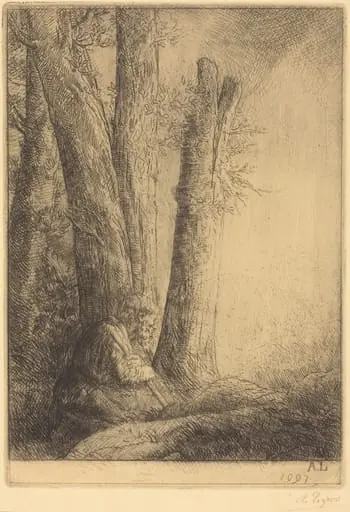 Study for the Prodigal Son (Etude pour L'enfant prodigue)
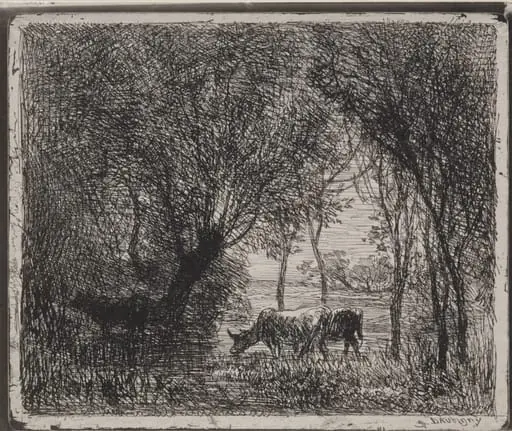 Cows in the Woods
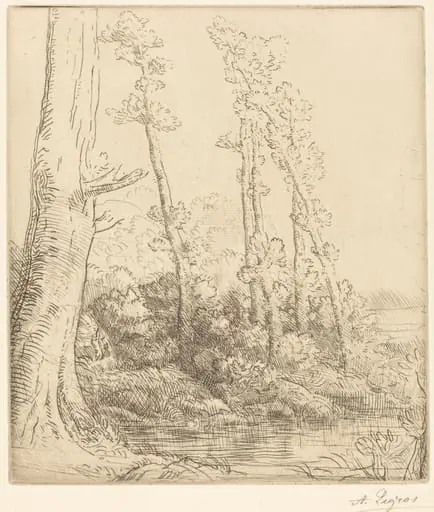 Little Pond (La petite mare)
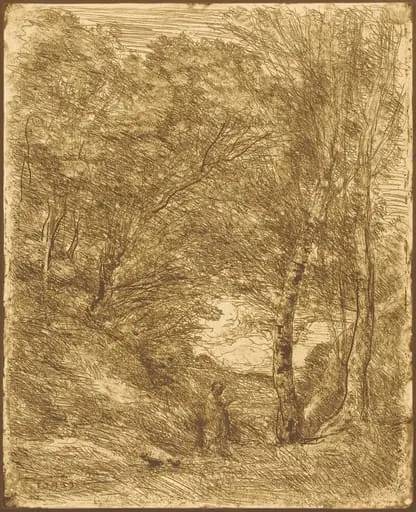 The Gardens of Horace (Les Jardins d'Horace)
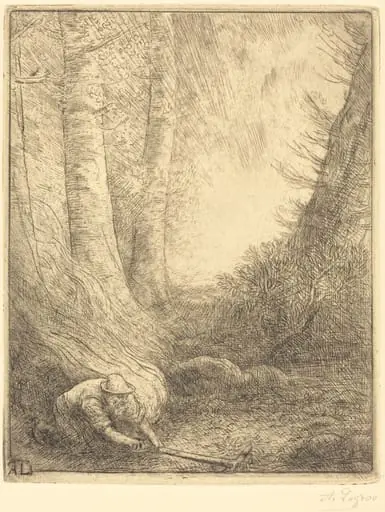 Burning the Grasses (Le bruleur d'herbes)
 Souvenir of the Sole Valley (Souvenir de la Vallee de la Sole)