Artwork
A Haiti
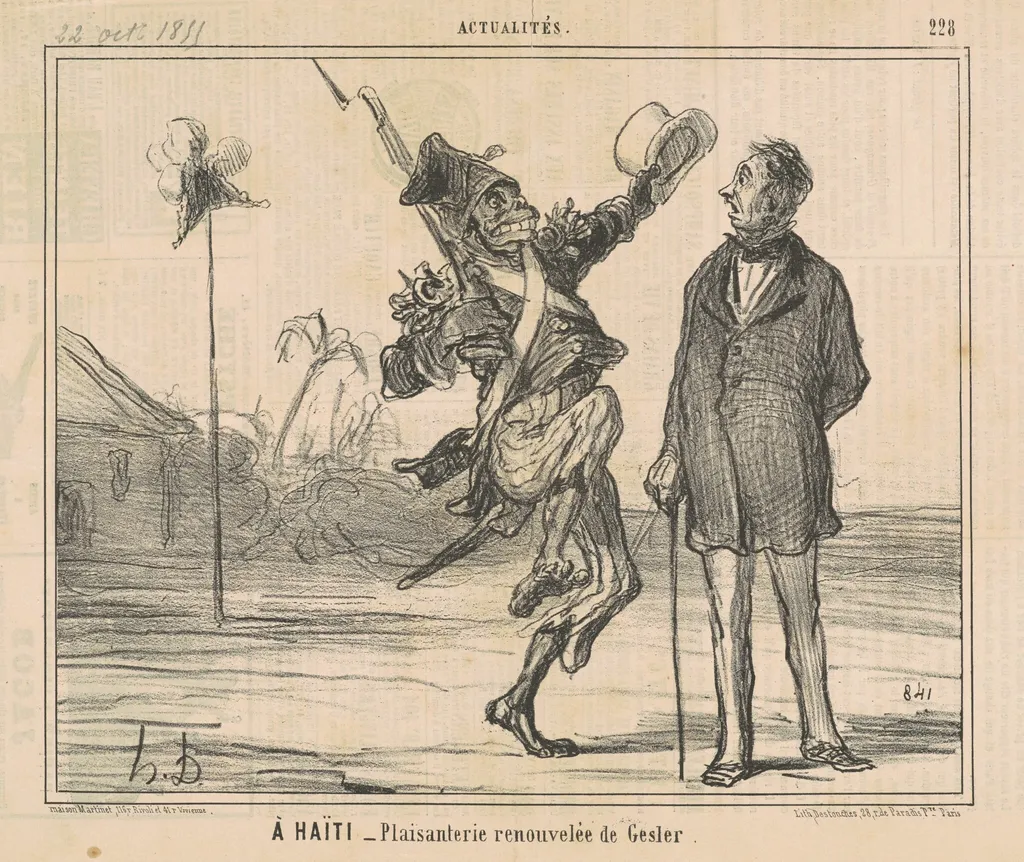
A Haiti is an ink print by the Impressionist artist Honoré Daumier. It dates from 1855 and is held in the collection of the National Gallery of Art.
About this work
The other wears plain clothes, arms stiff at his sides, mouth open in shock.
Two men stand face to face in a small frame. One wears a wild hat with feathers and a bright coat, waving his arms. The other wears plain clothes, arms stiff at his sides, mouth open in shock.
Daumier made this in 1855 as a lithograph. He used thick black lines to show strong feelings—anger here, fear there. The drawing feels fast, like a cartoon from a newspaper.
It makes you think of Daumier, Honoré
Overview
A Haiti is a 1855 lithograph by Honoré Daumier, featuring two men in a confrontational scene.
Subject & Meaning
The print depicts a flamboyantly dressed figure with a feathered hat gesturing emphatically towards another man, who stands rigidly in traditional attire, displaying shock or alarm. The contrast between the two figures suggests a commentary on cultural or societal differences.
Technique & Style
Thick black lines and bold characterizations convey strong emotions, giving the impression of a quickly executed drawing, akin to a newspaper cartoon. Daumier's use of lithography allows for expressive and dynamic renderings of the figures.
History & Provenance
Created in 1855, A Haiti is a product of Daumier's work during the mid-19th century, a period marked by significant social and cultural change.
Artist & collection
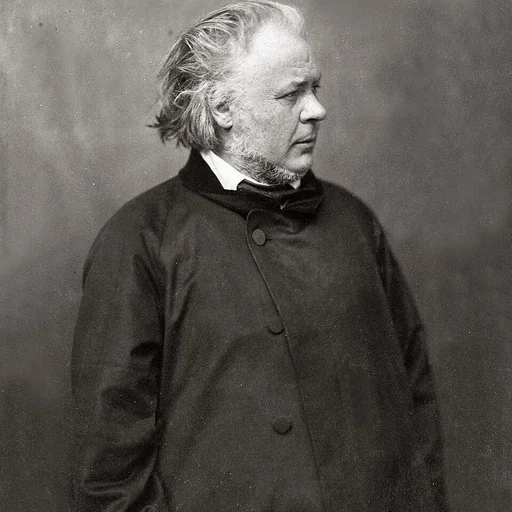
Artist
Honoré-Victorin Daumier was a French painter, sculptor, and printmaker, whose many works offer commentary on the social and political life in France, from the Revolution of 1830 to the fall of the Second French Empire in 1870.