Artwork
Scenes of Daily Life, Roads and Paths: Road to Saint-Cloud (Scènes de la vie quotidienne, Route et Chemins: Route de Saint-Cloud)
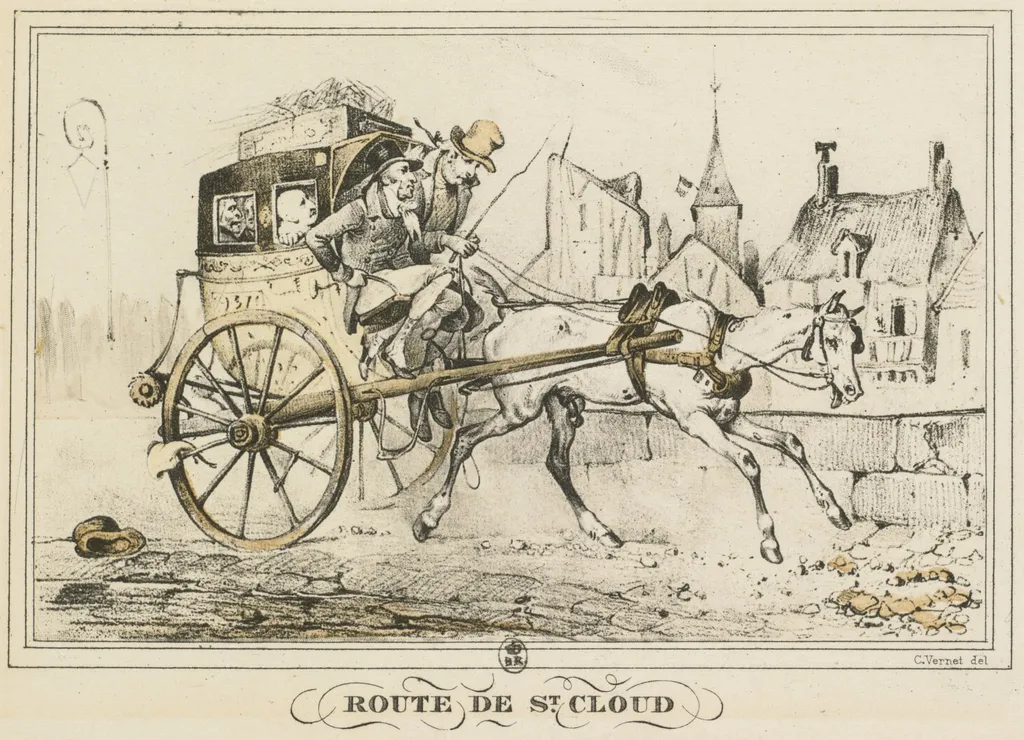
Scenes of Daily Life, Roads and Paths: Road to Saint-Cloud (Scènes de la vie quotidienne, Route et Chemins: Route de Saint-Cloud) is a print by the Romanticist artist Carle Vernet. It dates from 1816 and is held in the collection of the Cleveland Museum of Art.
About this work
This painting shows a dirt road near Paris in 1816.
Two men walk ahead. A woman in white rides a donkey.
A dog trots beside them. Trees line the path.
Vernet loved these quiet scenes of ordinary life.
He painted riders, travelers, and country folk.
His work feels warm and real. You almost hear the hoofbeats.
Check out Carle Vernet (French, 1758–1836) next.
Overview
Carle Vernet’s print ‘Road to Saint‑Cloud’ dates from 1816 and is part of the Cleveland Museum of Art’s collection. The image records a modest country lane on the outskirts of Paris, populated by a small group of travelers and framed by a line of trees. The work exemplifies Vernet’s interest in depicting everyday movement along French roads during the early nineteenth century.
Subject & Meaning
The scene presents a dirt track traversed by two men walking ahead of a woman dressed in white who rides a donkey, accompanied by a trotting dog. The composition captures a moment of ordinary travel, emphasizing the rhythm of footfall and animal gait while suggesting the quiet continuity of rural life beyond the city’s bustle.
Technique & Style
Executed as a print, Vernet employs fine line work and subtle shading to render the textures of road, foliage, and clothing. The balanced arrangement of figures and the restrained palette convey a sense of immediacy, while the careful delineation of the donkey and dog adds a lively, observational quality typical of Vernet’s genre scenes.
History & Provenance
Created in the post‑Napoleonic period, the print reflects Vernet’s broader output of rural and travel subjects. It entered the Cleveland Museum of Art’s holdings through acquisition (date of purchase not specified), where it remains on view as a representative example of early nineteenth‑century French printmaking.
Artist & collection

Artist
Antoine Charles Horace Vernet, better known as Carle Vernet, was a French painter, the youngest child of painter Claude-Joseph Vernet and the father of painter Horace Vernet.

 A la campagne, pas de grèves de cochers ... (recto); Villageois économes se contentant ... (verso)
 The One Hoss Shay
 A Hired Coachman in Winter
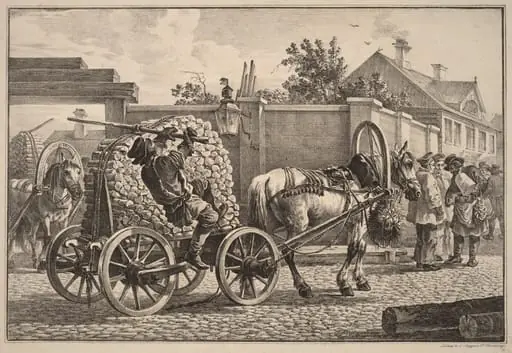 Russian Porter Carrying Wood on a Cart
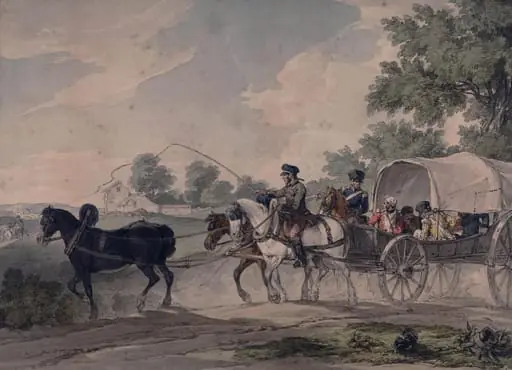 A Belgian Waggon Conveying Wounded from the Field after the Battle of Waterloo
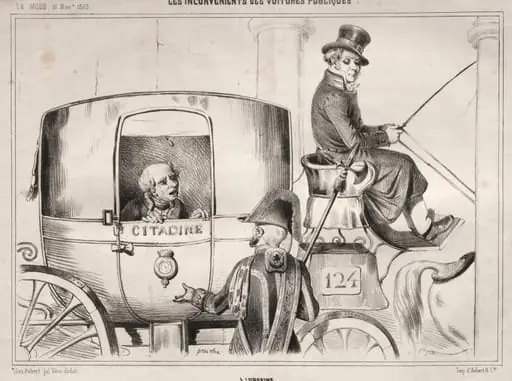 Actualités: Les Inconvénients des voitures publique: L'Urbaine
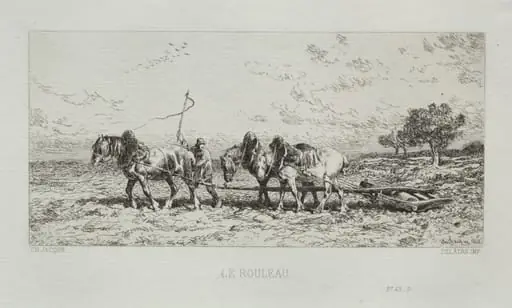 The Roller
 Actualités: Les Inconvénients des voitures publique: Le cocher de...
 Carriage in the Bois de Boulogne
 Hussar at the Door of a Cabaret, or Hussar Embracing a Servant