Artwork
A.P.F. Deslongrais
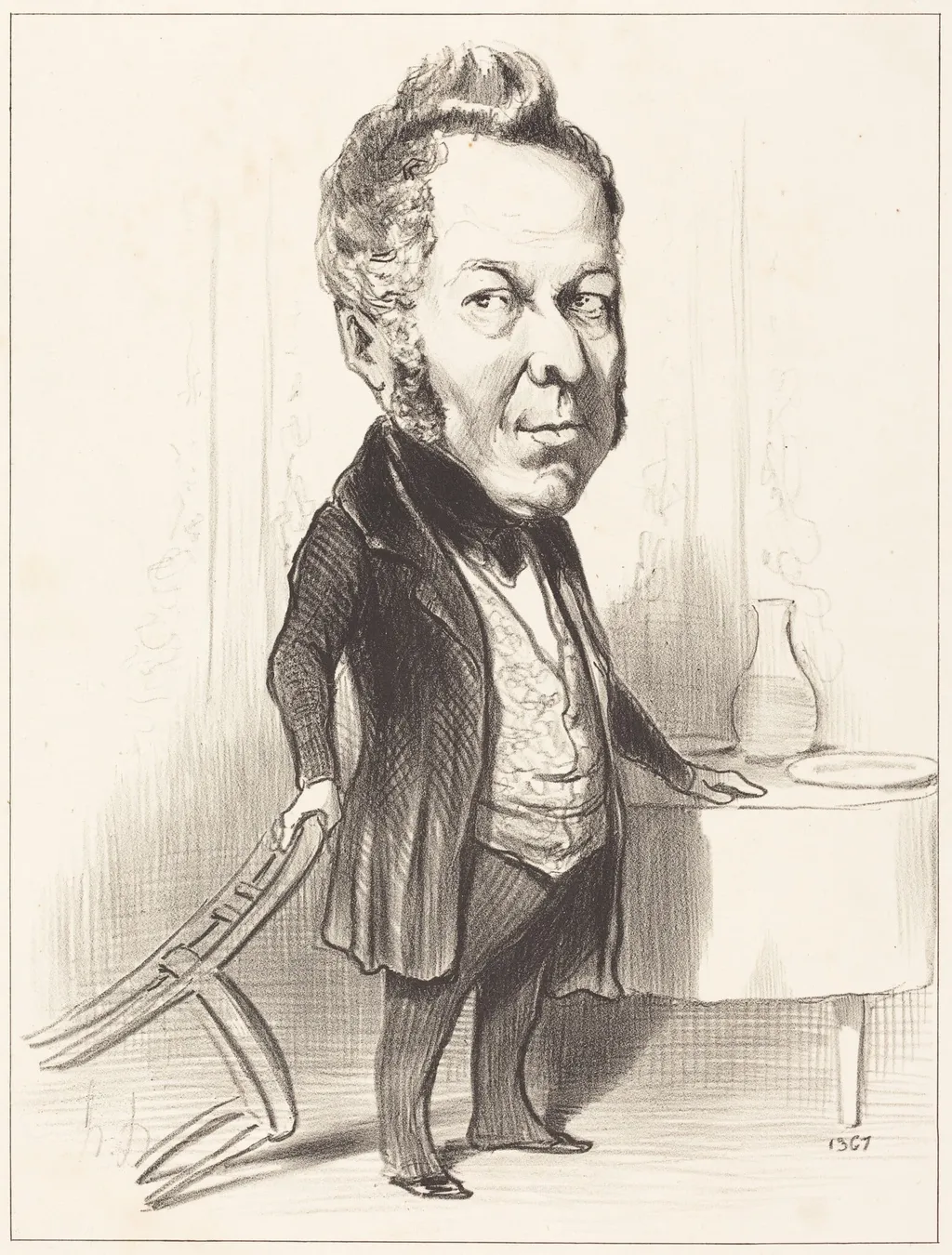
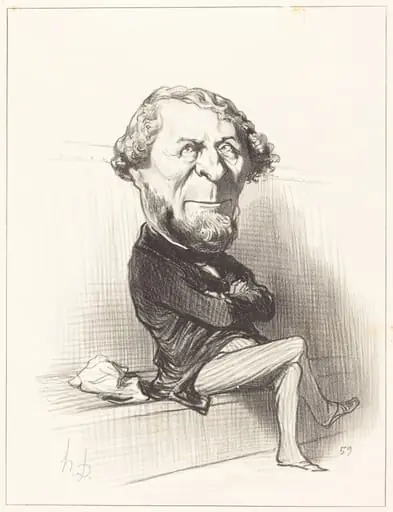
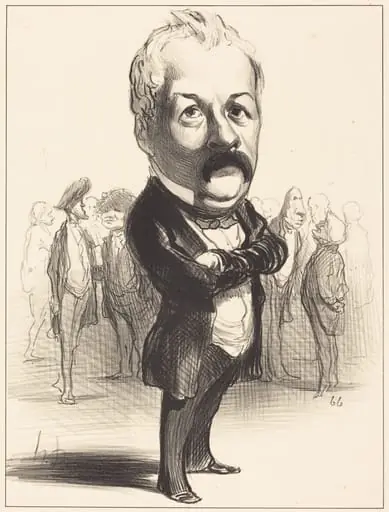
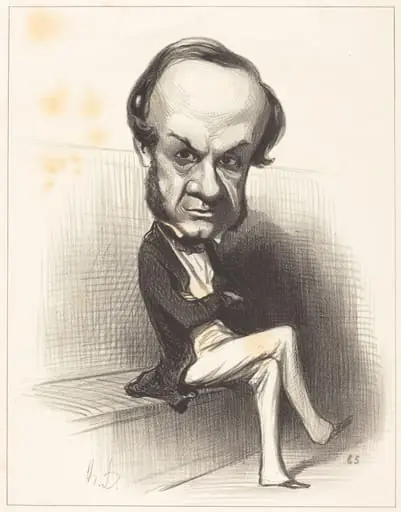
A.P.F. Deslongrais is an ink print by the Romanticist artist Honoré Daumier. It dates from 1849 and is held in the collection of the National Gallery of Art. Created in 1849, *A.
About this work
Overview
Created in 1849, *A.P.F. Deslongrais* is a lithographic print by Honoré Daumier. It belongs to the prolific series of satirical images he produced during the turbulent years of the July Monarchy and the early Second Republic, a period when Daumier’s work regularly appeared in the French press.
Subject & Meaning
The image depicts a solemn man in a dark coat and light shirt, clutching a walking stick, with a bottle and glass set on a table behind him. Daumier’s choice of a serious, somewhat disheveled figure serves as a subtle critique of the social elite, aligning with his broader republican sympathies and his habit of exposing the pretensions of the aristocracy and clergy.
Technique & Style
Executed with swift, sketch‑like lines, the lithograph captures the subject’s facial features and clothing in a lively, almost spontaneous manner. Daumier’s use of bold, gestural strokes gives the portrait a sense of immediacy, a hallmark of his caricatural approach that bridges drawing and printmaking.
History & Provenance
The print emerged from Daumier’s work for satirical journals such as *La Caricature* and *Le Charivari*, publications that disseminated his political commentary across Paris. Though originally intended for a newspaper audience, the lithograph later entered private collections and museum holdings, illustrating Daumier’s lasting influence as a visual chronicler of French public life.
Context
*A.P.F. Deslongrais* was produced amid the aftermath of the 1830 Revolution and the mounting tensions that would culminate in the fall of the Second Empire in 1870. Daumier’s republican outlook informed his depictions of contemporary figures, positioning the print as both a product of its time and a visual record of the era’s social dynamics.
Artist & collection

Artist
Honoré-Victorin Daumier was a French painter, sculptor, and printmaker, whose many works offer commentary on the social and political life in France, from the Revolution of 1830 to the fall of the Second French Empire in 1870.