Artwork
Ça pince, M'sieu Galimard, ça pince! ...
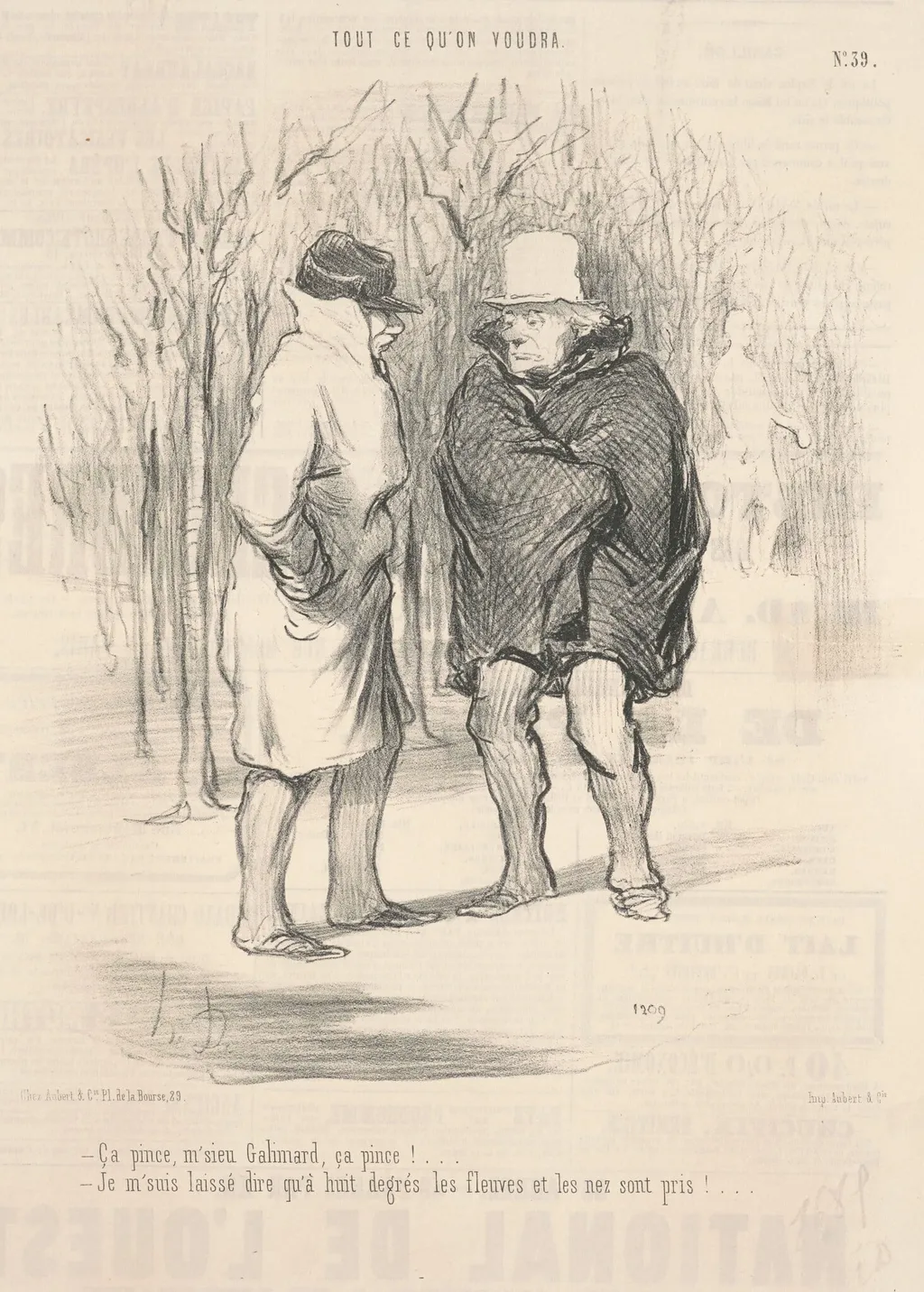
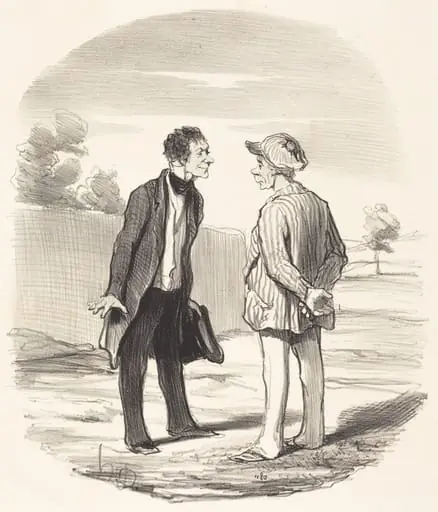
Ça pince, M'sieu Galimard, ça pince! ... is an ink print by the Romanticist artist Honoré Daumier. It dates from 1848 and is held in the collection of the National Gallery of Art.
About this work
The standing man’s polished look contrasts with the seated man’s worn clothes.
This lithograph shows two men outdoors under a bare tree. One man, in a long coat and top hat, stands stiff and proud. The second man, in a shabby coat, sits slouched with a worried look.
It’s a sharp comment on class in 1848 France. The standing man’s polished look contrasts with the seated man’s worn clothes. Daumier used lithography to make bold, fast lines that feel real and urgent.
Look up Daumier, Honoré to see more like this.
Overview
Honoré Daumier’s 1848 lithograph “Ça pince, M’sieu Galimard, ça pince!” presents a brief outdoor scene in which two men occupy opposite positions beneath a leafless tree. The composition is stark, emphasizing the contrast between a formally dressed, upright figure and a slumped, poorly clothed counterpart, thereby drawing immediate visual attention to their divergent social standings.
Subject & Meaning
The standing gentleman, attired in a long coat and top hat, embodies the respectable bourgeoisie, while the seated figure, wrapped in a tattered coat and displaying a worried expression, represents the struggling lower class. By juxtaposing these postures and garments, Daumier offers a pointed commentary on the economic disparities and social tensions that characterized France in the revolutionary year of 1848.
Technique & Style
Executed in lithography, the work relies on bold, swift lines that convey a sense of immediacy and realism. Daumier’s handling of the medium allows for stark contrasts between light and shadow, reinforcing the visual opposition of the two figures and enhancing the overall urgency of the social critique.
Context
Created amid the upheavals of the 1848 French Revolution, the print reflects contemporary anxieties about class conflict and political instability. Daumier, known for his satirical depictions of everyday life, used this image to capture the atmosphere of a society grappling with rapid change and widening economic gaps.
Artist & collection

Artist
Honoré-Victorin Daumier was a French painter, sculptor, and printmaker, whose many works offer commentary on the social and political life in France, from the Revolution of 1830 to the fall of the Second French Empire in 1870.









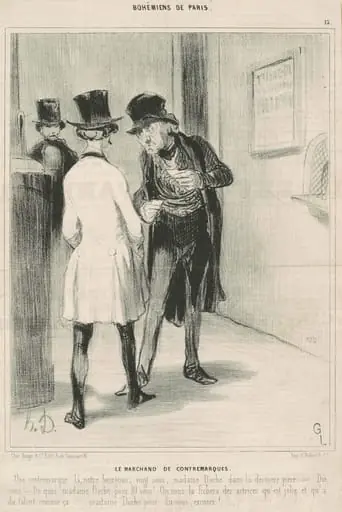 Le marchand de contremarques
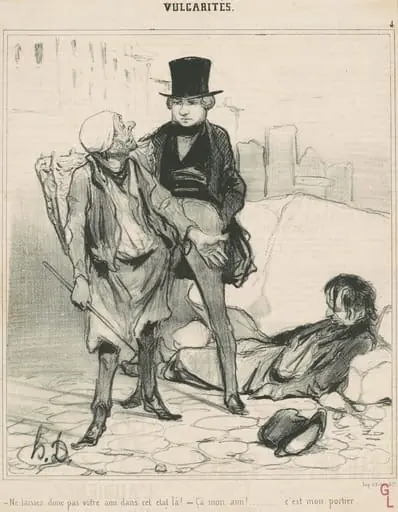 Ne laissez donc pas votre ami dans cet état la!
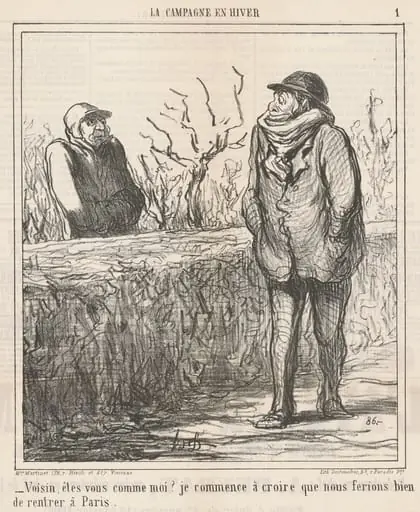 Voisin, êtes-vous comme moi? ...
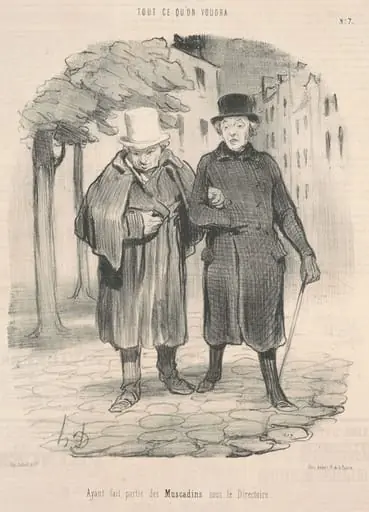 Ayant faitartie des muscadins sous le directoire
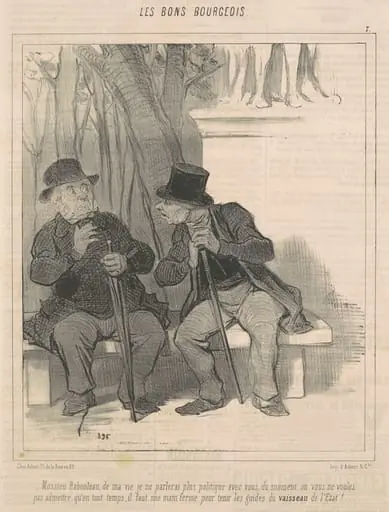 Mossieu Rabourdeau ... je ne parlerai plus politique avec vous ..
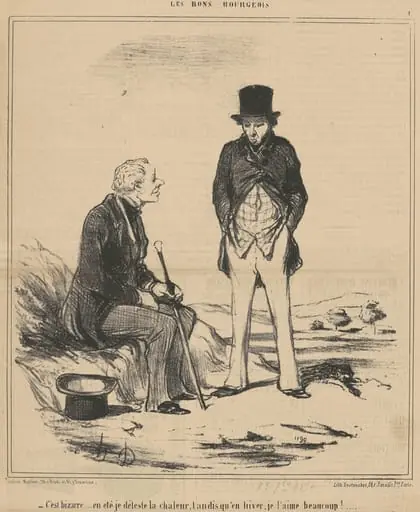 C'est bizarre ... été
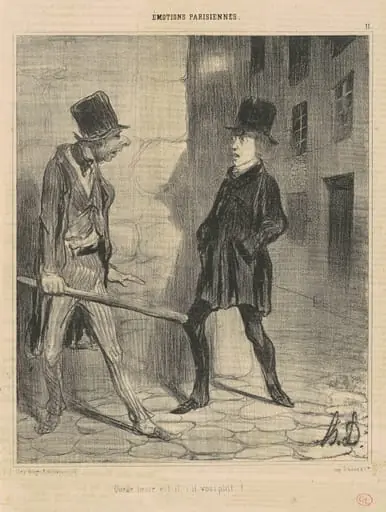 Quelle heure est'il, s'il vous plait?...
 Oui, monsieur Gimblet, l'ordre ne sera... rétabli...
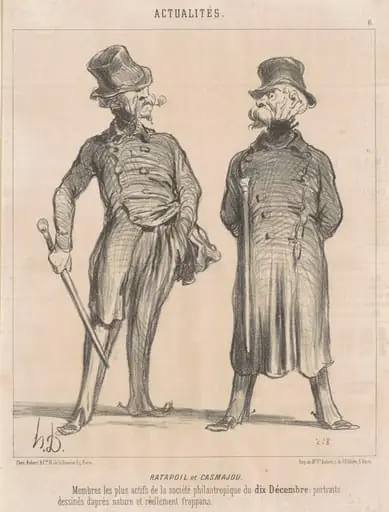 Ratapoil et Casmajou
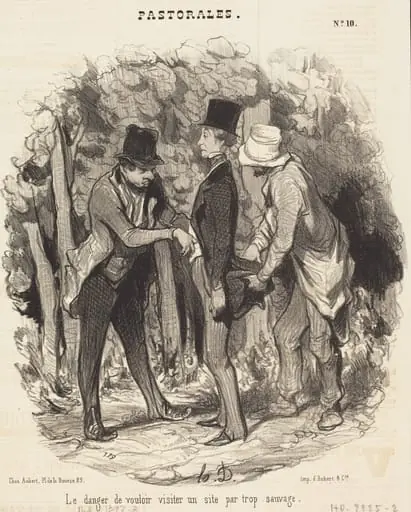 Le Danger de... visiter un site par trop sauvage