Artwork
Un Jeune homme qui est l'espoir... de la famille Badinguet
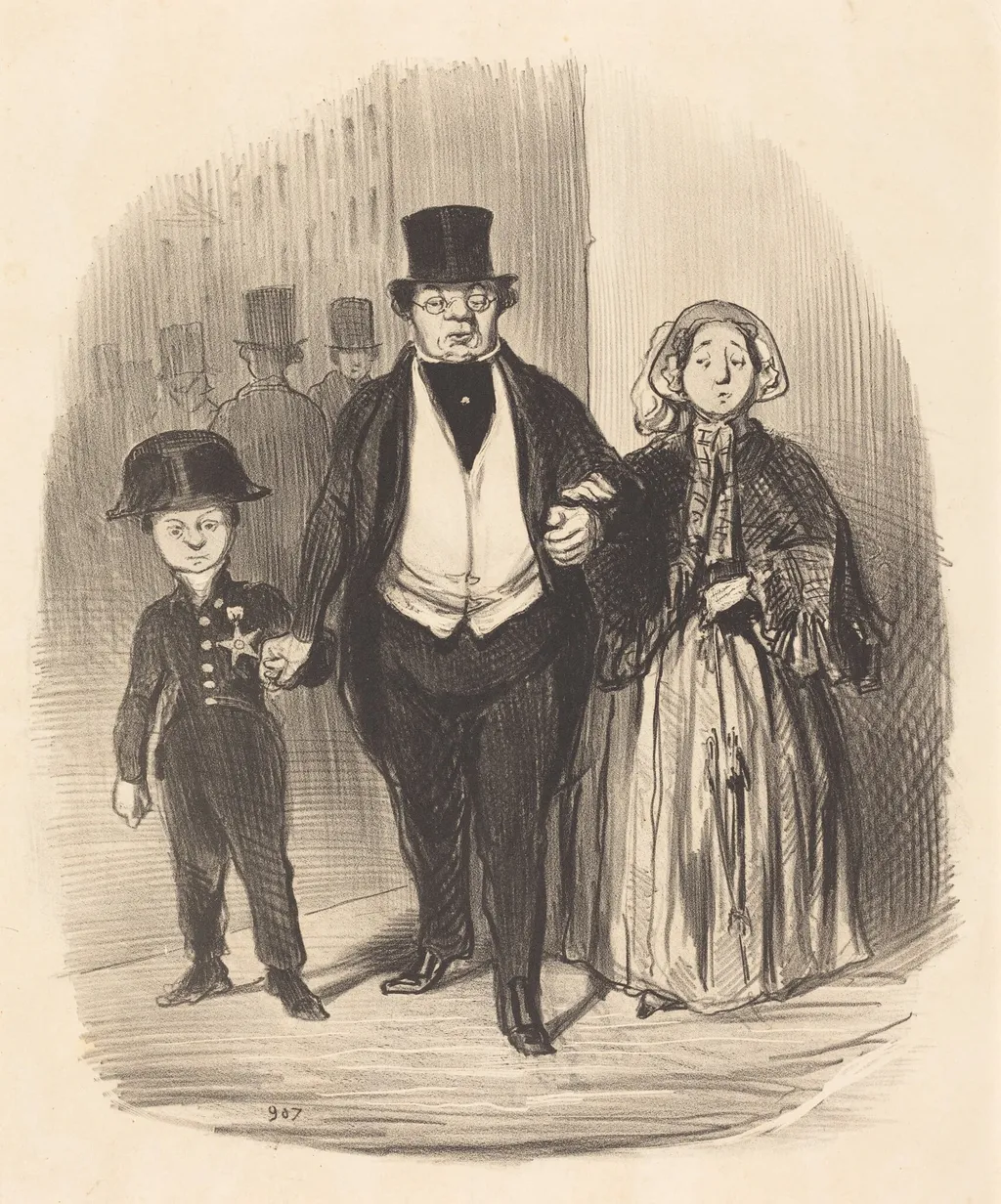
Un Jeune homme qui est l'espoir... de la famille Badinguet is an ink print by the Romanticist artist Honoré Daumier. It dates from 1846 and is held in the collection of the National Gallery of Art.
About this work
Overview
Created in 1846, this lithograph by Honoré Daumier presents a young man seated, gazing directly ahead with a solemn demeanor.
Created in 1846, this lithograph by Honoré Daumier presents a young man seated, gazing directly ahead with a solemn demeanor. Rendered in modest attire, the figure occupies a simple chair, his expression suggesting contemplation. The work belongs to Daumier’s extensive output of satirical prints produced for mid‑century French periodicals, where he frequently employed caricature to critique contemporary politics and society.
Subject & Meaning
The portrait mocks the notion of a youthful embodiment of hope linked to the Bonapartist claim to power during the turbulent years of the 1840s. By depicting the figure in unadorned clothing and a serious pose, Daumier underscores the fragility and perhaps the absurdity of placing political salvation in a single individual, reflecting broader skepticism toward monarchical and imperial aspirations.
Technique & Style
Executed in lithography, the image relies on bold outlines and subtle shading to convey volume and calm. Daumier’s hand‑drawn lines retain a spontaneous quality, while the limited tonal range emphasizes the sitter’s stillness. The print’s economy of detail aligns with the artist’s characteristic blend of realism and caricature, allowing the satirical intent to emerge without overt exaggeration.
History & Provenance
Originally published in one of Daumier’s regular outlets such as *La Caricature* or *Le Charivari*, the lithograph circulated among readers attuned to political commentary. Over time it entered private collections before being acquired by institutions documenting 19th‑century French printmaking, where it serves as a representative example of Daumier’s engagement with contemporary events.
Context
The mid‑1840s in France were marked by social unrest and the lingering legacy of the 1848 revolutions. Daumier’s work responded to a climate of shifting allegiances, where Bonapartist nostalgia competed with republican and monarchist currents. This print captures the era’s ambivalence, using a single figure to symbolize broader debates about leadership and national destiny.
Artist & collection
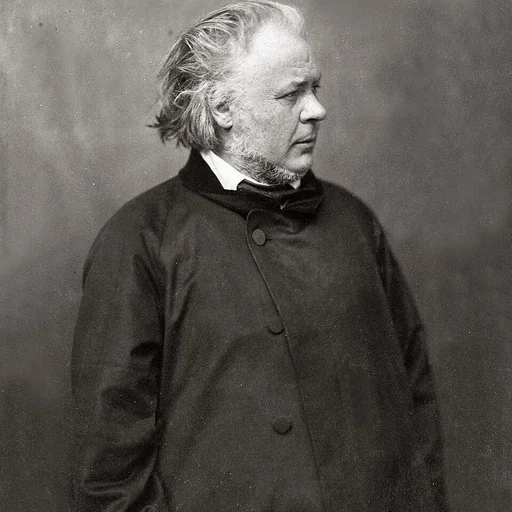
Artist
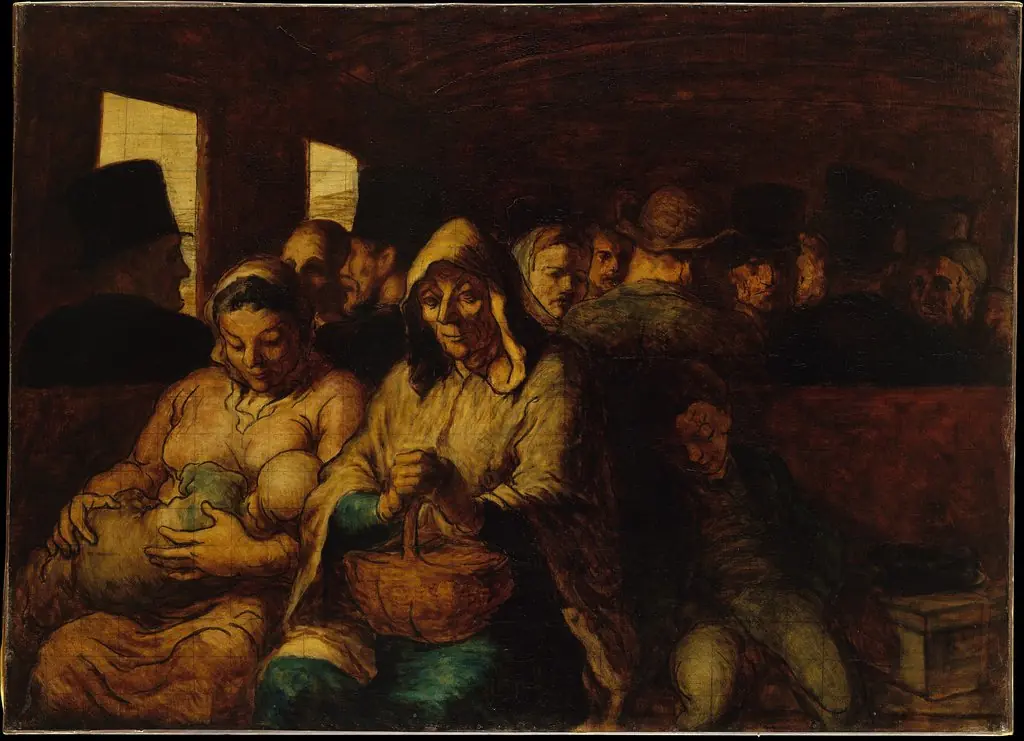
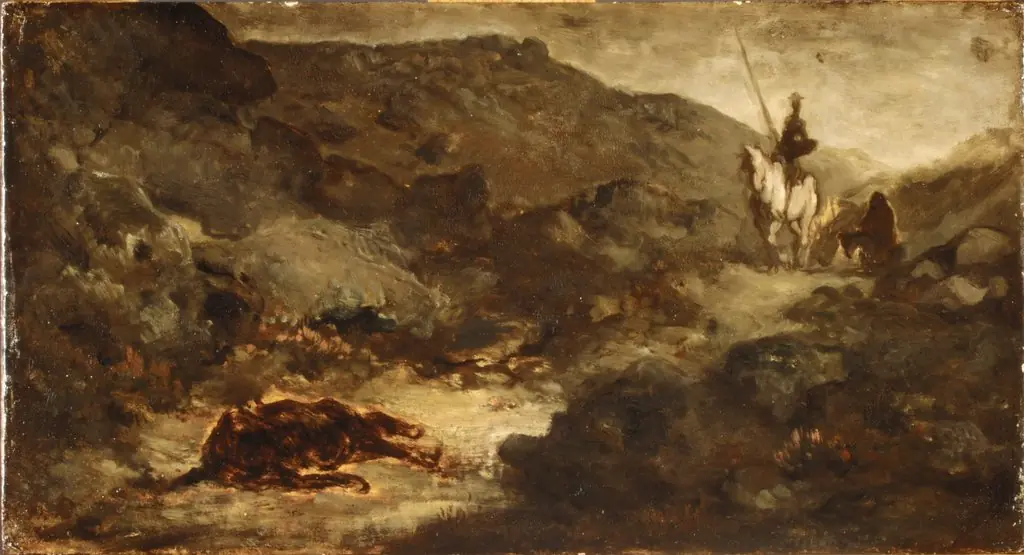
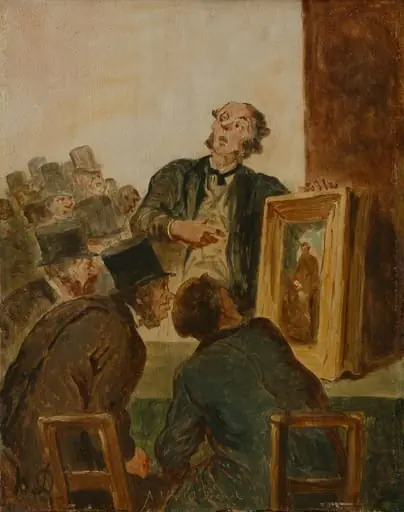
Honoré-Victorin Daumier was a French painter, sculptor, and printmaker, whose many works offer commentary on the social and political life in France, from the Revolution of 1830 to the fall of the Second French Empire in 1870.


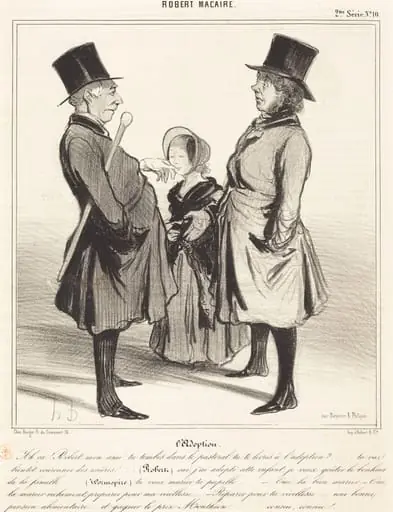 L'Adoption - Ah ça! Robert, mon ami...
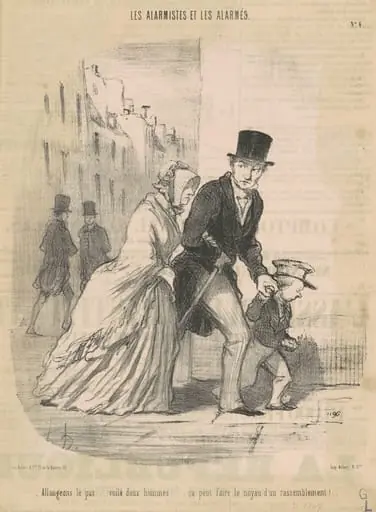 Allongeons le pas ... voila ceux hommes ...
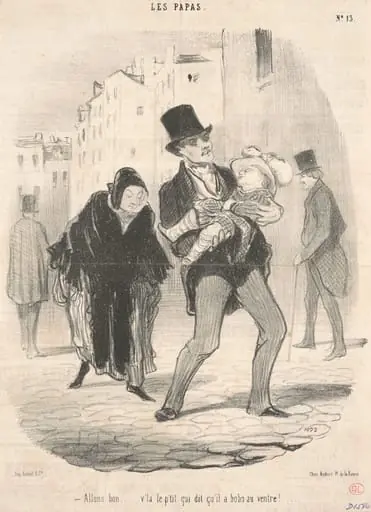 Allons bon ... v'la p'tit qui dit ...
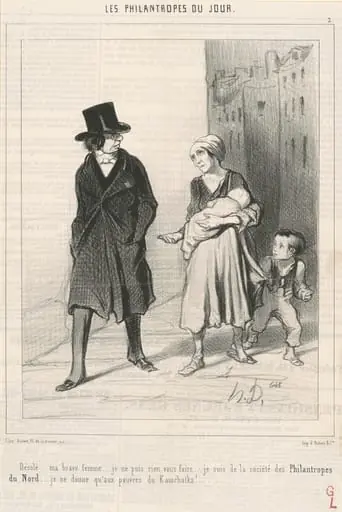 Désolé ... Je suis de la société des philantropes du nord ...
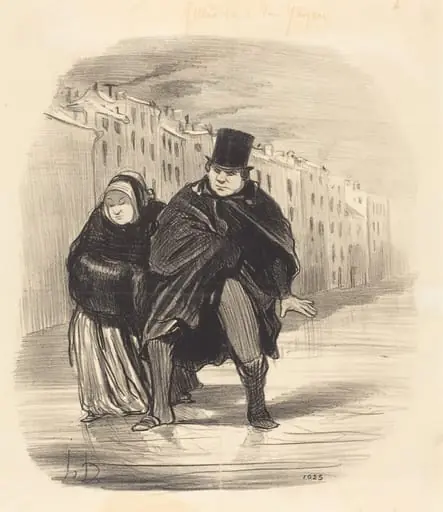 Tu m'reprendras encore... a aller souhaiter...
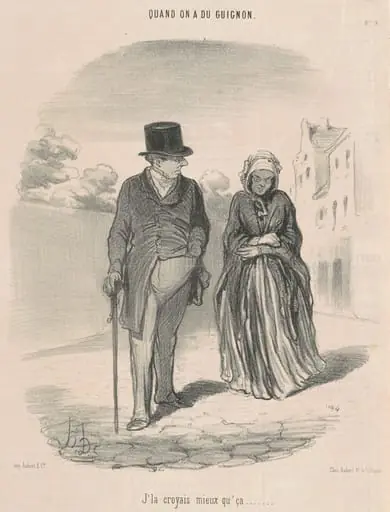 J'la croyais mieux qu'ça ...
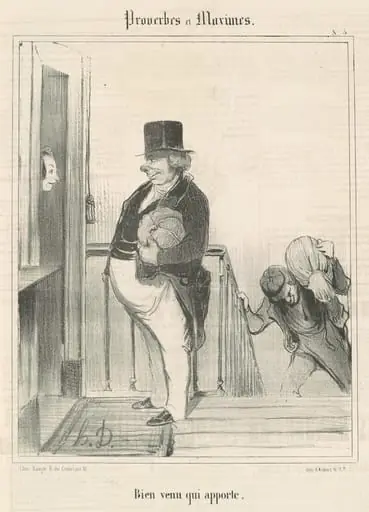 Bien venu qui apporte
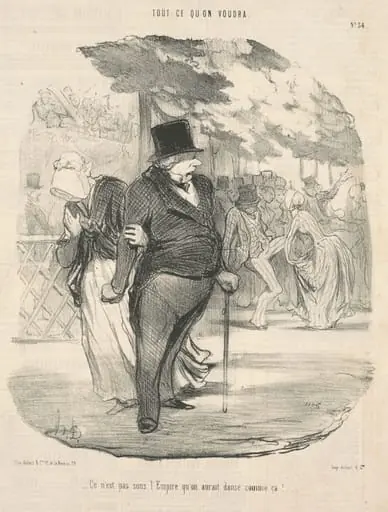 Ce n'est pas sous l"empire qu'on aurait dansé comme ca! ...
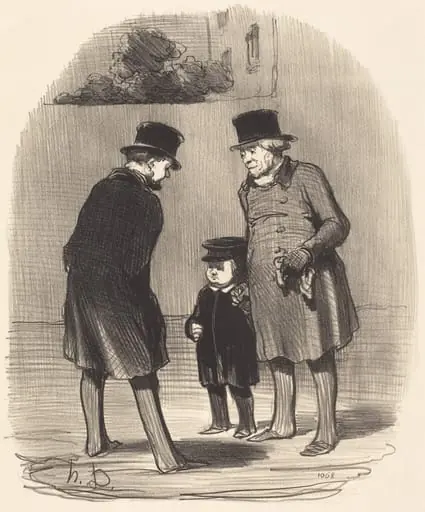 Oui, monsieur Chapuzot...
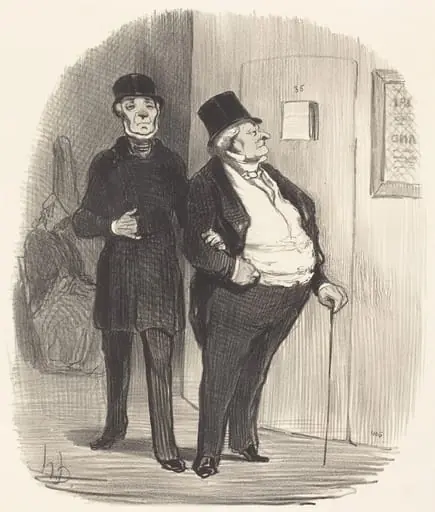 Un Jour de représentation a bénéfice...