Artwork
Clémence de Minos
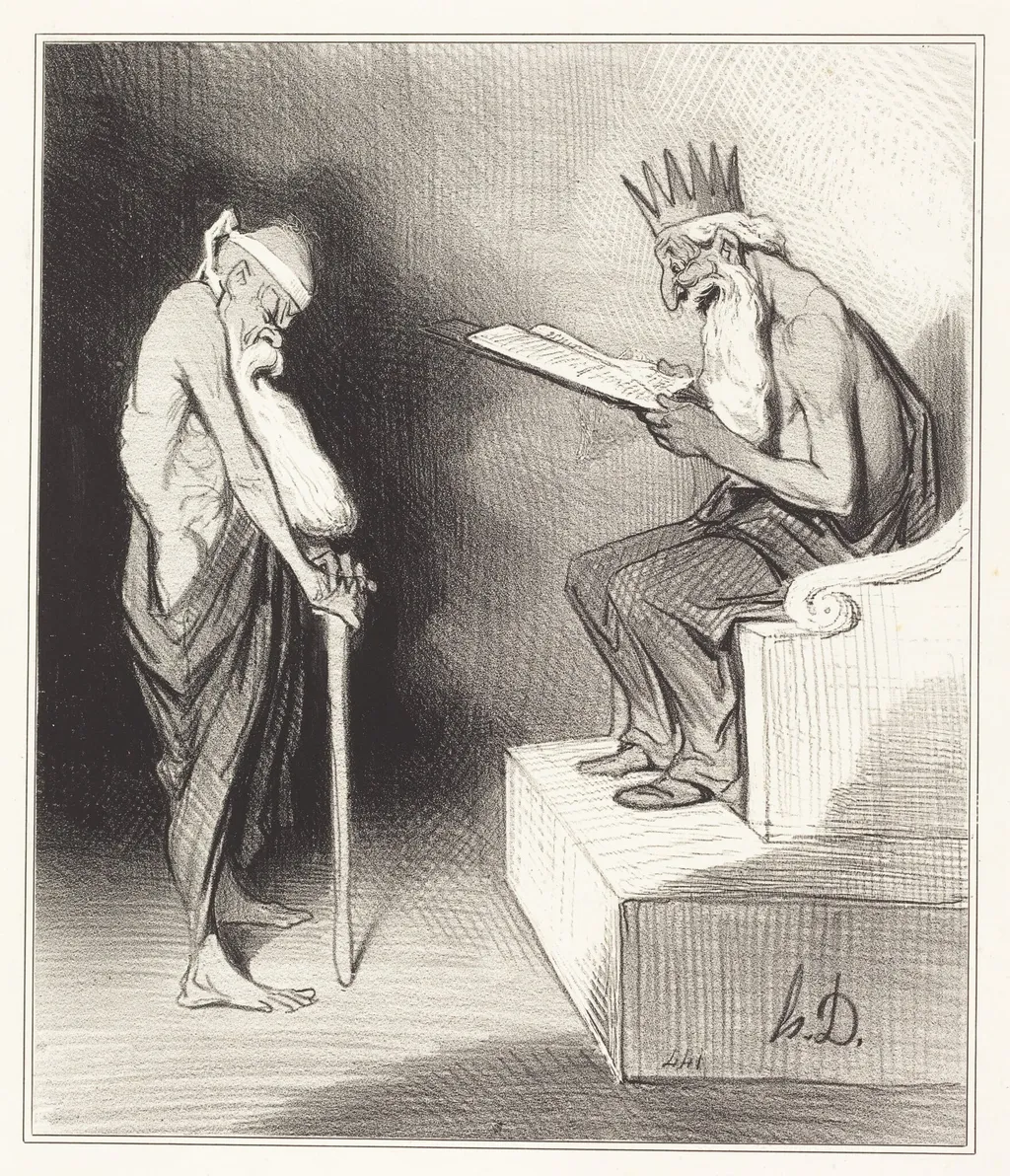
Clémence de Minos is an ink print by the Romanticist artist Honoré Daumier. It dates from 1843 and is held in the collection of the National Gallery of Art.
About this work
Overview
Clémence de Minos is a lithograph created by Honoré Daumier in 1843, characteristic of his satirical printmaking during the July Monarchy and Second Republic.
Subject & Meaning
The print depicts two figures in a symbolic, dimly lit setting: a standing man with a cane, looking down, and a seated, authoritative figure with a feather crown and scroll, pointing at the first. The scene conveys Daumier's republican critique, likely targeting monarchical or clerical authority.
Technique & Style
Executed in quick, sketchy lines, the lithograph prioritizes mood over detail. The stark, overhead lighting on the seated figure enhances the symbolic and satirical intent, while the overall darkness underscores the somber, critical tone.
History & Provenance
Part of Daumier's contributions to publications like *La Caricature* and *Le Charivari*, *Clémence de Minos* reflects his active role in 19th-century French political satire, aligning with his democratic, anti-monarchist views.
Context
Created amidst the political tensions of the July Monarchy and the rise of the Second Republic, the work is a product of Daumier's broader campaign to critique the French monarchy, aristocracy, and clergy through caricature.
Legacy
As one of Daumier's satirical prints, *Clémence de Minos* contributes to his legacy as a leading 19th-century French printmaker and social commentator, known for influencing future generations of artists and caricaturists.
Artist & collection
Artist
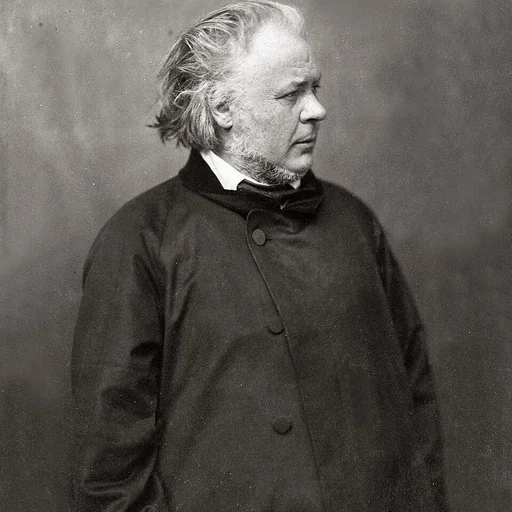
Honoré-Victorin Daumier was a French painter, sculptor, and printmaker, whose many works offer commentary on the social and political life in France, from the Revolution of 1830 to the fall of the Second French Empire in 1870.









 Télémaque et Mentor
 Télémaque interrogé par les sages
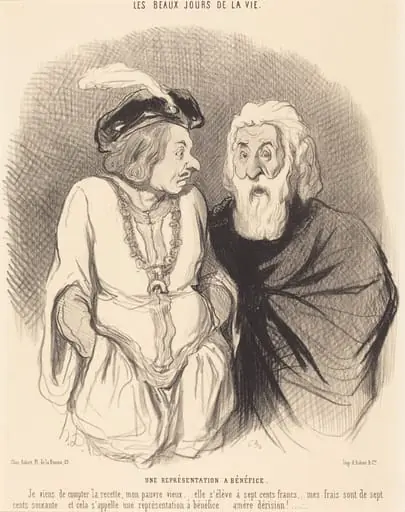 Une Représentation a bénéfice
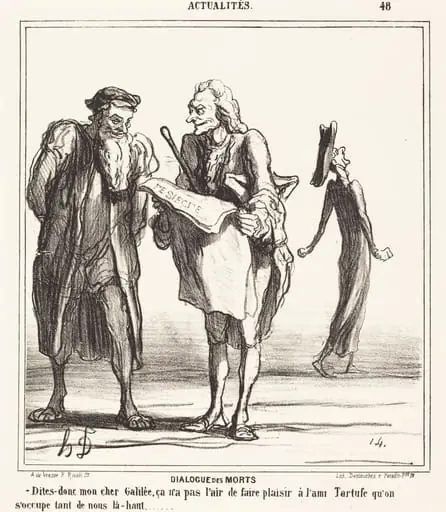 Dialogue des morts
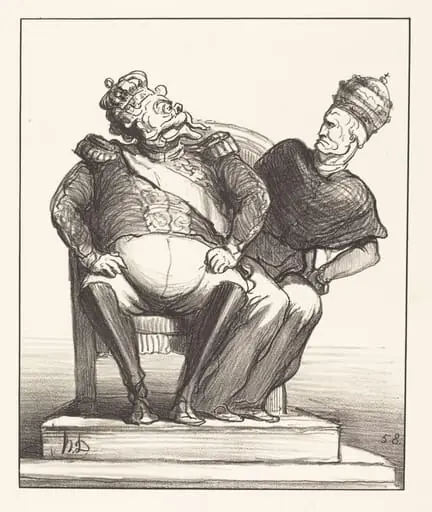 Trop étroit pour deux
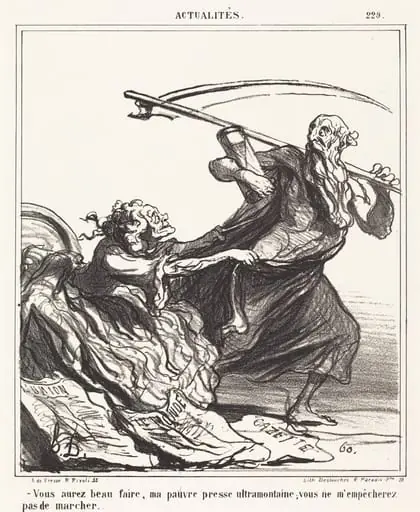 Vous aurez beau faire, ma pauvre presse...
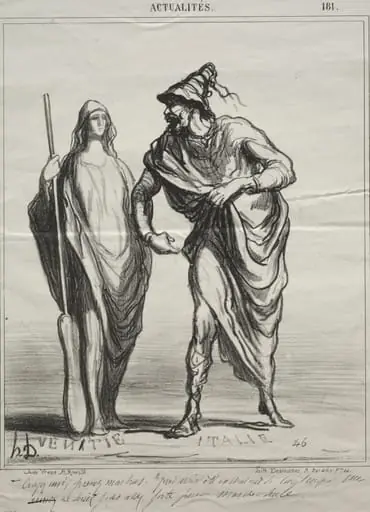 Trust me! Take my arm...
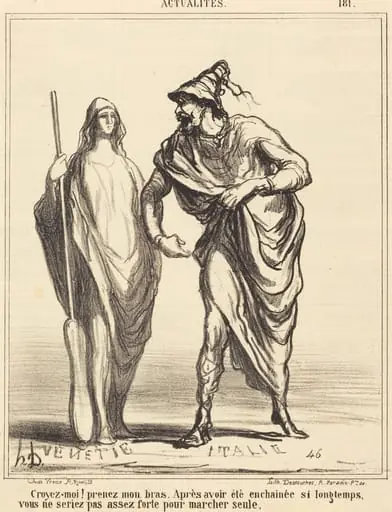 Croyez-moi! prenez mon bras...
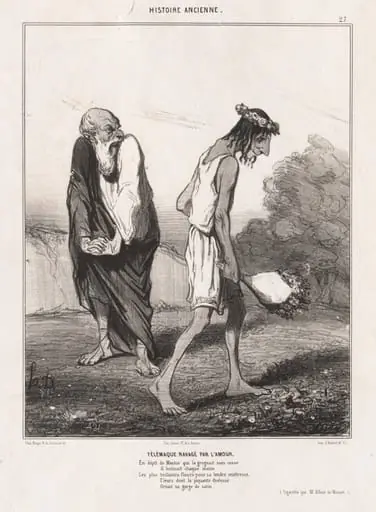 Telemachus Ravaged by Love
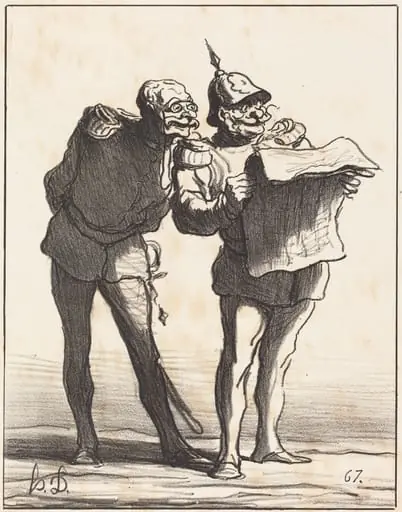 Décidément on ne peut pas...
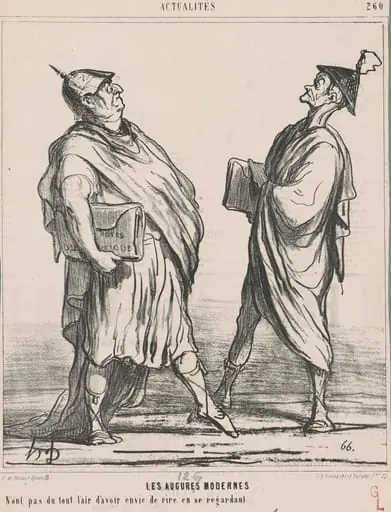 Les augures modernes ...
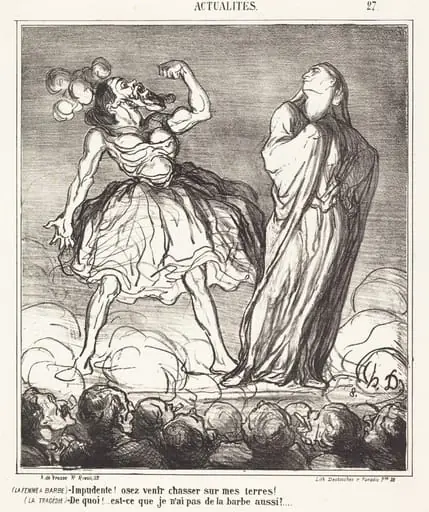 La Femme a barbe