Artwork
Confrère, méfiez-vous du petit baron...
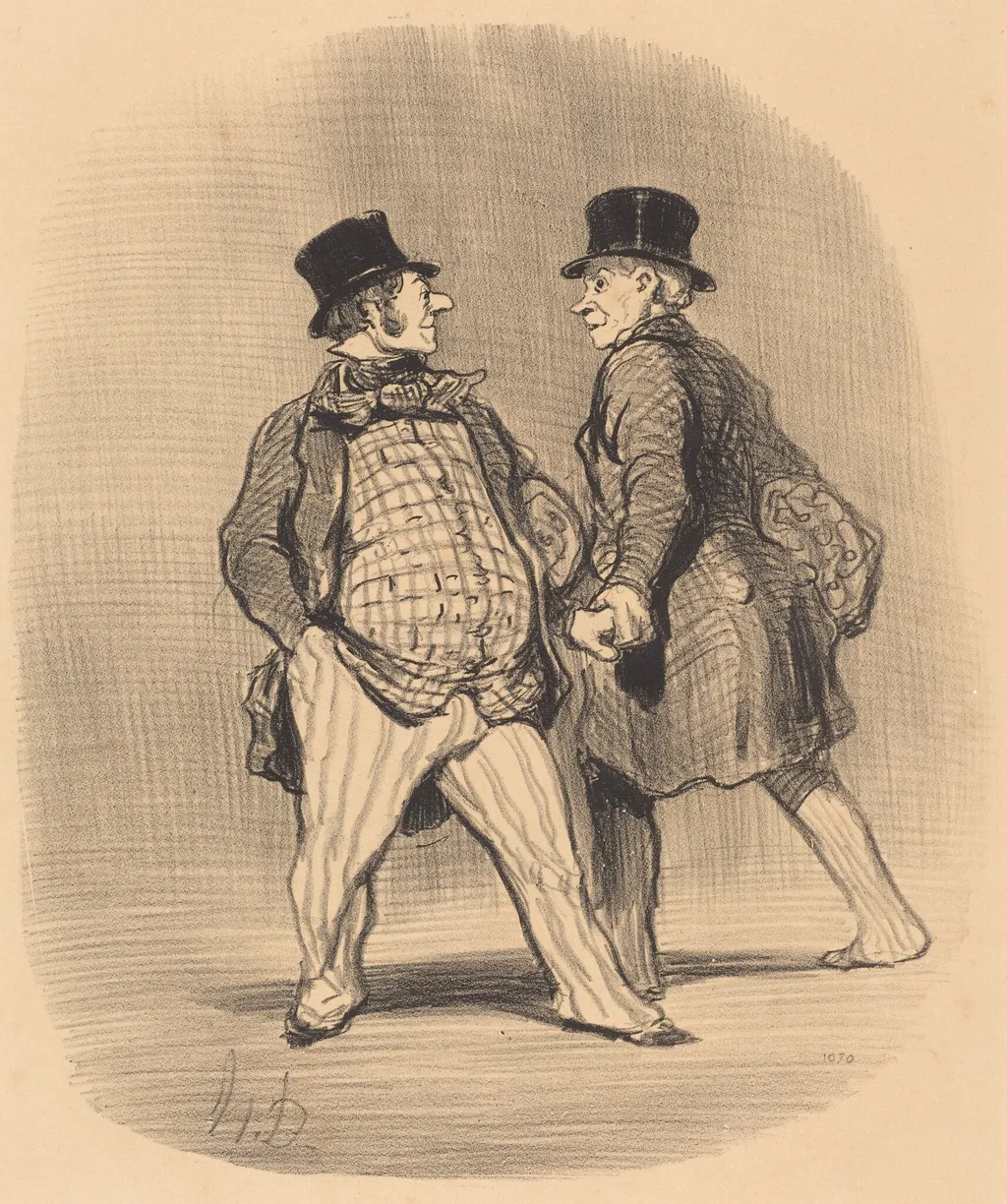
Confrère, méfiez-vous du petit baron... is an ink print by the Romanticist artist Honoré Daumier. It dates from 1848 and is held in the collection of the National Gallery of Art.
About this work
Overview
This 1848 lithograph by Honoré Daumier was created as a political satire for a Parisian periodical, part of a sustained series critiquing social hierarchies during France’s turbulent transition from monarchy to republic. Executed in the medium of lithography, it reflects Daumier’s role as a visual commentator on the era’s power dynamics, using sharp wit and visual economy to expose the anxieties of the middle class toward rising petty aristocrats.
Subject & Meaning
The image depicts two men in formal attire, one warning the other about a minor nobleman, identified by his title and demeanor.
The image depicts two men in formal attire, one warning the other about a minor nobleman, identified by his title and demeanor. The title, translating to 'Friend, beware of the little baron...', frames the encounter as a cautionary exchange. The baron’s presence, though unobtrusive, is implied as threatening—his small stature and the gesture of the other man’s hand on his own suggest manipulation or hidden danger, reflecting broader fears of aristocratic influence in a democratizing society.
Technique & Style
Daumier employed lithography to achieve rapid, expressive lines with minimal detail, focusing on posture and gesture over facial precision. The figures are rendered in stark tonal contrasts against a muted, uneven background, enhancing their isolation and tension. The lack of elaborate setting directs attention to the interaction, while the rough texture of the print reinforces the immediacy and urgency of the message, typical of journalistic satire of the time.
History & Provenance
Created during the early months of the Second Republic, the print emerged from Daumier’s prolific output for *Le Charivari*, where he regularly faced censorship and legal threats for his political caricatures. Though the original publication context is documented, the print’s subsequent circulation among collectors and institutions reflects its enduring value as a document of 19th-century French political culture, preserved in public collections since the late 1800s.
Context
In post-revolutionary France, the term 'petit baron' referred to minor nobles who clung to privilege despite the erosion of aristocratic power. Daumier’s work tapped into middle-class unease about these figures’ lingering influence in bureaucracy and society. His prints functioned as visual journalism, offering accessible critiques when free speech was fragile, and satire was among the few tools left to challenge authority without direct confrontation.
Legacy
Daumier’s lithographs, including this one, helped redefine political illustration as a serious form of social critique. His influence extended beyond his lifetime, shaping later generations of cartoonists and satirical artists who saw in his work a model for combining artistic skill with moral urgency. Though once dismissed as ephemeral, these prints are now recognized as vital records of democratic struggle in 19th-century Europe.
Artist & collection
Artist
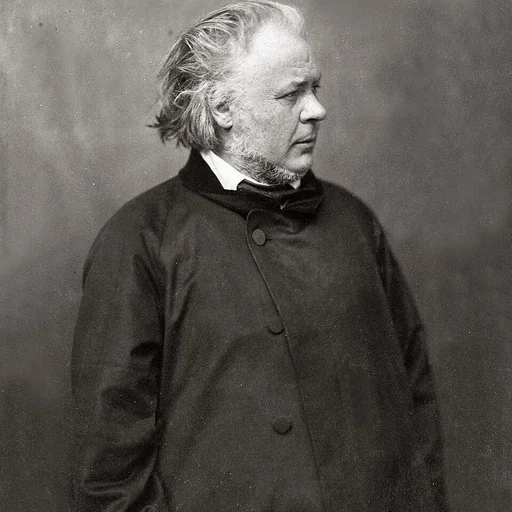
Honoré-Victorin Daumier was a French painter, sculptor, and printmaker, whose many works offer commentary on the social and political life in France, from the Revolution of 1830 to the fall of the Second French Empire in 1870.

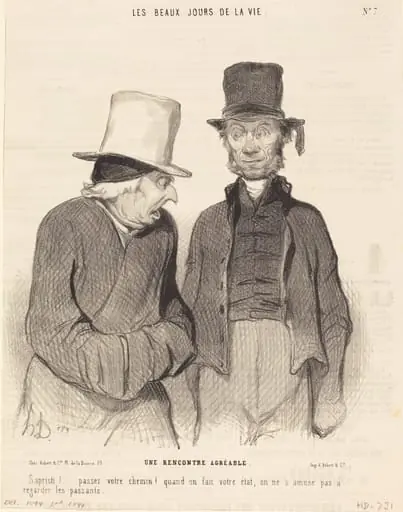 Une Rencontre agréable
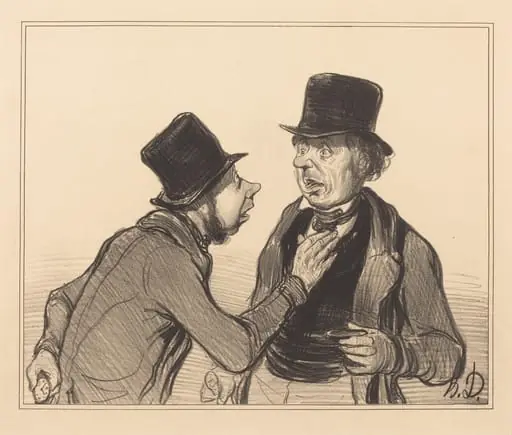 Oui Monsieur vous n'êtes pas de Paris...
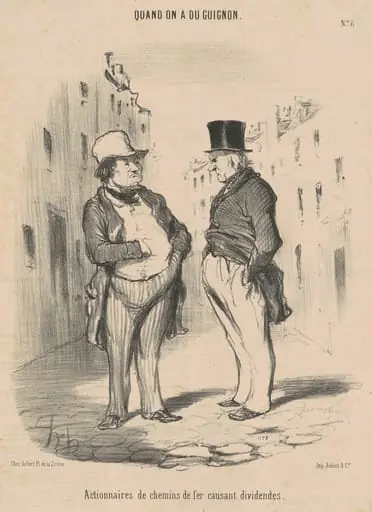 Actionnaires de chemins de fer causant dividendes
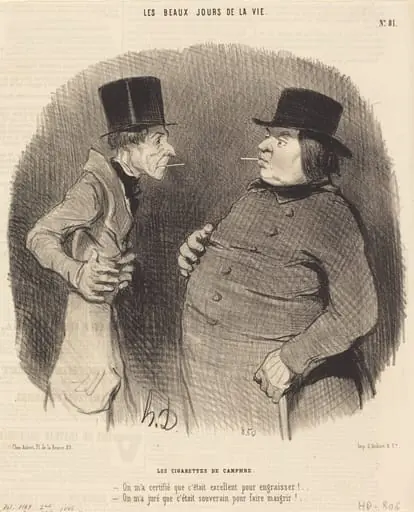 Les Cigarettes de camphre
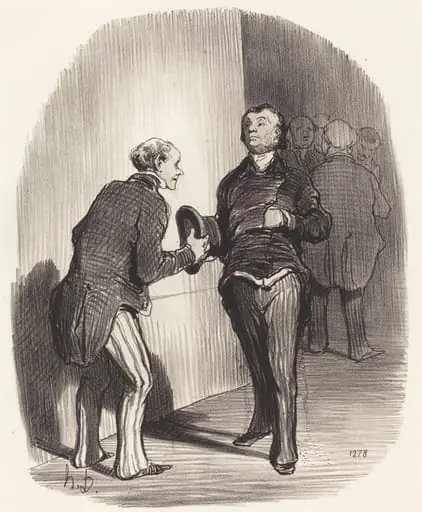 Vue d'une antichambre ministérielle...
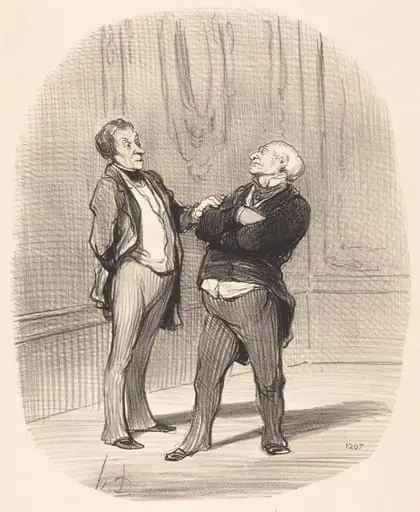 Il y a la guerre... les loyers vont... diminuer...
 Je vous arrête, mauvais sujet...
 Tiens... je ne te reconnaissais pas...
 Revers des médailles: Moi qui vous parle
 It seems to me that I notice a little dog there that is not muzzled!...