Artwork
Vue d'une antichambre ministérielle...
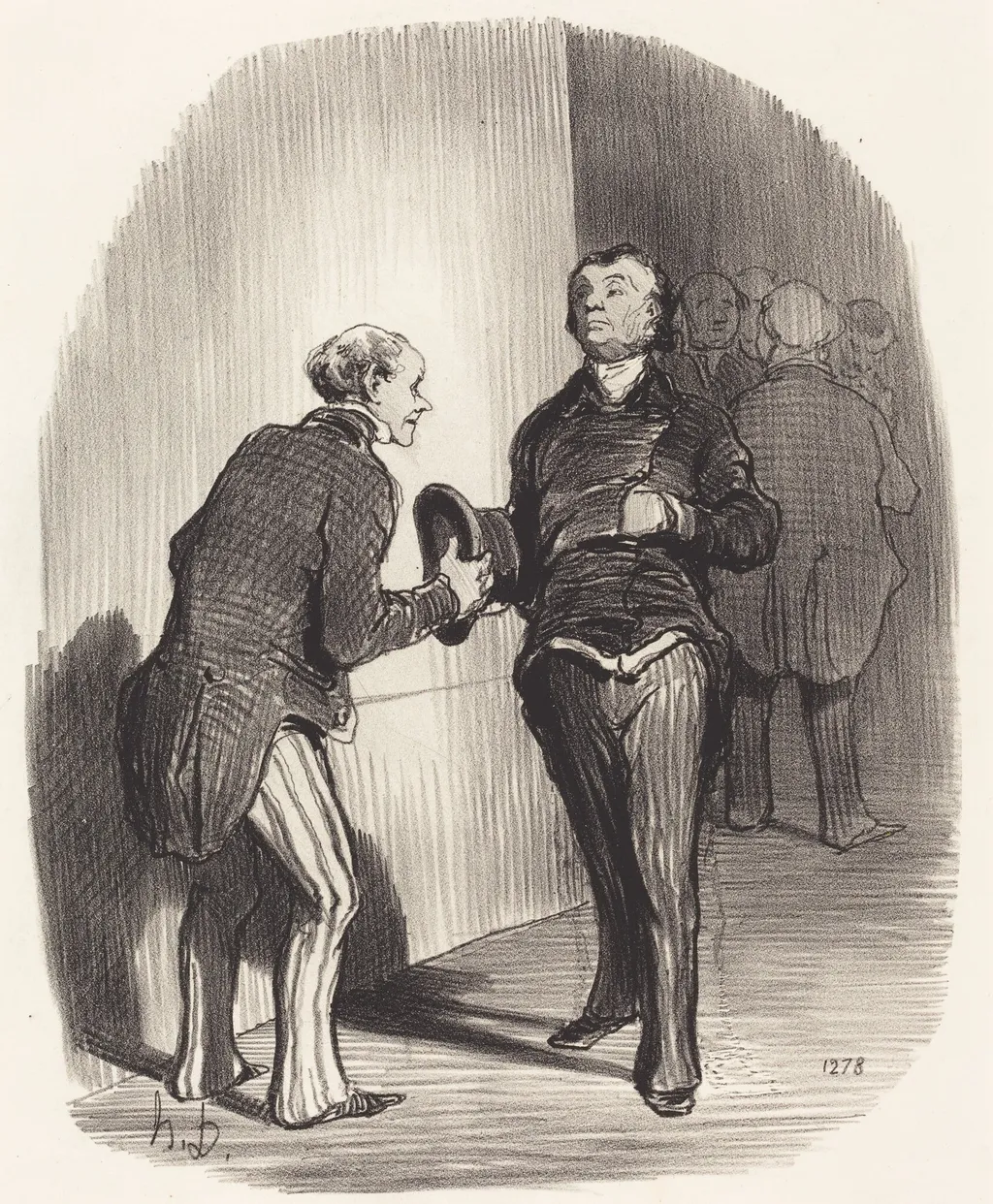
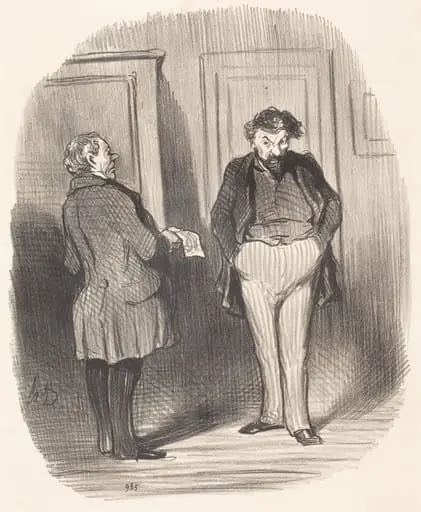
Vue d'une antichambre ministérielle... is an ink print by the Romanticist artist Honoré Daumier. It dates from 1849 and is held in the collection of the National Gallery of Art.
About this work
Overview
Created in 1849, this lithograph by Honoré Daumier captures a quiet moment in a government office, part of a broader series critiquing French bureaucratic life. Executed in the medium of lithography, it reflects Daumier’s commitment to using accessible print technology to expose the routines and power dynamics of state institutions during a period of political instability in France.
Subject & Meaning
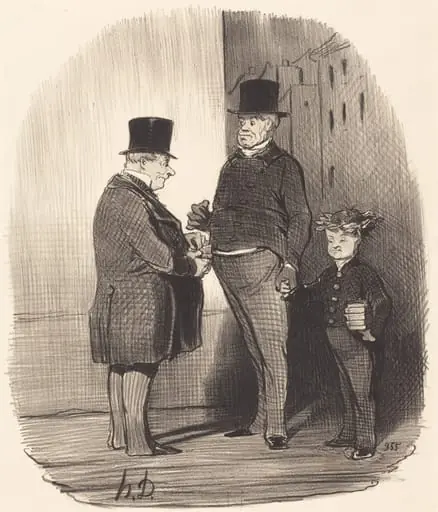
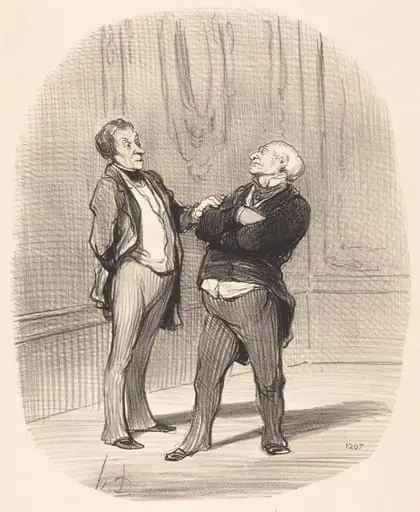
The scene depicts two officials in an antechamber: one transfers a document to the other, while a third figure lingers indistinctly in the background.
The scene depicts two officials in an antechamber: one transfers a document to the other, while a third figure lingers indistinctly in the background. The interaction suggests the routine exchange of influence or favors, subtly critiquing the opacity and hierarchy within ministerial circles. Daumier avoids overt caricature, instead using mundane gestures to reveal systemic complacency and unspoken authority.
Technique & Style
Daumier employed rapid, fluid lines typical of his sketch-based lithographic method, emphasizing movement and psychological nuance over detail. The loose rendering of forms, minimal background elements, and blurred peripheral figure create a sense of immediacy. This approach aligns with his focus on capturing authentic, transient moments rather than idealized or formal compositions.
History & Provenance
Produced during the early years of the Second Republic, the print emerged from Daumier’s ongoing collaboration with satirical journals like *Le Charivari*. Though originally published in periodicals, such works were later collected and preserved by institutions and private collectors, cementing their role as historical documents of 19th-century French political culture.
Context
In the aftermath of the 1848 Revolution, public scrutiny of government officials intensified. Daumier’s prints responded to this climate, offering visual commentary on the persistence of patronage and bureaucratic inertia despite changing regimes. His work resonated with urban readers familiar with the inner workings of state offices and the quiet corruption they often concealed.
Legacy
Daumier’s lithographs, including this one, influenced later generations of social realists and political illustrators. By elevating everyday bureaucratic scenes to the level of critical observation, he expanded the potential of printmaking as a tool for social analysis. His unembellished style and focus on institutional behavior remain relevant in visual critiques of power today.
Artist & collection

Artist
Honoré-Victorin Daumier was a French painter, sculptor, and printmaker, whose many works offer commentary on the social and political life in France, from the Revolution of 1830 to the fall of the Second French Empire in 1870.