Artwork
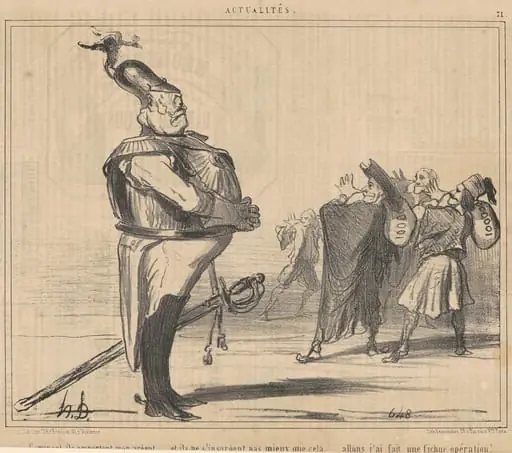
L'empereur Nicolas recevant une députation ...
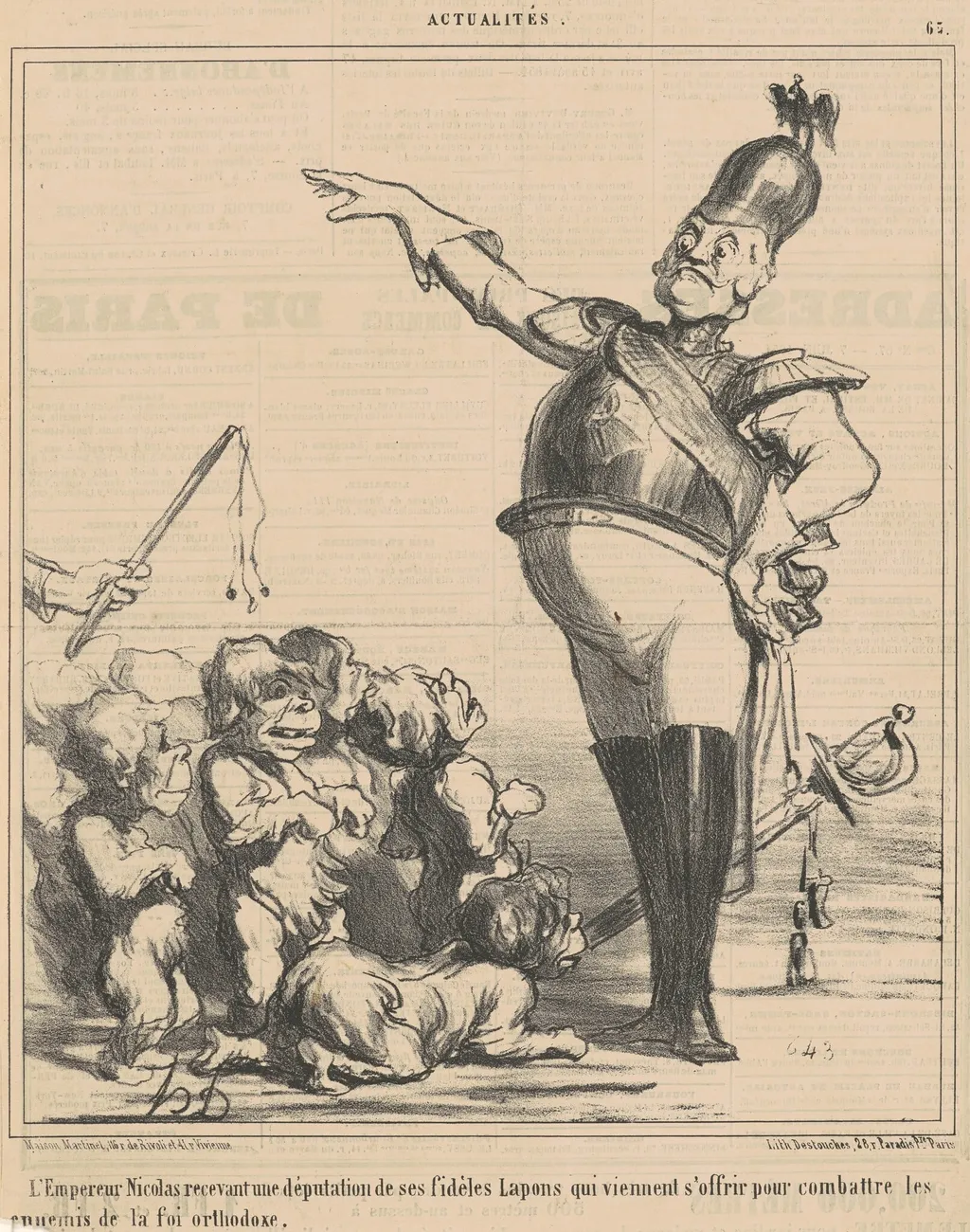
L'empereur Nicolas recevant une députation ... is an ink print by the Impressionist artist Honoré Daumier. It dates from 1854 and is held in the collection of the National Gallery of Art.
About this work
This lithograph shows a man in armor standing tall. Dogs in suits surround him, all looking serious. The cross-hatched lines make the scene look both sharp and a little silly.
Daumier made this in 1854. He used it to mock power and bad leaders. The dogs aren’t just funny—they represent people who follow blindly.
Look it up next to work by Daumier, Honoré.
Overview
Honoré Daumier’s 1854 lithograph presents a towering figure in armor flanked by a procession of canine‑like characters dressed in similar regalia. The composition balances precise line work with dense cross‑hatching, giving the scene a crisp yet slightly absurd quality that immediately signals its satirical intent.
Subject & Meaning
The armored central figure represents a military or political authority, while the surrounding dogs—human in dress but animal in form—symbolize obedient followers. By pairing a serious commander with these anthropomorphic canines, Daumier critiques the blind loyalty and unquestioning compliance that he perceived in contemporary governance.
Technique & Style
Executed in lithography, the print relies on fine, parallel lines and cross‑hatching to model volume and texture. This method allows Daumier to render both the metallic sheen of armor and the soft fur of the dogs with equal clarity, while the stark contrasts reinforce the work’s biting humor.
History & Provenance
Created in the mid‑nineteenth century, the lithograph was part of Daumier’s broader series of political caricatures that circulated in newspapers and pamphlets. It reflects his ongoing engagement with the turbulent French political climate of the 1850s, a period marked by authoritarian rule and public dissent.
Context
Daumier’s satirical prints often targeted the Second Empire and its officials, employing allegory to evade censorship. The use of animal figures to represent human subjects was a common device in French caricature, allowing the artist to comment on power structures while maintaining a degree of visual distance.
Legacy
The work remains a notable example of how lithography could combine artistic skill with social critique. Its blend of humor and political observation continues to inform studies of 19th‑century French visual culture and the role of print media in shaping public opinion.
Artist & collection
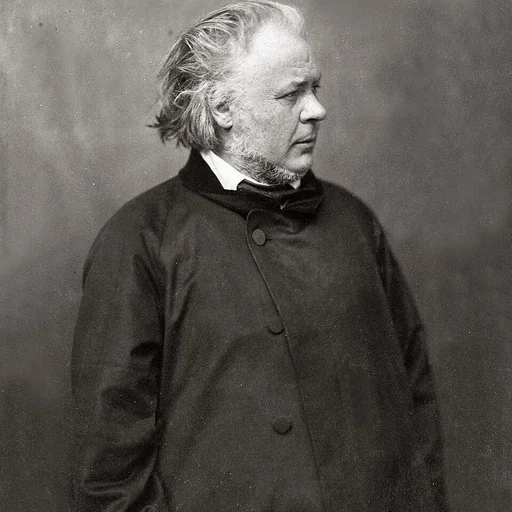
Artist
Honoré-Victorin Daumier was a French painter, sculptor, and printmaker, whose many works offer commentary on the social and political life in France, from the Revolution of 1830 to the fall of the Second French Empire in 1870.