Artwork
Dieu ai-je aimé cet être la
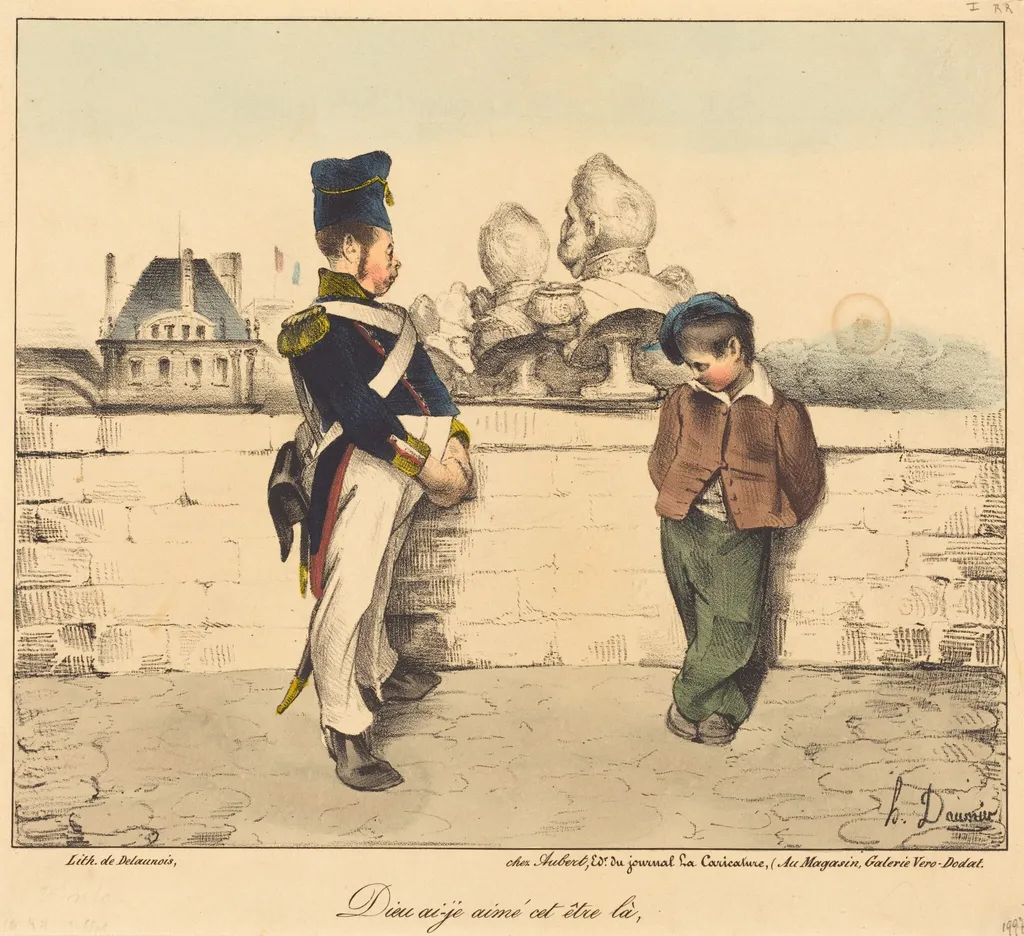
Dieu ai-je aimé cet être la is an ink print by the Romanticist artist Honoré Daumier. It dates from 1831 and is held in the collection of the National Gallery of Art.
About this work
Overview
Honoré Daumier’s 1831 lithograph titled *Dieu ai‑je aimé cet être là* presents a scene on a stone bridge where a uniformed soldier rests his hand on a young boy’s shoulder while the child looks away. A river, buildings and a large ship form the background, and the French inscription at the bottom translates to “God, how I loved this being.”
Subject & Meaning
The juxtaposition of a military figure and an innocent child invites reflection on authority and vulnerability in post‑revolutionary France. By placing the soldier’s gesture of support against the boy’s distant gaze, Daumier hints at a disconnect between official power and the populace, echoing his broader republican concerns about the role of the state and the clergy during the July Monarchy.
Technique & Style
Executed in lithography, the work relies on the medium’s capacity for fine line work and tonal variation. Daumier’s characteristic bold outlines and subtle shading convey both the solidity of the bridge and the movement of water, while the exaggerated facial expressions and attire underscore his satirical approach without abandoning realistic detail.
History & Provenance
Created for the politically charged press of the early 1830s, the print originally appeared in venues such as *La Caricature* and *Le Charivari*, where Daumier routinely critiqued the monarchy, aristocracy, and clergy. The lithograph later entered private collections before being acquired by a public museum, where it remains a documented example of his early republican activism.
Context
The image reflects the turbulent atmosphere of the July Monarchy, a period marked by contested authority and rising republican sentiment. Daumier’s use of humor and visual irony in this piece contributed to the development of political caricature as a tool for social critique, influencing subsequent generations of satirical artists and reinforcing the lithograph’s role in French visual culture.
Artist & collection

Artist
Honoré-Victorin Daumier was a French painter, sculptor, and printmaker, whose many works offer commentary on the social and political life in France, from the Revolution of 1830 to the fall of the Second French Empire in 1870.









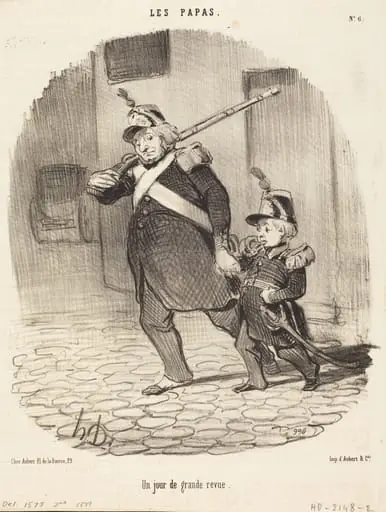 Un Jour de grande revue
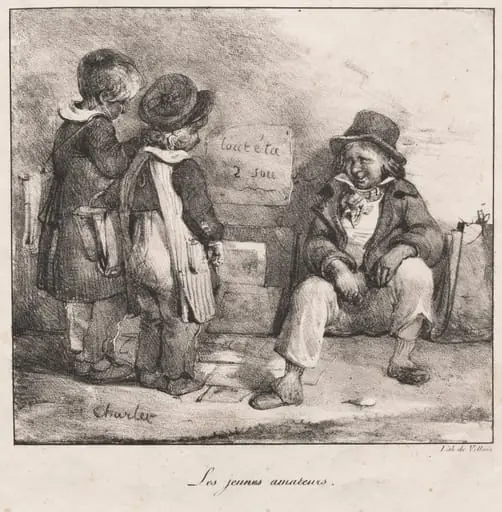 Sketch Book for the Use of Small Children: The Young Amateurs
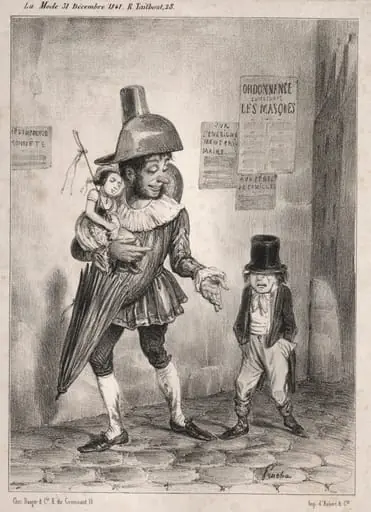 Pochades de carnaval: Vois-tu, si ton maître est bien content de toi et si tu as le prix de sagesse cette année! je te laisserai deguiser en paillasse! ...l'année prochaine!!
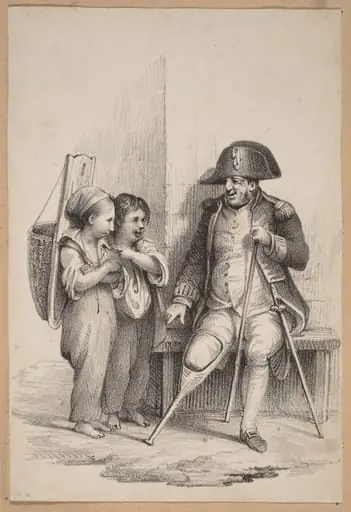 The Soldier's Birth Right
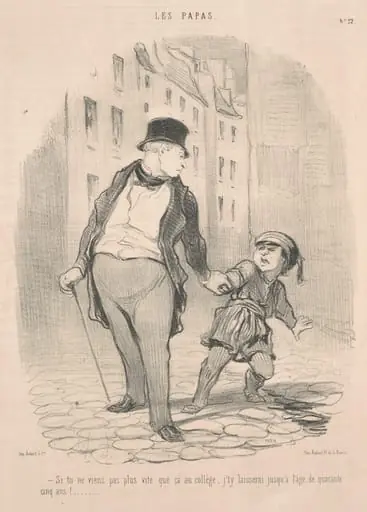 Si tu ne viens pas plus que ça au collège ...
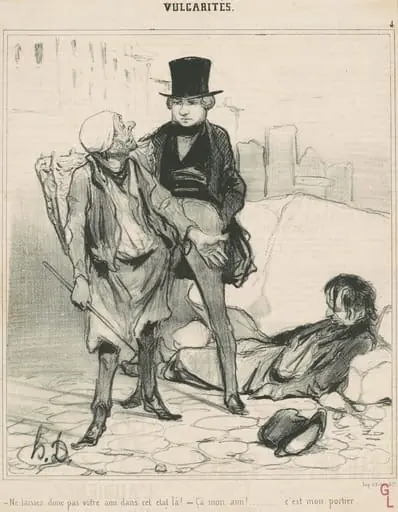 Ne laissez donc pas votre ami dans cet état la!
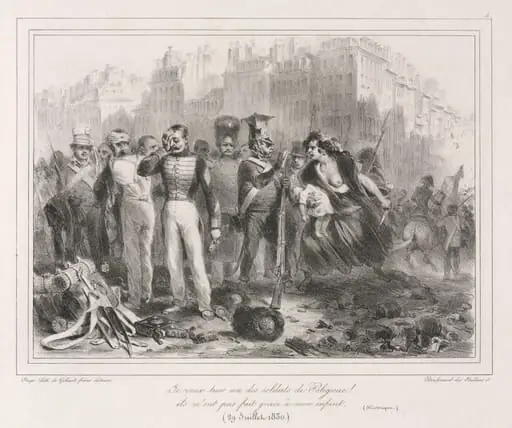 Album of 1831: I want to kill one of Polignac's soldiers. They did not spare my child (Historic)
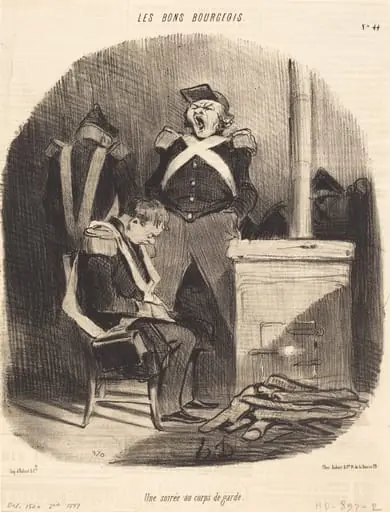 Une Soirée au corps de garde
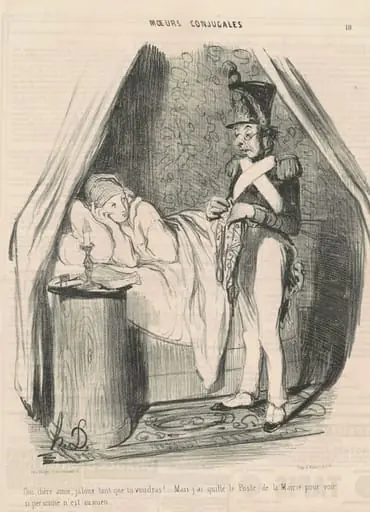 Oui, chère amie, jaloux tant que tu voudras!...
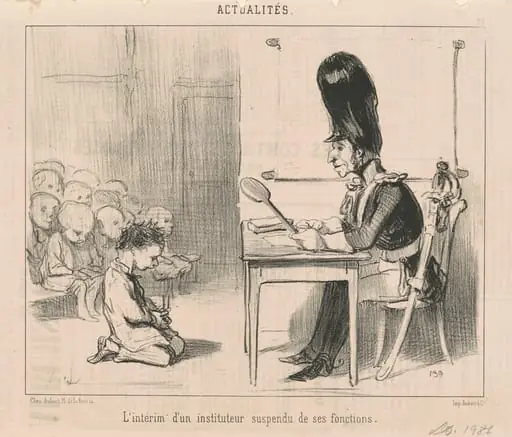 L'intérim d'un instituteur suspen du ...
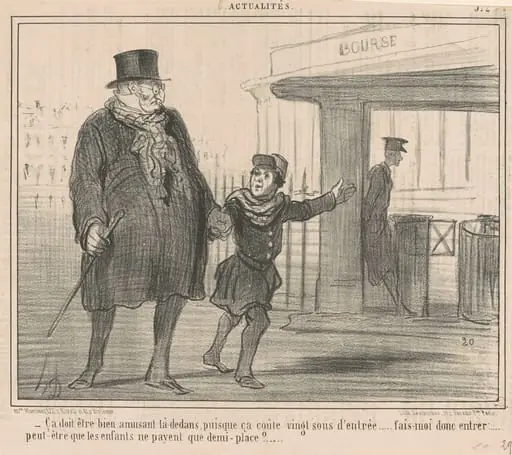 Ca doit être bien amusant la-dedans ...
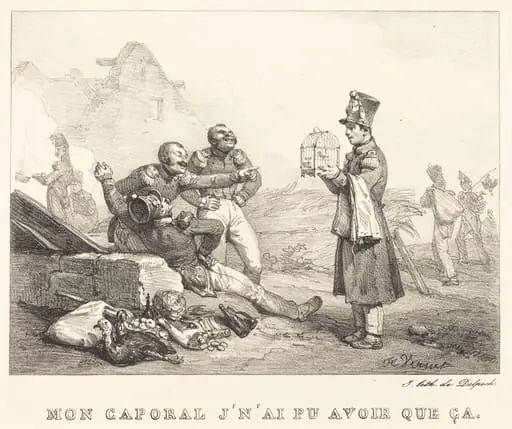 Mon Caporal, Je n'ai pu avons que ça