Artwork
Dire que ça si dandine avec un petit air...
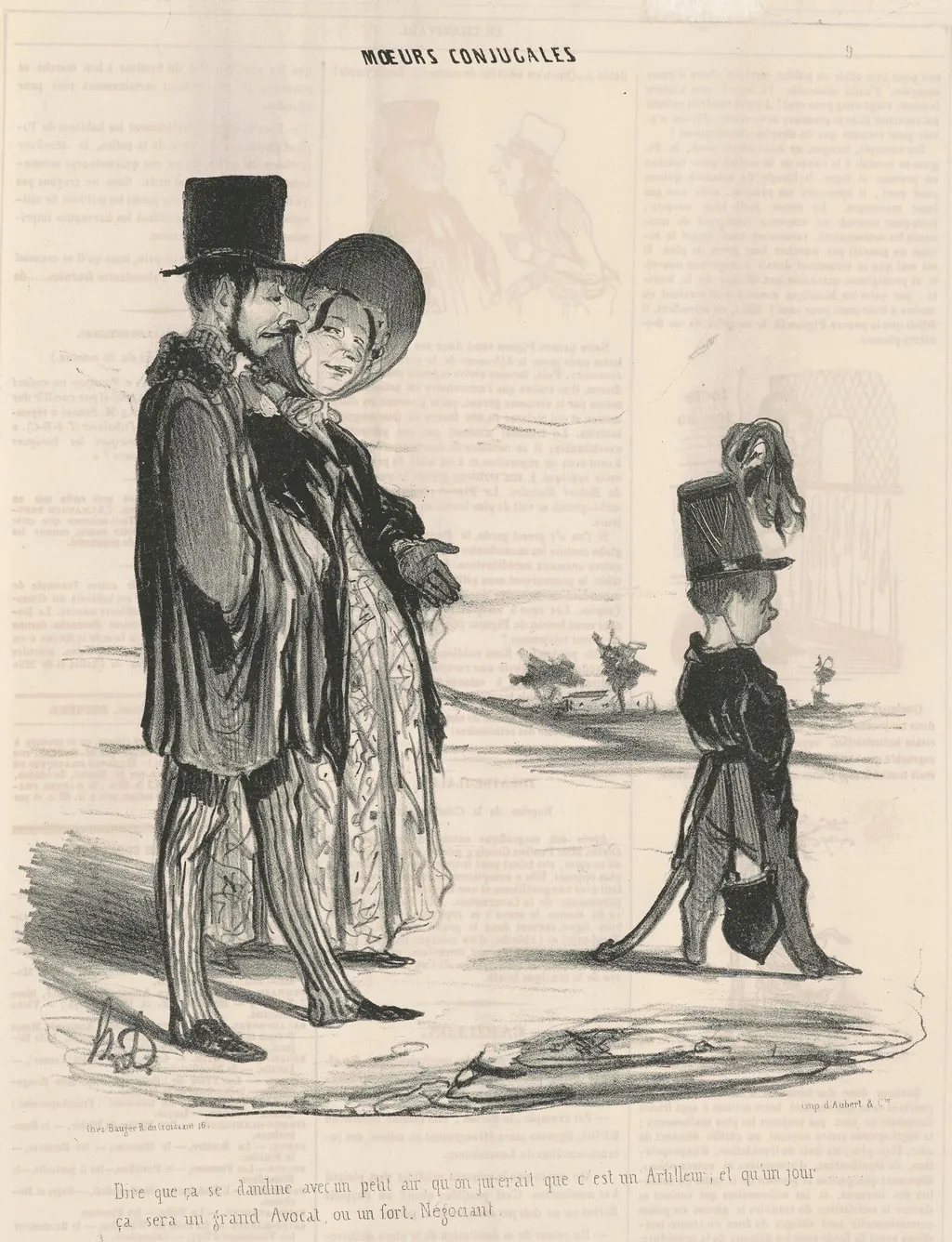
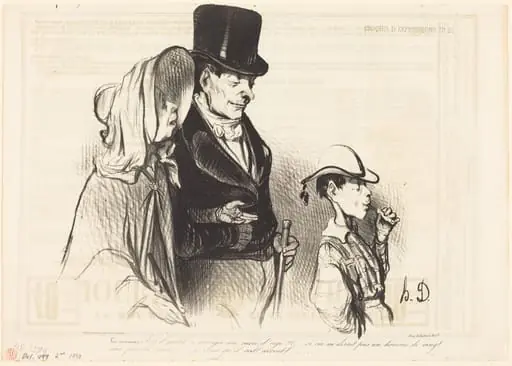
Dire que ça si dandine avec un petit air... is an ink print by the Romanticist artist Honoré Daumier. It dates from 1839 and is held in the collection of the National Gallery of Art.
About this work
Overview
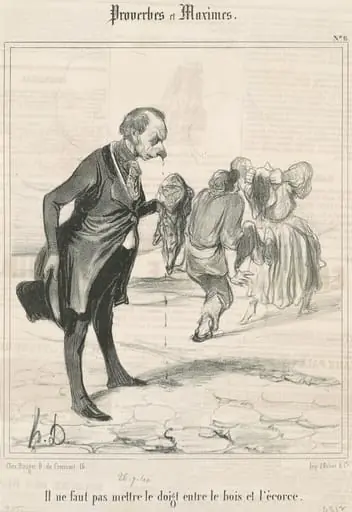
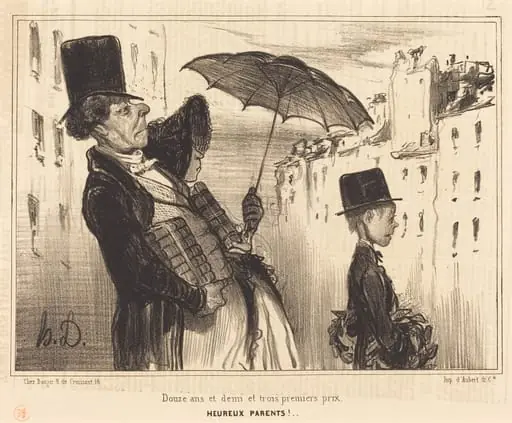
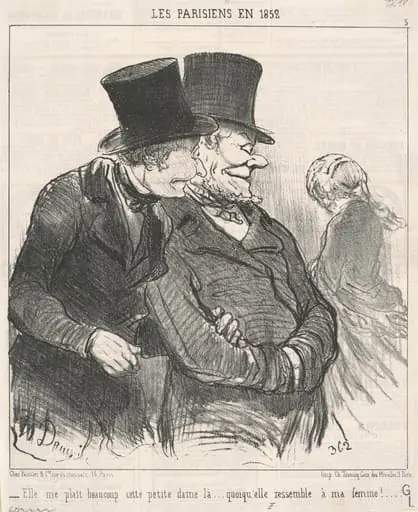
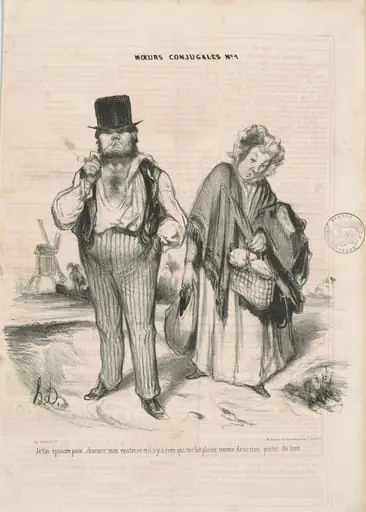
This 1839 lithograph by Honoré Daumier presents a quiet urban scene featuring two adults and a child. The figures are rendered in the characteristic tonal contrasts of lithographic printing, with sharp outlines and subtle shading. The composition centers on the proximity of the man and woman, while the child’s turned back introduces a subtle tension, suggesting unspoken dynamics within the group.
Subject & Meaning
The man and woman, dressed in formal early 19th-century attire, appear engaged in a private moment, their closeness implying social familiarity or romantic connection. The child, deliberately facing away, disrupts the scene’s harmony, hinting at alienation or neglect. This contrast may reflect Daumier’s critique of bourgeois behavior, where adult preoccupations overshadow familial responsibility.
Technique & Style
Daumier employed lithography to achieve rapid, expressive lines and nuanced gradations of gray. The medium allowed him to capture fleeting gestures and atmospheric detail with immediacy. Figures are simplified yet psychologically suggestive, with exaggerated postures and minimal background elements that focus attention on interpersonal tension rather than setting.
History & Provenance
Created during Daumier’s early period of social satire, this print was likely published in a periodical, common for his work at the time. It circulated among Parisian audiences familiar with the artist’s sharp observations of middle-class life. No early ownership records are widely documented, but the image remains part of institutional collections focused on 19th-century French graphic art.
Context
In late 1830s Paris, lithography flourished as a tool for political and social commentary, especially in illustrated journals. Daumier, working under censorship, used subtle imagery to critique class behavior. This print aligns with his broader interest in domestic scenes that reveal moral contradictions, avoiding overt caricature while still challenging societal norms.
Legacy
Daumier’s ability to convey complex social narratives through minimal means influenced later generations of illustrators and realist artists. This lithograph exemplifies his quiet, observational style—less sensational than his political cartoons, yet equally perceptive. It endures as a nuanced document of everyday life in mid-19th-century France.
Artist & collection
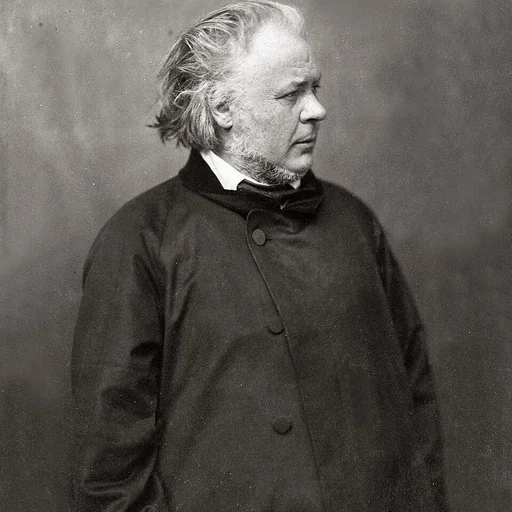
Artist
Honoré-Victorin Daumier was a French painter, sculptor, and printmaker, whose many works offer commentary on the social and political life in France, from the Revolution of 1830 to the fall of the Second French Empire in 1870.