Artwork
En v'la un qu'est un drole de corps ...
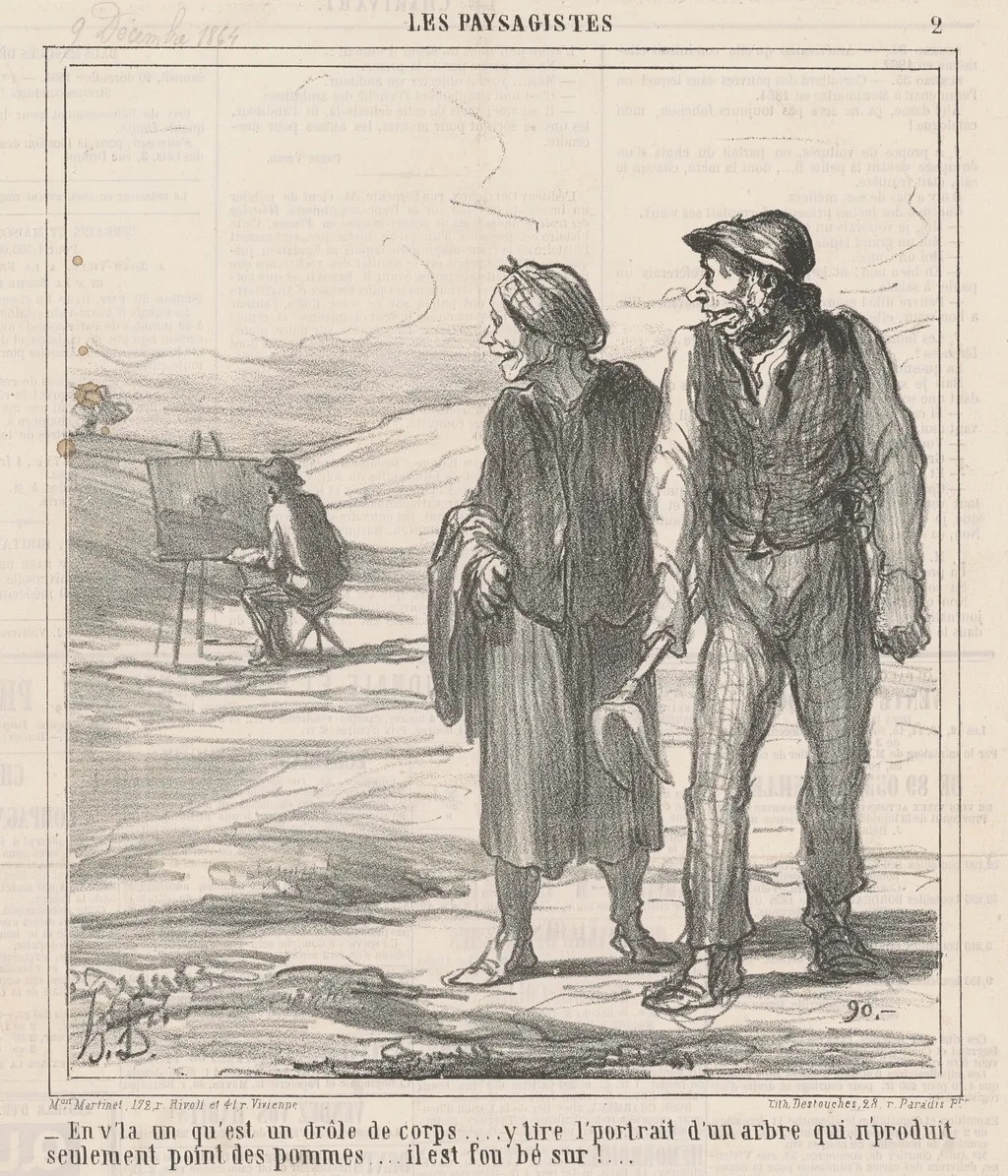
En v'la un qu'est un drole de corps ... is an ink print by the Impressionist artist Honoré Daumier. It dates from 1864 and is held in the collection of the National Gallery of Art.
About this work
Overview
Honoré Daumier’s lithograph presents a trio of rural figures set against a countryside backdrop. Two of the characters are caught in a lively exchange, gesturing toward a painter who is working en plein air. The composition captures a moment of informal observation, rendered in the crisp, linear quality characteristic of Daumier’s printmaking.
Subject & Meaning
The scene satirically references the growing popularity of outdoor painting in the mid‑19th century. By portraying country folk pointing and commenting on the artist’s activity, Daumier injects a humorous commentary on the pretensions of the art world, using exaggerated facial expressions to underscore the light‑hearted mockery.
Technique & Style
Executed in lithography, the work relies on bold line work and dense cross‑hatching to model forms and suggest texture. Daumier’s characteristic exaggeration of features—oversized hats, twisted faces—enhances the caricatural tone, while the precise rendering of the landscape provides a clear spatial context for the figures.
History & Provenance
Created during Daumier’s prolific period of social and artistic satire, the print reflects his ongoing engagement with contemporary artistic trends. It has circulated among collections of 19th‑century French prints, appearing in several exhibitions that explore the intersection of humor and visual culture in the era.
Context
In the 1850s and 1860s, plein‑air painting gained prominence through the work of the Barbizon School and early Impressionists. Daumier’s lithograph responds to this shift, positioning the rural onlookers as both participants and critics of the new artistic practice, thereby situating the work within broader debates about modernity and artistic authenticity.
Artist & collection
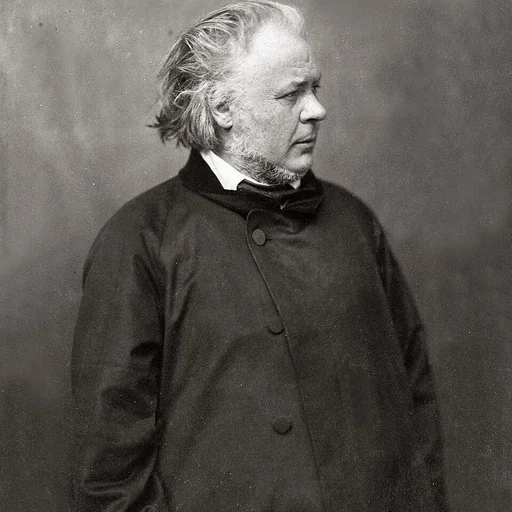
Artist
Honoré-Victorin Daumier was a French painter, sculptor, and printmaker, whose many works offer commentary on the social and political life in France, from the Revolution of 1830 to the fall of the Second French Empire in 1870.

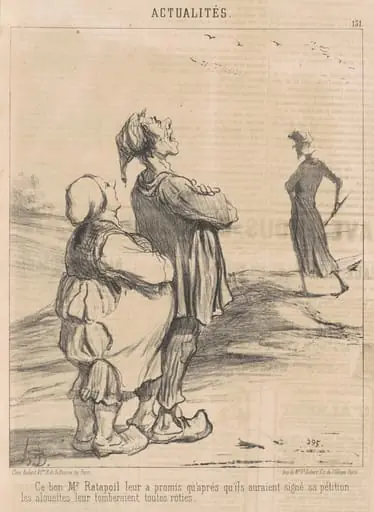 Ce bon M. Ratapoil leur a promis ...
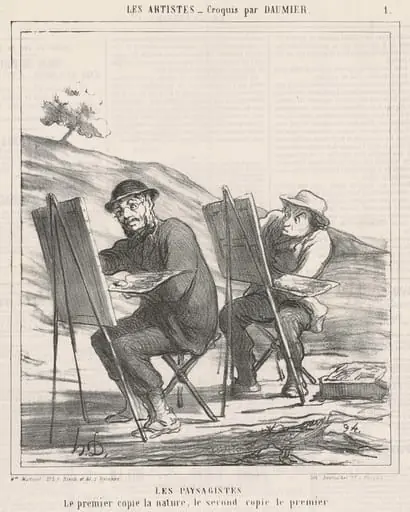 Les paysagistes. Le premier copie la nature
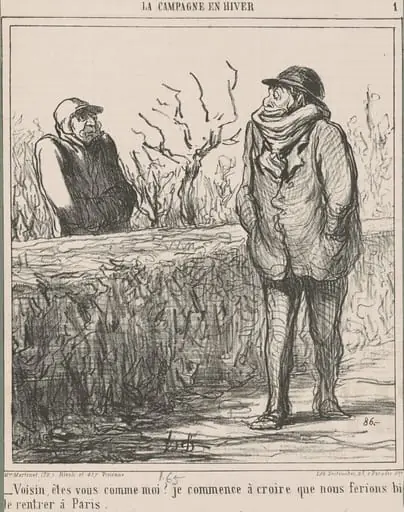 Voisin, êtres-vous comme moi? ...
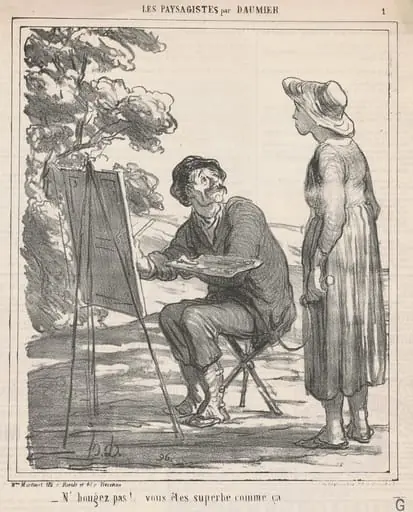 N'bougez pas! ...
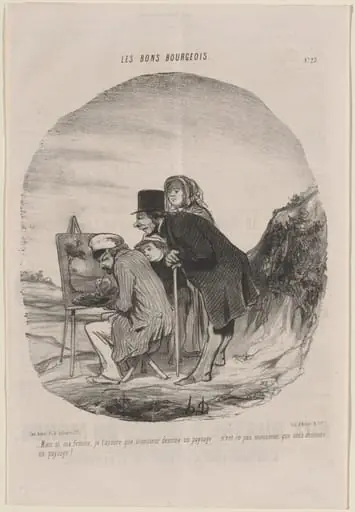 Monsieur dessine un paysage
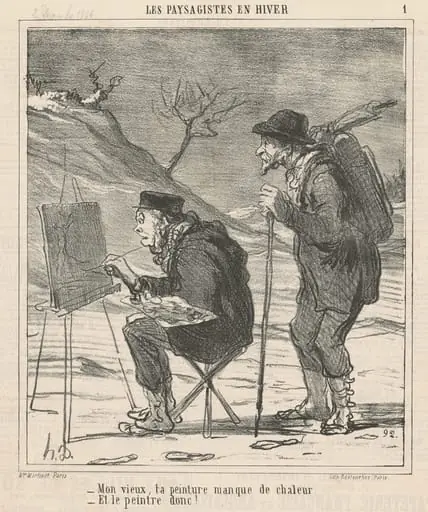 Mon vieux, ta peinture manque de chaleur ...
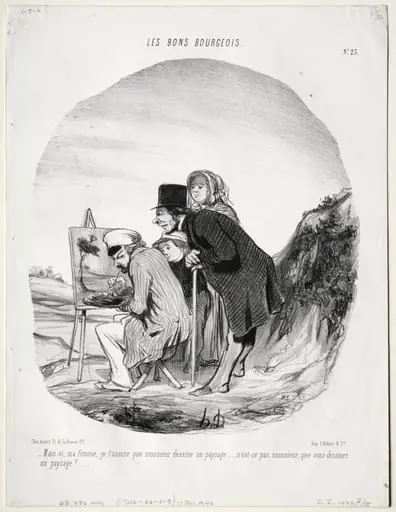 But yes, my dear, I assure you that this gentleman is drawing a landscape...
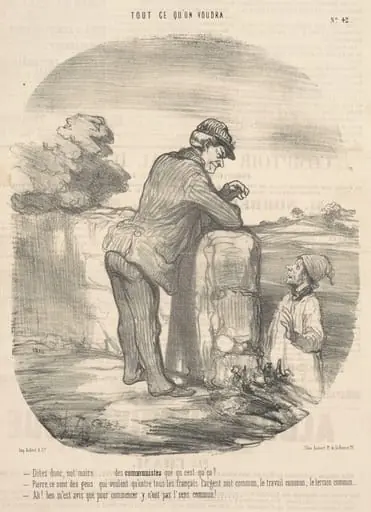 Dites donc, not'maire ... des communistes qué qu'c'est ça?
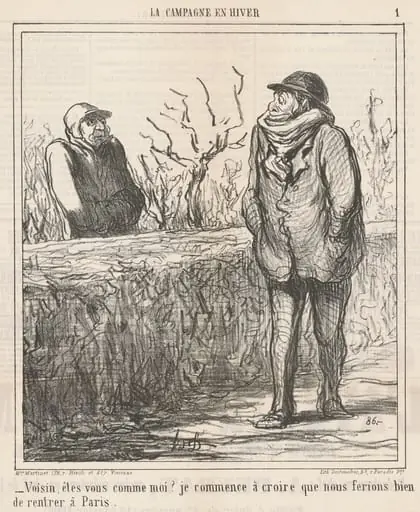 Voisin, êtes-vous comme moi? ...
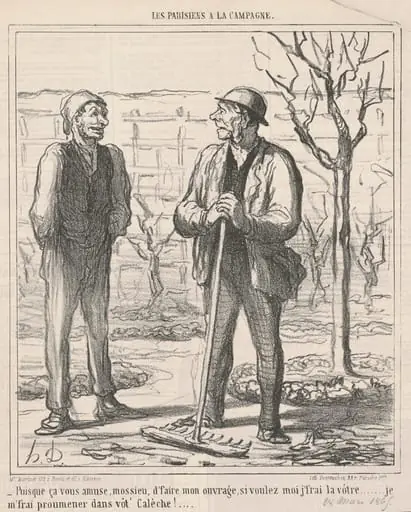 Pisque ca vous amuse ...